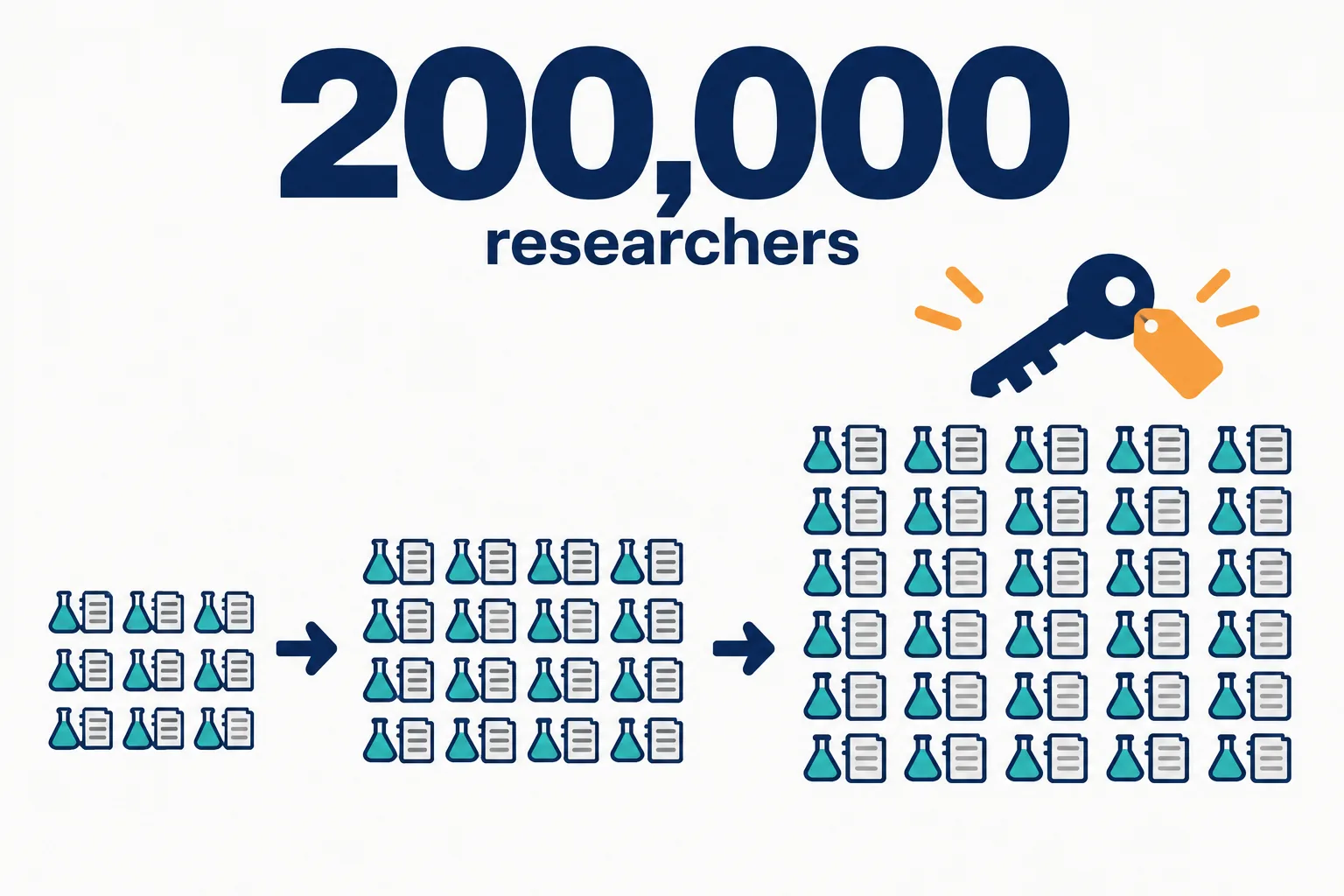
OpenAI said on November 16, 2026 that it is expanding its ChatGPT for Academic Researchers program to give up to 200,000 researchers worldwide free access to ChatGPT. Applications for the next round open Monday, November 23, and the 50,000 new grants go to eligible researchers first come, first served. OpenAI’s post about it on X had about 590,000 views by 08:03 UTC on November 17.
On this page · 6 sectionsOpen
 OpenAI said on November 16, 2026 it is expanding ChatGPT for Academic Researchers to give up to 200,000 researchers free ChatGPT.
 Applications open Monday, November 23. OpenAI will award 50,000 new grants, first come first served, replacing the pilot’s lottery.
 Each grant covers the recipient and up to two collaborators, so this round can reach up to 150,000 researchers.
 New grants get ChatGPT Plus, not the pilot’s Pro: OpenAI found most pilot users would have stayed within Plus limits.
 By default, OpenAI says it does not use data shared through the program to train its models.
 In OpenAI’s survey of the summer pilot, researchers estimated the same work would have taken nearly twice as long without AI.
§ 01What a grant includes
Each grant gives the recipient and up to two collaborators free ChatGPT Plus, with training on using it in research. That is up to 150,000 researchers in this round. OpenAI says its goal for the whole program is 200,000, “double the goal we announced when the pilot launched in July.”
Two things changed from the pilot. OpenAI is “moving away from lottery-based selection” after feedback from researchers. And new grants get Plus instead of Pro, because, in OpenAI’s words, “most participants would have stayed within ChatGPT Plus usage limits.”

§ 02The pilot and the new round, side by side
| July 2026 pilot | Round opening Nov 23, 2026 | |
|---|---|---|
| Plan given | ChatGPT Pro (GPT-5.6 Sol Pro at launch) | ChatGPT Plus |
| Collaborators per grant | Up to four | Up to two |
| Selection | Lottery, selected institutions | First come, first served |
| Size | 100,000 researchers planned through 2027 | 50,000 grants, up to 150,000 researchers |
| Program goal | 100,000 | 200,000 |
§ 03What the pilot showed, per OpenAI
OpenAI says 20,000 researchers in 33 countries joined since July. It also published a study from its Economic Research team of more than 1,800 pilot participants, who “estimated that, without AI, the same research work at the same quality would have taken nearly twice as long.” That is a self-reported estimate, not a measured time.
The program sits inside a larger commitment. The July post called it part of “a commitment of more than $250 million through 2027 to support external scientific research and discovery.” On November 16 OpenAI also said it gave $5 million to a new Simons Foundation initiative to help mathematicians check and build on results produced by AI.
§ 04Eligibility and what is not known
Per the July post, eligible institutions “must be recognized, degree-granting colleges or universities with a high level of research activity,” and applicants verify their affiliation. People already on the waitlist who qualify get an email before applications open.
Not known yet: how long a Plus grant lasts, whether the round stays open after the 50,000 grants are gone, and how OpenAI will check the first-come order across countries. On data, OpenAI says only that “By default, we don’t use data shared through the program to train our models.”
§ 05Our conflict, declared
CellCog has no relationship with OpenAI. CellCog runs Anthropic’s Claude Opus 5.5, a competitor to the models in this program.
§ 06Sources
- OpenAI, Broadening access to AI for scientists, November 16, 2026
- OpenAI, Accelerating scientific discovery with ChatGPT for Academic Researchers, July 29, 2026
- @OpenAI announcement on X, November 16, 2026
Q1Who is eligible?
Per the July announcement, researchers at recognized, degree-granting colleges or universities with a high level of research activity, who verify their affiliation.
Q2How is this round different from the pilot?
The pilot used a lottery, gave ChatGPT Pro and allowed up to four collaborators. The new round is first come first served, gives ChatGPT Plus and allows up to two collaborators.
Q3How many researchers joined the pilot?
OpenAI says 20,000 researchers in 33 countries have joined since the pilot began in July.
Q4Is my research data used for training?
By default, no. OpenAI says it does not use data shared through the program to train its models.
Q5Are there other OpenAI programs for researchers?
Yes. ChatGPT Edu for universities, and the Rosalind Academic Plan, which offers eligible US university labs up to 30 seats of GPT-Rosalind at no cost for up to 12 months.