Skip to content
AI EmployeeSuper-AgentsAgent-to-AgentPricingBlogStoryContact
Author

Nitish Garg

Founder & CEO, CellCog

Nitish Garg is the founder and CEO of CellCog, the platform for hiring AI employees for any role. He built CellCog with CellCog itself: 2,000+ super-agent sessions, and no other coding tool.

Before CellCog, he was an infrastructure engineer at Bloomberg, Rippling, and Oscar Health, building the kind of production systems AI employees now have to operate inside. He studied at IIT Delhi and the University of Florida.

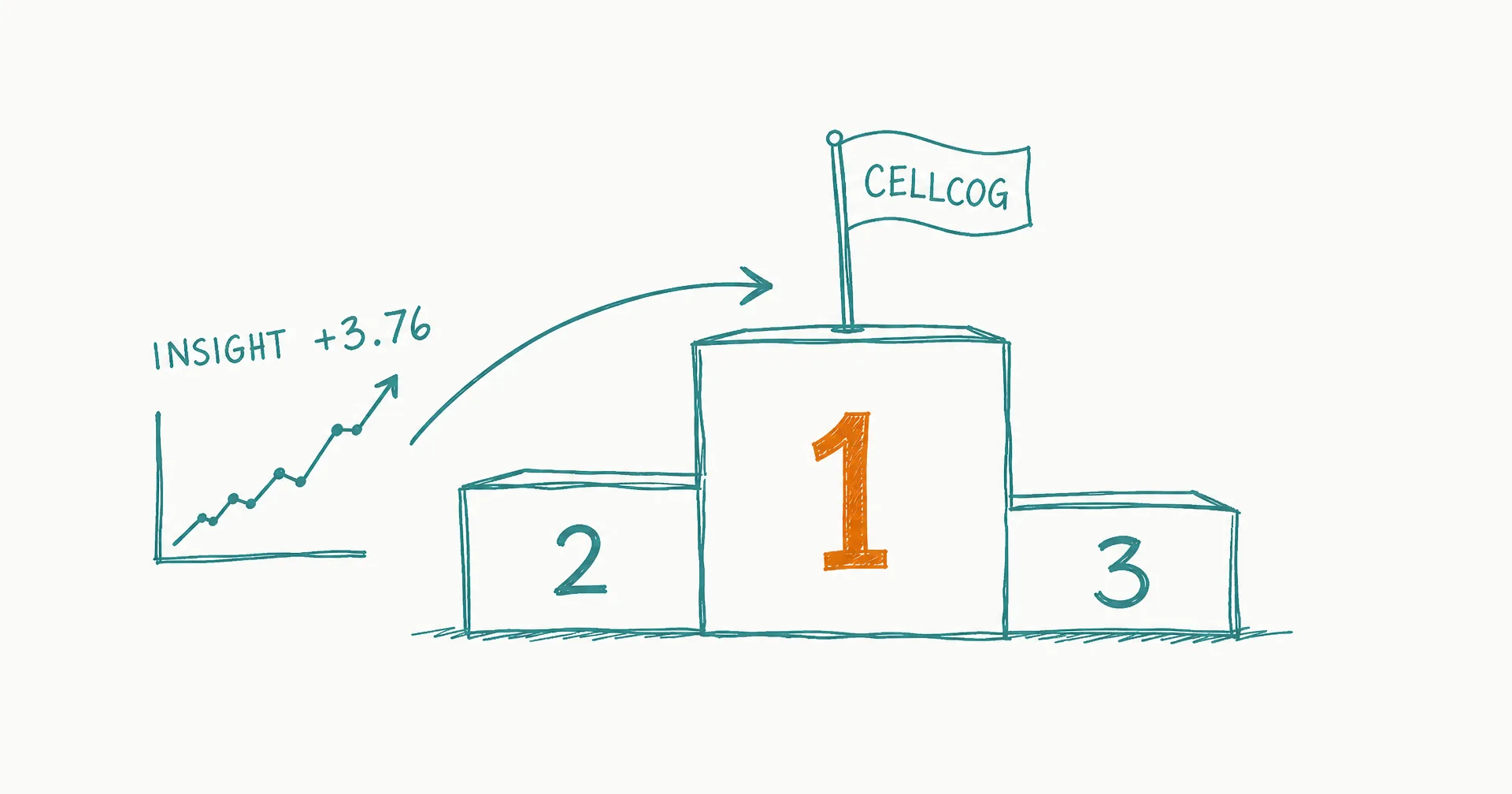
CellCog’s research agent, cellcog-max, is ranked #1 on the DeepResearch Bench leaderboard (July 2026). Everything on this blog comes out of running that platform, and the AI employees on it, in production.

CredentialsAt a glance
Role
Founder & CEO, CellCog
Previously
Infrastructure engineering at Bloomberg, Rippling, and Oscar Health
Education
IIT Delhi · University of Florida
Known for
cellcog-max, #1 on DeepResearch Bench (July 2026)
Writes about
AI employees, delegation design, cost models, benchmarks
Elsewhere: LinkedIn · X

Articles by Nitish Garg 71 articles
31 JUL 2026 What Is a Super-Agent? Capability Breadth Without Category Hype A super-agent carries one goal across planning, tools, modalities, state, verification, and recovery in one loop. Breadth is a claim to test on a complete workflow, not a feature count. InsightsMulti-agent 26 min
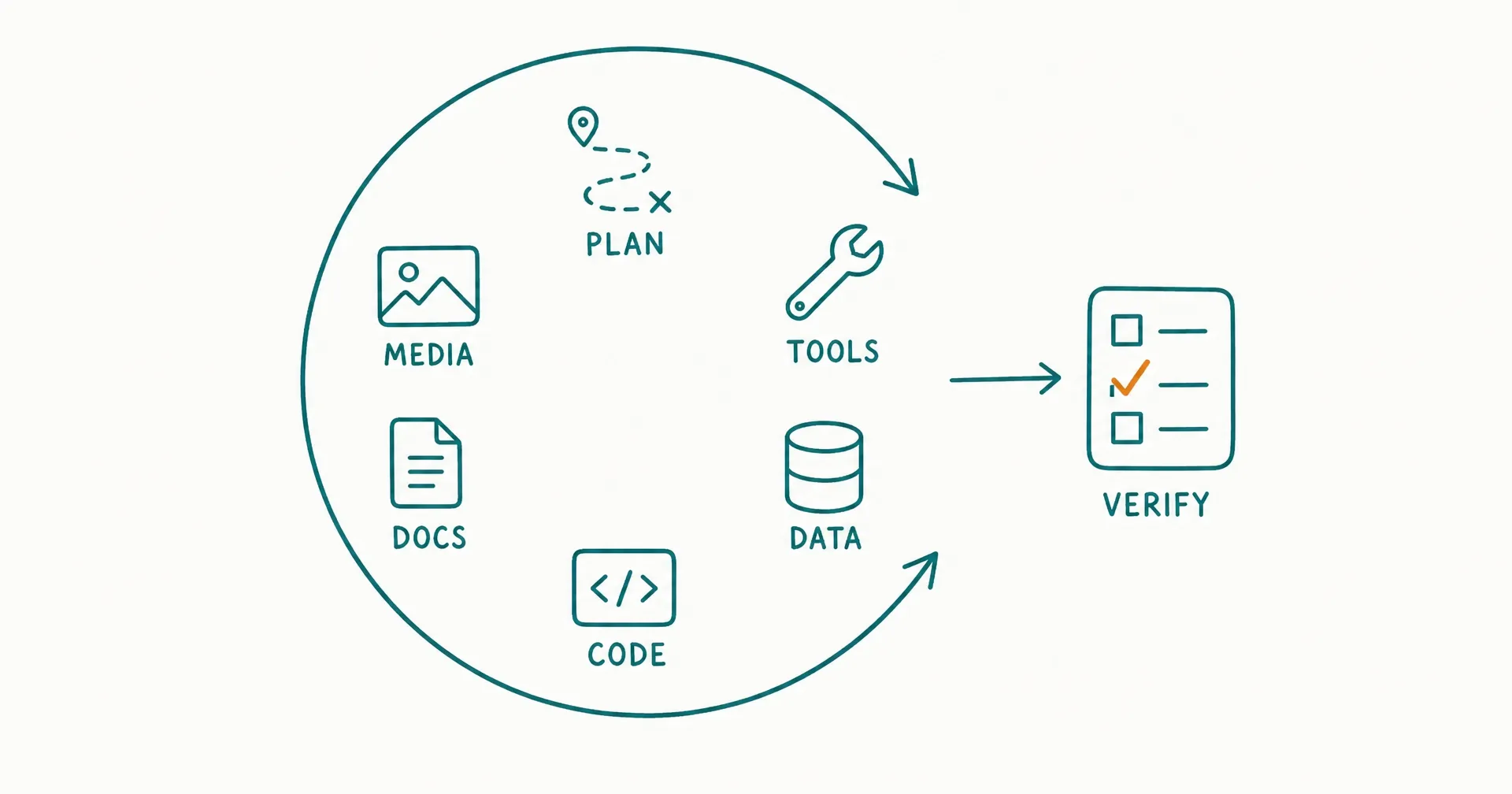
Napkin-style sketch of one large agent loop circling icons for planning, tools, documents, data, code, and media, with a checklist gate at the loop's exit and an amber highlight on the verification checkmark
31 JUL 2026 What Is Agent-to-Agent Communication? Discovery, Tasks, and Results Sending messages is not enough. A reliable exchange names the participants, task, authority, state, and result artifact - and knows when a plain API is the better interface. InsightsMulti-agent 28 min
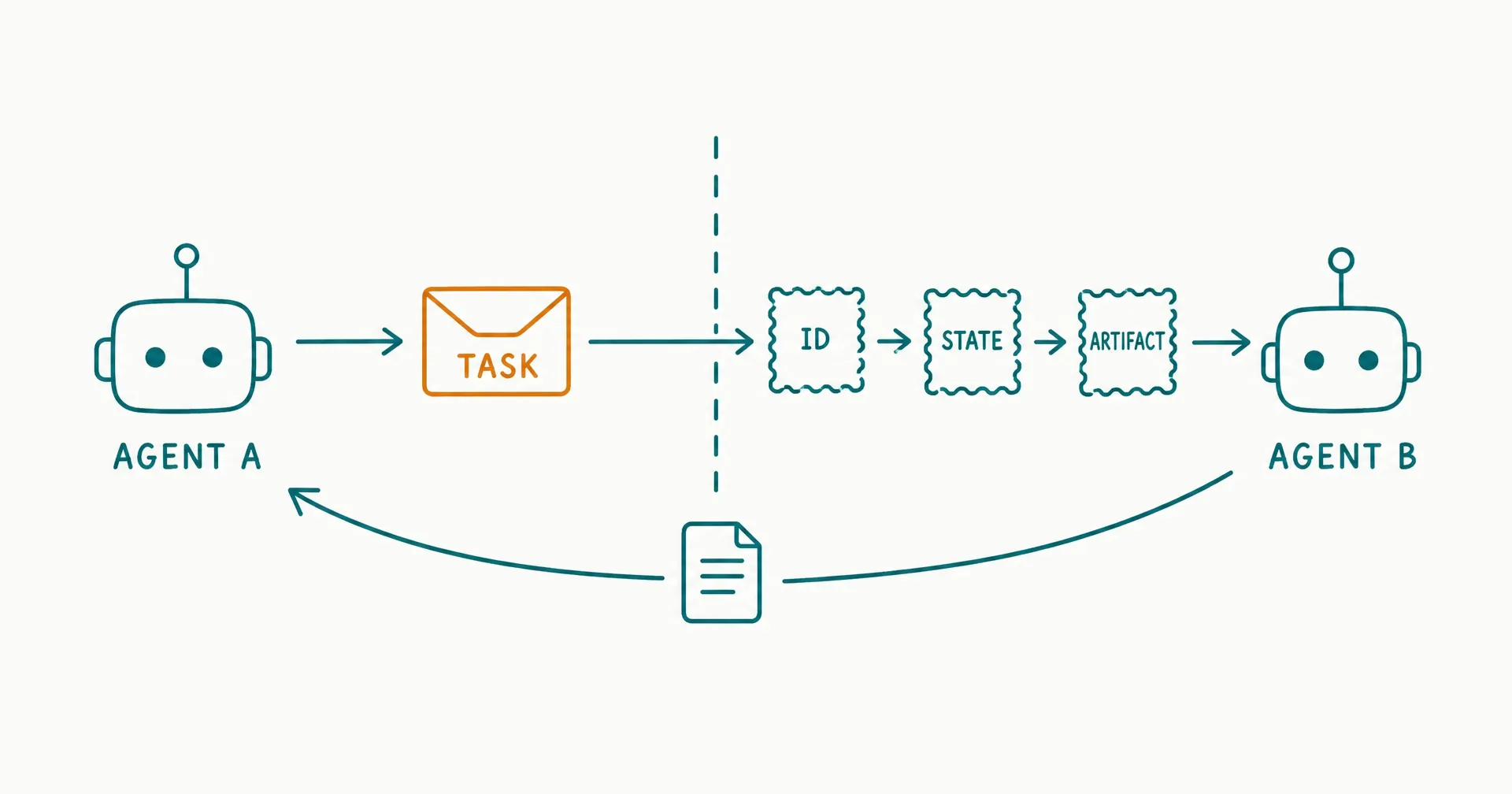
Napkin-style sketch of two agent nodes exchanging a labeled task packet across a boundary line, with small stamps for identity, state, and artifact along the path, and an amber highlight on the task contract packet
31 JUL 2026 The First 30 Days With an AI Employee A practical first-month operating rhythm: orient and observe (days 1-3), shadow (days 4-7), drafts (week 2), approved actions (week 3), bounded shifts (week 4), and the Day 30 decision memo. GuidesHiring 19 min
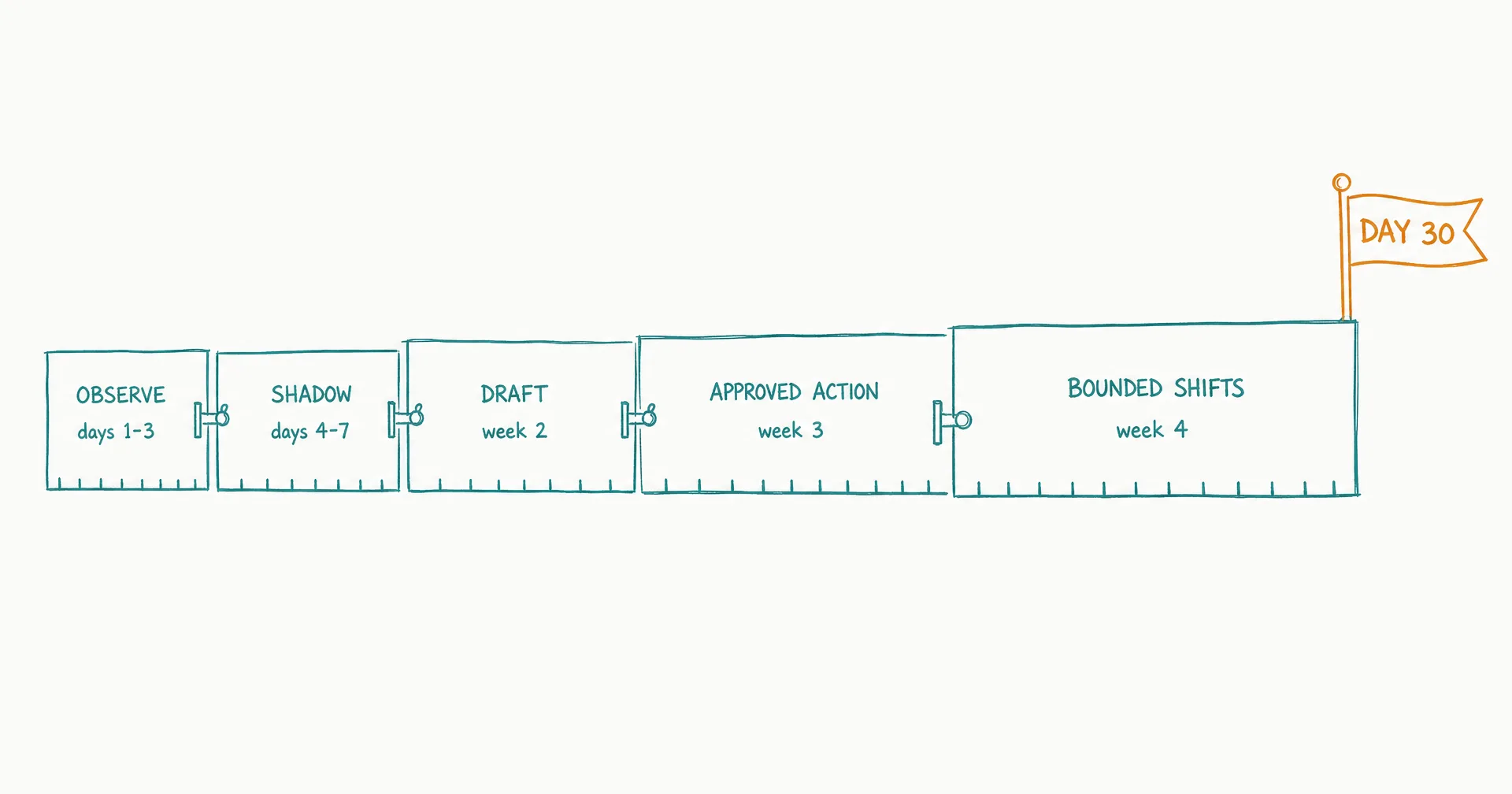
Napkin-style sketch of a 30-day calendar strip divided into five labeled phases - observe, shadow, draft, approved action, bounded shifts - with a decision flag at day 30
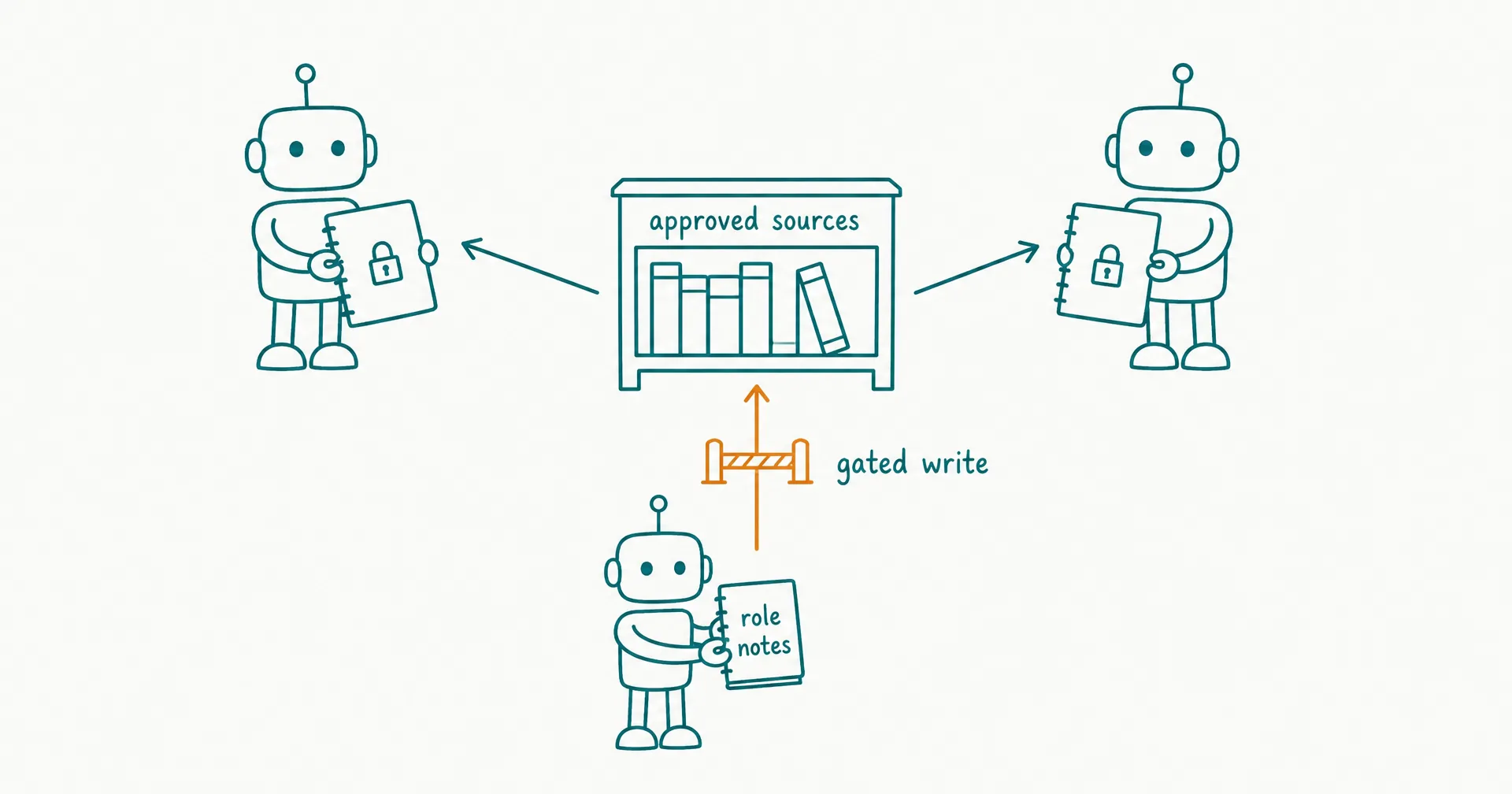
31 JUL 2026 Shared vs Role-Specific AI Memory AI agents should not share all memory. The safe default is isolation. Sharing is an explicit policy decision based on purpose, provenance, sensitivity, authority, freshness, and blast radius. InsightsMulti-agent 19 min
Napkin-style sketch of a central labeled bookshelf of approved sources with read arrows to three robots, each robot keeping its own small locked notebook, with an amber highlight on the single gated write arrow into the shelf
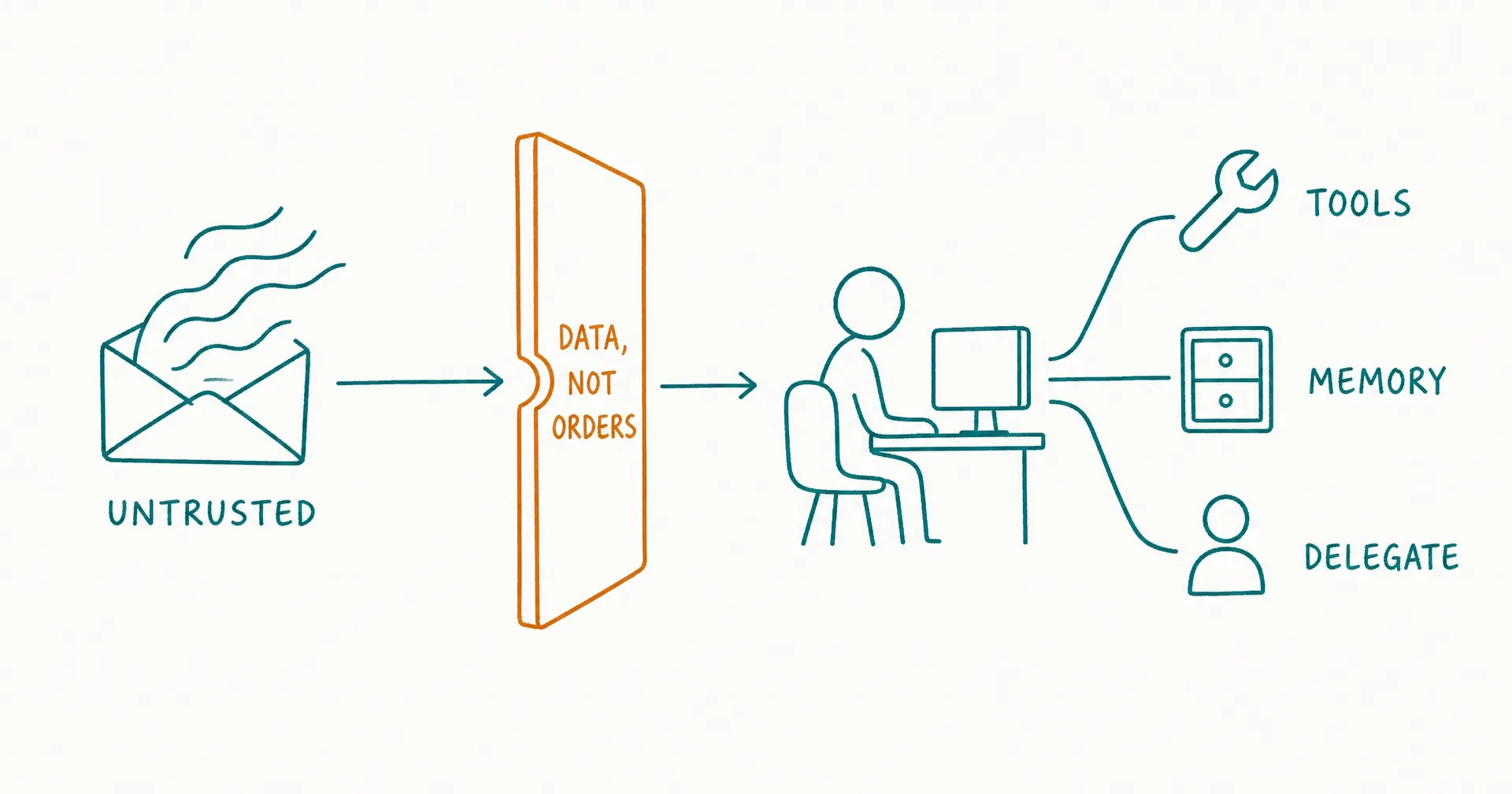
31 JUL 2026 Prompt Injection for AI Employees: Why Persistent Workers Change the Risk Persistence changes the attack: a hostile instruction read today can become memory that steers tomorrow's work. Source-to-effect controls, memory write gates, and the tests that prove them. GuidesTrust & security 27 min
Napkin-style sketch of an envelope with instruction-like text flowing toward a worker figure, blocked by a gate before reaching tool, memory, and delegation sinks
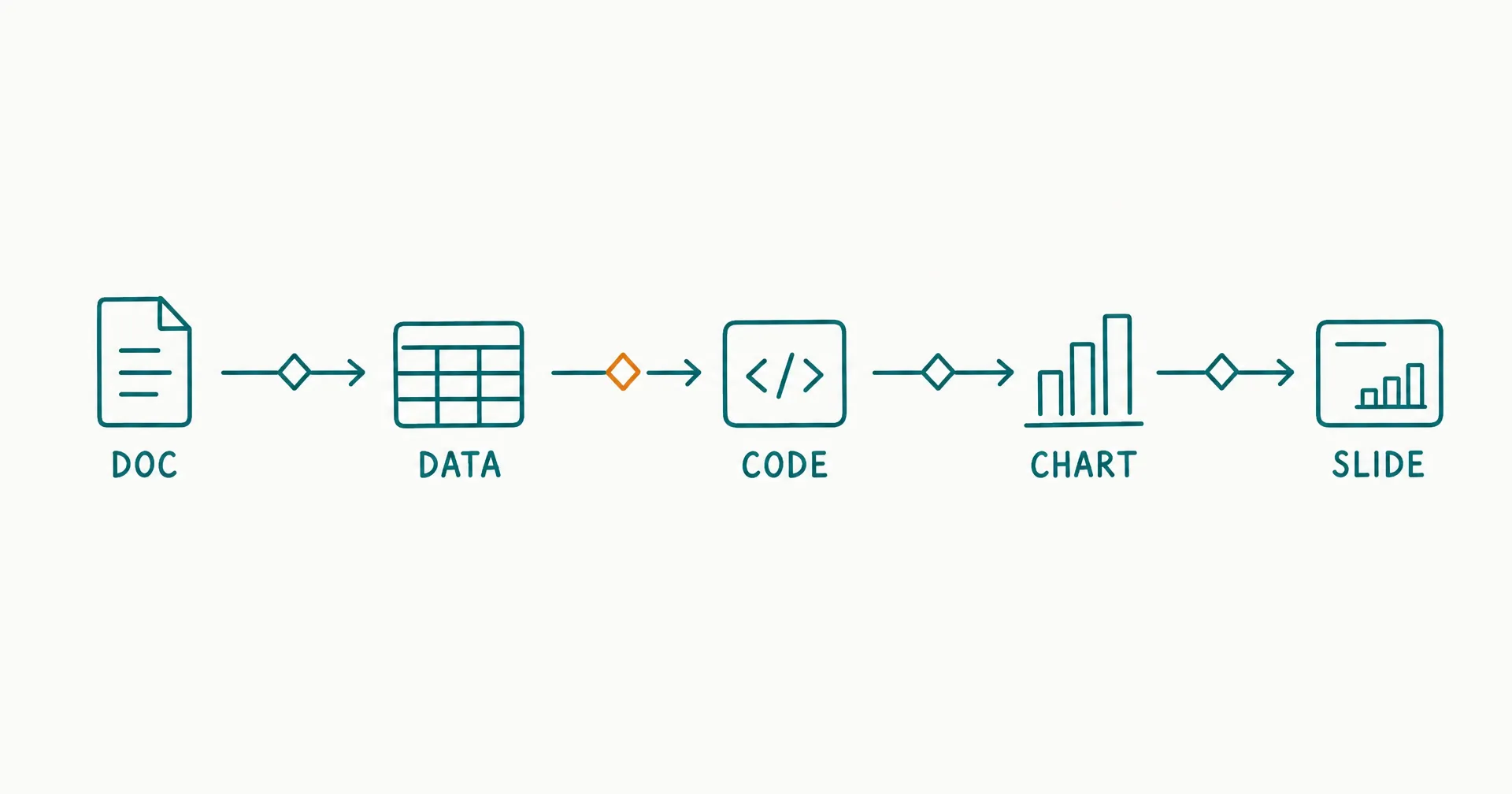
31 JUL 2026 Multimodal AI Agents: When Work Crosses Text, Data, Code, and Media The value is not making text and images. It is continuity: a source becomes data, code validates it, a chart shows it, and the deck keeps the same facts. Every transition can lose meaning. InsightsMulti-agent 23 min
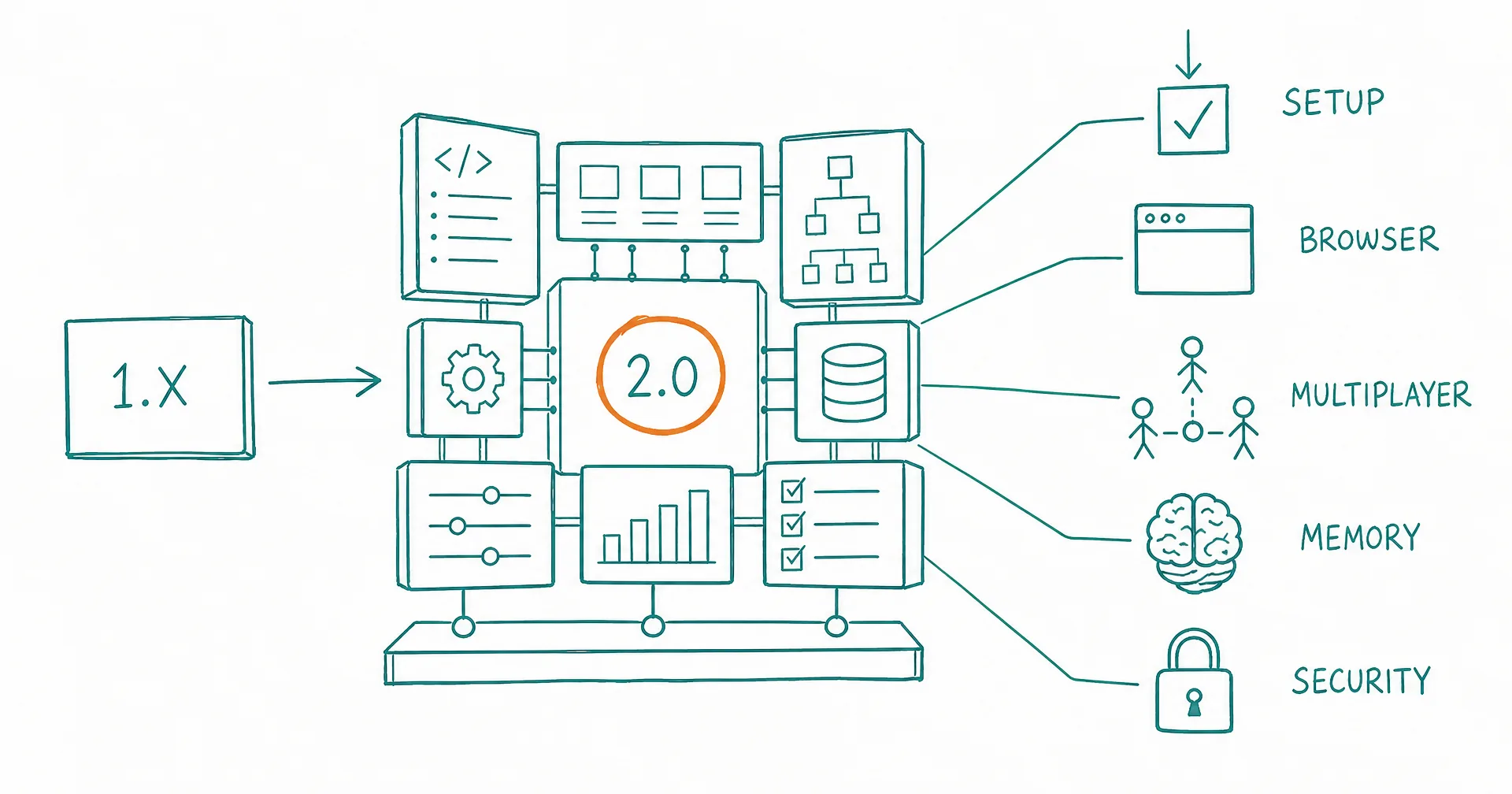
Napkin-style sketch of a chain of artifacts - a document, a data table, a code block, a chart, and a presentation slide - connected by arrows with small checkpoint gates between them, and an amber highlight on one checkpoint gate
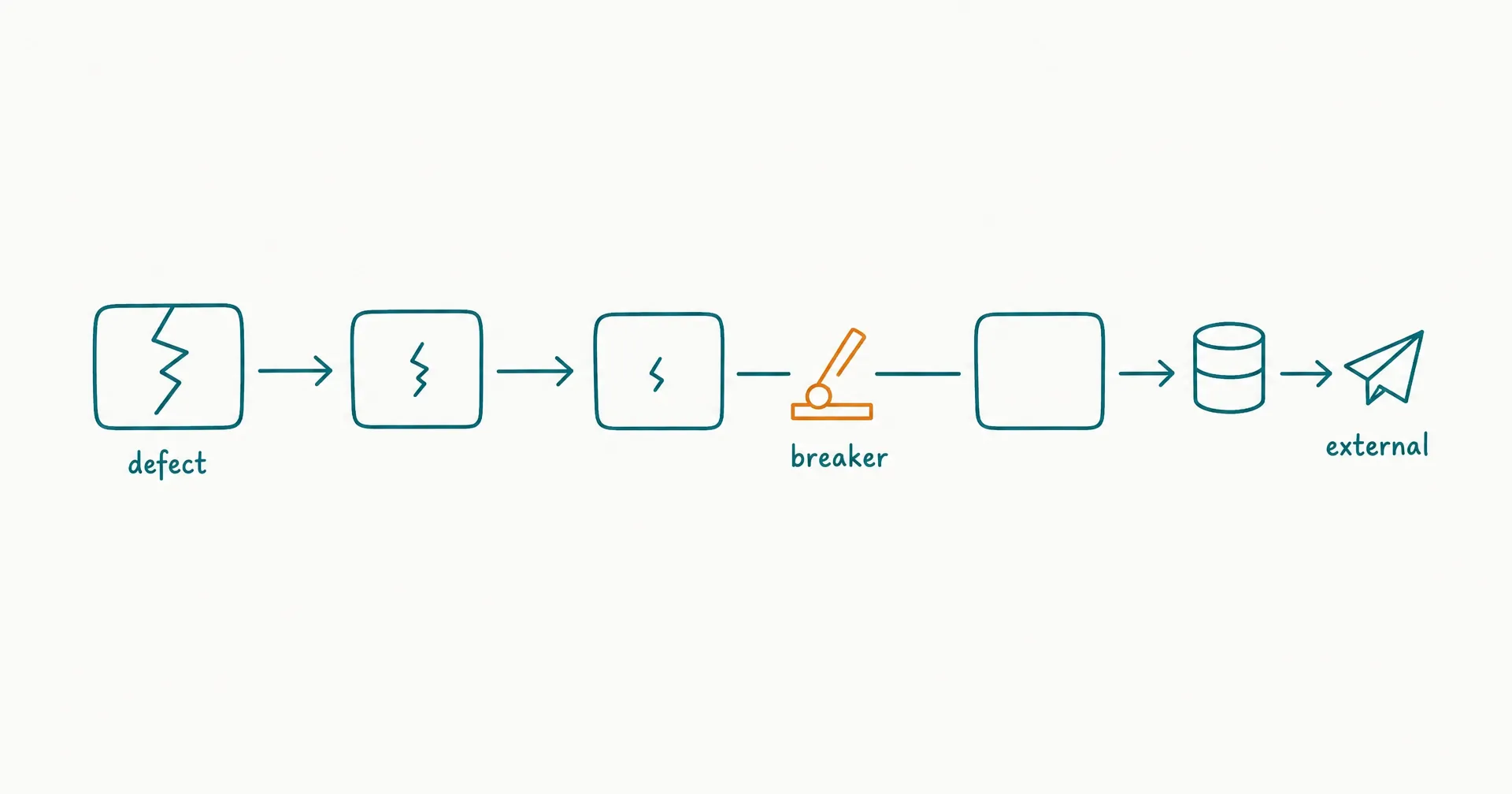
31 JUL 2026 Multi-Agent System Failure Modes: How Errors Propagate The first mistake may be small. The danger is propagation: another agent accepts the mistake as input, acts on it, stores it, or sends it farther. Assume one component will eventually be wrong. InsightsMulti-agent 28 min
Napkin-style sketch of a small crack in one box spreading along arrows through a chain of agent boxes, memory cylinder, and an external send icon, with an amber highlight on a circuit-breaker switch that cuts the chain
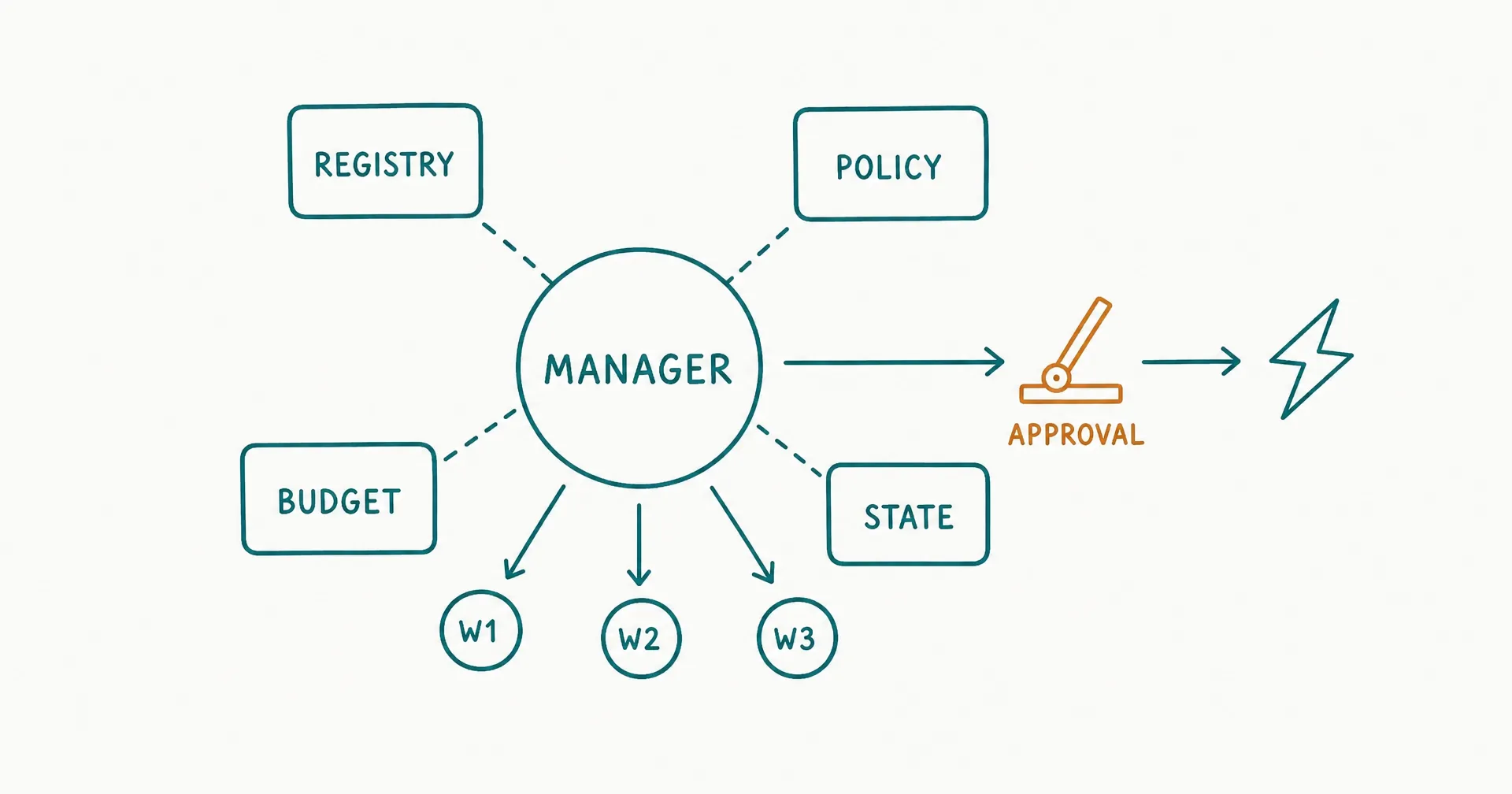
31 JUL 2026 Manager-Agent Architecture: Routing, Review, State, and Failure Containment The manager is a coordination role, not an all-powerful agent. Identity, policy, budgets, state, and approvals stay deterministic - the controller proposes, services enforce. InsightsMulti-agent 24 min
Napkin-style sketch of a central manager node connected to three specialist worker nodes, surrounded by four small deterministic-service boxes labeled registry, policy, budget, and state, with an amber highlight on the approval gate between the manager and an external action
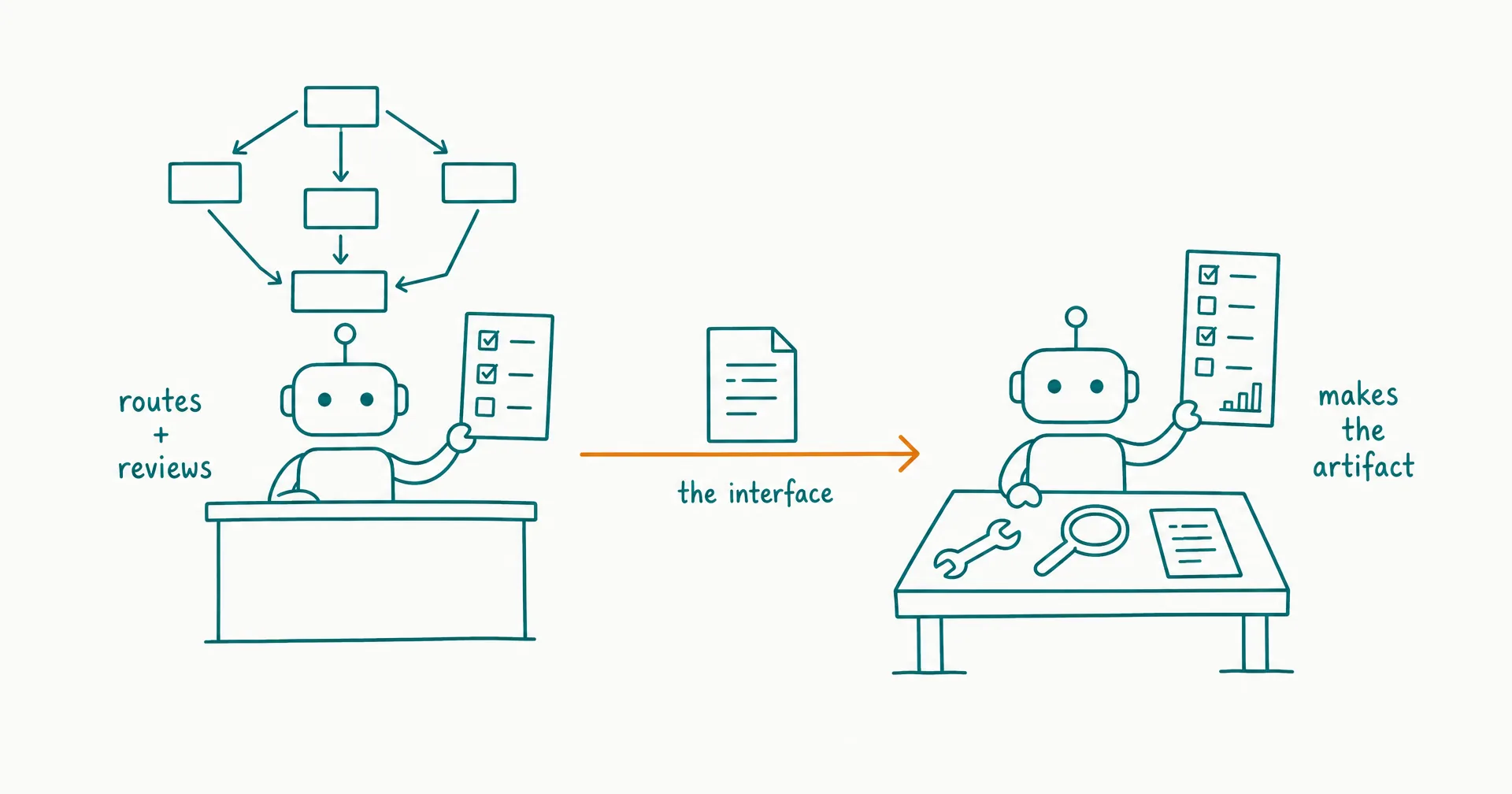
31 JUL 2026 Manager Agent vs Specialist Agent: Different Jobs, Different Evals The manager succeeds when the right work reaches the right specialist and the outcome closes. The specialist succeeds when its artifact meets a domain contract. Do not score both with one number. InsightsMulti-agent 22 min
Napkin-style sketch of a manager robot at a routing desk with a task graph beside a specialist robot at a workbench with domain tools, each holding a different scorecard, with an amber highlight on the interface arrow between them
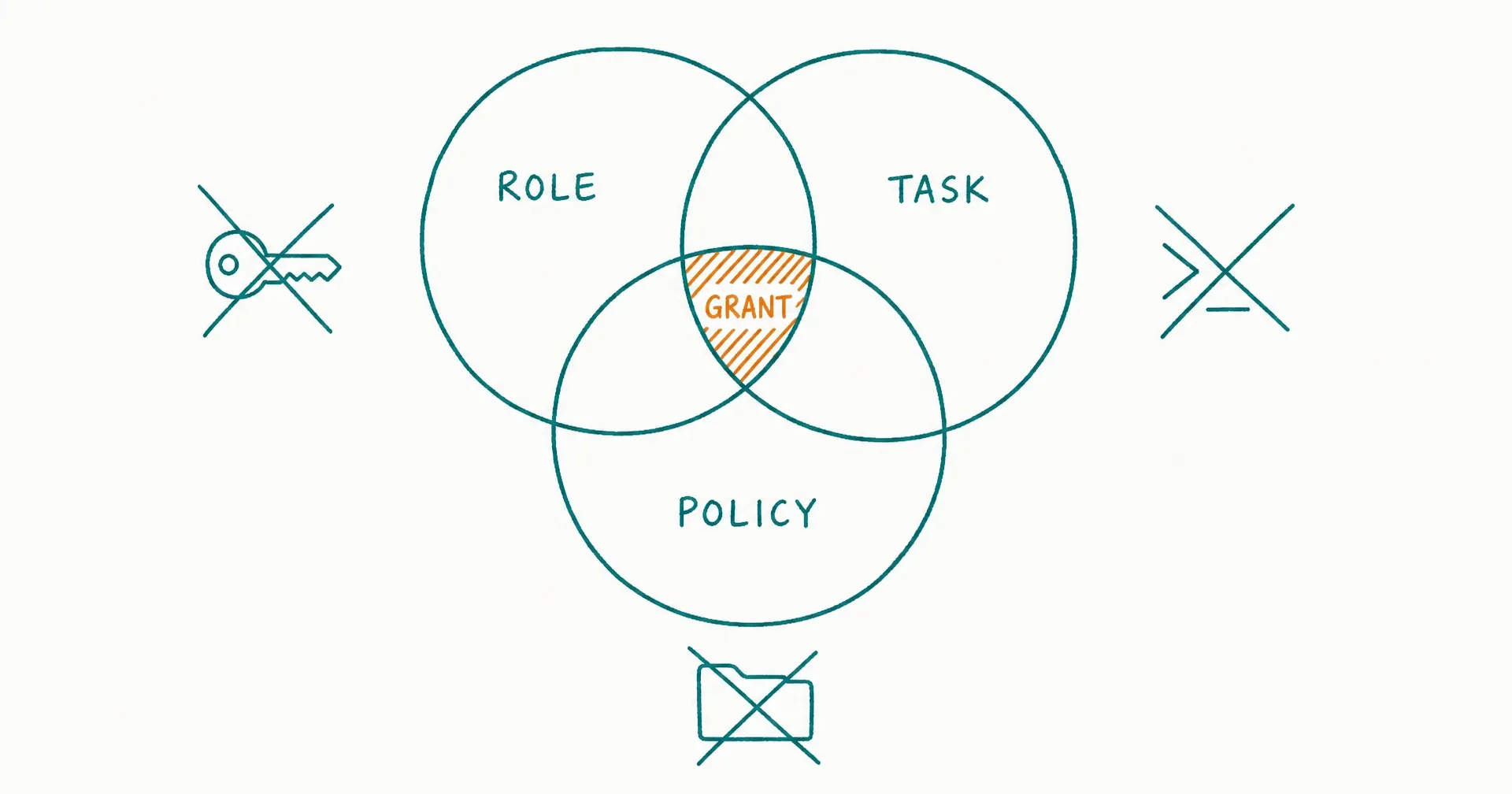
31 JUL 2026 Least Privilege for AI Agents: A Practical Access Model The smallest useful grant: distinct identity, narrow tools over open-ended shells, field-level data scope, temporary credentials, and delegation that narrows authority instead of inheriting it. GuidesTrust & security 22 min
Napkin-style sketch of three overlapping circles labeled role, task, and policy with the small central intersection highlighted as the effective grant
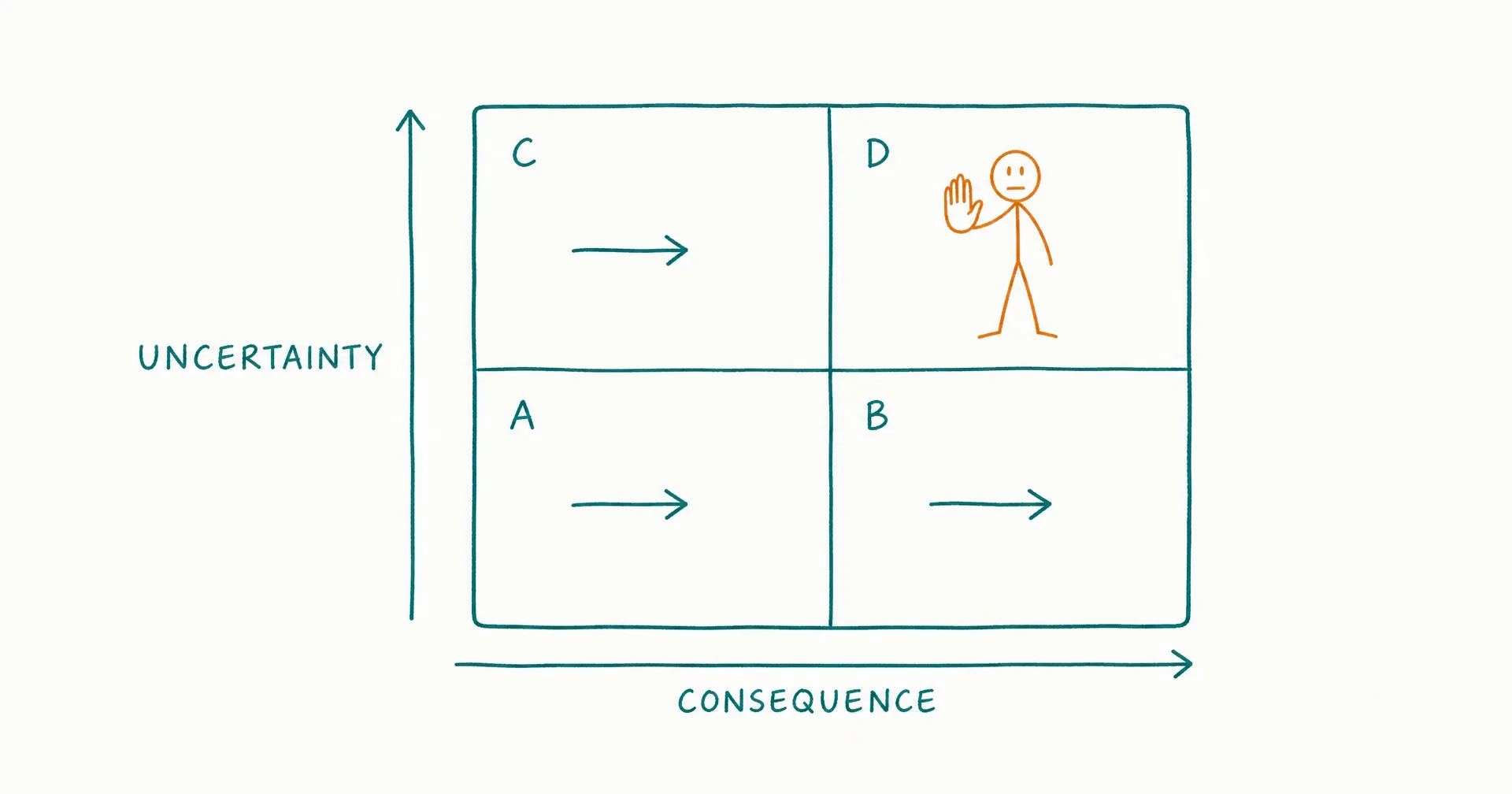
31 JUL 2026 Human-in-the-Loop AI Employees: Where Oversight Belongs Approving everything trains reviewers to click through: put human gates at consequence and uncertainty boundaries, give reviewers authority to disagree, and measure override quality. GuidesTrust & security 24 min
Napkin-style sketch of a two-by-two consequence and uncertainty matrix with three zones flowing freely and the high-consequence high-uncertainty zone routed to a human figure
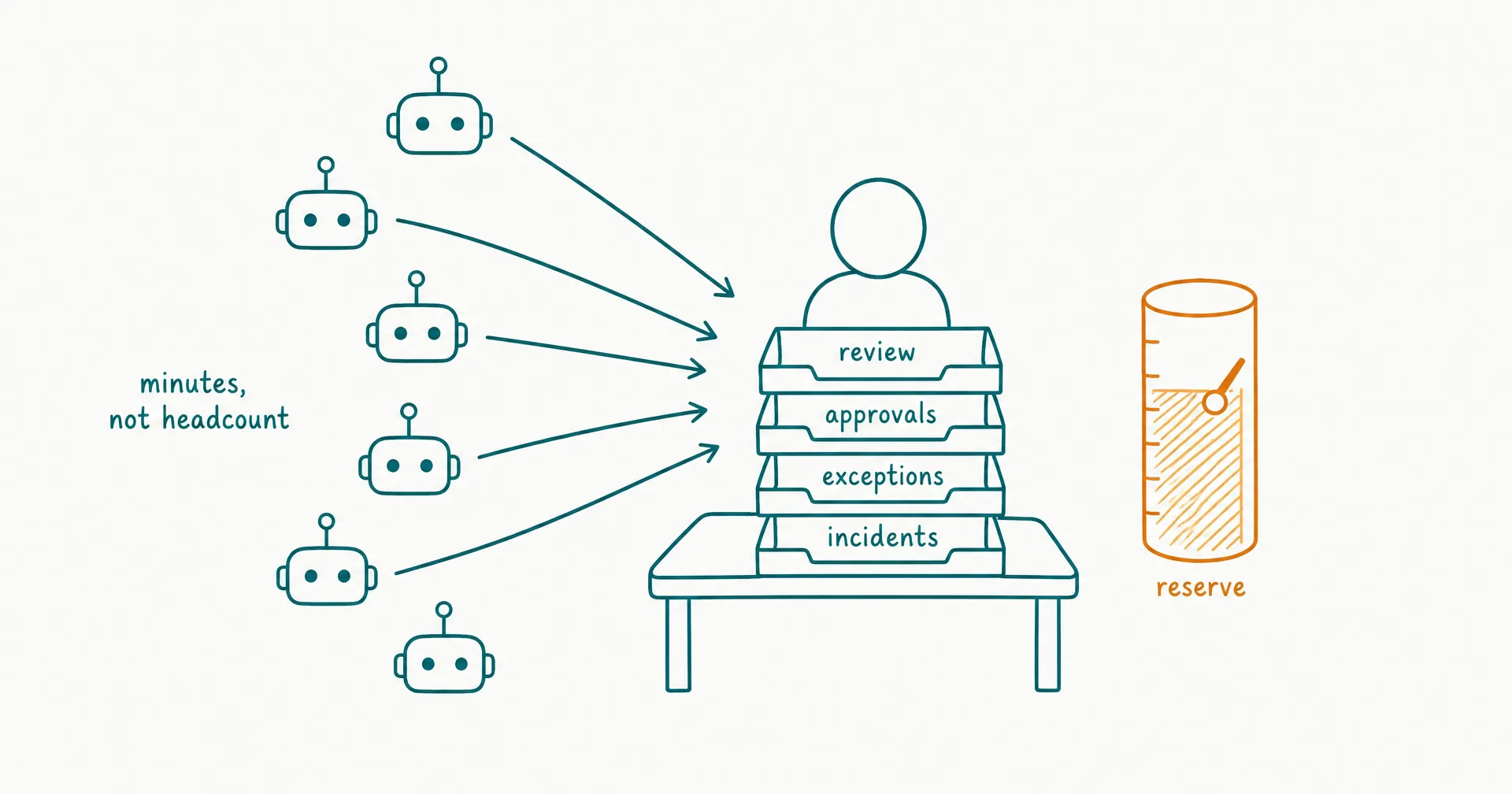
31 JUL 2026 Human Span of Control for AI Agents: A Workload Model for Safe Supervision There is no universal number of AI agents one human can supervise. Agent count is an inventory number; human workload comes from the work each agent sends back. InsightsMulti-agent 23 min
Napkin-style sketch of a human figure at a desk with four labeled inbox trays for review, approvals, exceptions, and incidents, fed by arrows from several robot icons, with an amber highlight on a small reserve tank gauge beside the desk
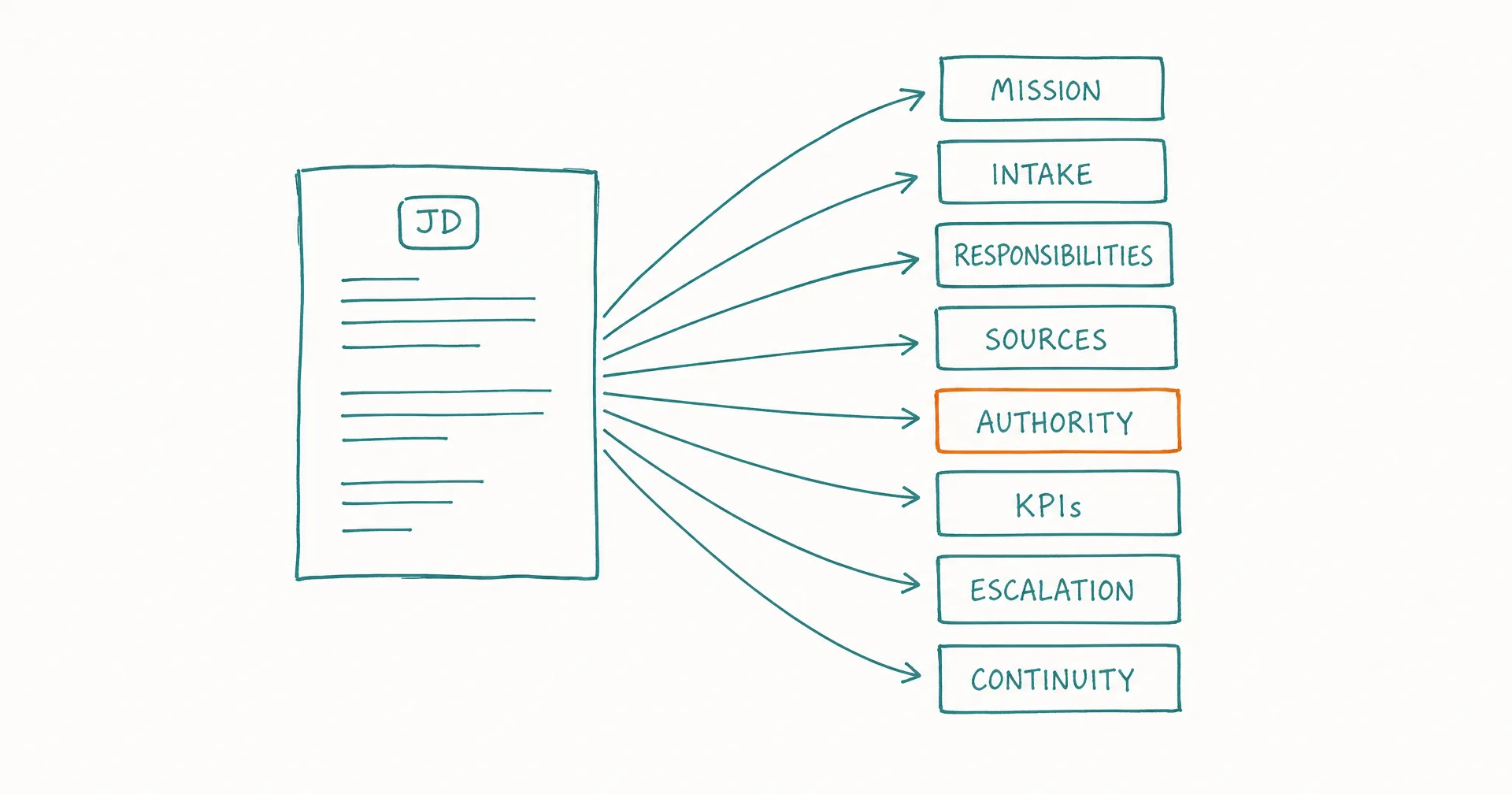
31 JUL 2026 How to Write an AI Employee Job Description An operating contract, not a recruitment ad: mission, intake, responsibilities, sources, authority, deliverables, KPIs, escalation, continuity, and change control - with a copy-and-use template. GuidesHiring 29 min
Napkin-style sketch of a job description document splitting into labeled specification blocks: mission, intake, responsibilities, sources, authority, KPIs, escalation, and continuity
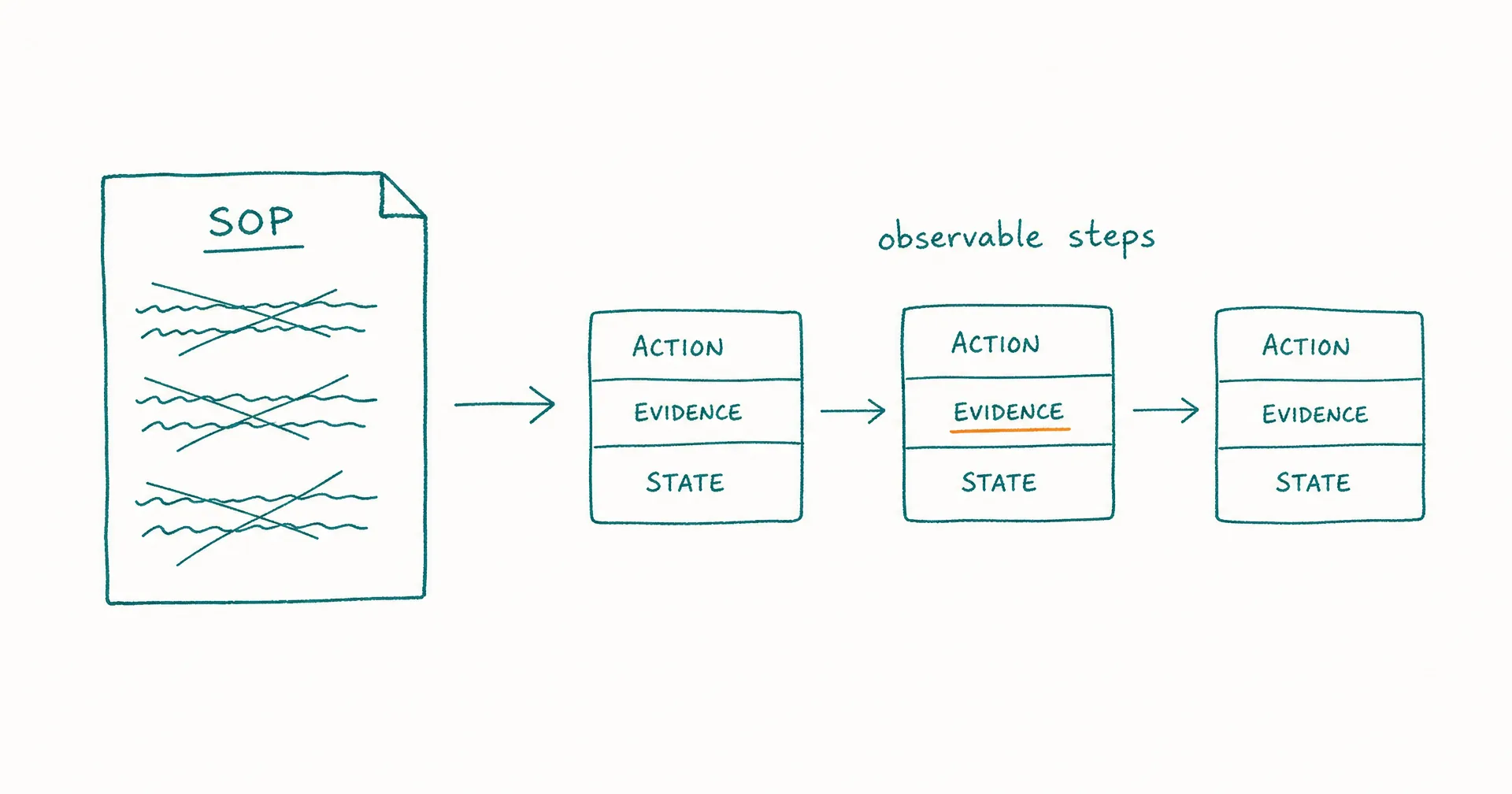
31 JUL 2026 How to Write SOPs an AI Employee Can Actually Use A testable operating contract for one repeatable procedure: trigger, inputs, bounded steps, decision rules, evidence, approvals, and stop conditions - with a copyable template. GuidesHiring 27 min
Napkin-style sketch of a procedure document transforming into a step chain, each step carrying an action, evidence tag, and resulting state
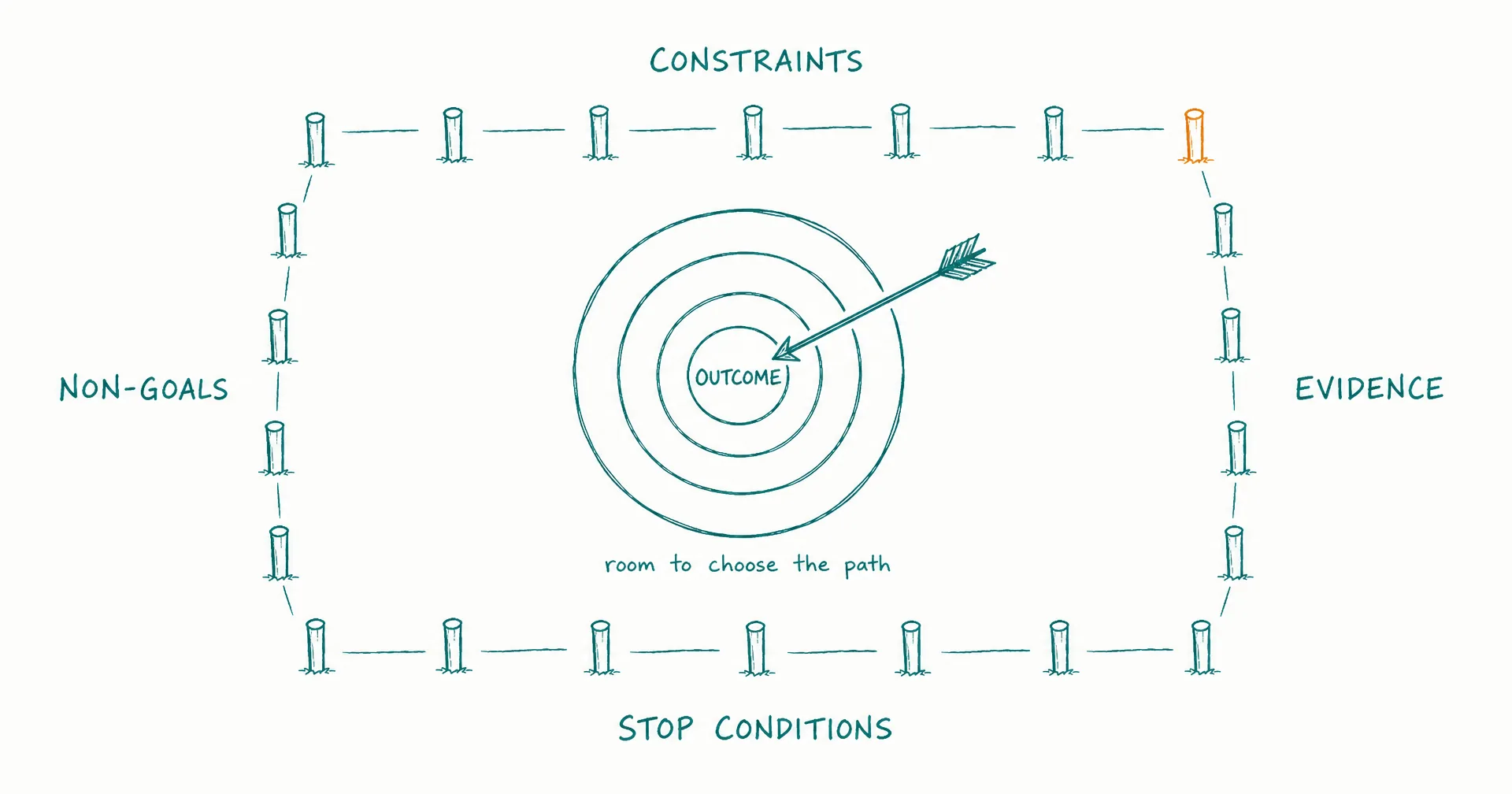
31 JUL 2026 How to Set Goals for an AI Employee A bounded result, not an unlimited direction: one owned outcome plus acceptance conditions, constraints, non-goals, authority limits, priority rules, and stop conditions - with a copyable template. GuidesHiring 23 min
Napkin-style sketch of a goal target surrounded by a labeled boundary fence of constraints, non-goals, evidence, and stop conditions
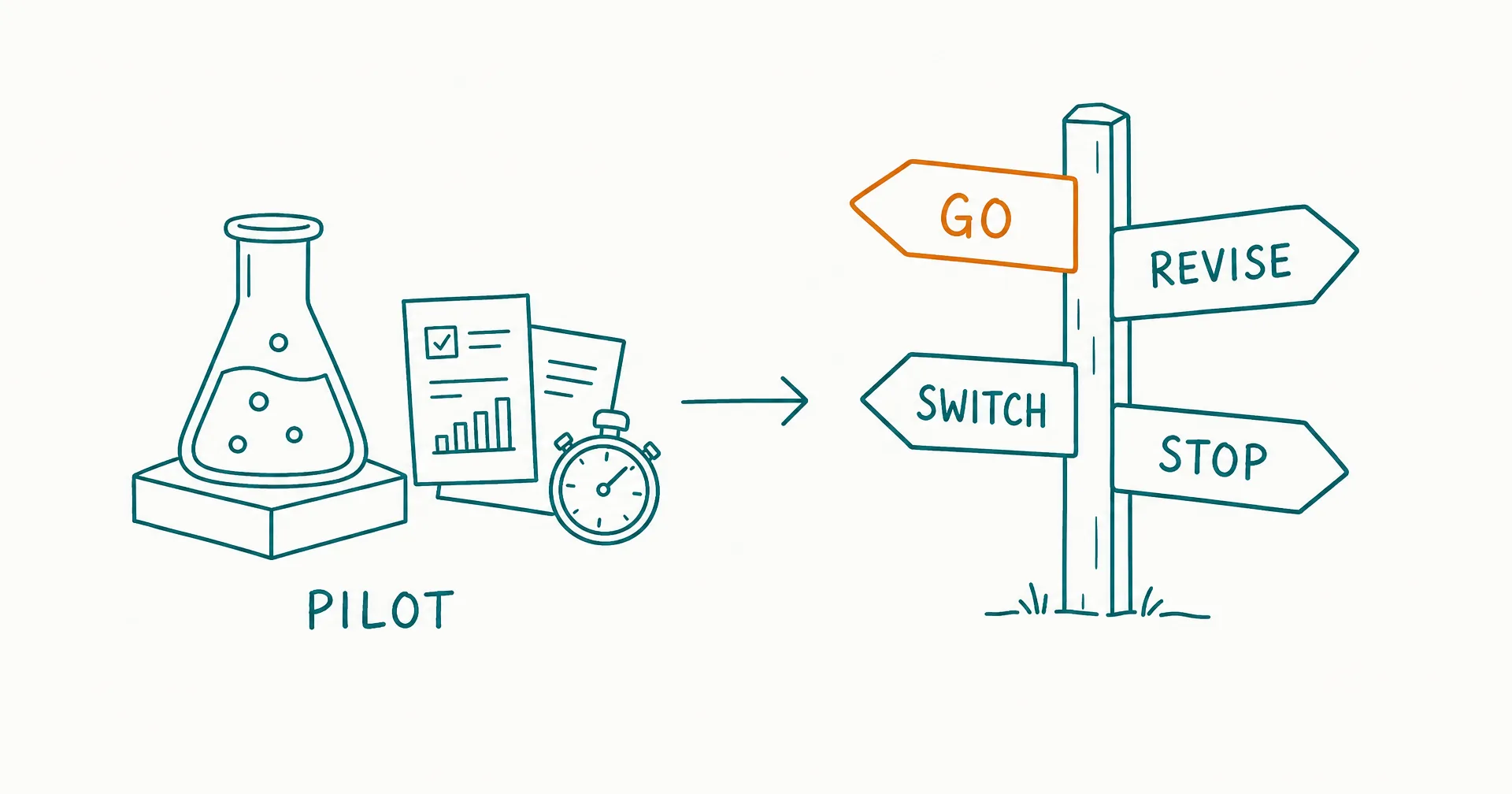
31 JUL 2026 How to Run an AI Employee Pilot That Produces a Decision A collection of impressive demos is not a pilot. A 30-day trial with no comparison, no acceptance definition, and no stop condition is only extended product exploration. GuidesChoosing 22 min
Napkin-style sketch of a laboratory flask on a pedestal feeding a four-way decision signpost labeled go, revise, switch, stop, with an amber highlight on the go arrow
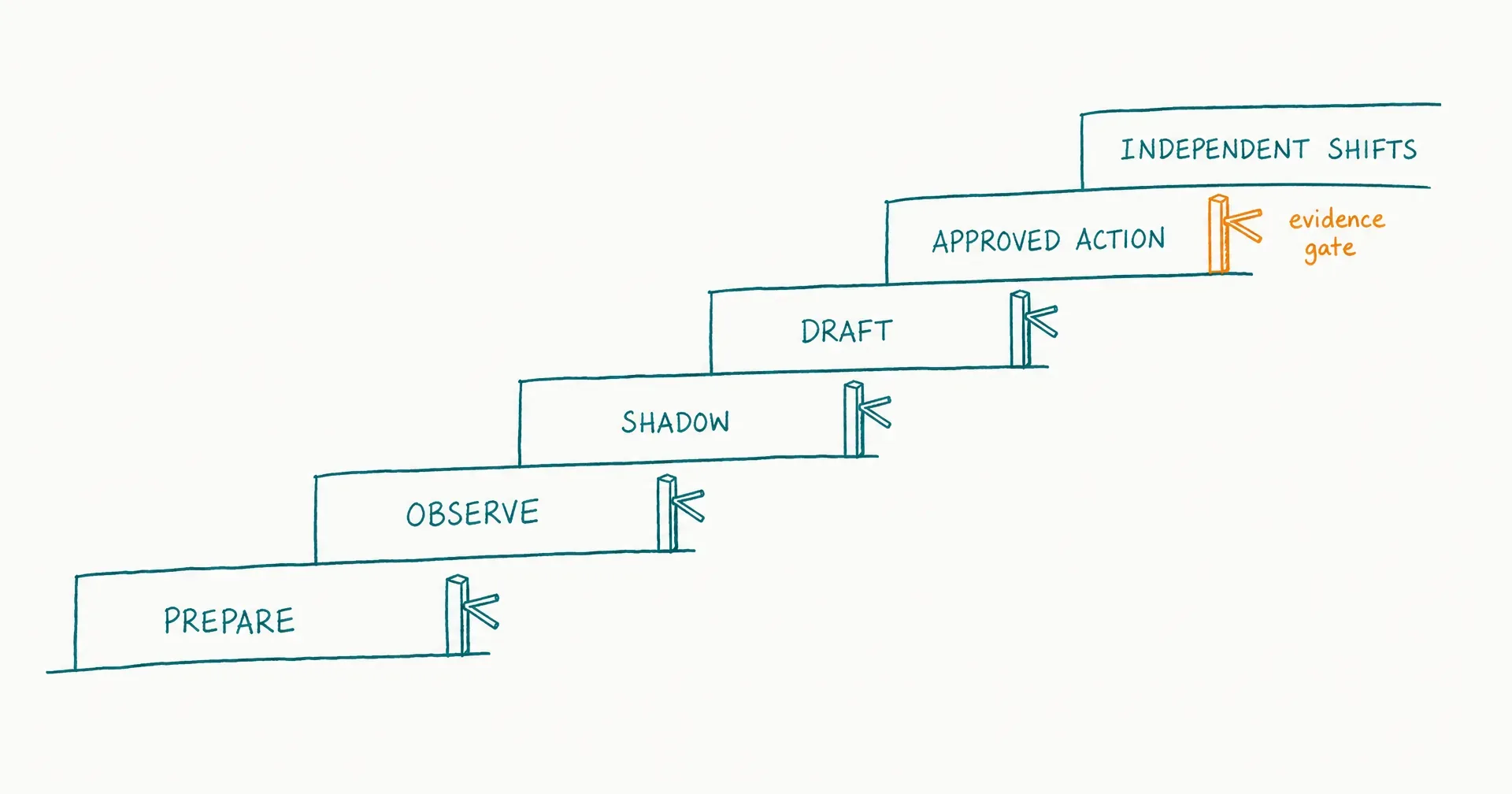
31 JUL 2026 How to Onboard an AI Employee With Graduated Autonomy Six evidence-gated stages - prepare, observe, shadow, draft, approved action, bounded independent shifts - and the four boundaries (scope, context, access, authority) that expand one at a time. GuidesHiring 24 min
Napkin-style sketch of a six-step onboarding ladder rising left to right, each step labeled: prepare, observe, shadow, draft, approved action, independent shifts, with an evidence gate between steps
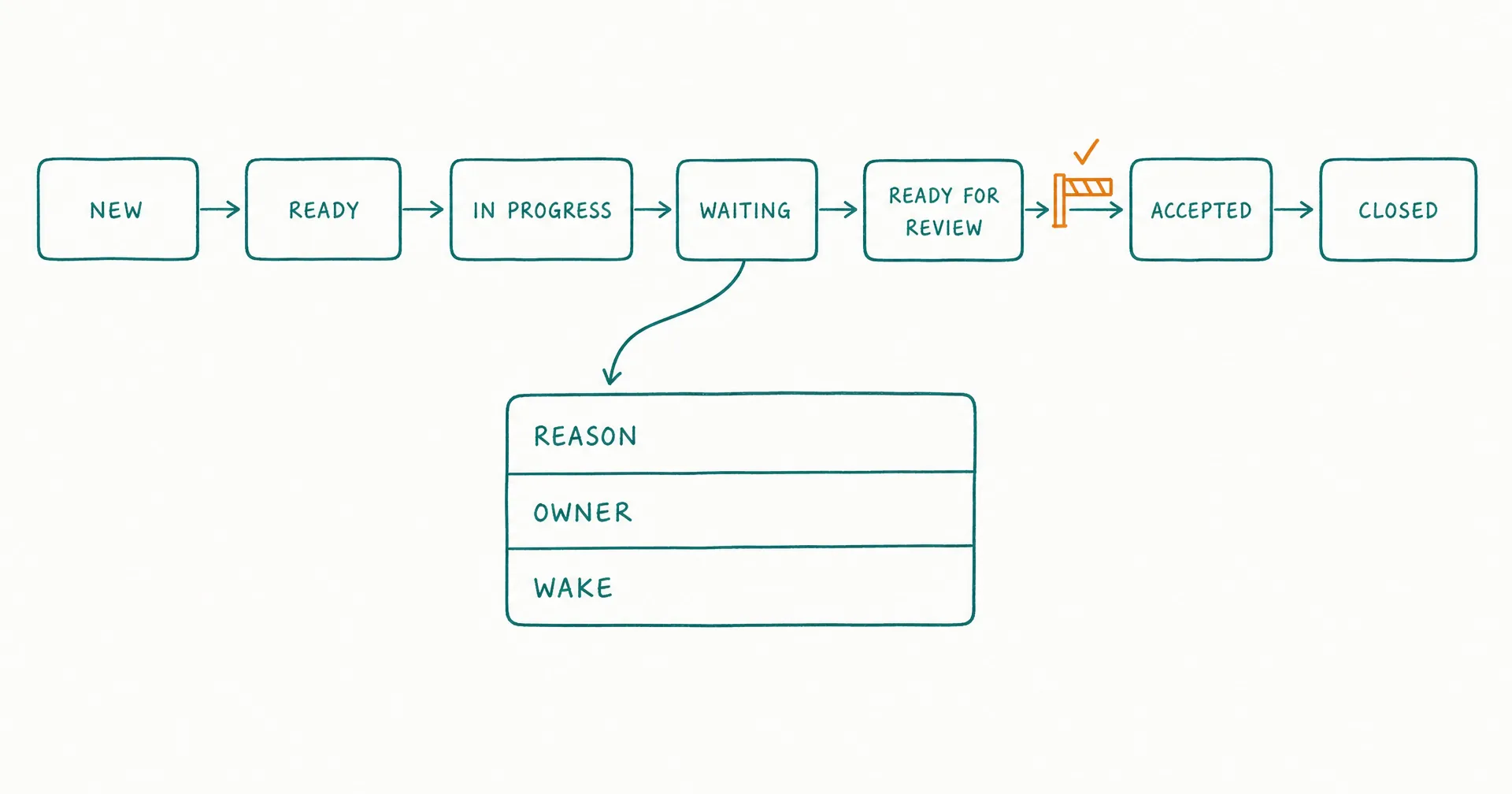
31 JUL 2026 How to Design an AI Employee Task Board The board is a control surface, not an activity feed: seven core states, transition contracts, one owner per next action, structured blockers and approvals, and closure that actually means done. GuidesTrust & security 20 min
Napkin-style sketch of a seven-state task flow from New to Closed with gated transitions and an enlarged waiting card showing reason, owner, and wake fields
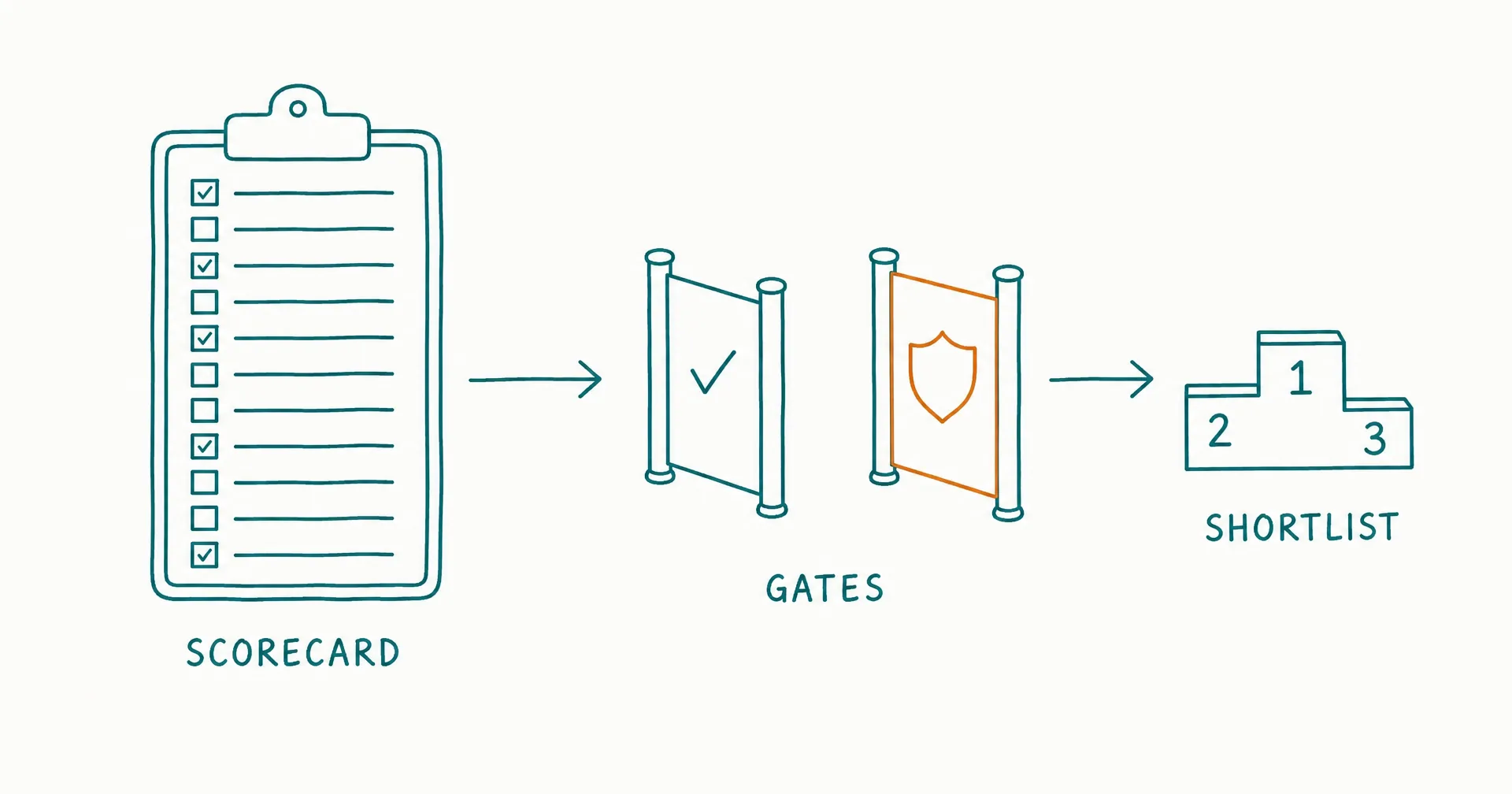
31 JUL 2026 How to Choose an AI Employee Platform: A 12-Point Evaluation Framework Twelve evidence-weighted criteria, non-compensating gates, and one rule: score the platform you can prove, not the product the vendor can describe. GuidesChoosing 32 min
Napkin-style sketch of a clipboard scorecard with twelve criteria rows beside a row of locked gates, with an amber highlight on one gate labeled approvals
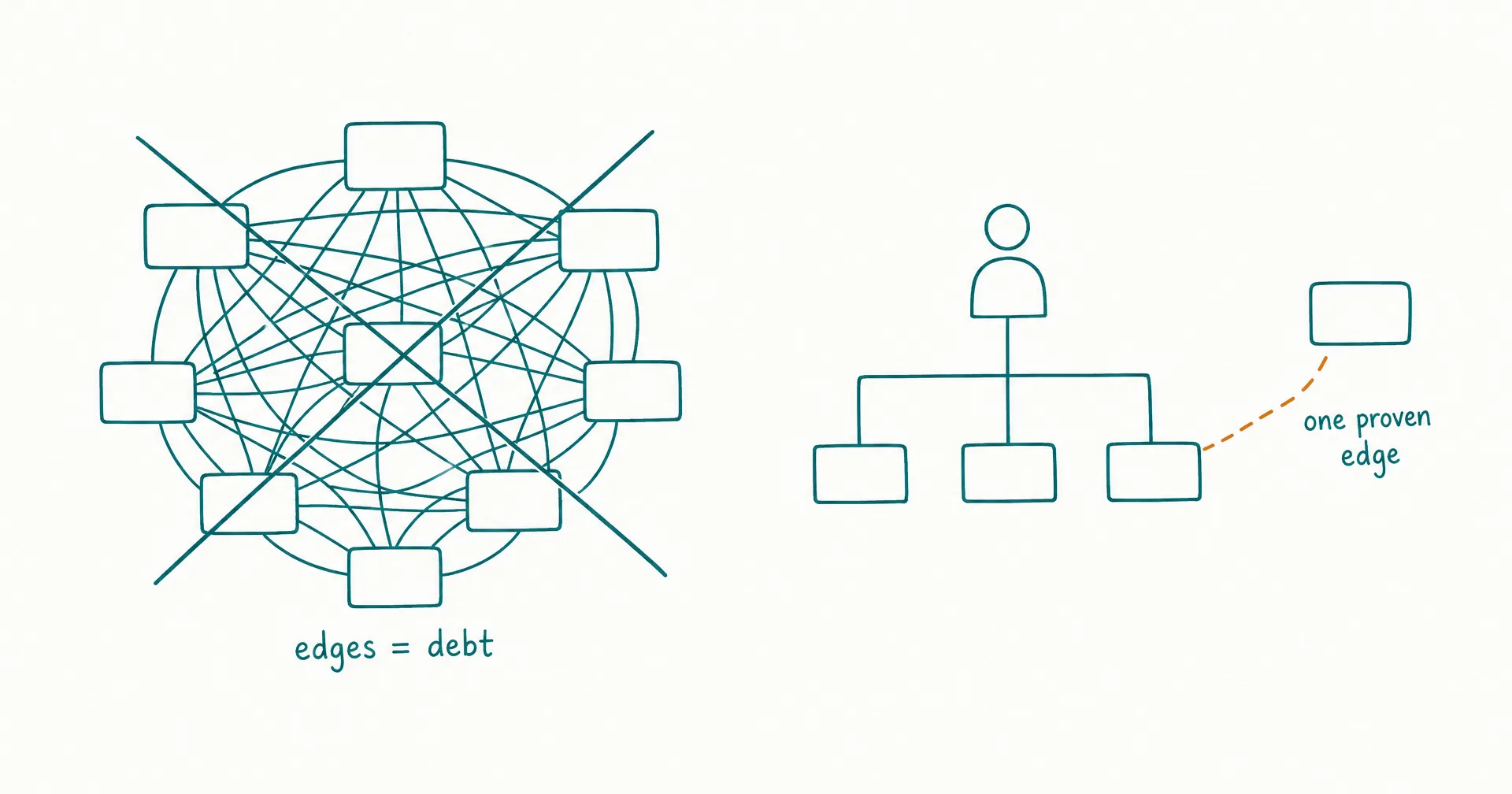
31 JUL 2026 How to Build an AI Organization Without Creating Coordination Debt The objective is not the largest agent org chart. It is the smallest human-AI operating model that produces more accepted work without moving the burden into delegation, review, and supervision. InsightsMulti-agent 22 min
Napkin-style sketch of a small org chart gaining one node while a dense fully connected web of agent boxes is crossed out, with an amber highlight on the single new connection
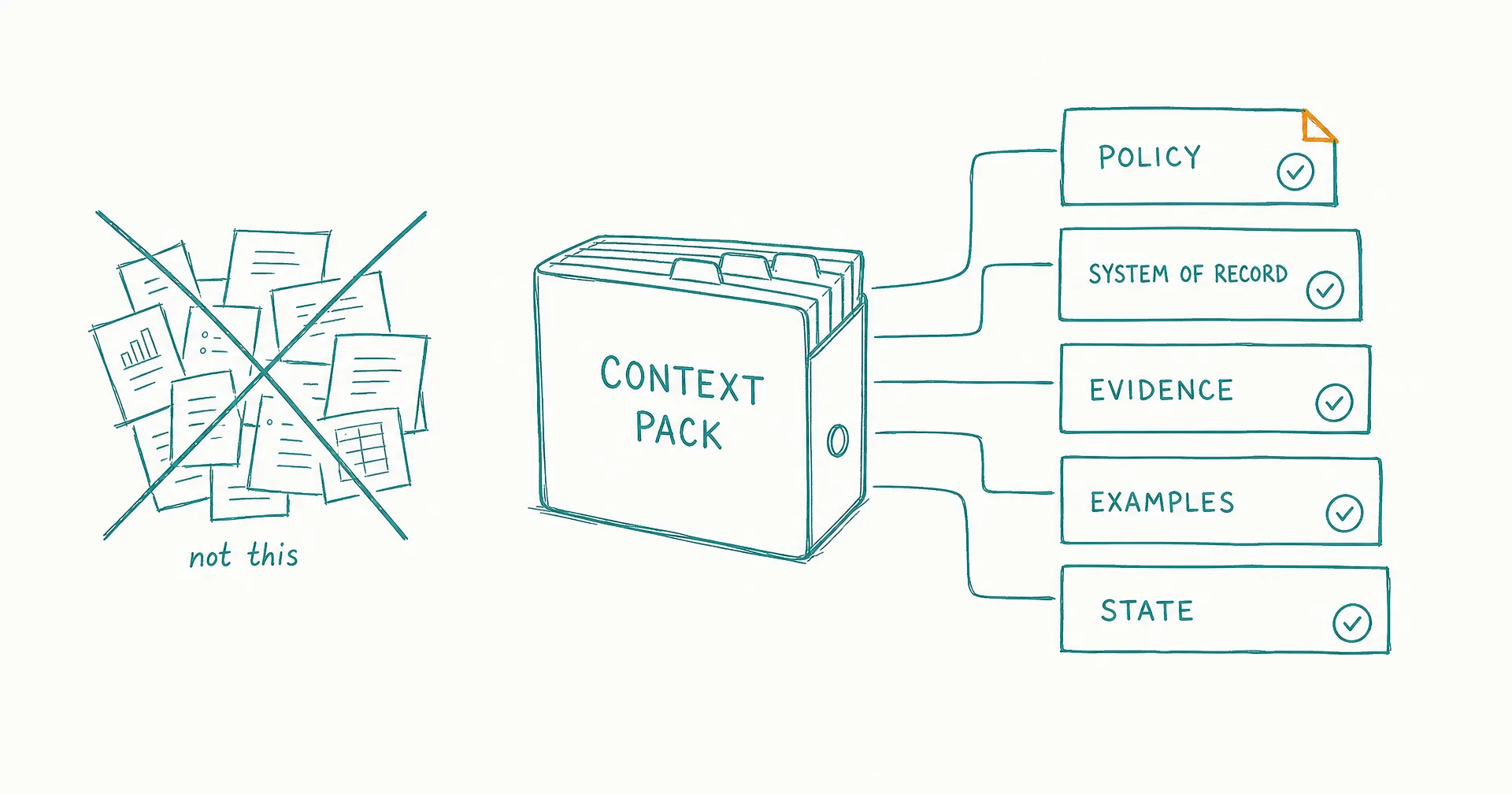
31 JUL 2026 How to Build an AI Employee Context Pack The smallest owned set of information a role needs: a governed index with authority levels, a source register, schemas, boundary examples, open-work state, and explicit unknowns - not a drive dump. InsightsMemory 18 min
Napkin-style sketch of a compact indexed context pack binder connected to governed source cards, contrasted with a crossed-out pile of unsorted documents
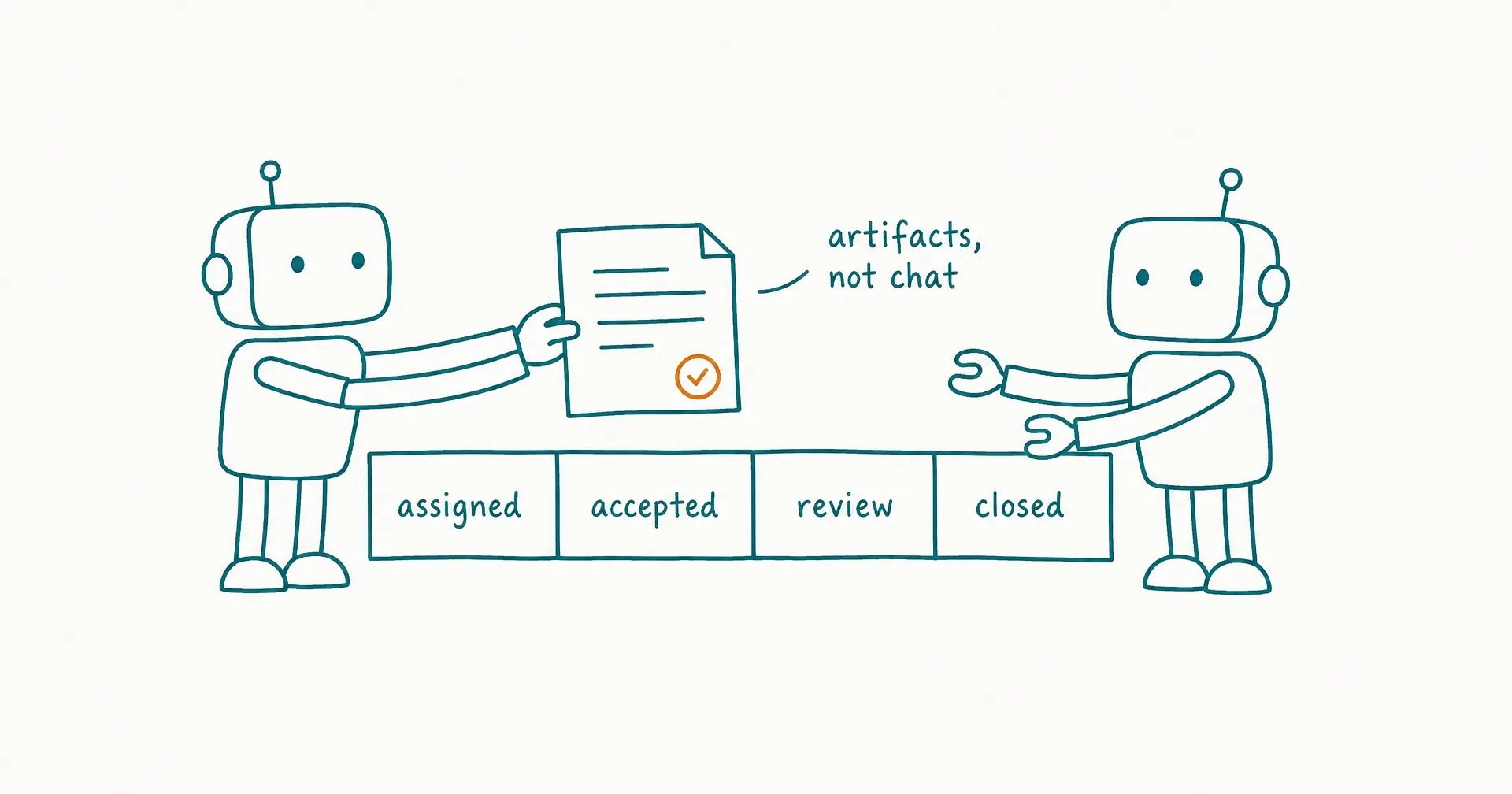
31 JUL 2026 How AI Employees Work Together: Delegation, Handoffs, and Shared Context A useful collaboration has a beginning and an end: one role requests a defined result, another explicitly accepts it, the result arrives as a versioned artifact, and one owner closes the outcome. InsightsMulti-agent 22 min
Napkin-style sketch of two worker figures exchanging a stamped document across a labeled task pipeline with states for assigned, accepted, review, and closed, with an amber highlight on the acceptance stamp
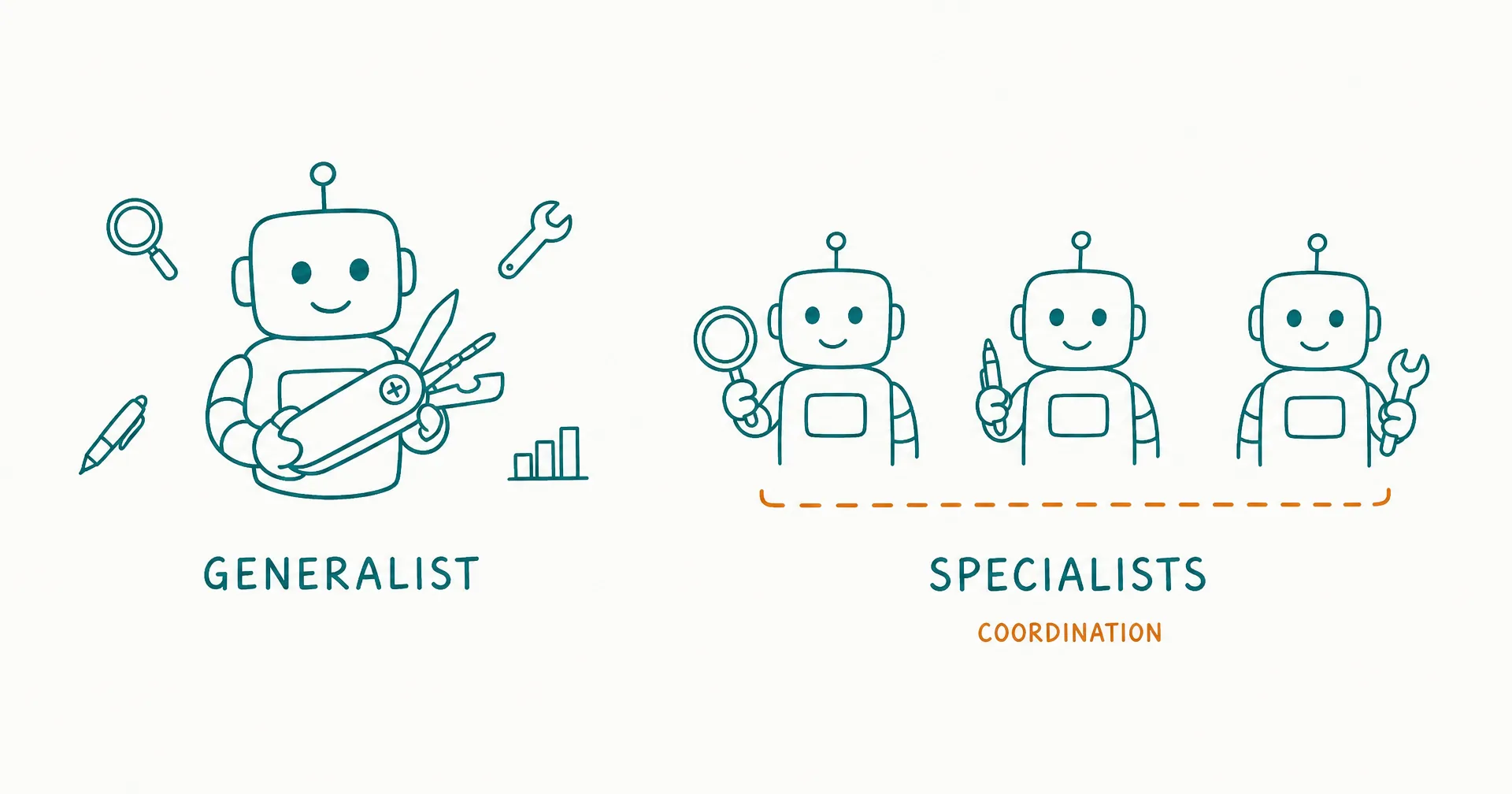
31 JUL 2026 General-Purpose vs Specialized AI Agents: Which Architecture Fits? The wrong comparison is one smart agent versus many smart agents. The real comparison is breadth inside one context versus separation across several operating contracts. GuidesChoosing 22 min
Napkin-style sketch of one large multi-tool agent figure on the left and a row of three small single-tool specialist figures on the right, with an amber coordination line connecting the specialists
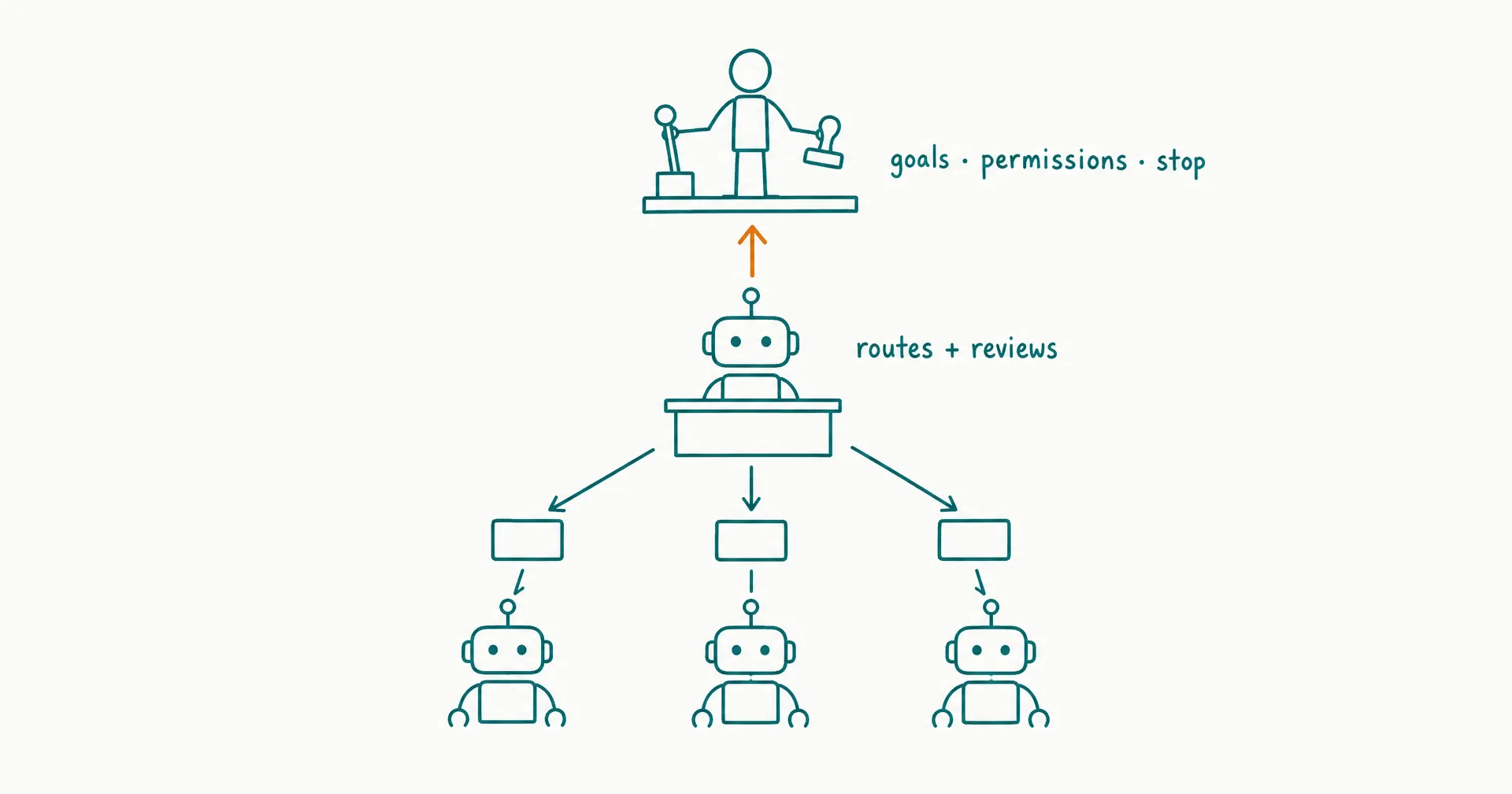
31 JUL 2026 Can AI Employees Manage Other AI Employees? Yes, when 'manage' means bounded coordination: decompose work, assign it, monitor state, review evidence, request repair, escalate exceptions. That does not make the AI manager an executive. InsightsMulti-agent 22 min
Napkin-style sketch of a manager robot at a small desk routing task cards to three worker robots while a human figure above holds a stop lever and an approval stamp, with an amber highlight on the escalation arrow to the human
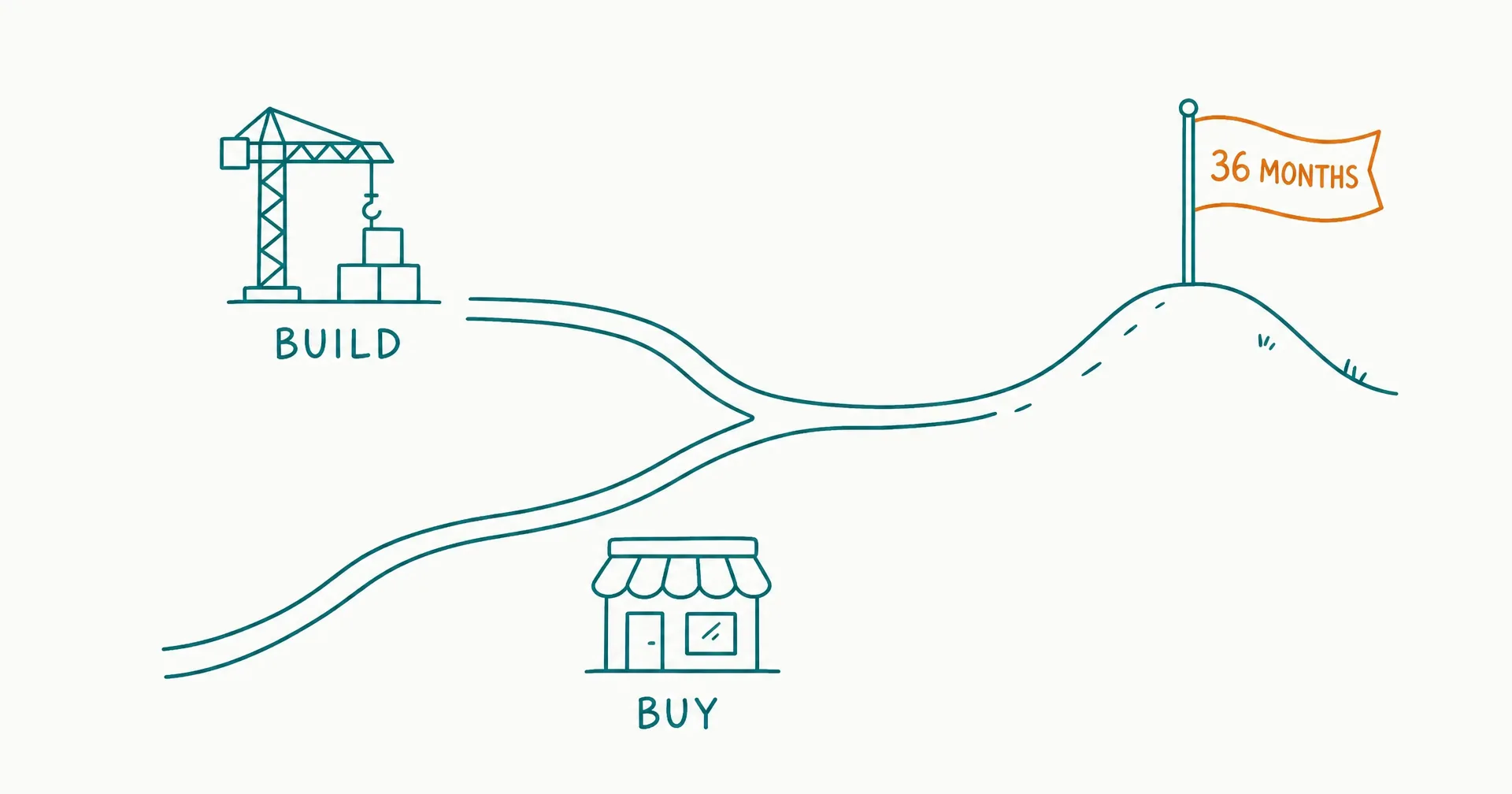
31 JUL 2026 Build vs Buy an AI Employee: Control, Cost, and Maintenance Not engineers versus subscription - a choice about who owns the agent's production lifecycle for 36 months. Compare three years of the same accepted workload, never a prototype against a plan price. GuidesChoosing 23 min
Napkin-style sketch of a fork in a road: one path leads to a construction crane building blocks, the other to a storefront, both converging on a flag labeled 36 months, with an amber highlight on the flag
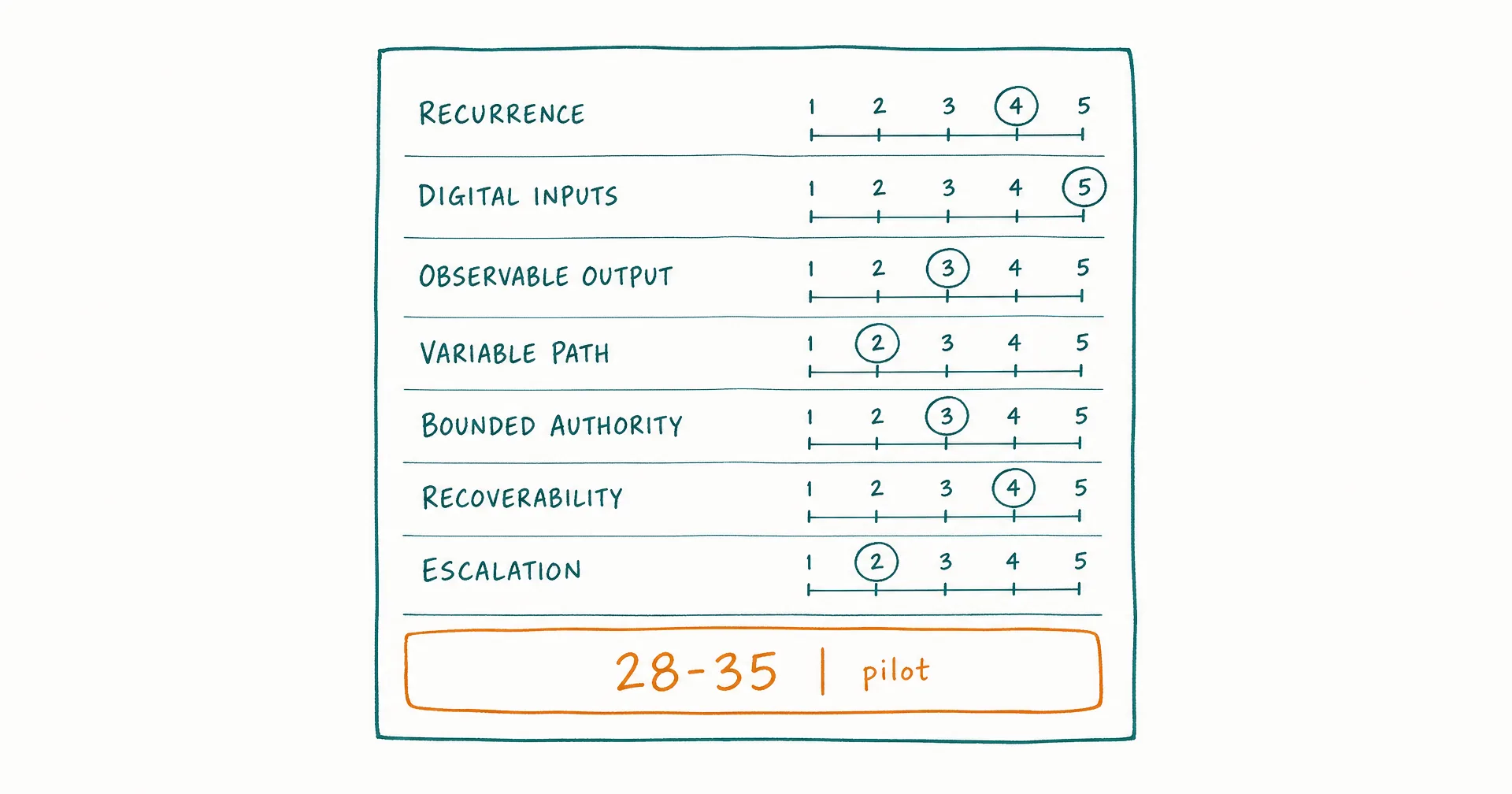
31 JUL 2026 Best Tasks for AI Employees: 12 Good Fits and 10 to Keep Human-Led A 7-factor scorecard for what to delegate: 12 strong starting tasks, 10 to keep human-led, and the metrics that prove a task is working - accepted outcomes, not activity. GuidesHiring 22 min
Napkin-style scorecard showing seven labelled factors - recurrence, digital inputs, observable output, variable path, bounded authority, recoverability, escalation - with a highlighted 28-35 pilot band
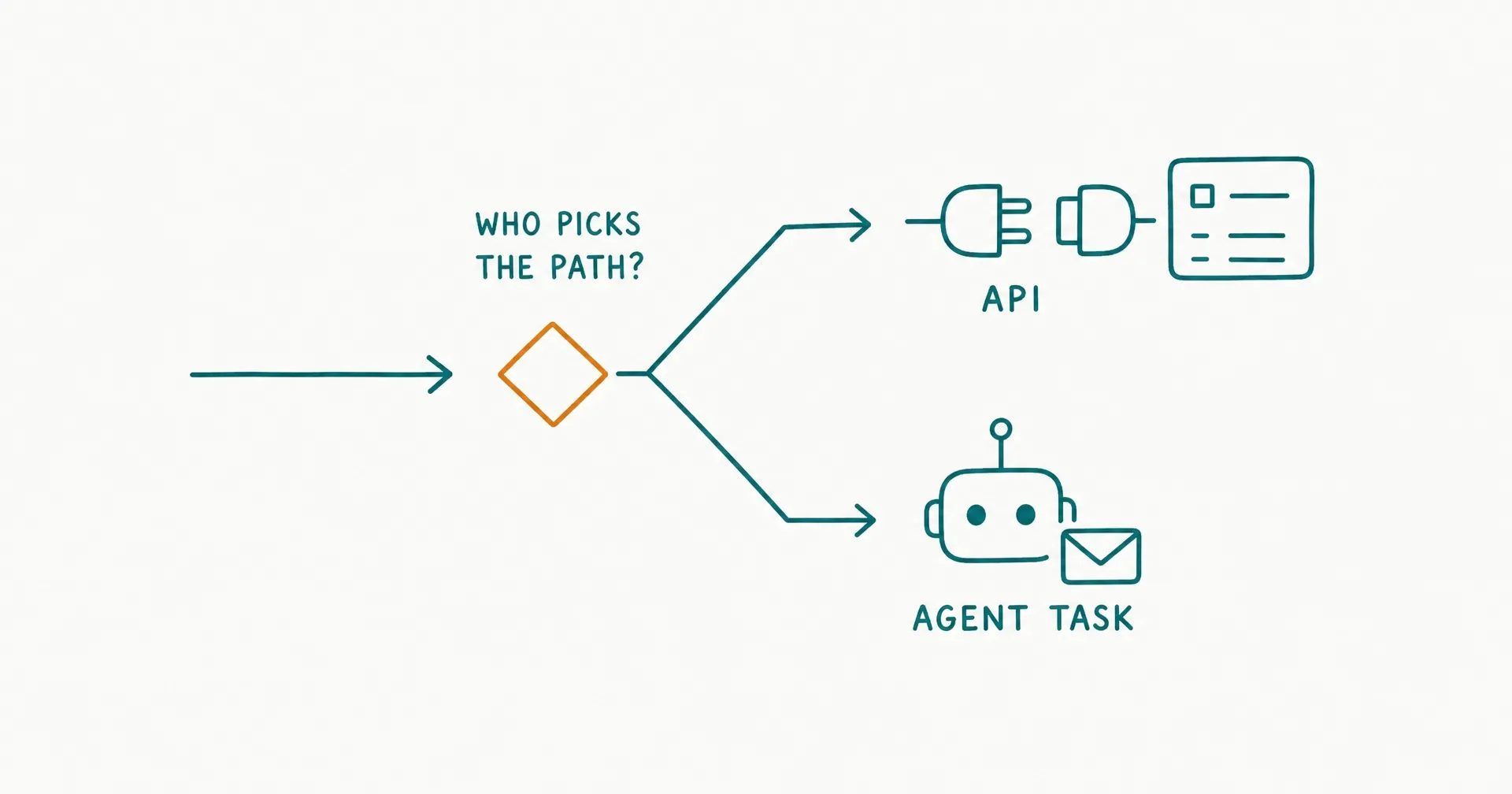
31 JUL 2026 Agent-to-Agent vs API Automation: When Should Software Delegate? Use an API when you can name the operation. Use an agent boundary when the outcome is clear but the path must flex. The transport does not decide - the contract scope does. InsightsMulti-agent 26 min
Napkin-style sketch of a fork in a path: the left branch leads to a plug-and-socket API icon with a typed parameter card, the right branch leads to an agent node holding a task envelope, with an amber highlight on the decision diamond at the fork
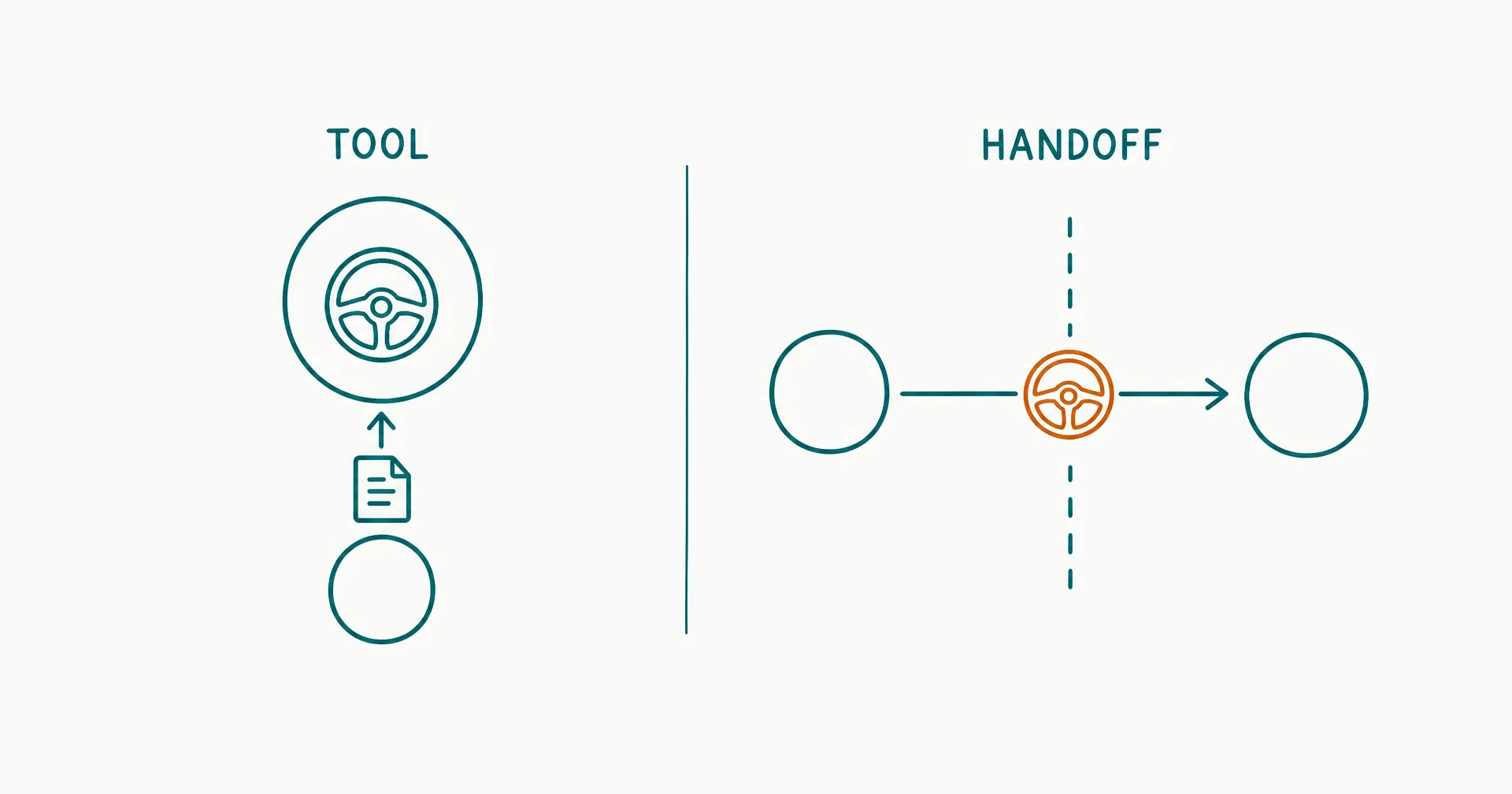
31 JUL 2026 Agent Handoffs vs Agents as Tools: Who Keeps Control? The difference is not how many agents run. It is who controls the interaction and who owns the final result - and what happens to that ownership when something fails. InsightsMulti-agent 22 min
Napkin-style sketch of two panels: on the left a parent agent node holds a steering wheel while a small specialist returns a document to it; on the right the steering wheel is being passed across a dashed boundary to a second agent node, with an amber highlight on the steering wheel in transit
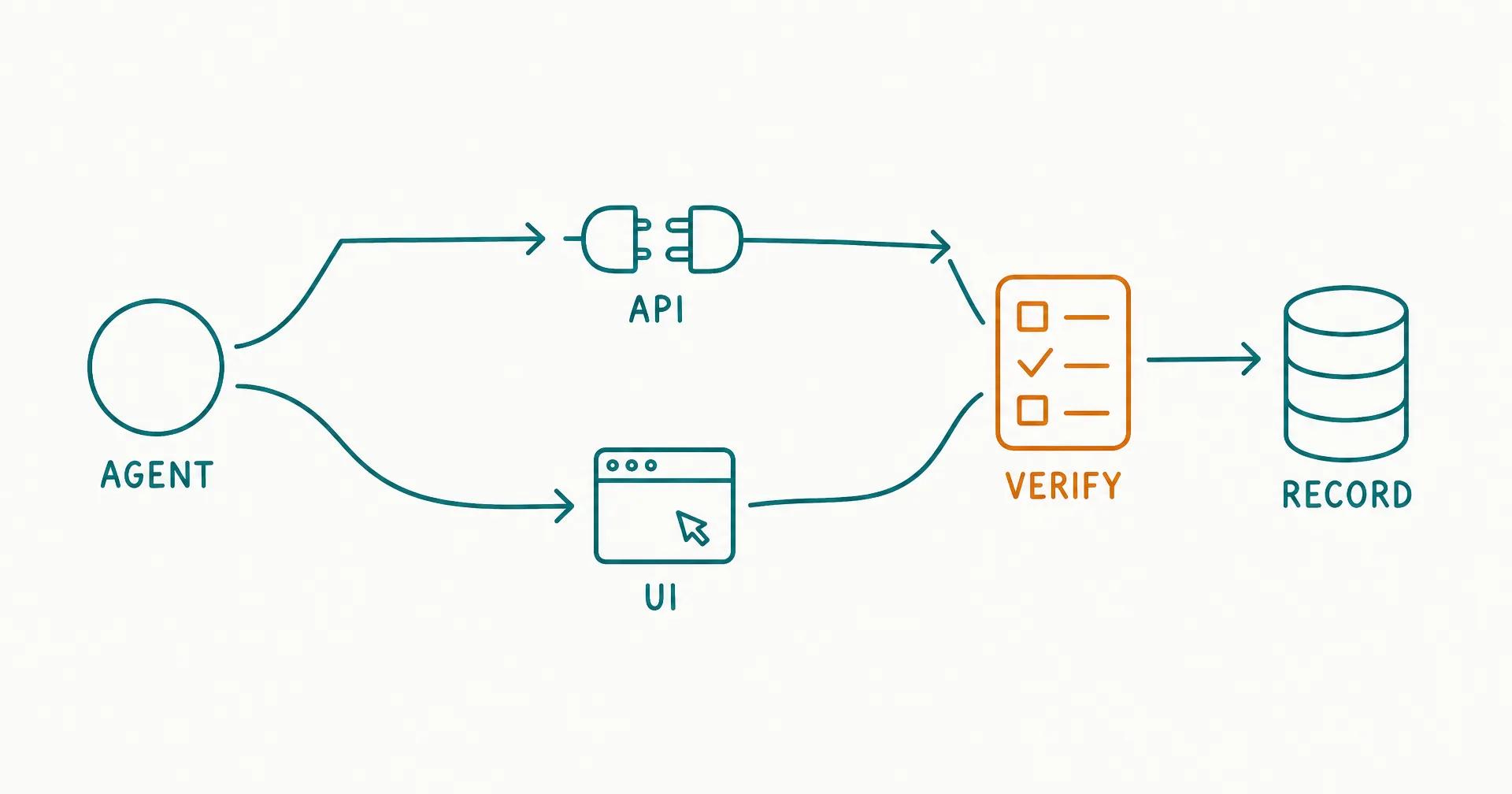
31 JUL 2026 Agent Computer Use vs API Integrations: Reliability, Reach, and Risk A click is not proof of completion. Prefer the most structured action path that can complete the outcome, then verify the resulting state independently - through a different path. InsightsMulti-agent 22 min
Napkin-style sketch of an agent node with two action routes: an upper structured route through a plug-and-socket API icon straight to a database, and a lower winding route through a browser window with a cursor arrow, both converging on a verification checkpoint, with an amber highlight on the verification checkpoint
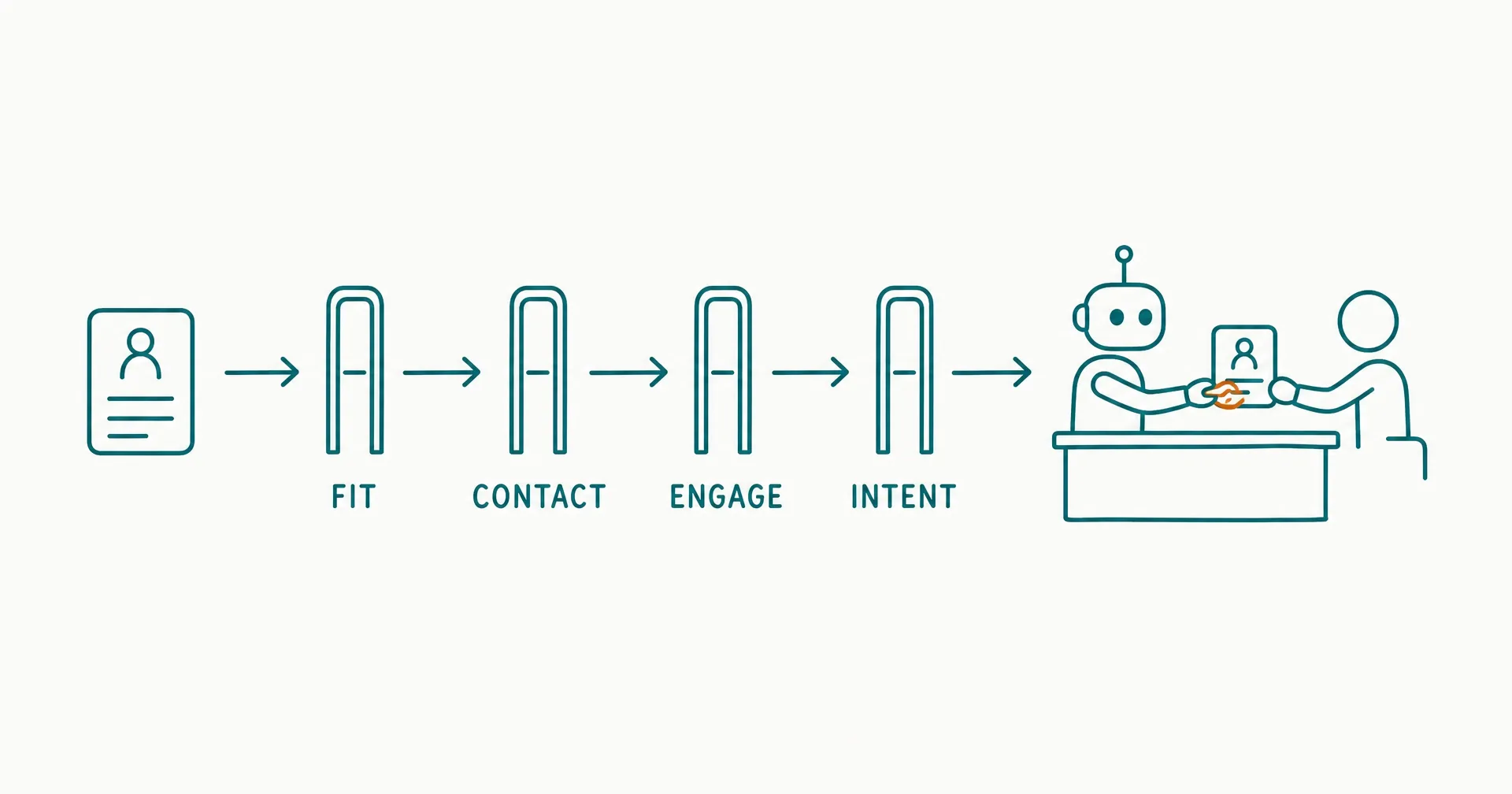
31 JUL 2026 AI SDR to Human Handoff: When a Lead Becomes Sales-Ready A useful handoff is an acceptance contract between prospecting and sales, not a notification. Four gates - account fit, contact fit, engagement, intent - and one cannot substitute for another. GuidesWorkflows 22 min
Napkin-style sketch of a lead card passing through four labeled gate arches - fit, contact, engage, intent - then being handed from a small robot figure to a human figure across a desk, with an amber highlight on the handshake between them
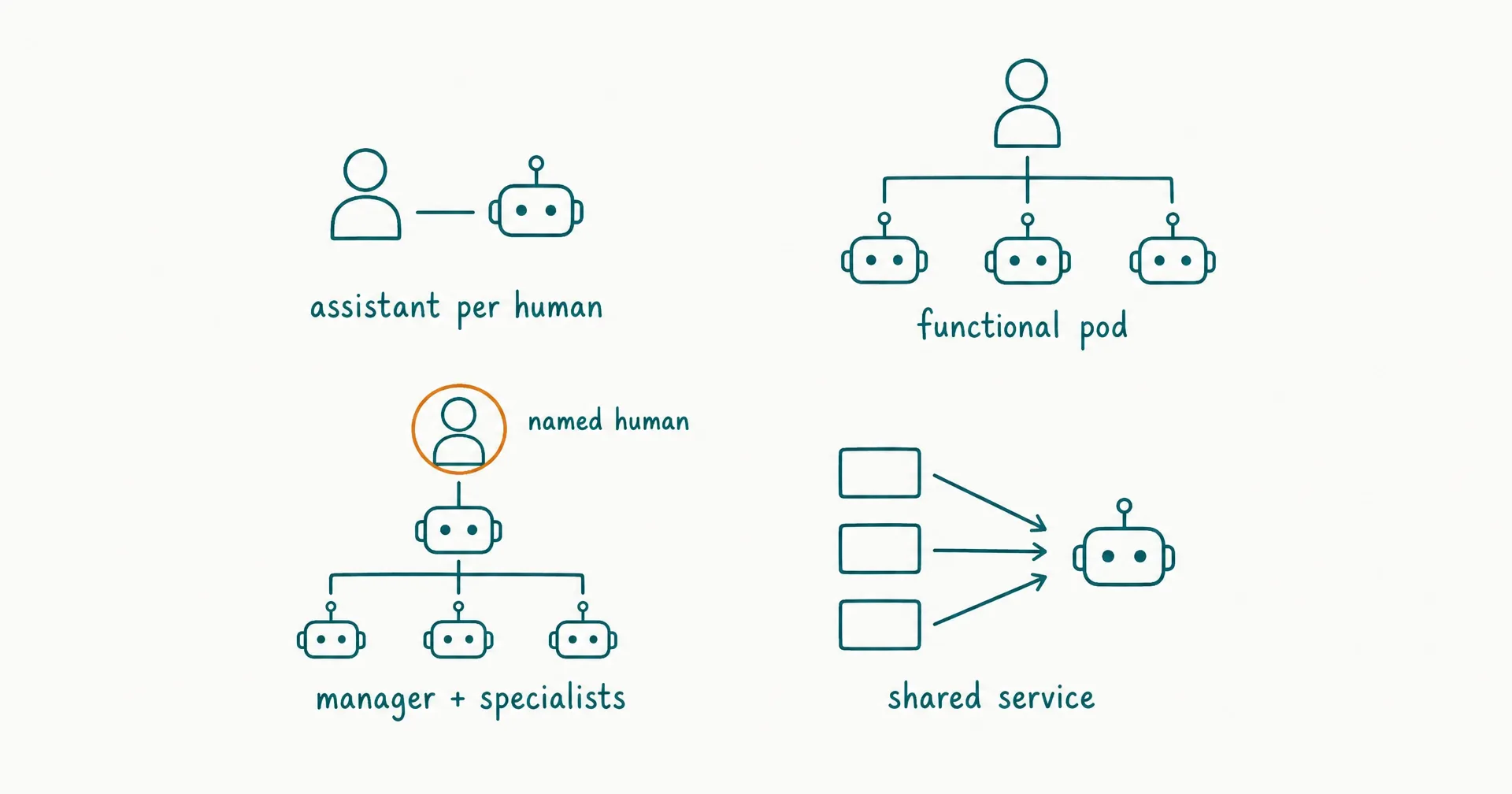
31 JUL 2026 AI Organization Charts: Four Patterns for Human-AI Teams A box-and-line diagram that shows only titles and reporting relationships is incomplete. AI roles act across tools, share memory, and operate at machine speed - the chart needs operating overlays. InsightsMulti-agent 22 min
Napkin-style sketch of four small org chart patterns side by side - assistant per human, functional pod, manager with specialists, and shared service hub - with an amber highlight circling the human accountability marker on one chart
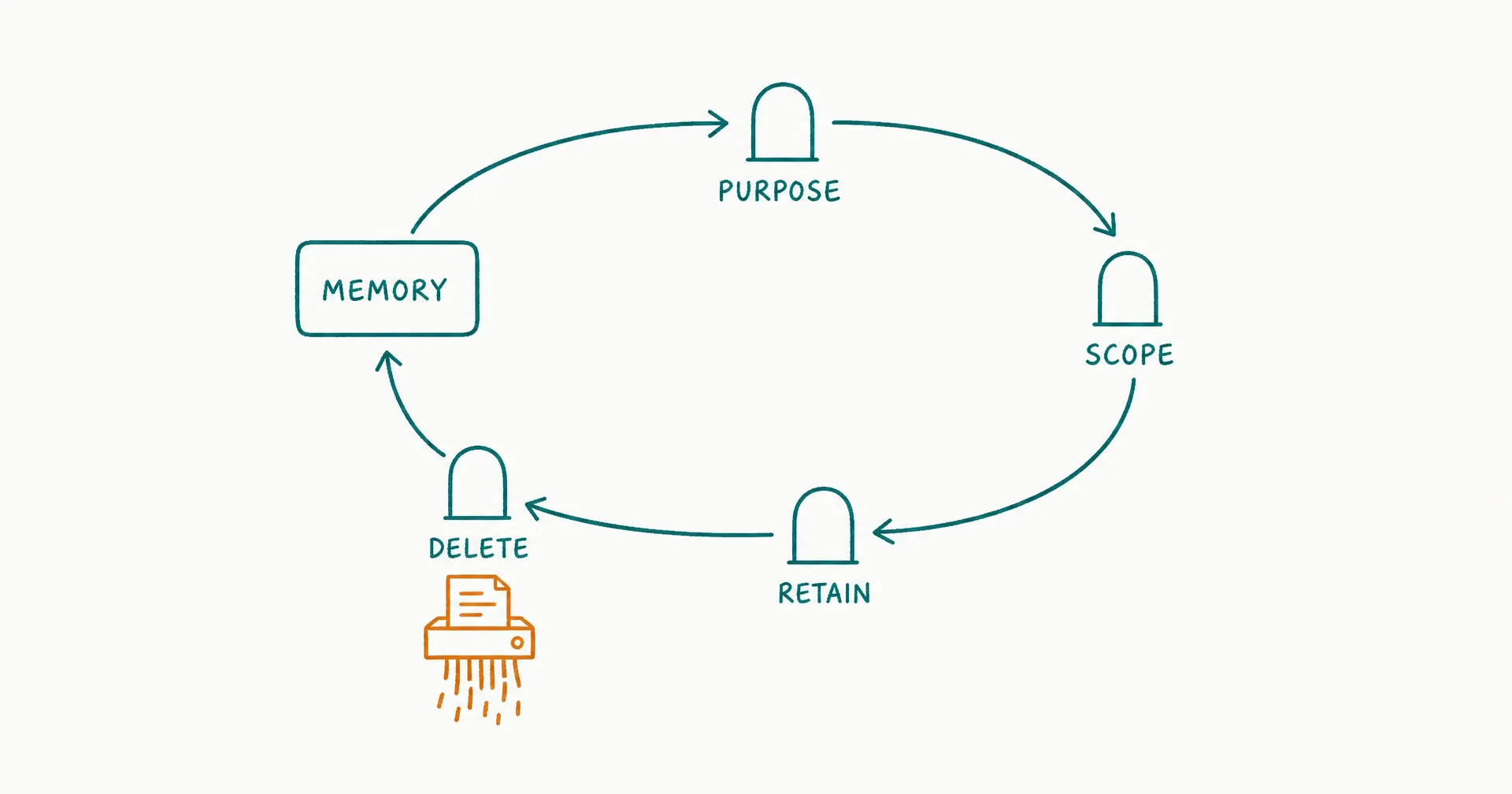
31 JUL 2026 AI Memory Privacy and Retention: A Governance Checklist Twelve control gates from inventory to reassessment: purpose-bound writes, event-based retention, and deletion that reaches every index - because "maybe later" never justifies persistence. InsightsMemory 22 min
Napkin-style sketch of a memory record passing through twelve small labeled gate checkpoints arranged in a loop, with an amber shredder icon at the deletion gate
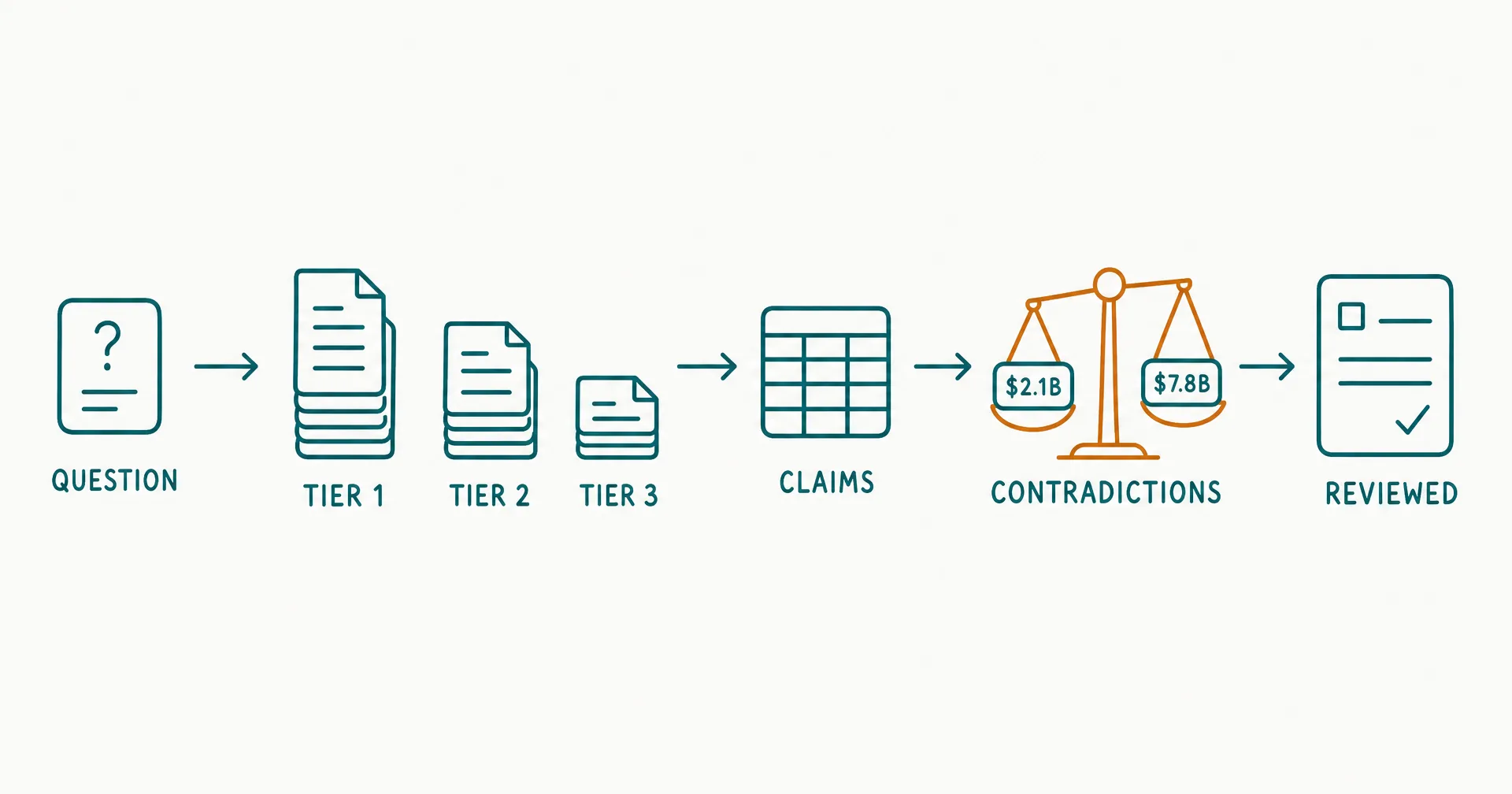
31 JUL 2026 AI Market Research Workflow: Sources, Synthesis, and Review AI market research is trustworthy only when a reviewer can trace how a question became a conclusion. The report needs ledgers behind it - sources, claims, contradictions. GuidesWorkflows 22 min
Napkin-style sketch of a research pipeline: a question card flows through source stacks of three tiers, into a claims ledger table, past a contradiction scale weighing two conflicting values, to a reviewed report page, with an amber highlight on the contradiction scale
31 JUL 2026 AI KPI Reporting Workflow: From Data to Exceptions and Actions An AI KPI report is useful only when a reviewer can reproduce the number, understand the variance, accept the explanation, and assign an action. A polished dashboard can still be wrong. GuidesWorkflows 22 min
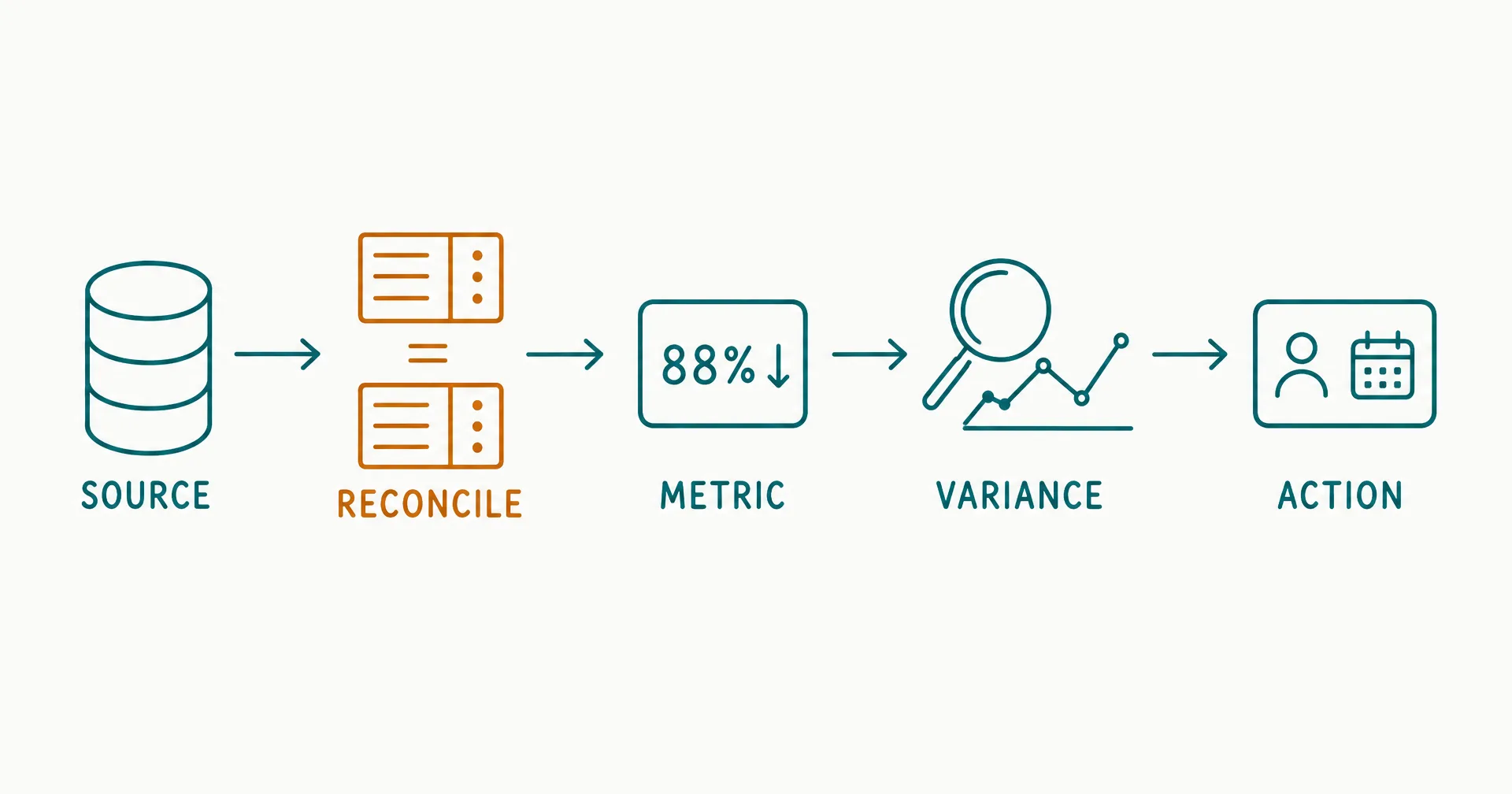
Napkin-style sketch of a KPI pipeline: a database cylinder flows through a reconciliation balance checkpoint into a metric card showing a percentage, then to a magnifying glass over a variance arrow, and finally to an action card with an owner and due date, with an amber highlight on the reconciliation checkpoint
31 JUL 2026 AI Executive Briefing Workflow: From Signals to a Reviewed Brief The useful output is not everything that happened. It is a reviewed, source-linked view of what changed, why it matters now, and who owns the next action. GuidesWorkflows 22 min
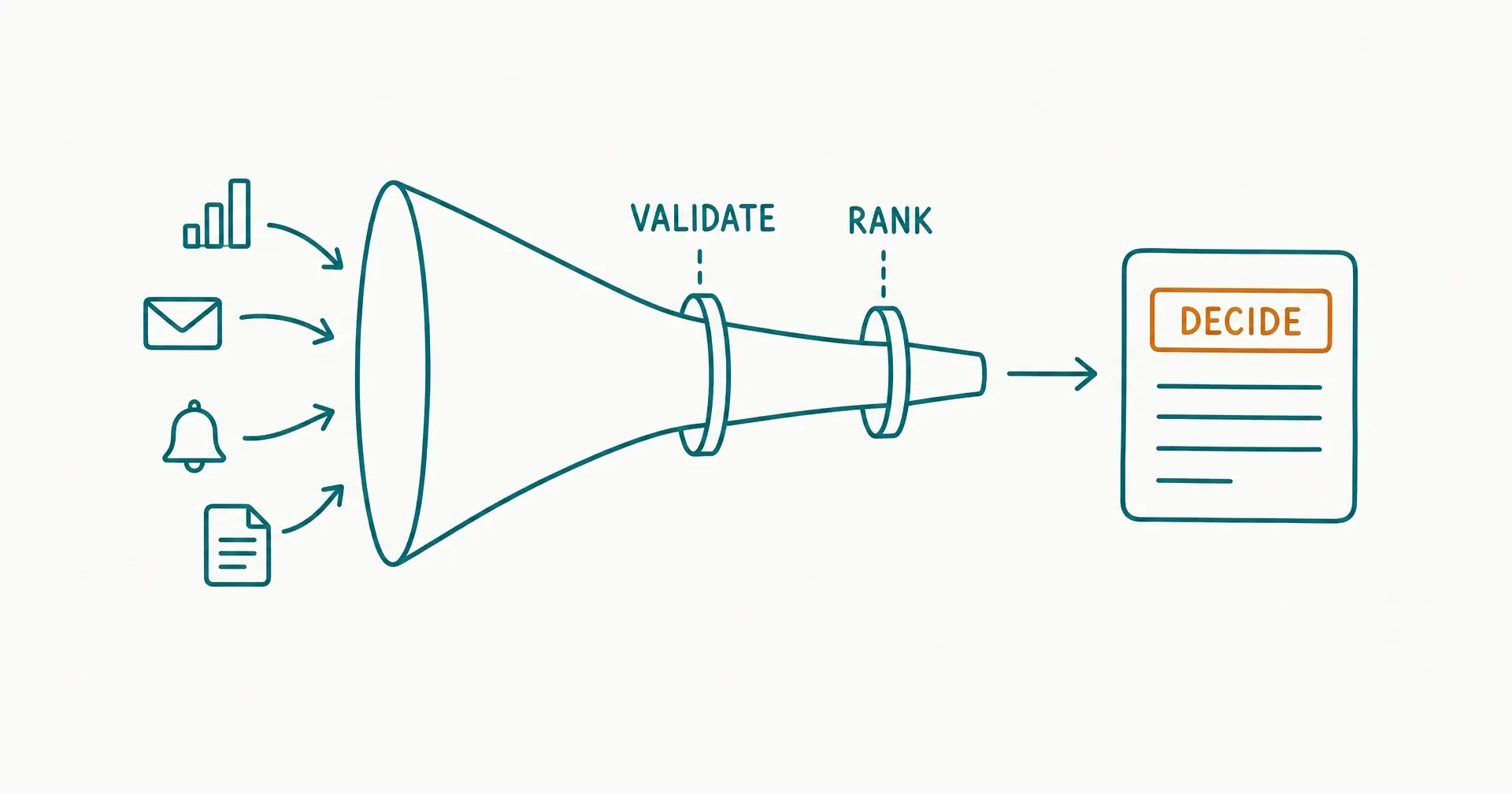
Napkin-style sketch of a funnel taking in many small signal icons at the top, narrowing through labeled gates for validate and rank, and producing one clean briefing page at the bottom with a checkmark, with an amber highlight on the single decision item at the top of the page
31 JUL 2026 AI Employee vs Human Employee Cost: A Fair Comparison Comparing a software subscription with a salary is not a business case. Five feasible capacity options, one accepted outcome, and the full cost stack each option actually carries. InsightsCost & ROI 21 min
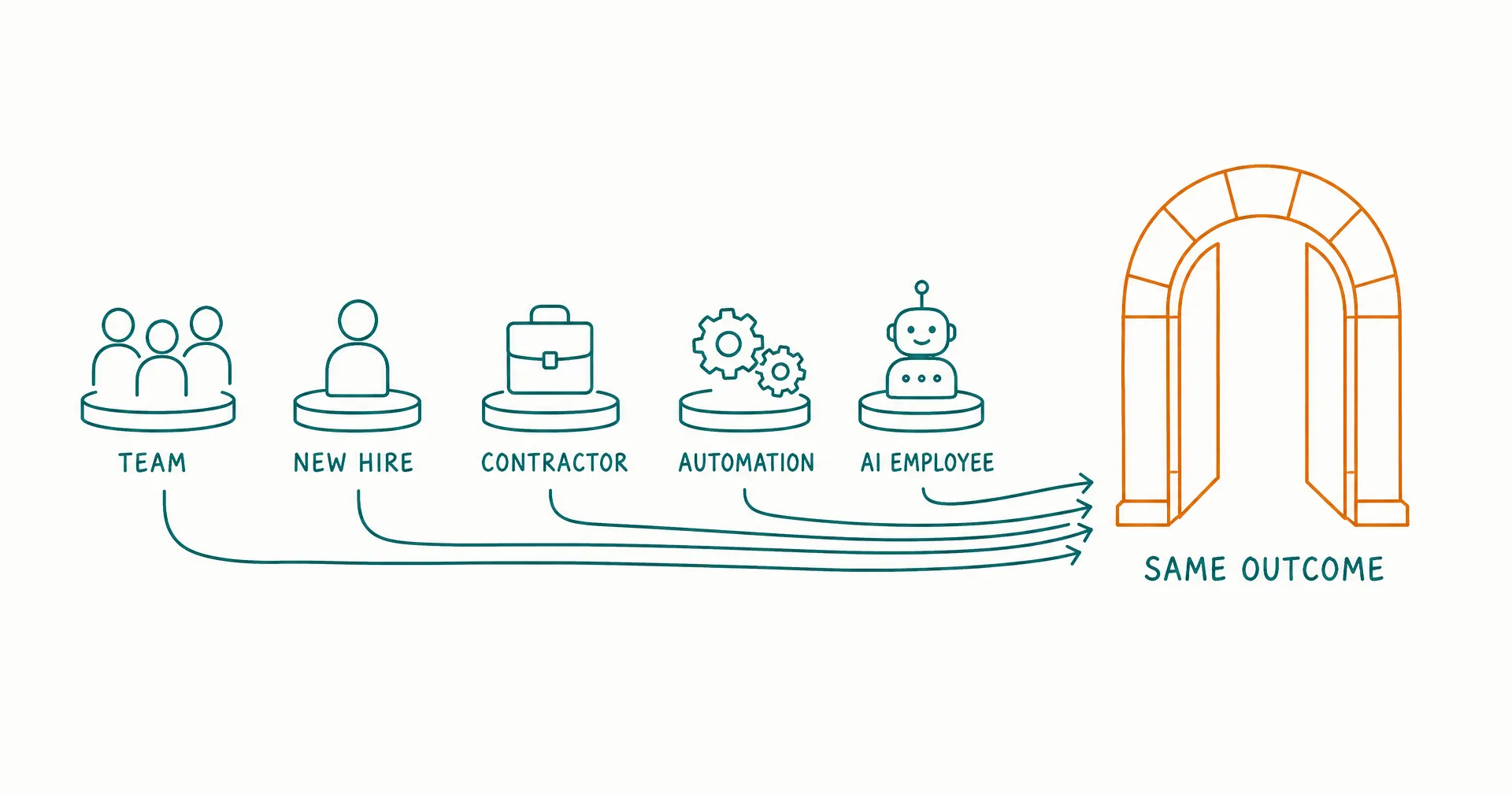
Napkin-style sketch of five capacity options - existing team, new hire, contractor, automation, AI employee - each on its own platform feeding one outcome gate, with an amber highlight on the gate
31 JUL 2026 AI Employee Shifts and Schedules: When Should Work Start? "Be proactive" is not a scheduling policy: authorized triggers, bounded shift windows, quiet hours, deduplication, concurrency limits, and retries only for declared transient failures. GuidesTrust & security 18 min
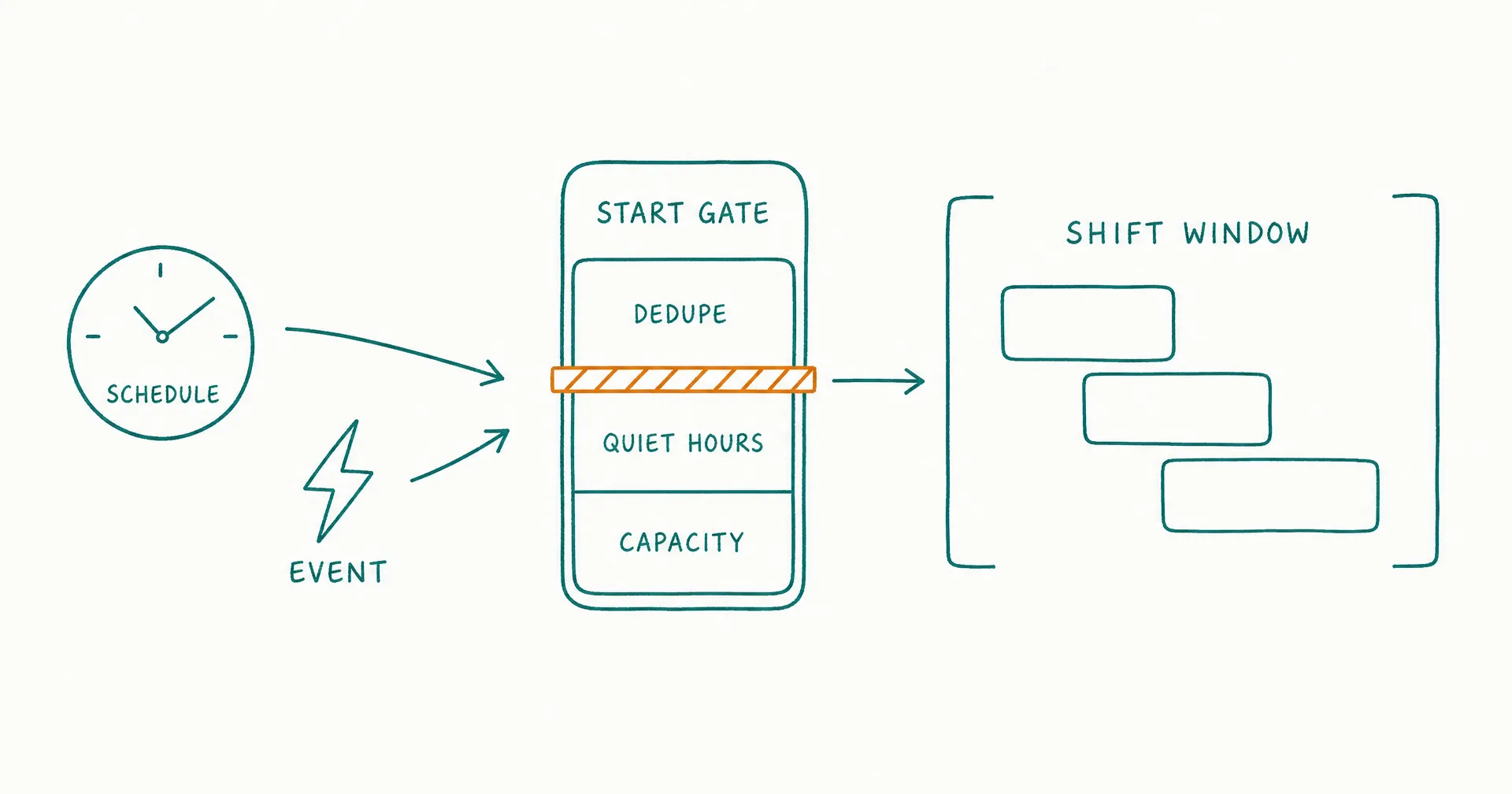
Napkin-style sketch of a clock face and an event bolt feeding into a start gate labeled with dedupe, quiet hours, and capacity checks before a bounded shift window
31 JUL 2026 AI Employee Security Checklist for a Production Pilot Twelve control areas, hard stops before scoring, and one rule throughout: "promised" and "supported" are not evidence - ask to see the control deny, allow, log, contain, and recover. GuidesTrust & security 28 min
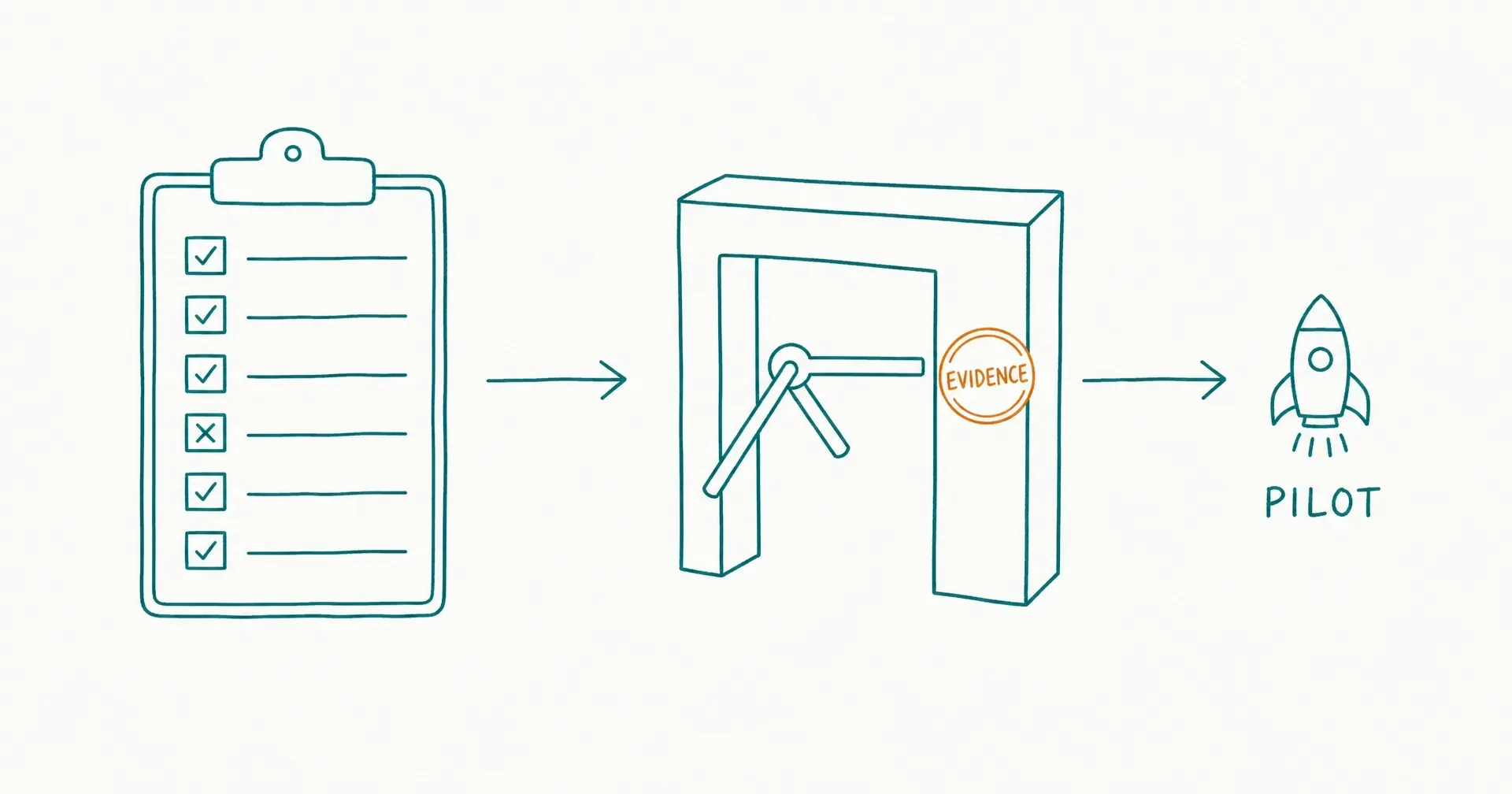
Napkin-style sketch of a twelve-item checklist clipboard beside a launch gate, with an amber pass stamp on the gate and a small stop sign guarding it
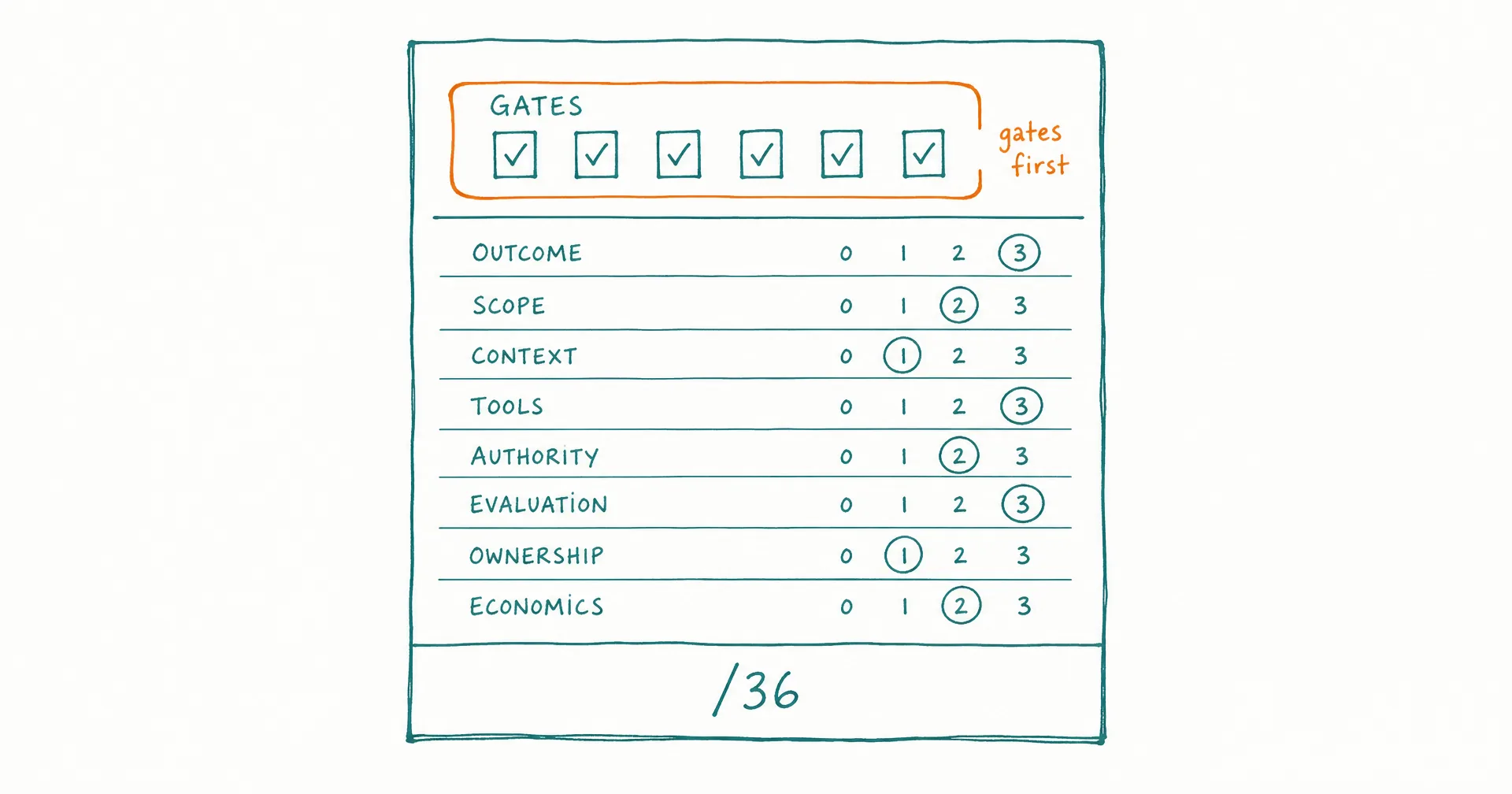
31 JUL 2026 AI Employee Role Scorecard: A Pre-Hire Template Six non-compensating gates and 12 scored criteria that decide whether a proposed role is ready to test: outcome, scope, context, tools, authority, evaluation, ownership, and economics. GuidesHiring 23 min
Napkin-style sketch of a pre-hire scorecard sheet with six gate checkboxes above twelve scored criterion rows and a total band
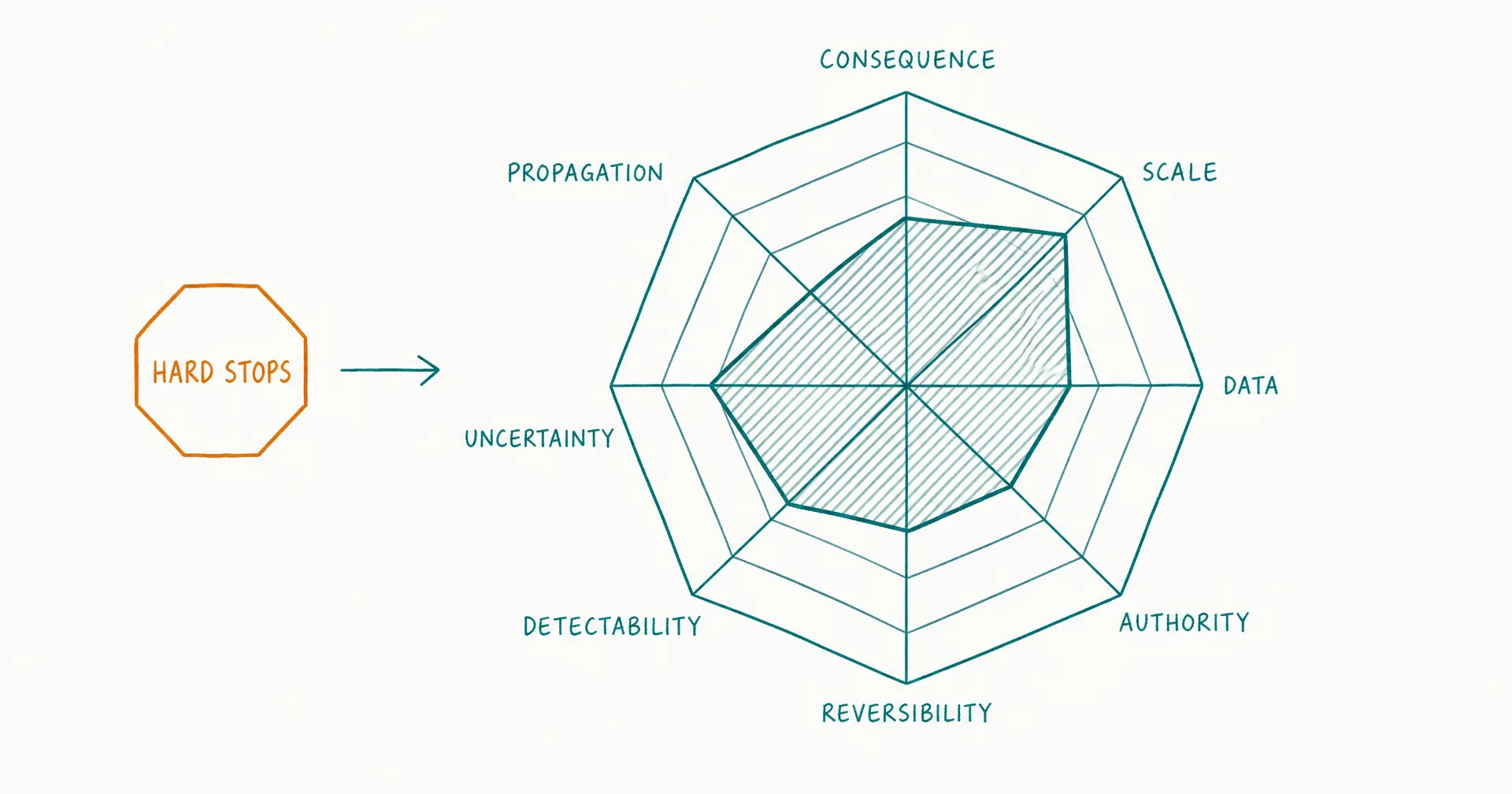
31 JUL 2026 AI Employee Risk Assessment: Score the Role Before Launch Eight exposure dimensions, hard stop conditions applied before any scoring, control evidence graded from claimed to proven recovery, and five launch decisions from reject to bounded execute. GuidesTrust & security 22 min
Napkin-style sketch of an eight-axis radar chart labeled with risk dimensions, with an amber octagonal stop sign gate placed before the chart
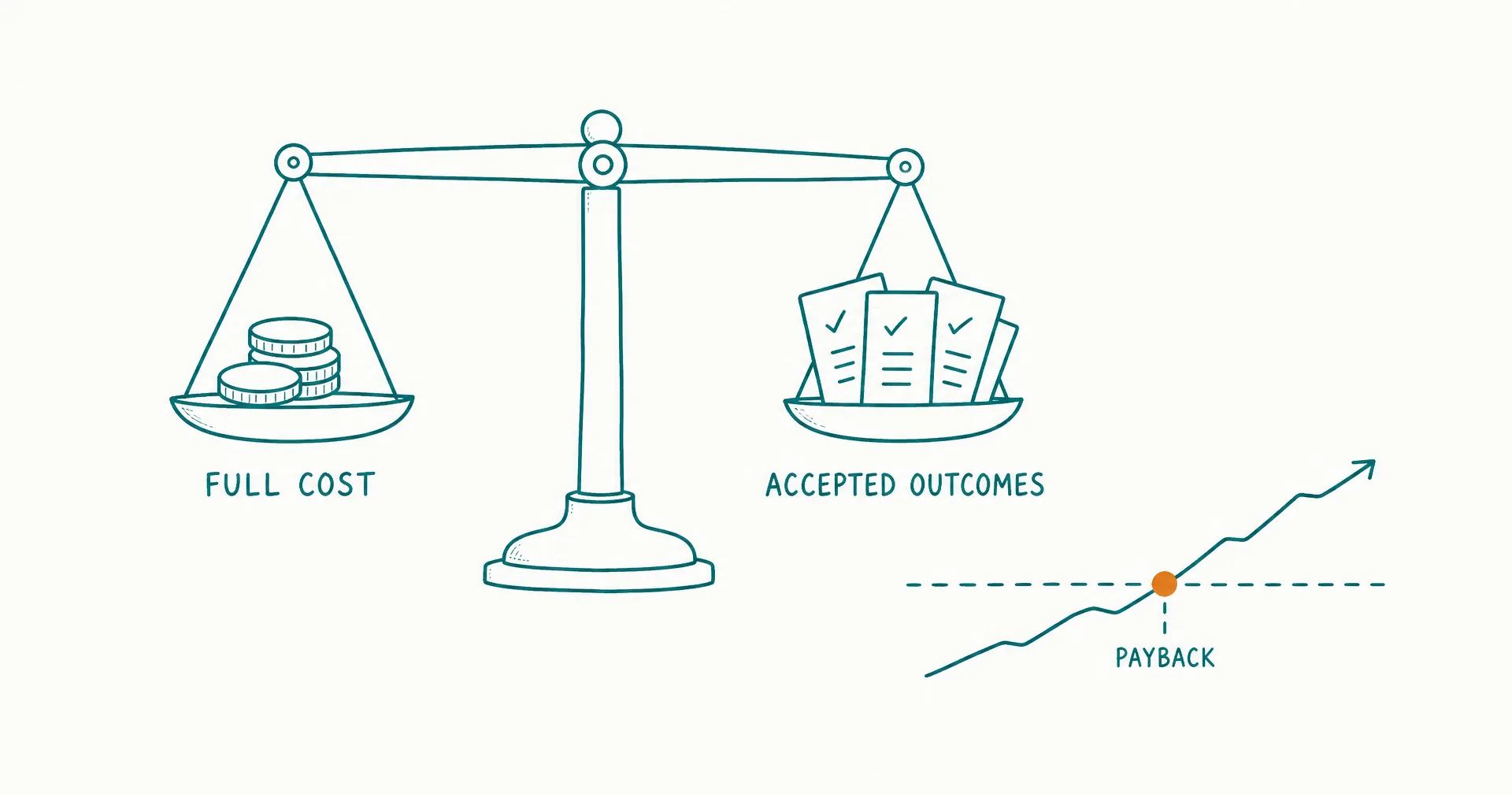
31 JUL 2026 AI Employee ROI: A Payback Model That Includes Human Review The ROI formula is easy to write and easy to distort. The real work is the baseline, the realization factor on released hours, priced human review, and a low case you can actually live with. InsightsCost & ROI 22 min
Napkin-style sketch of a balance scale weighing accepted outcomes against a full cost stack, with an amber payback arrow crossing a break-even line
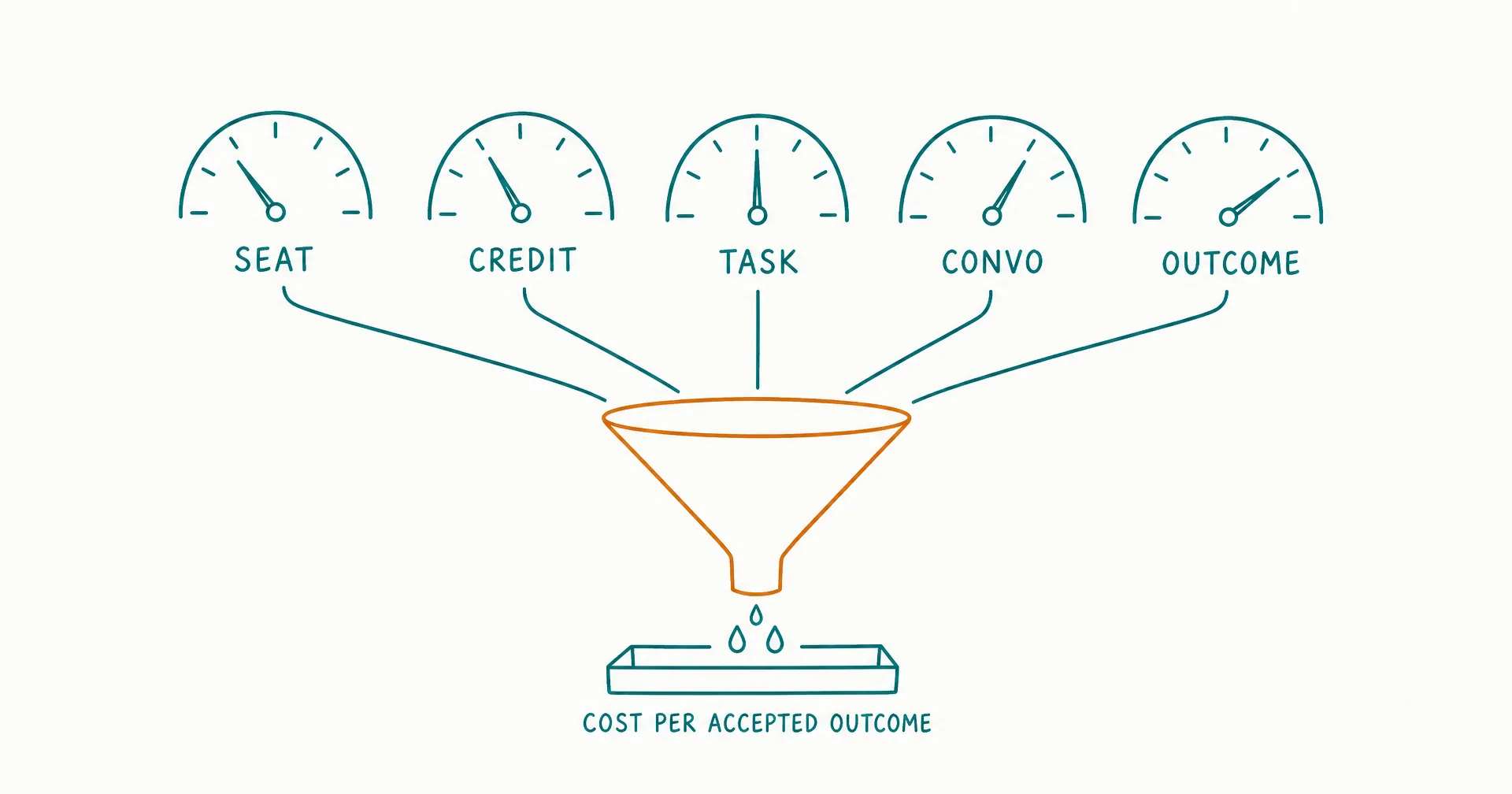
31 JUL 2026 AI Employee Pricing Models: Credits, Seats, Tasks, or Outcomes? A seat can include usage, a credit can represent different operations, and one business task can trigger several billable runs. The fair comparison: normalize every quote to the same workload. InsightsCost & ROI 22 min
Napkin-style sketch of five different billing meters - seat, credit, task, conversation, outcome - all feeding one funnel labeled cost per accepted outcome, with an amber highlight on the funnel
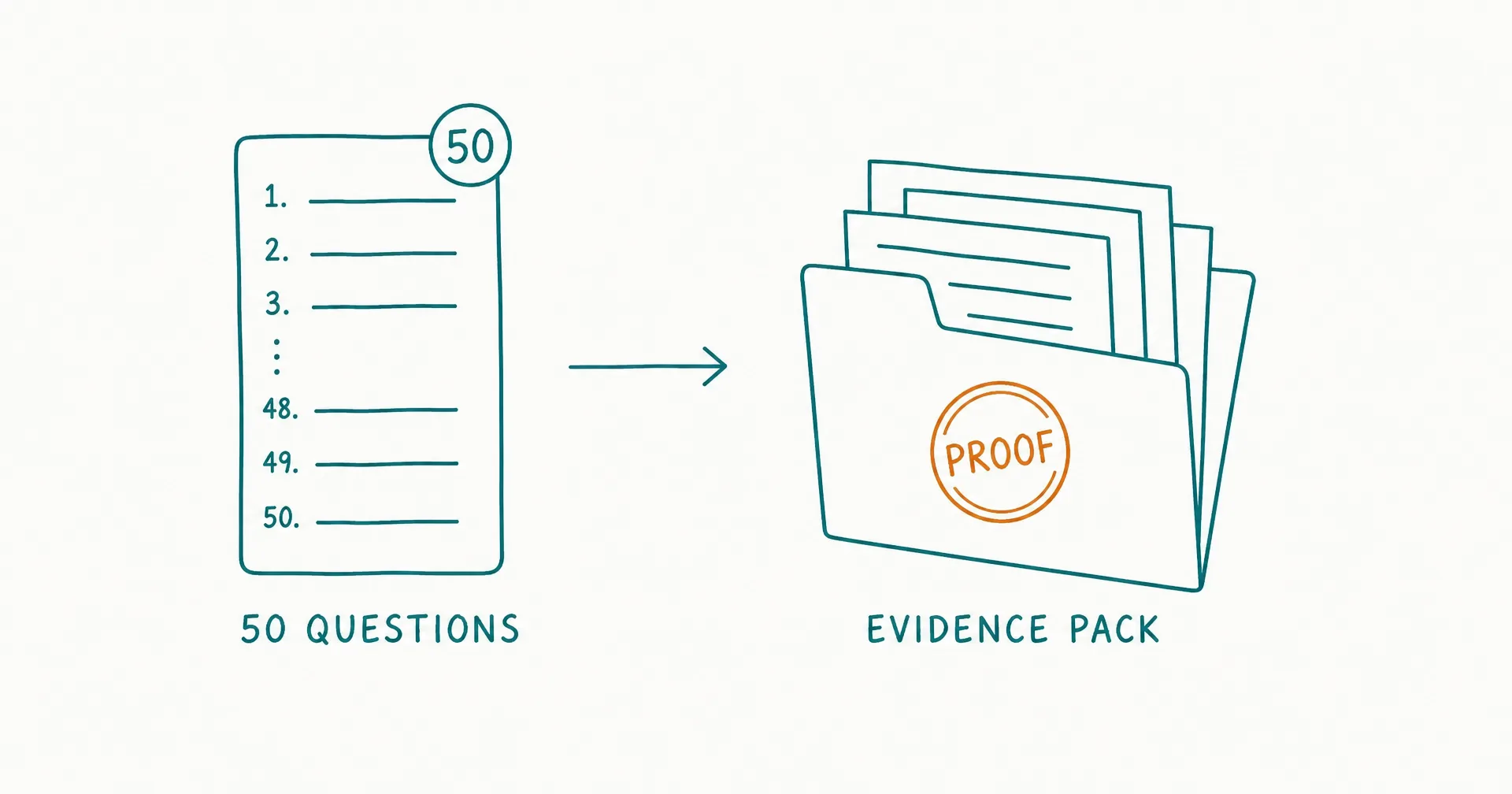
31 JUL 2026 AI Employee Platform RFP Checklist: 50 Questions and Proof Requests Yes, we support approvals is an assertion. A control description, admin configuration, denied-action demonstration, approval record, and contractual commitment show what the answer means. GuidesChoosing 32 min
Napkin-style sketch of a questionnaire sheet with fifty numbered rows feeding into an evidence folder, with an amber stamp reading proof on the folder
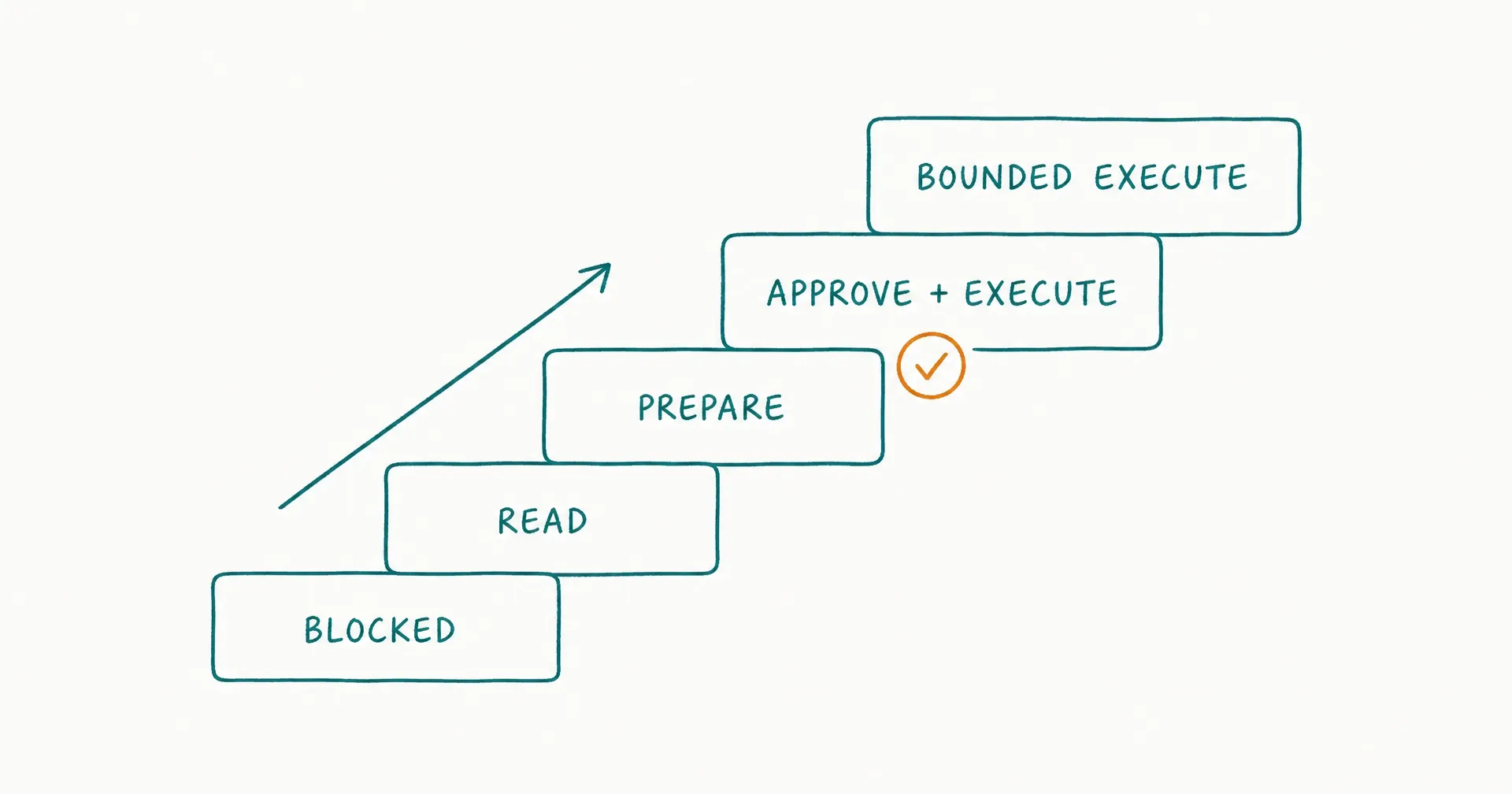
31 JUL 2026 AI Employee Permissions and Approvals: A Practical Model "Marketing manager" is not a permission: an 11-field action matrix, five permission states from blocked to bounded execute, approval policies from per-action to human-only, and tested revocation. GuidesTrust & security 22 min
Napkin-style sketch of a five-step permission ladder from Blocked to Bounded Execute with an amber approval stamp gating the execute step
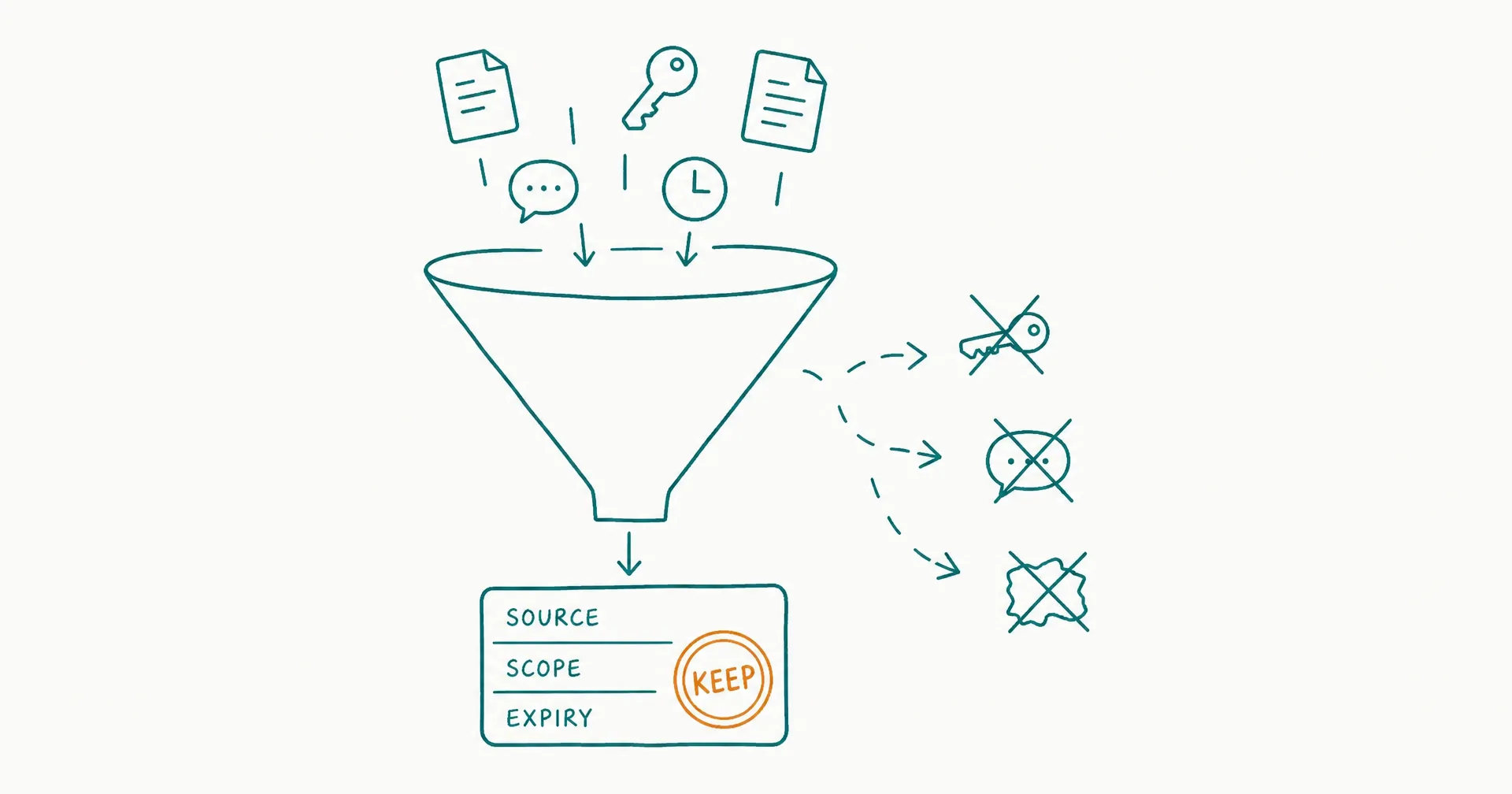
31 JUL 2026 AI Employee Memory: What It Should Remember - and Forget An endless transcript is not institutional knowledge: a seven-stage memory lifecycle, an 11-field record schema, five operational scopes, and the discipline to forget secrets, stale rules, and noise. InsightsMemory 31 min
Napkin-style sketch of a funnel filtering candidate memories into a small governed record box, with rejected items falling away and an amber review stamp on the kept record
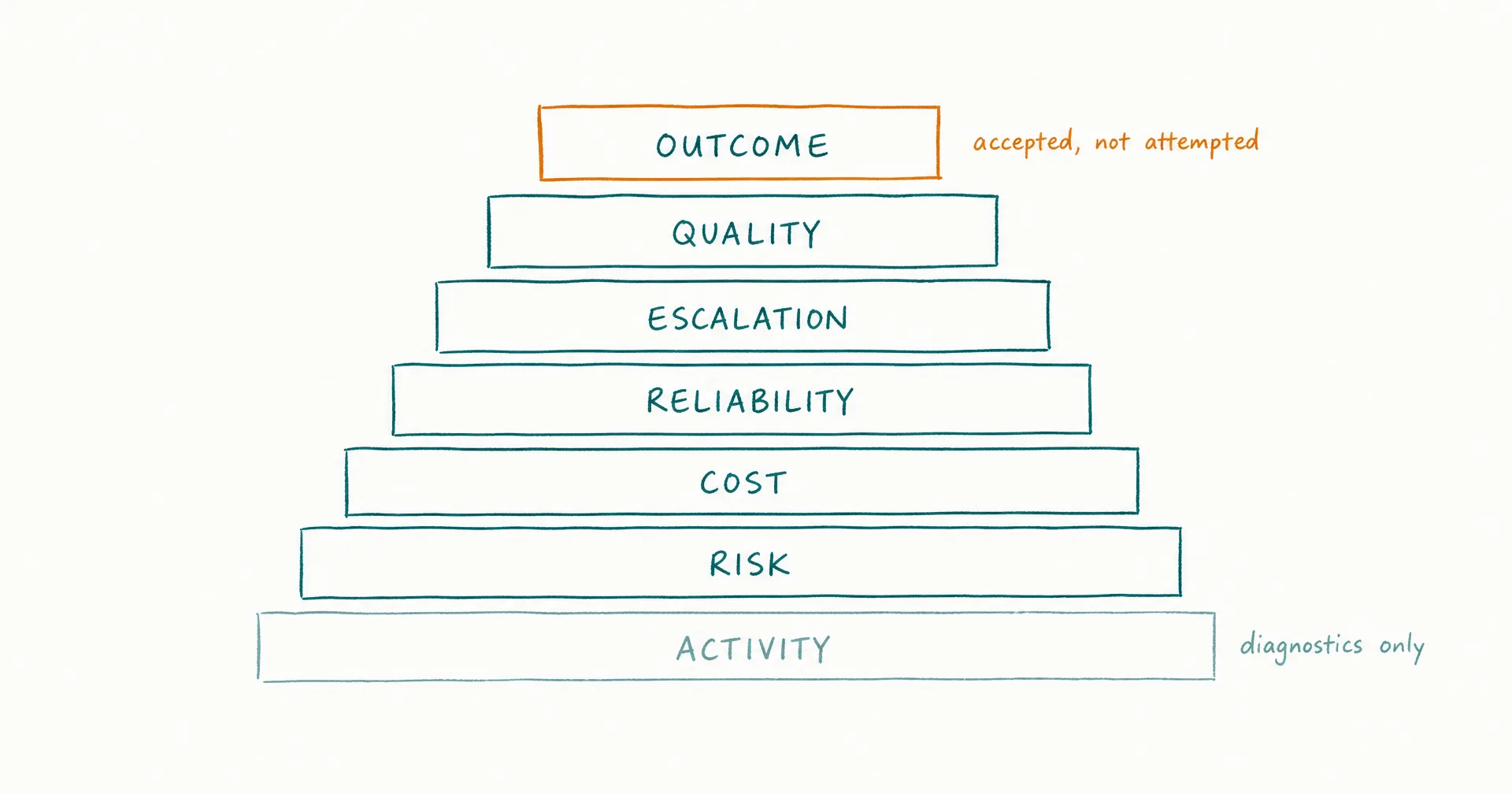
31 JUL 2026 AI Employee KPIs: Measure Outcomes, Quality, and Escalation The best KPI is not tasks completed: a seven-layer scorecard - outcome, quality, escalation, reliability, cost, risk, diagnostics - with formulas, worked examples, and anti-gaming checks. GuidesHiring 21 min
Napkin-style sketch of a seven-layer KPI scorecard pyramid with accepted outcomes at the top and activity diagnostics at the base
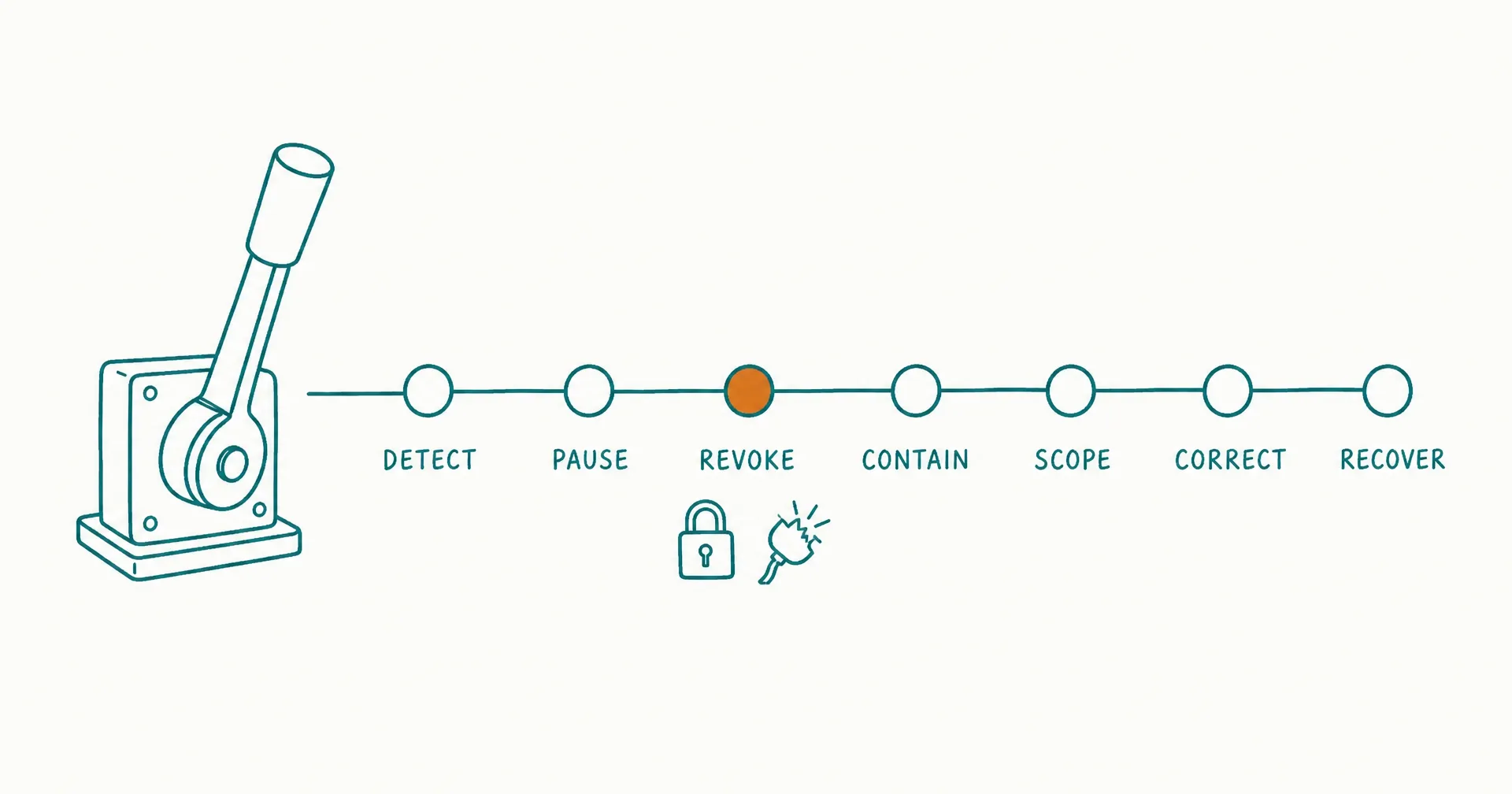
31 JUL 2026 AI Employee Incident Response: Contain, Revoke, Review, Recover A 12-decision response path for AI employee incidents: pause work, revoke authority, preserve evidence, scope propagation, correct business state, and resume only on an accountable decision. GuidesTrust & security 24 min
Napkin-style sketch of an emergency stop lever beside a response path from detect through recover, with an amber highlight on the revoke step
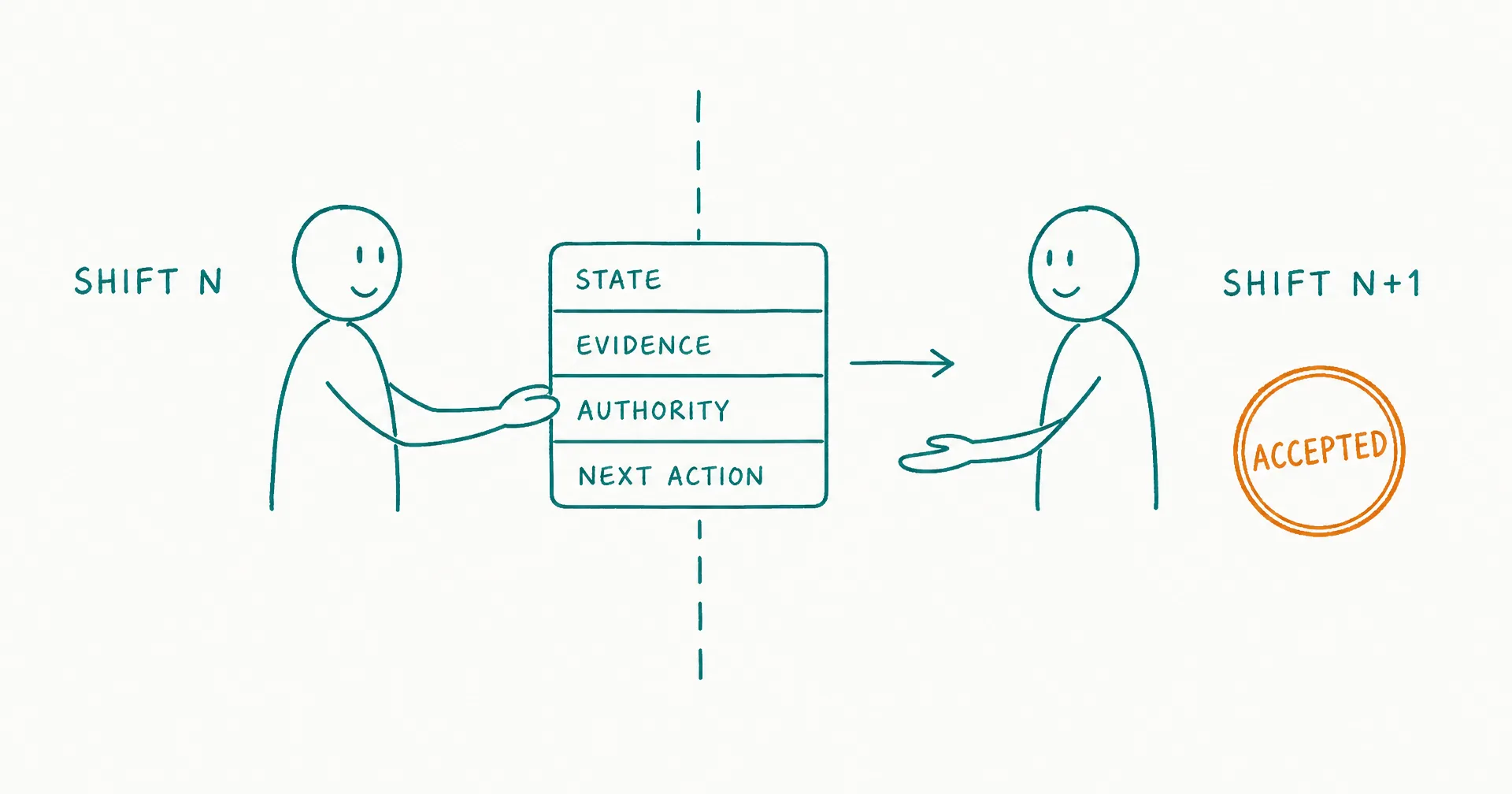
31 JUL 2026 AI Employee Handovers: Context Without Coordination Debt A handover is a state transition, not a summary note: minimum high-signal context, explicit authority and approvals, receiver acceptance, and closure without open loops or coordination debt. InsightsMemory 18 min
Napkin-style sketch of two shift figures passing a structured packet card labeled state, evidence, authority, and next action across a boundary line, with an acceptance stamp on the receiving side
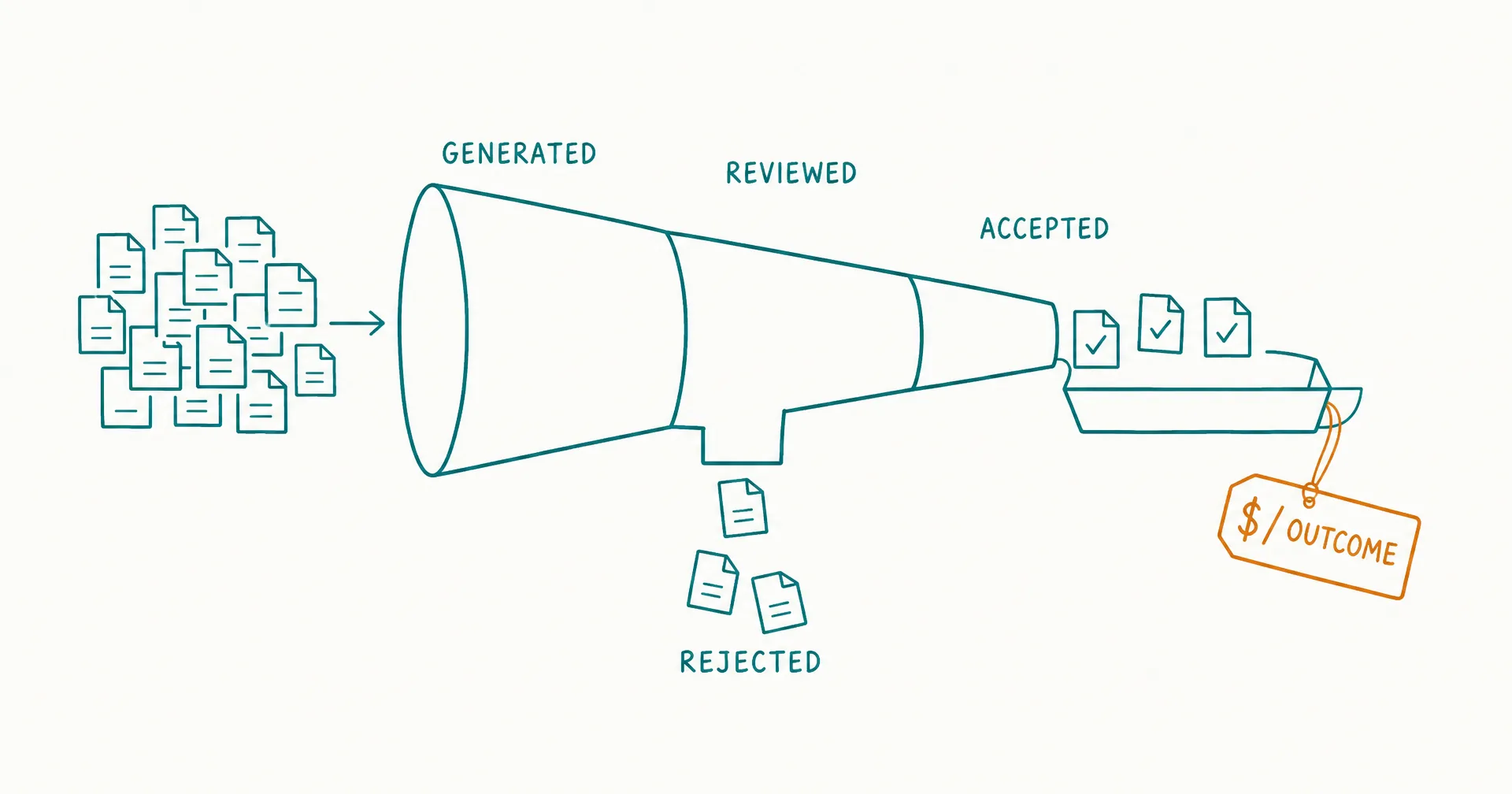
31 JUL 2026 AI Employee Cost per Outcome: The Metric Sticker Price Misses Pricing tells you what a vendor bills. Cost per accepted outcome tells you what the business receives for everything it spends - including the review and correction labor the invoice never shows. InsightsCost & ROI 24 min
Napkin-style sketch of a funnel narrowing from generated output through review down to accepted outcomes, with an amber price tag attached to the accepted-outcome tray
31 JUL 2026 AI Employee Audit Logs: What Buyers Should Be Able to Reconstruct The test is reconstruction: from one disputed action back to its origin and forward to every consequence - identity, authority, execution, effect, and recovery, all connected. GuidesTrust & security 27 min
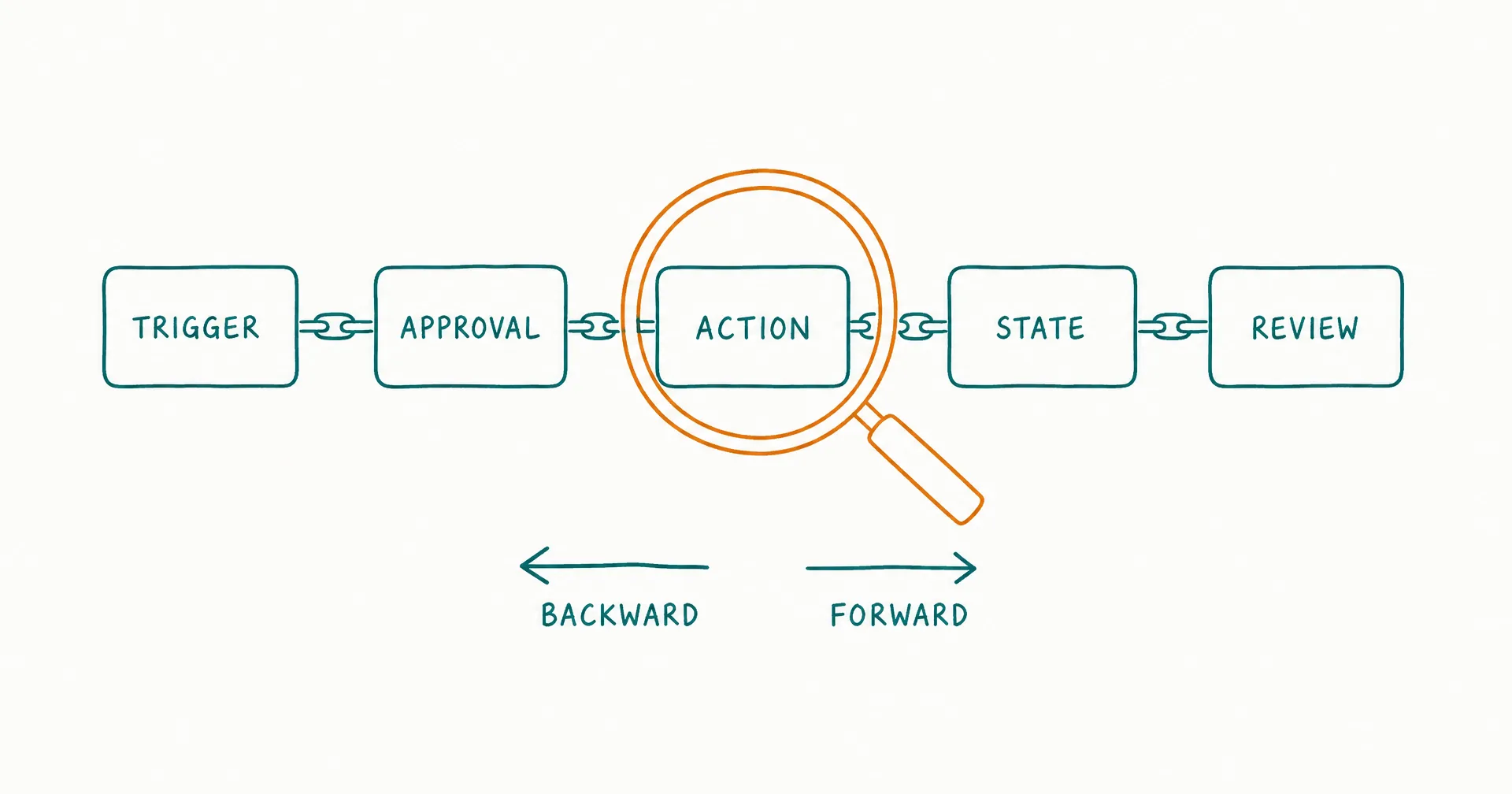
Napkin-style sketch of a chain of linked event blocks from trigger through approval to verified effect, examined by an amber magnifying glass
31 JUL 2026 AI Customer Support Escalation: When the Agent Should Stop Escalate when unsure is not an operating rule. A production workflow needs explicit stop triggers, a context packet that travels with the case, and a receiver who formally accepts. GuidesWorkflows 22 min
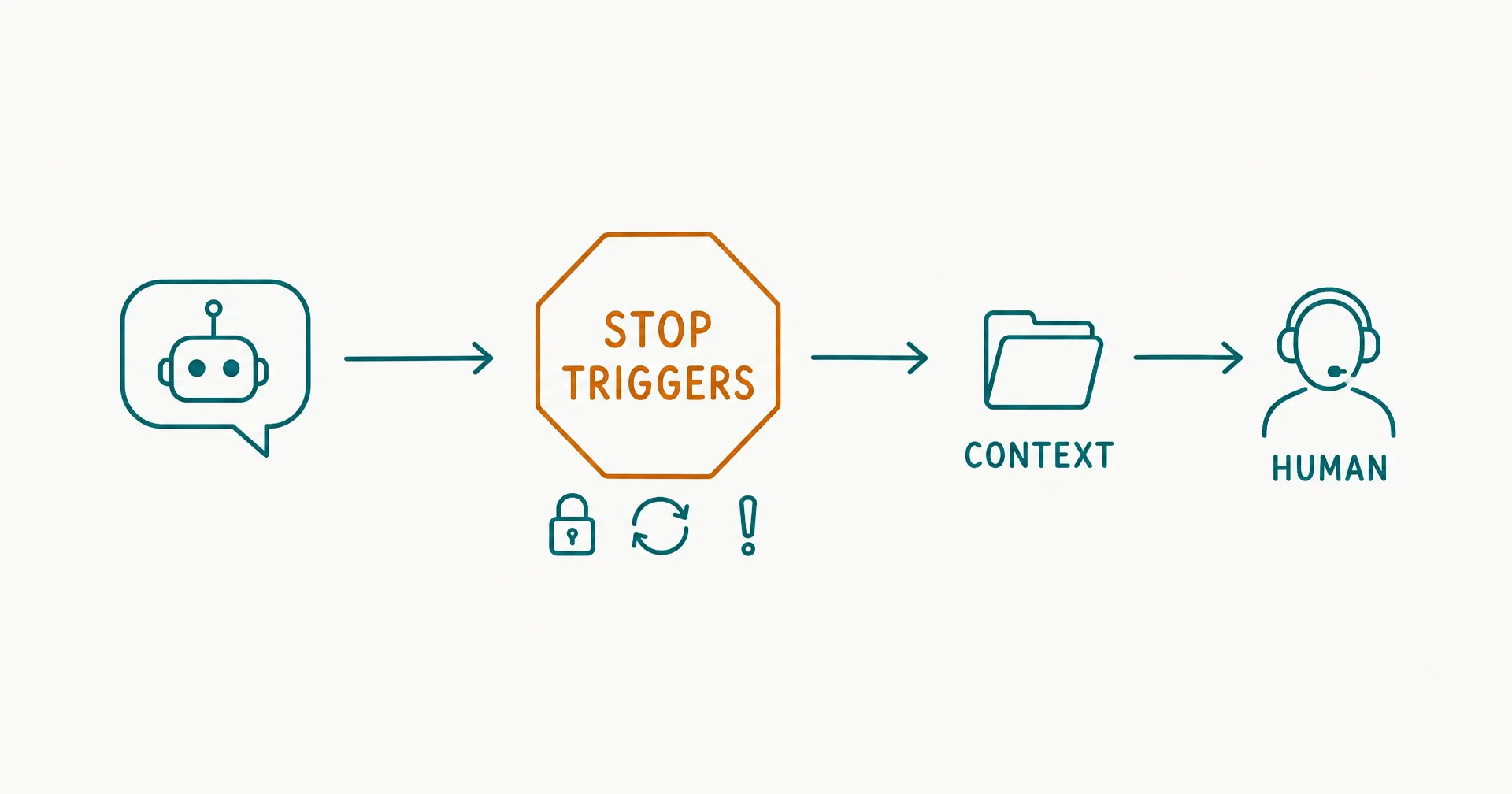
Napkin-style sketch of a support conversation path with a large stop sign gate in the middle labeled with trigger icons, a context packet folder passing beyond the gate to a human figure wearing a headset, with an amber highlight on the stop gate
31 JUL 2026 AI Content Operations Workflow: Brief, Draft, Review, Repurpose AI content ops should increase accepted, useful content - not text waiting for review. The scaling constraint is claim, editorial, and approval throughput, not token generation. GuidesWorkflows 22 min
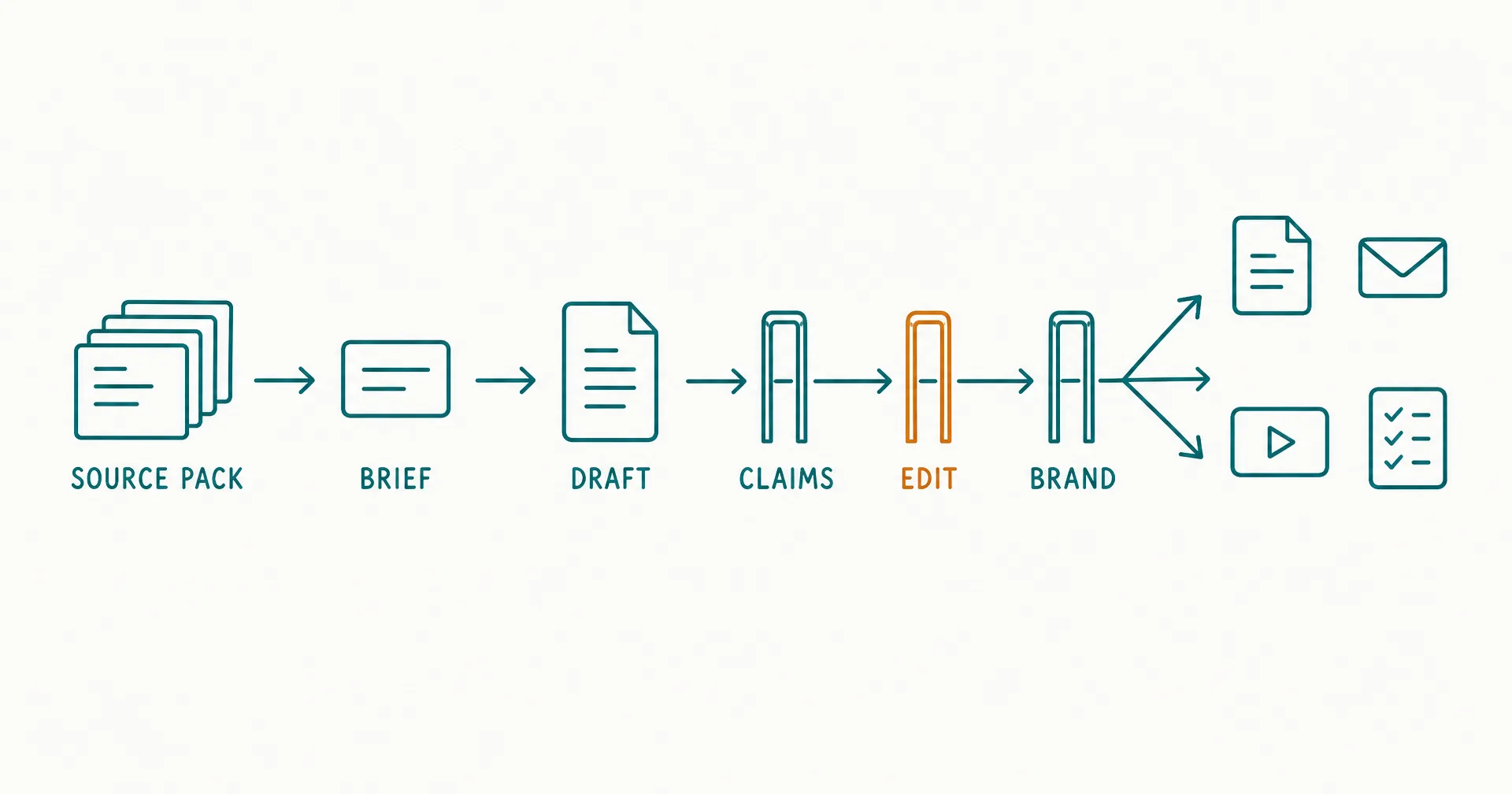
Napkin-style sketch of a content production line: a source pack box feeds a brief card, then a draft page moving through three stamped review gates, branching at the end into several small channel assets, with an amber highlight on the middle review gate
31 JUL 2026 AI Agent Task Delegation: Authority, Acceptance, and Closure The delegating agent keeps responsibility for the parent outcome; the receiving agent owns only the contribution it explicitly accepts. A delivered artifact is not accepted work. InsightsMulti-agent 29 min
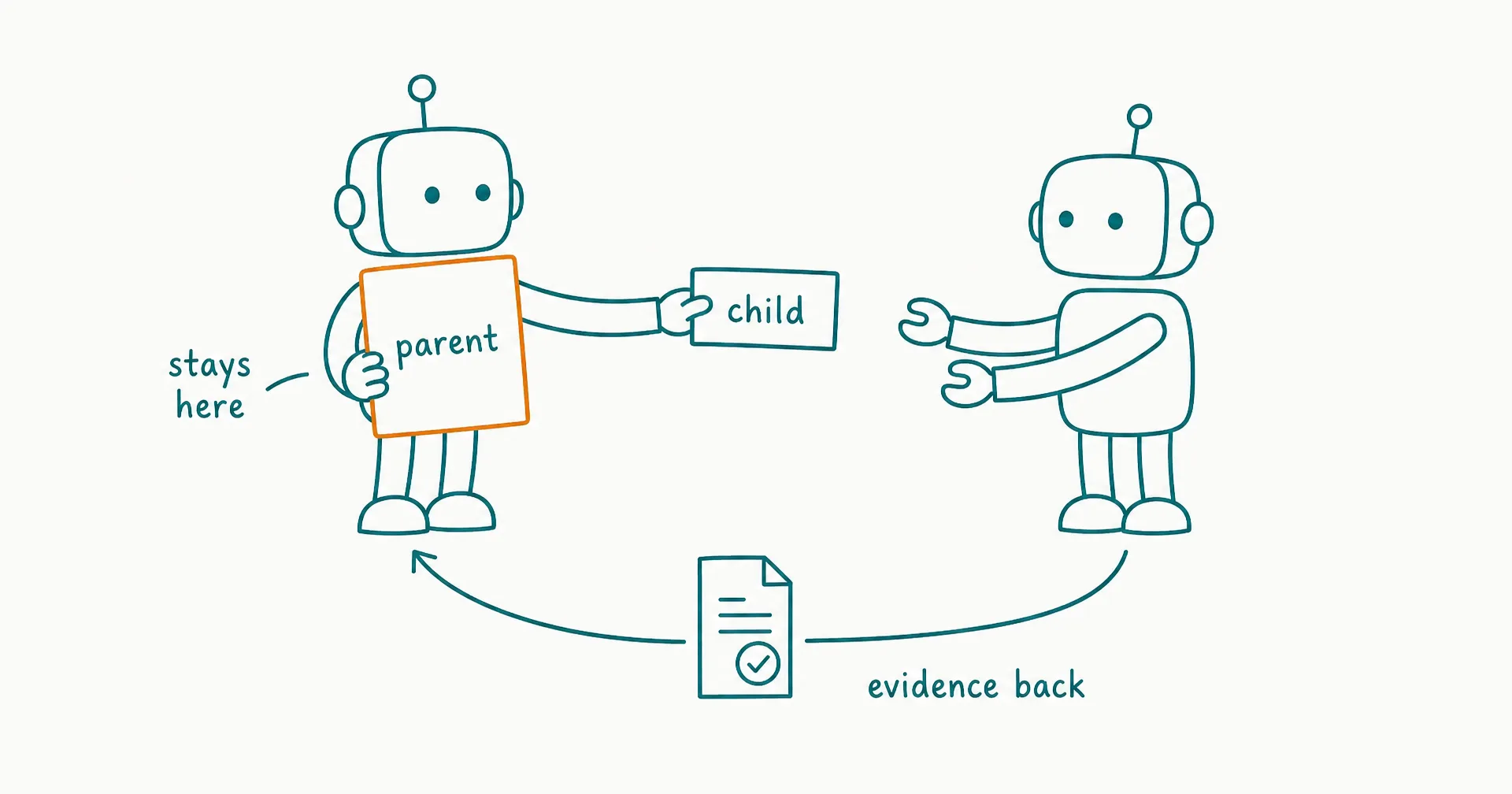
Napkin-style sketch of a parent robot holding a large parent task card while handing a smaller bounded child task card to a worker robot, the child card returning along a loop with an evidence stamp, with an amber highlight on the parent card staying in the delegator's hand
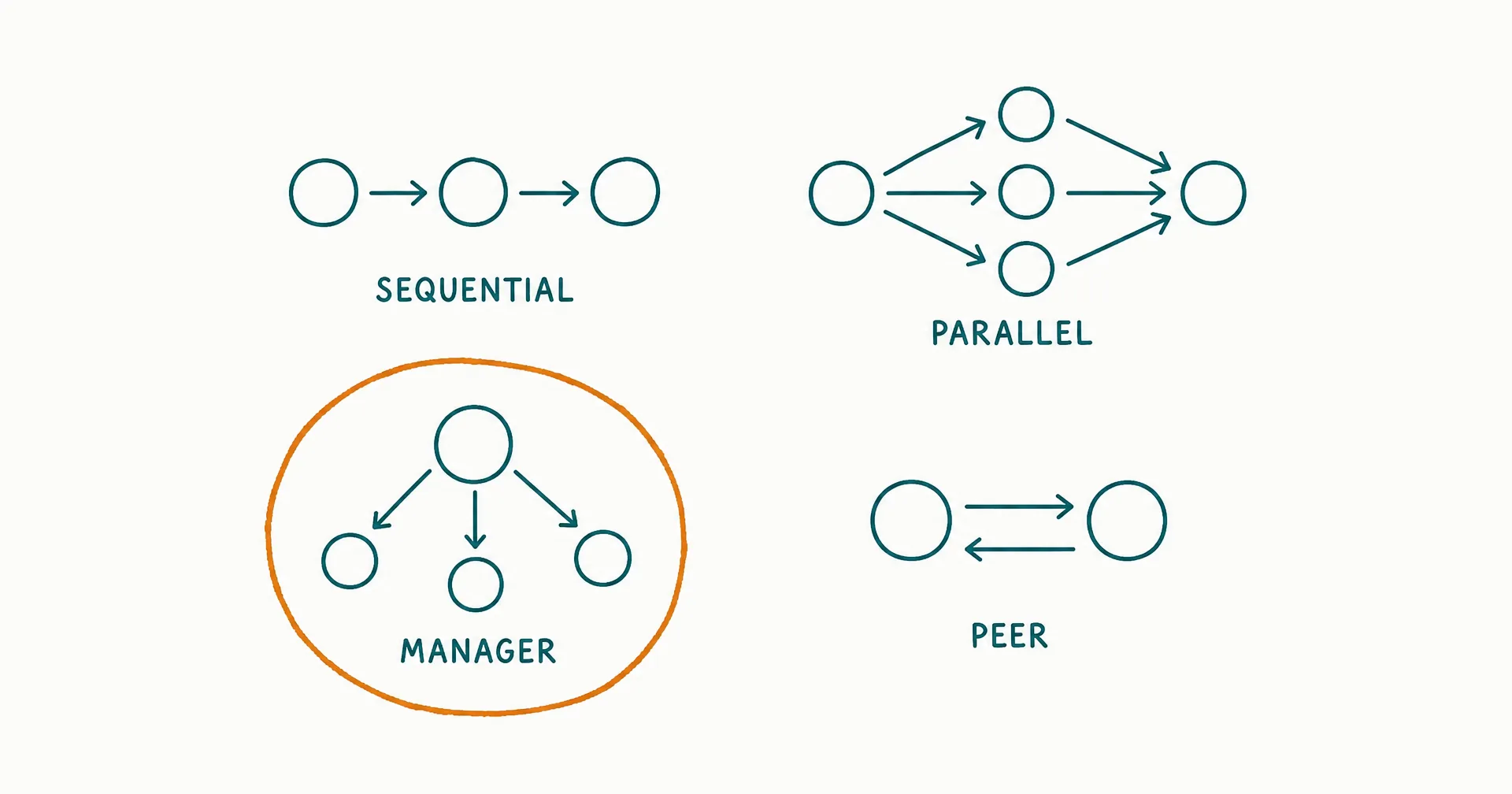
31 JUL 2026 AI Agent Orchestration Patterns: Sequential, Parallel, Manager, and Peer Six patterns cover most deployed designs. The right one is the least complex topology that removes a measured bottleneck - and a single agent plus tools is always the baseline. InsightsMulti-agent 26 min
Napkin-style sketch of four small topology diagrams in a two-by-two grid - a straight chain of nodes, a fan-out of parallel branches rejoining, a hub with spokes to specialist nodes, and two peer nodes exchanging a task - with an amber highlight circling the hub diagram
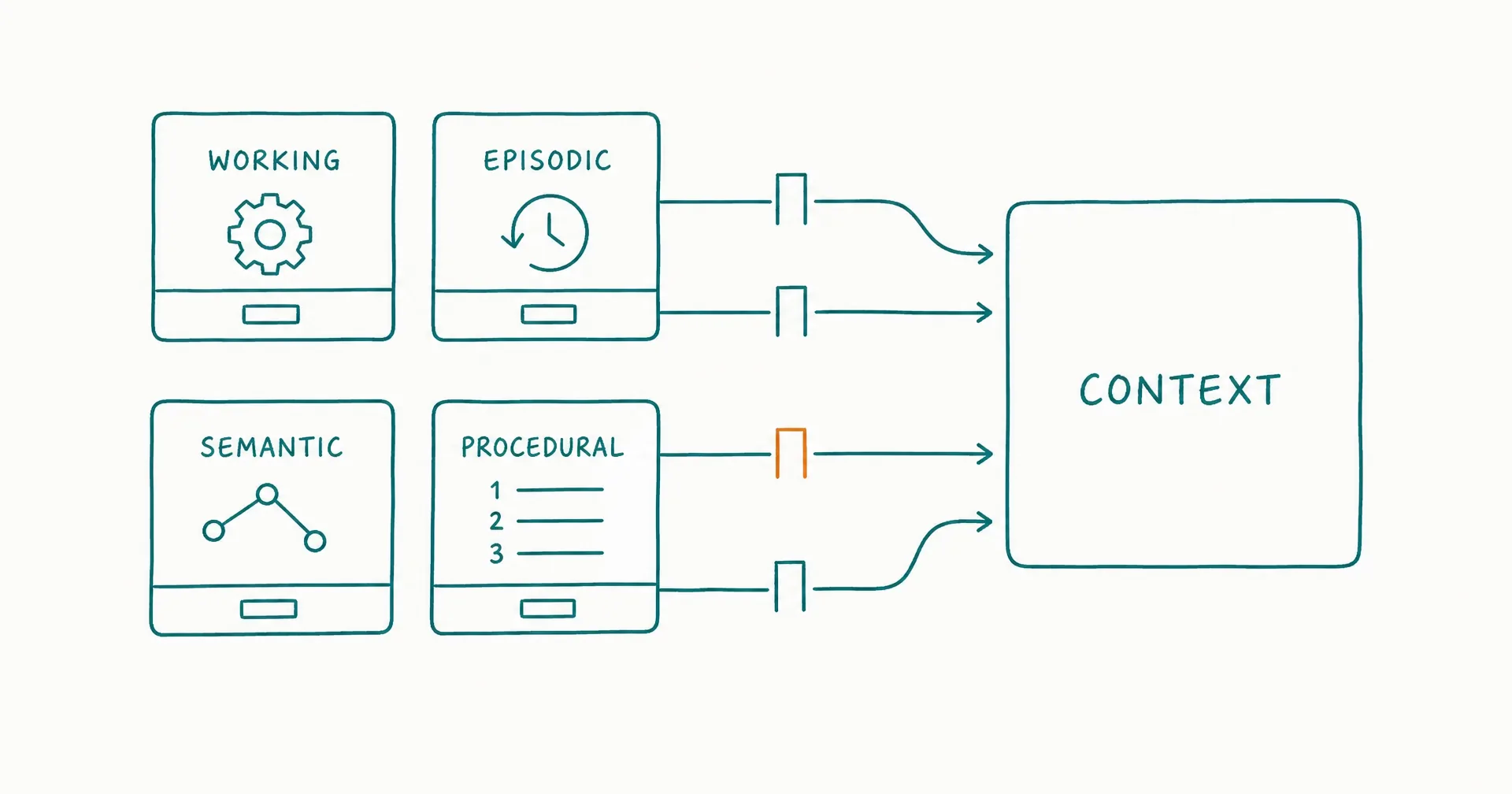
31 JUL 2026 AI Agent Memory Types: Working, Episodic, Semantic, and Procedural Four information jobs, not one memory store: working state, curated episodes with outcomes, typed semantic facts, and versioned procedures - each with its own write gate. InsightsMemory 25 min
Napkin-style sketch of four labeled memory drawers - working, episodic, semantic, procedural - feeding through gates into a small bounded context frame
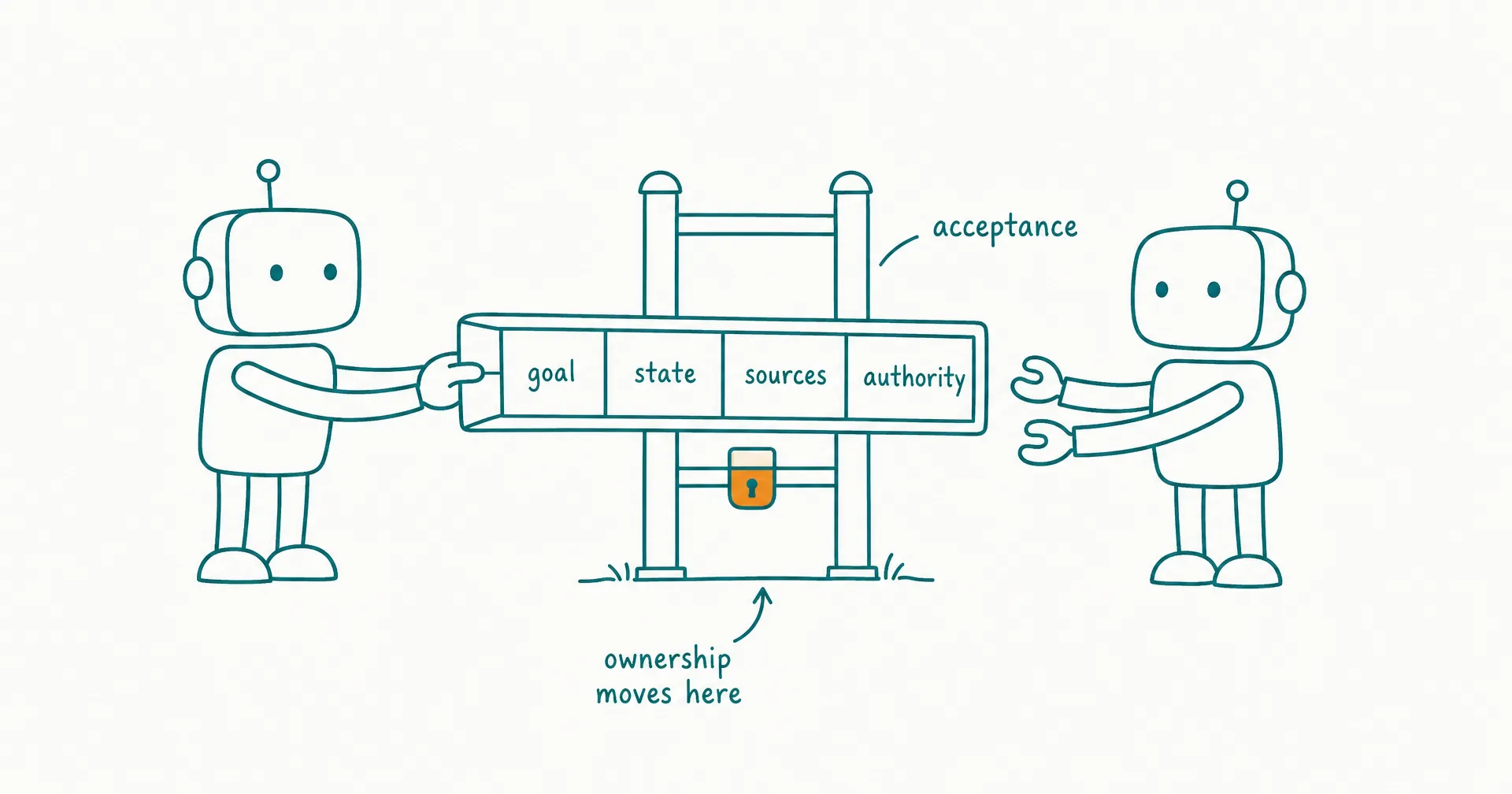
31 JUL 2026 AI Agent Handoff Protocols: What Must Travel With the Task An AI agent handoff should transfer a typed task contract, not a conversation summary. If the sender does not say whether ownership moves, both agents may act - or neither may own closure. InsightsMulti-agent 22 min
Napkin-style sketch of a robot handing a sealed packet across a gate to another robot, the packet labeled with small compartments for goal, state, sources, and authority, with an amber highlight on the acceptance gate latch
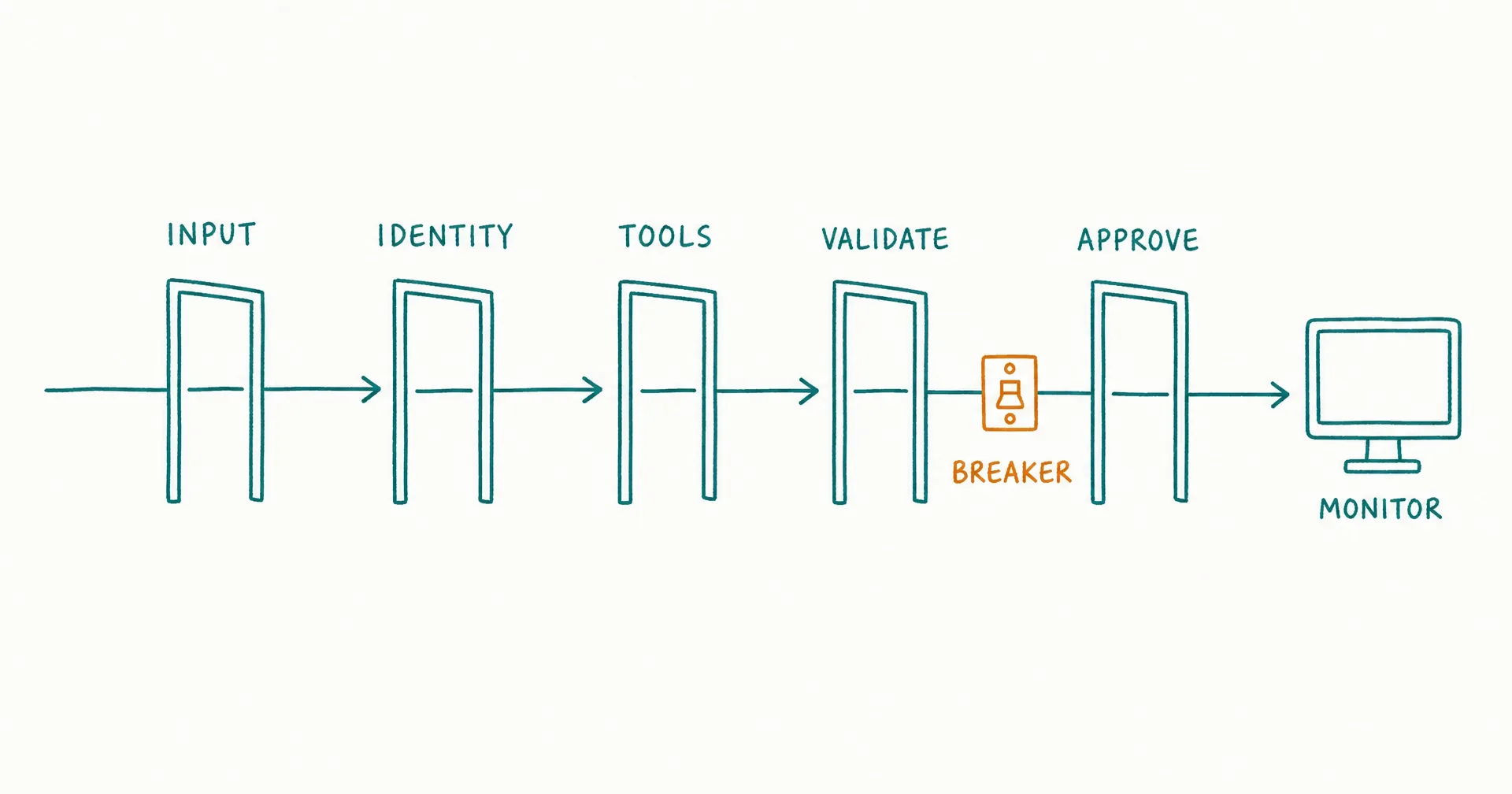
31 JUL 2026 AI Agent Guardrails: What They Can - and Cannot - Do A guardrail is an enforceable control, not a promise: layered checks across inputs, identity, tools, validation, approvals, monitoring, and circuit breakers - and what none of them can guarantee. GuidesTrust & security 22 min
Napkin-style sketch of a work path passing through a series of labeled gate layers from input to monitoring, with an amber circuit-breaker switch on the final segment
31 JUL 2026 15 AI Employee Examples, With Boundaries and Success Measures 15 role patterns - executive briefing, research, triage, bookkeeping, and more - each with triggers, permitted actions, approvals, KPIs, and the boundary where software must stop. InsightsCategory basics 19 min
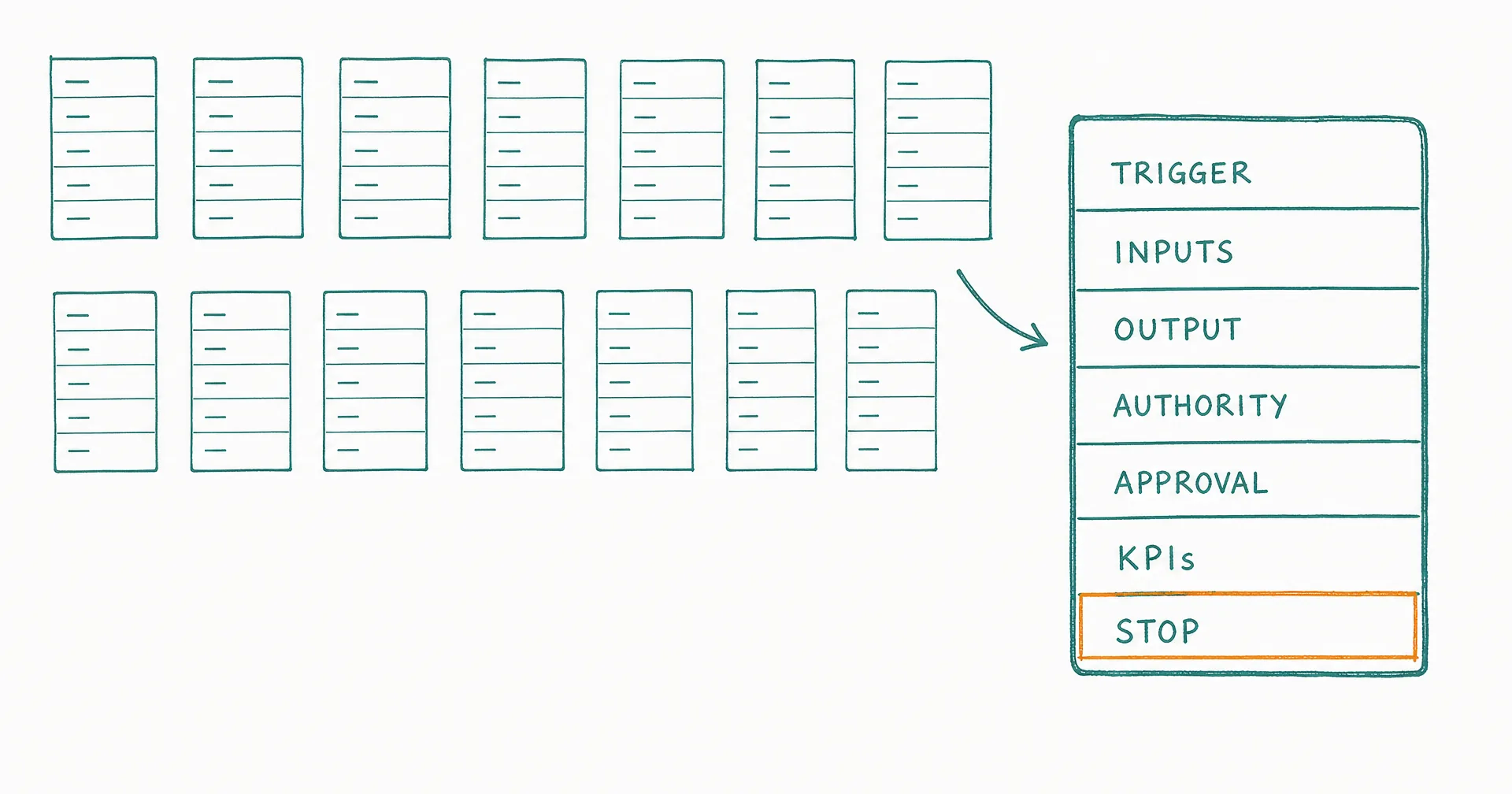
Schematic gallery of fifteen AI employee role cards with one enlarged card showing labeled contract fields: trigger, inputs, output, authority, approval, KPIs, and stop
30 JUL 2026 What Is an AI Employee? The 5-Part Test for a Standing AI Worker A practical five-part test - role, continuity, initiative, agency, accountability - that separates a standing AI worker from chatbots, assistants, agents, and workflow automation. InsightsCategory basics 26 min
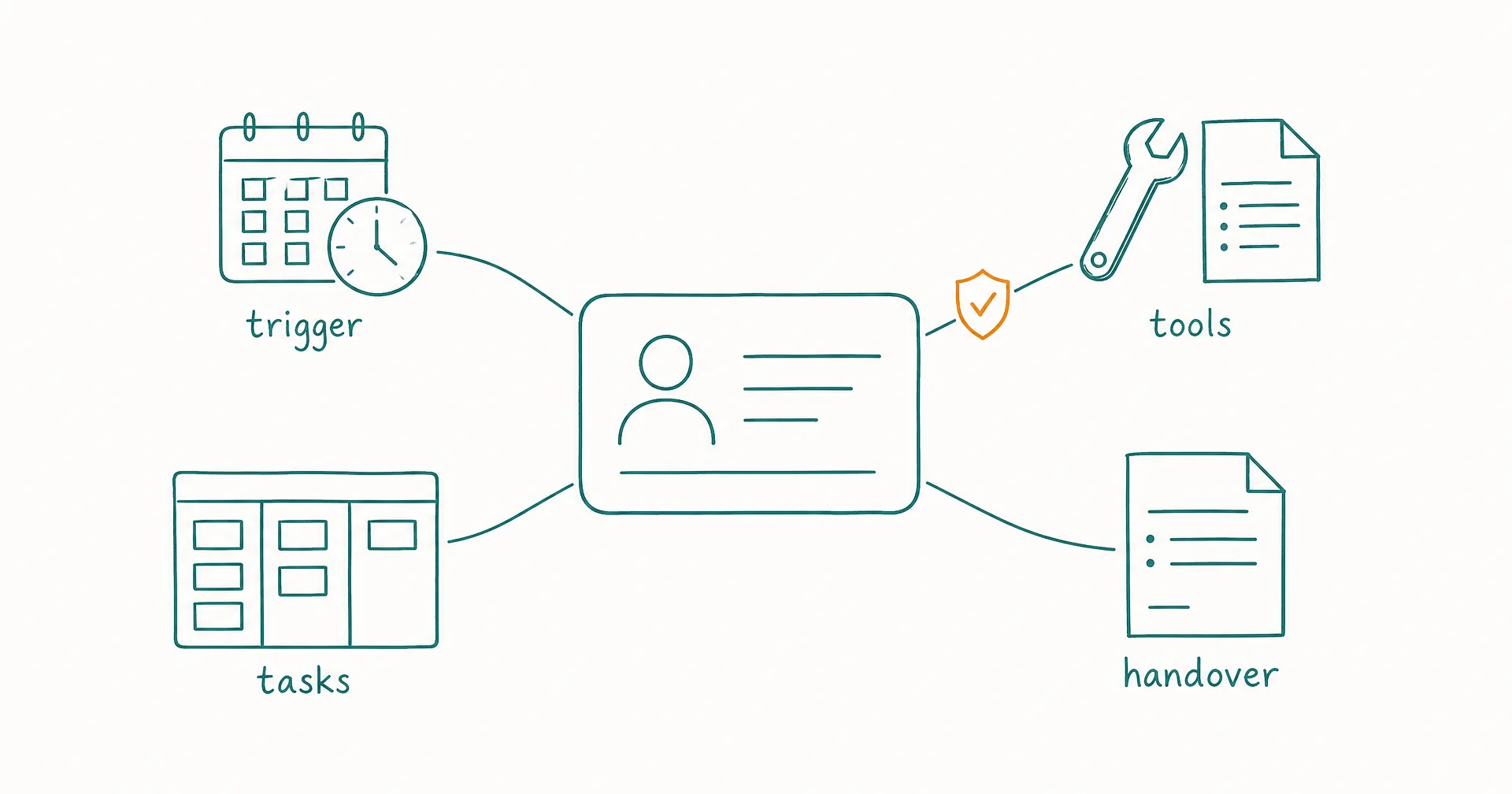
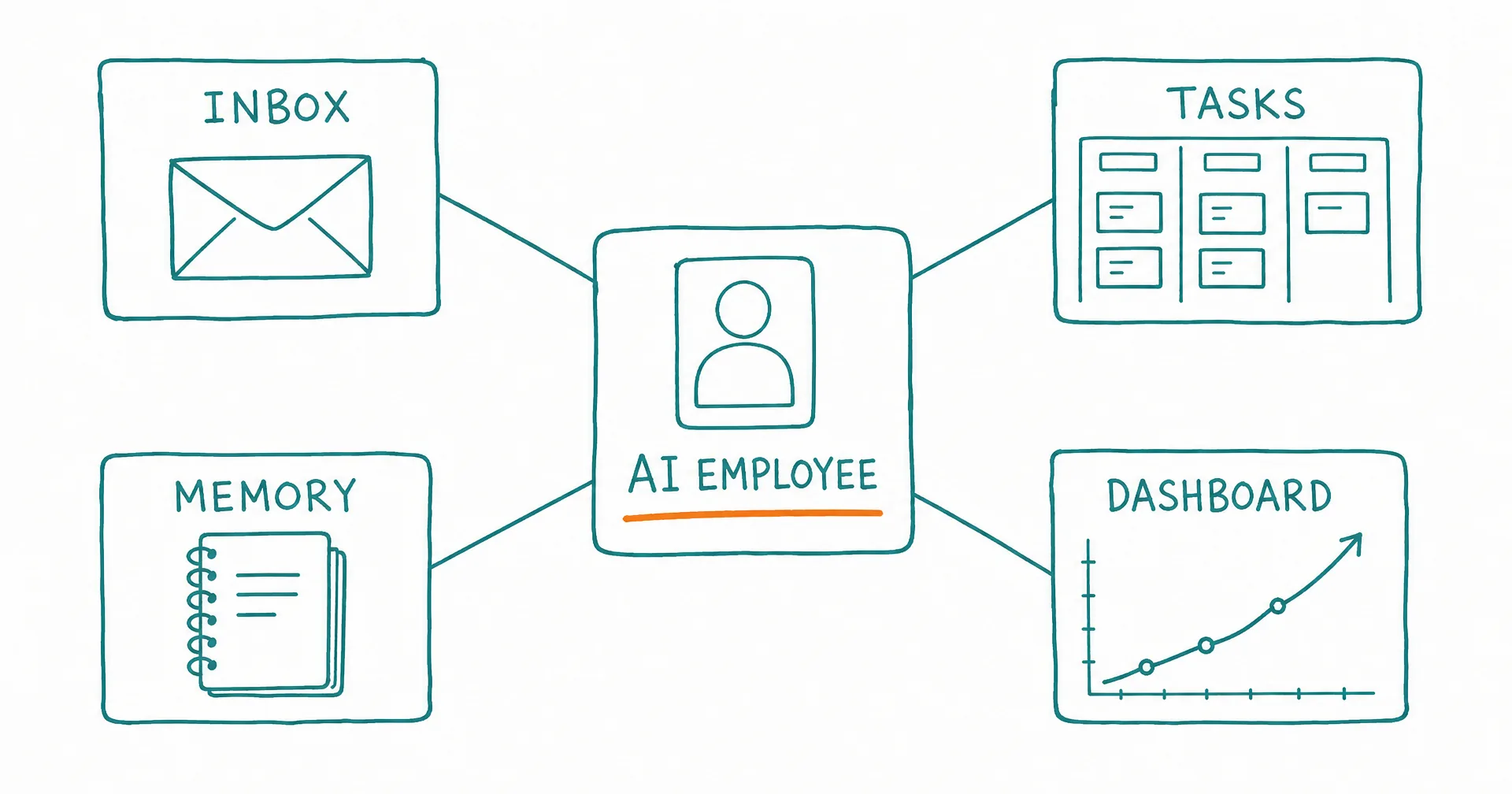
Schematic diagram of an AI employee operating loop: a central worker card connected by teal lines to a trigger, tools, a task board, and a handover note
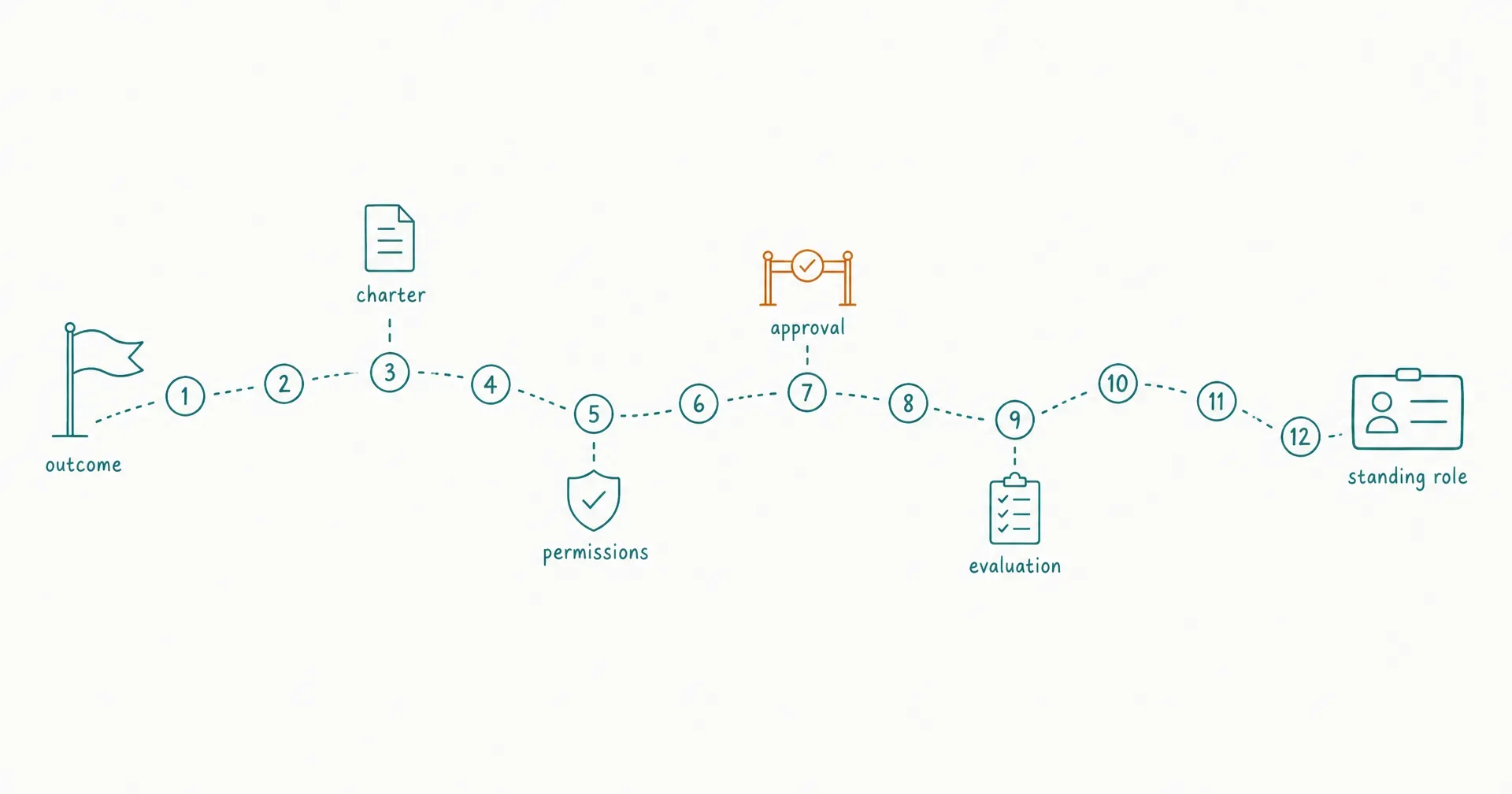
30 JUL 2026 How to Hire an AI Employee: A 12-Step Outcome-First Process Start with one recurring outcome, not a job title. A 12-step process covering task fit, role charters, permissions, evaluation sets, and a graduated pilot that earns each new authority. GuidesHiring 18 min
Hand-drawn winding path with twelve numbered stops from an outcome flag to a standing-role badge, with an approval checkpoint gate along the way
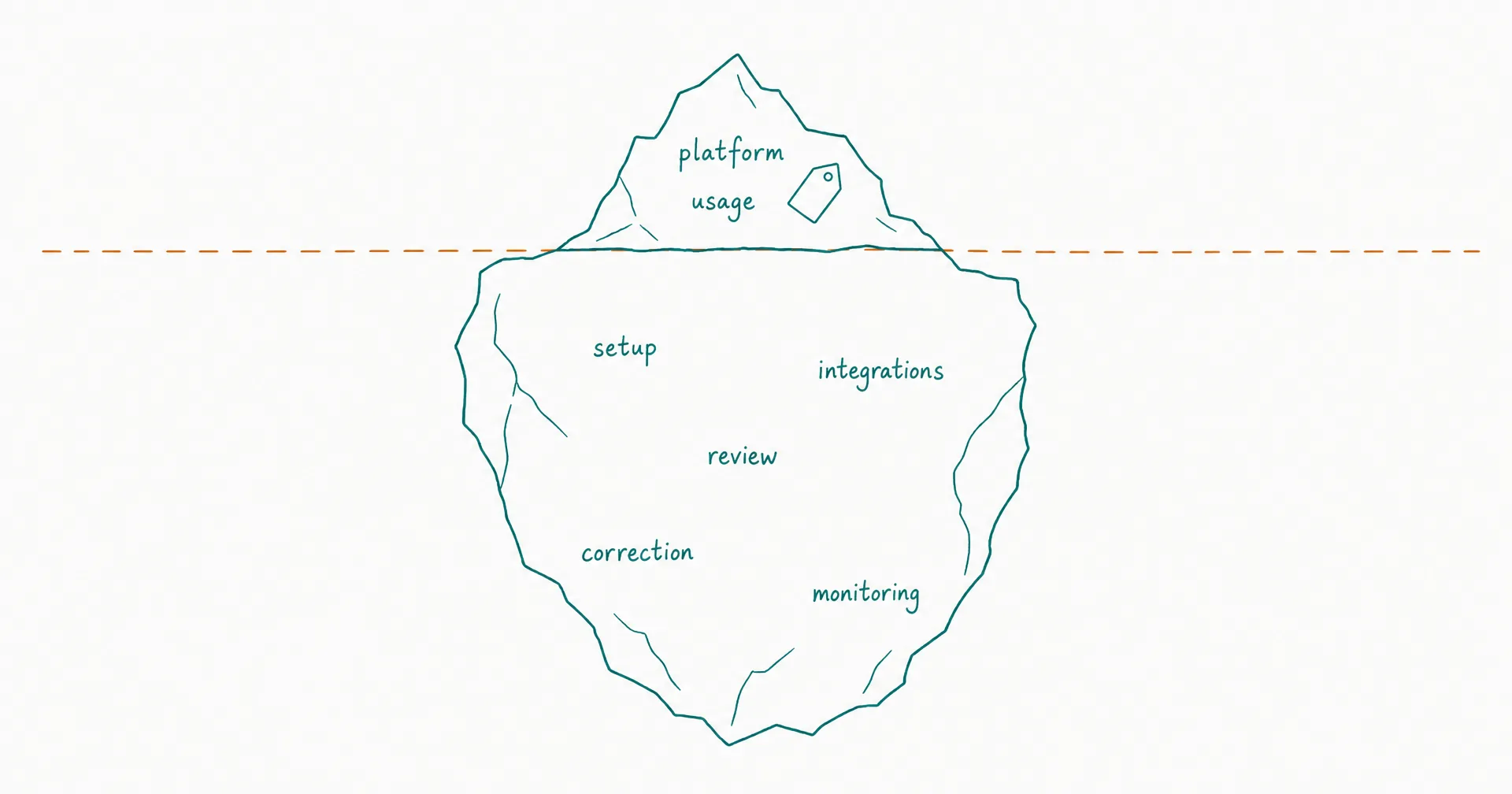
30 JUL 2026 How Much Does an AI Employee Cost? A 7-Layer Total-Cost Framework The plan price is not the total cost. Seven layers - platform, usage, setup, integrations, review, correction, monitoring - with CellCog's live pricing, two worked scenarios, and break-even math. InsightsCost & ROI 18 min
Hand-drawn iceberg diagram: platform and usage costs above the waterline, with setup, integrations, review, correction, and monitoring below it
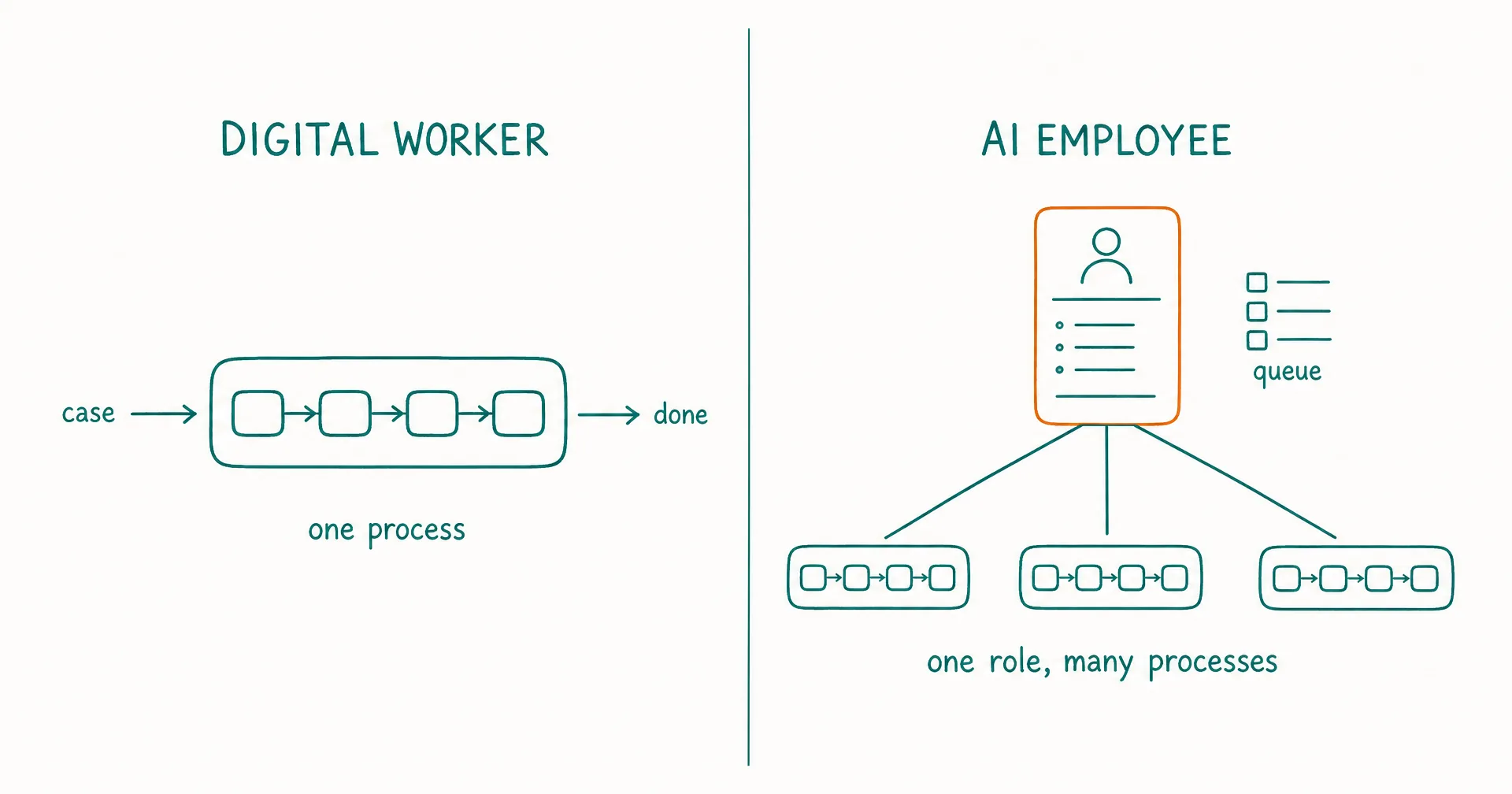
30 JUL 2026 Digital Worker vs AI Employee: What Actually Changes? Process capacity versus role ownership - sometimes nothing changes but the label. Ten differences to test, an upgrade playbook, and a 15-point scorecard. InsightsCategory basics 19 min
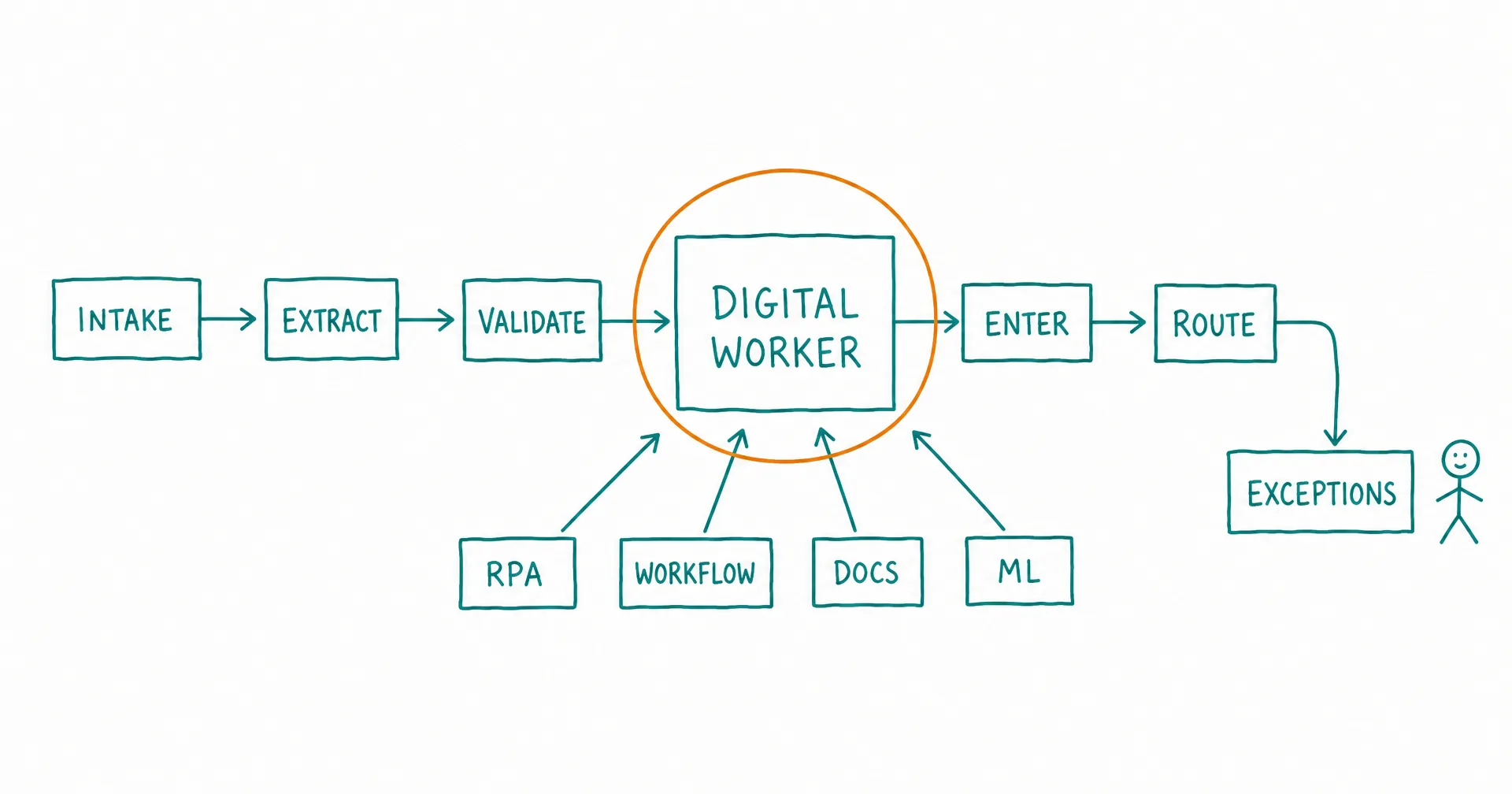
Sketch contrasting a digital worker executing one mapped process with an AI employee owning a role that spans several processes
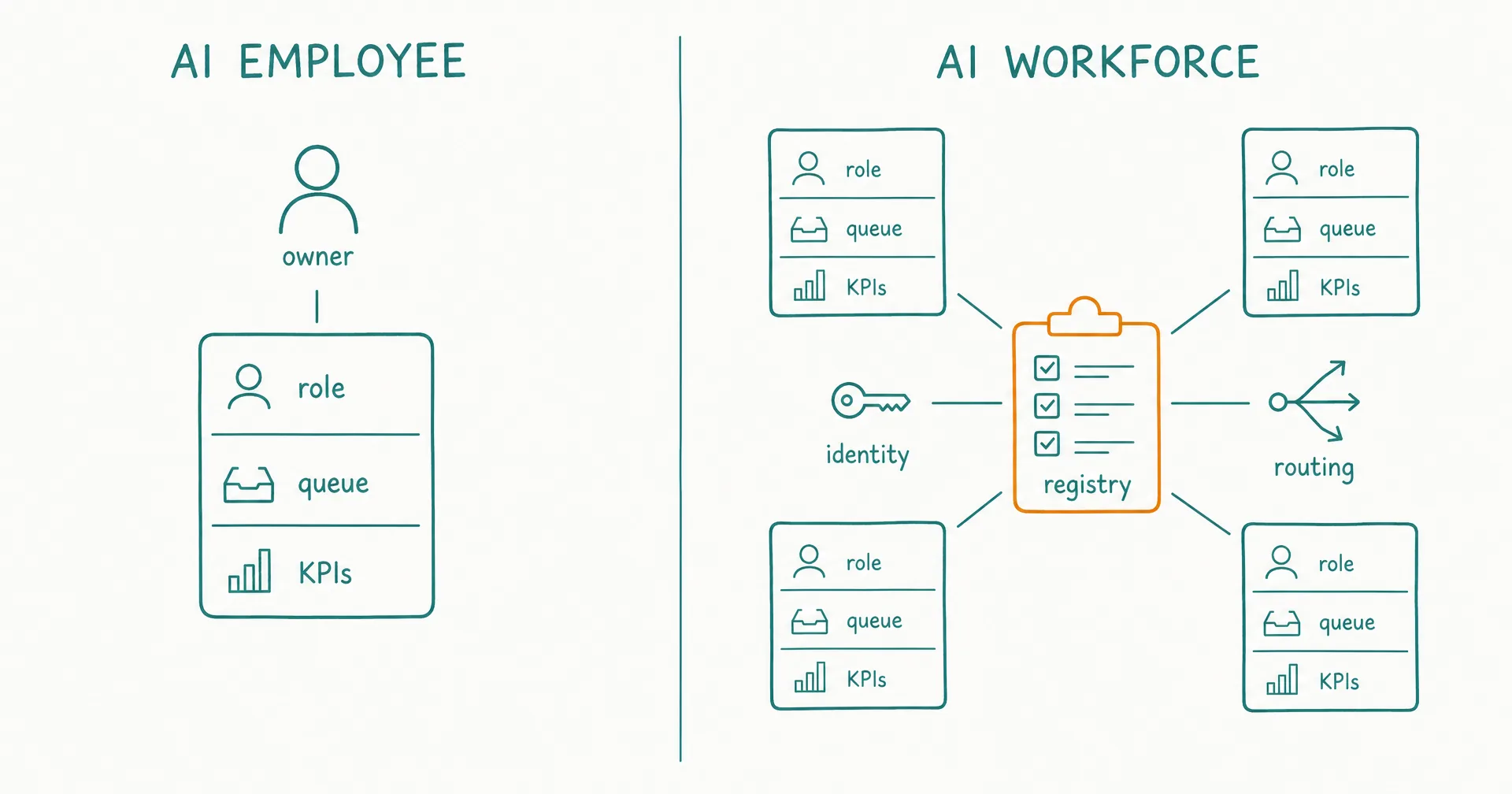
30 JUL 2026 AI Workforce vs AI Employee: One Role or an Operating System? An AI employee is one standing role; an AI workforce is the governed portfolio around many. Seven workforce tests, four operating patterns, and a five-stage scaling model. InsightsCategory basics 18 min
Sketch contrasting a single AI employee role card with a governed portfolio of several roles connected by registry, routing, and shared services
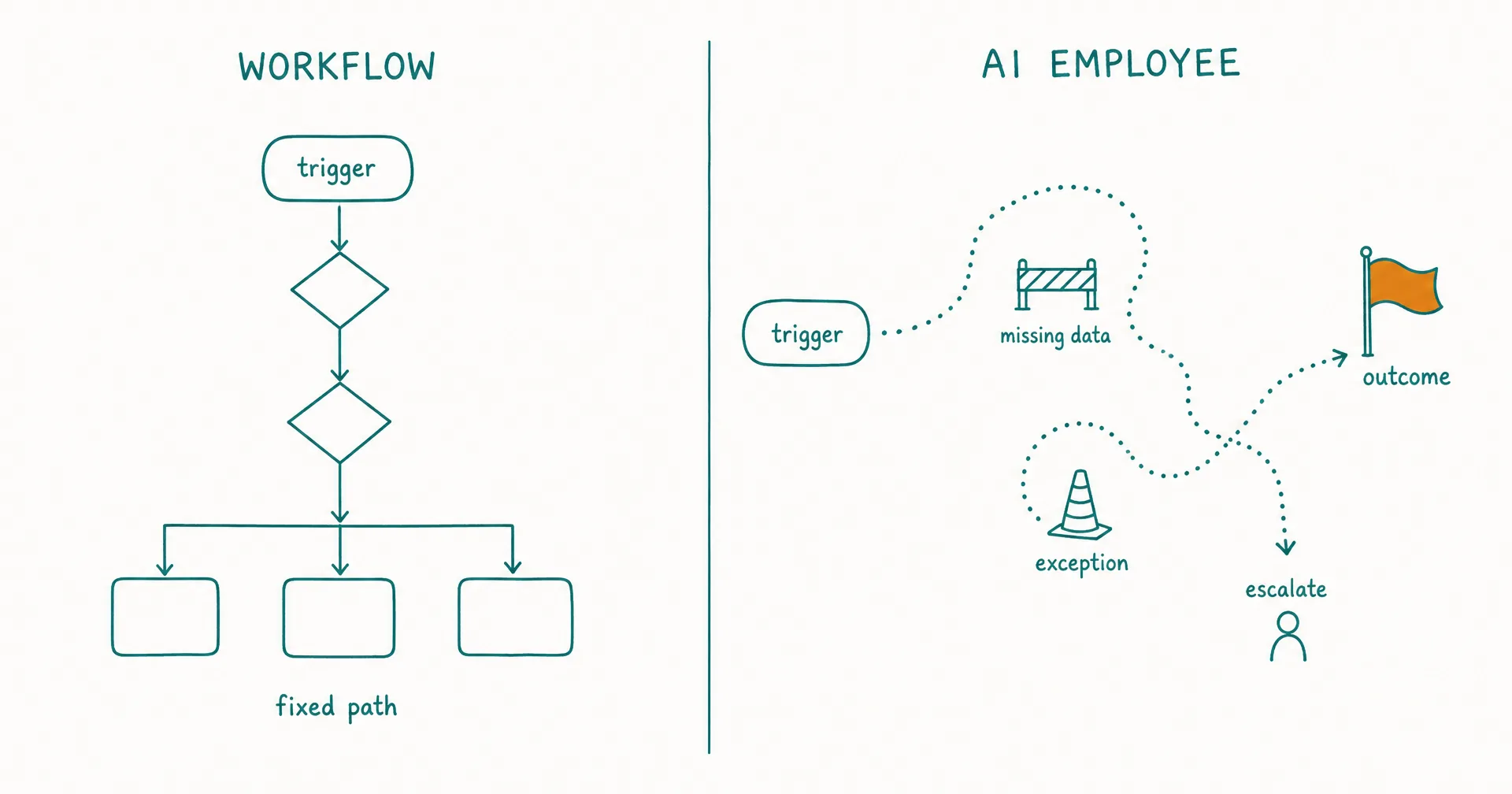
30 JUL 2026 AI Employee vs Workflow Automation: Which Should Own the Process? A workflow owns a known path; an AI employee owns a recurring outcome when the path varies. Where each wins, three hybrid patterns, and a 15-minute scoring test. InsightsCategory basics 22 min
Sketch contrasting a fixed workflow flowchart with an AI employee pursuing an outcome along a variable path
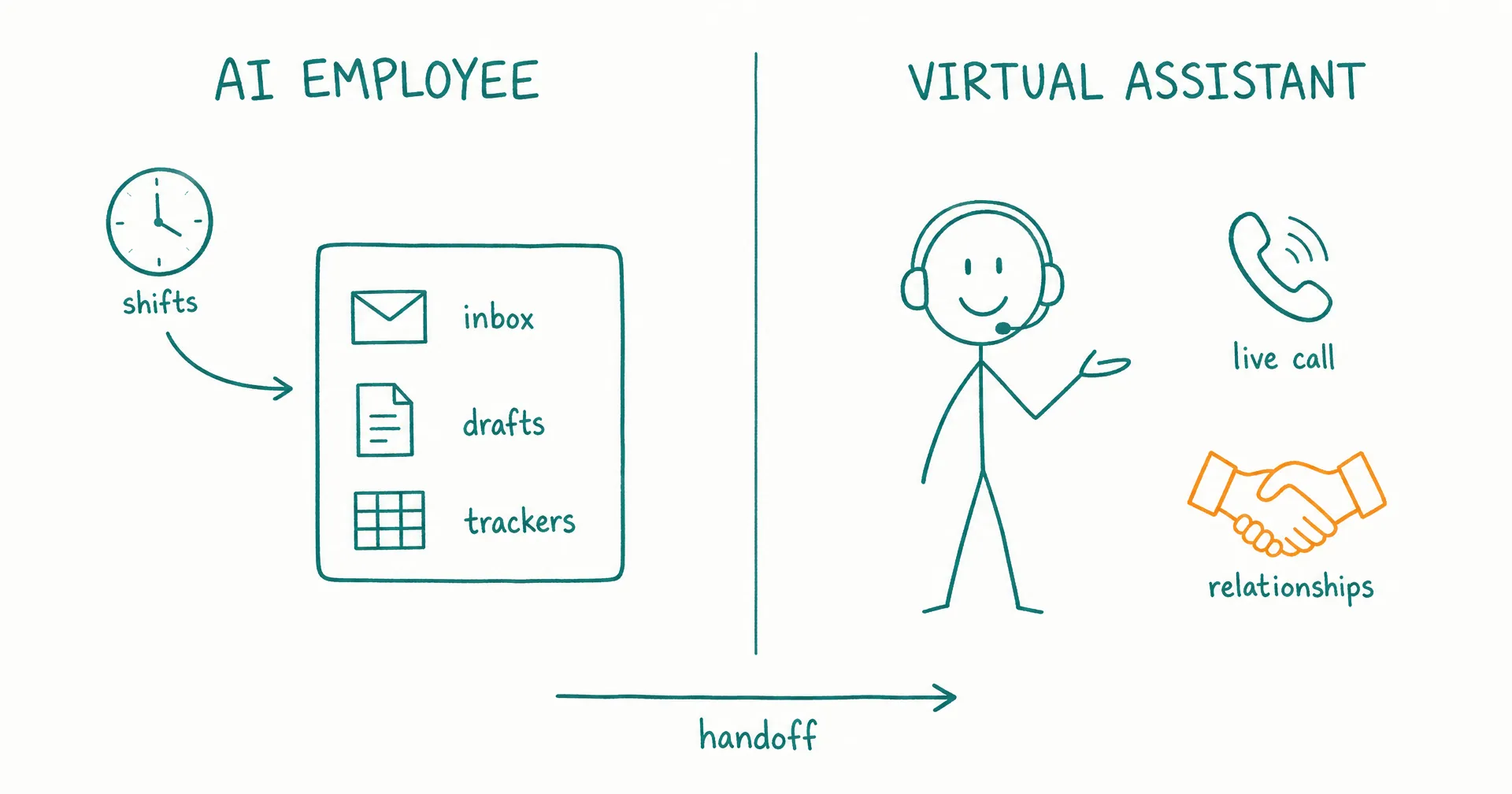
30 JUL 2026 AI Employee vs Virtual Assistant: Software or Human Support? One is software, the other is a person. Where each wins, how to run a fair pilot, and a role-splitting worksheet that usually ends in a hybrid. InsightsCategory basics 19 min
Sketch contrasting an AI employee role card working digital tasks with a human assistant handling a live conversation
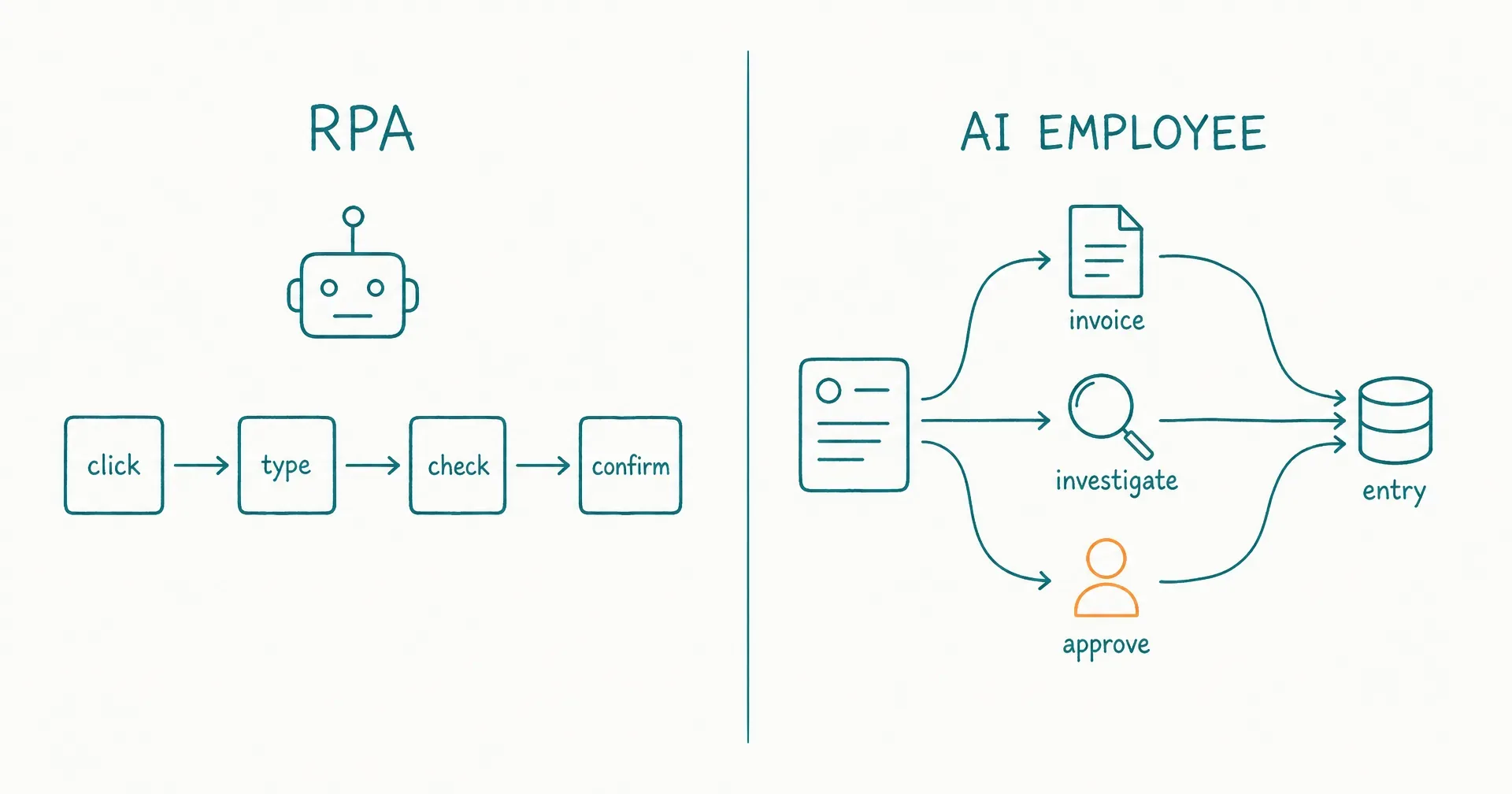
30 JUL 2026 AI Employee vs RPA: Adaptive Work vs Deterministic Bots RPA executes encoded procedures; an AI employee adapts inside a governed role. Nine differences, four hybrid patterns, and a worked invoice example. InsightsCategory basics 20 min
Sketch contrasting an RPA bot replaying an exact click sequence with an AI employee choosing a path through variable evidence
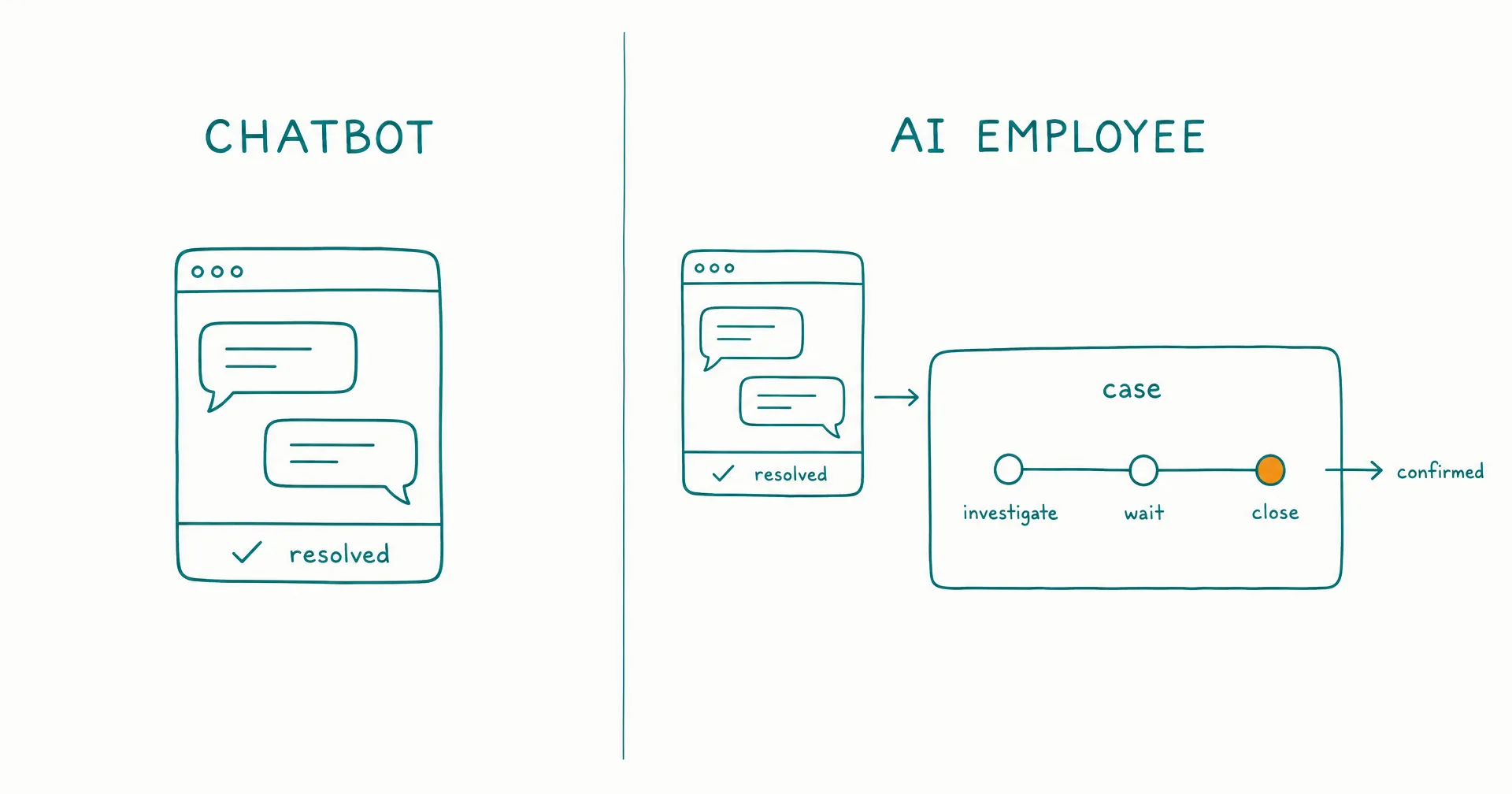
30 JUL 2026 AI Employee vs Chatbot: Conversation Is Not the Same as Ownership A chatbot manages the exchange; an AI employee manages the continuing obligation. Eight practical differences, four hybrid patterns, and the silence test. InsightsCategory basics 20 min
Sketch contrasting a chat window resolving a conversation with an AI employee role carrying a case forward after the chat closes
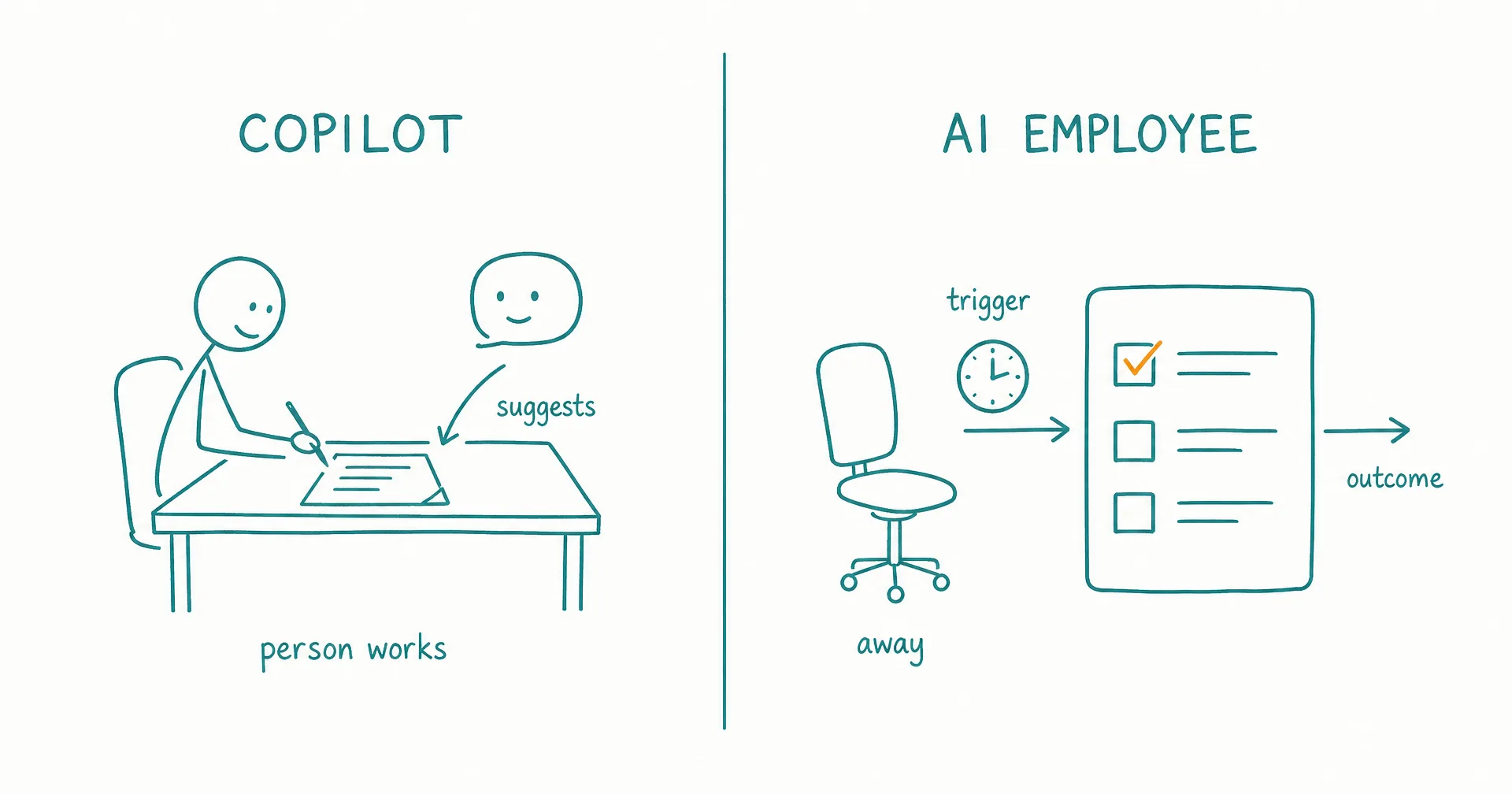
30 JUL 2026 AI Copilot vs AI Employee: Assistance vs Delegated Ownership Co-production versus delegation: where the human sits in the loop. Nine differences, a worked pipeline-review example, and a four-week augment-to-delegate pilot. InsightsCategory basics 19 min
Sketch contrasting a copilot suggesting alongside a working person and an AI employee carrying a task queue while the person is away
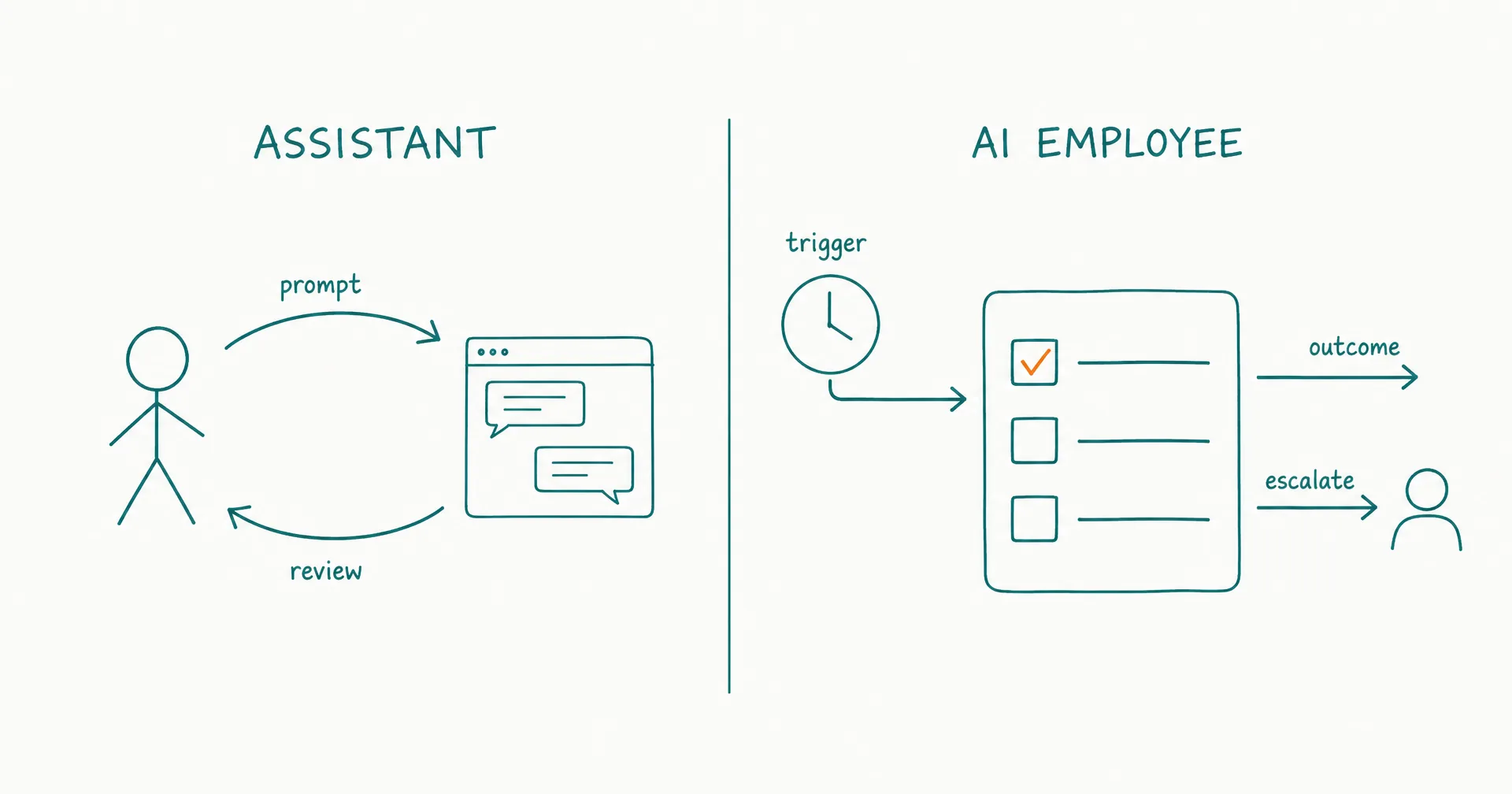
30 JUL 2026 AI Assistant vs AI Employee: Help on Demand vs Owned Work An assistant helps you do the work; an AI employee carries defined work forward. Four ownership tests, the coordination tax, and a 10-question routing rule. InsightsCategory basics 30 min
Sketch of a person prompting an assistant on one side and an AI employee role working a task queue from triggers on the other
30 JUL 2026 AI Agent vs AI Employee: Capability vs Accountable Role An AI agent can complete a task. An AI employee keeps owning a bounded outcome across tasks, triggers, and shifts. Ten operating differences and a final decision rule. InsightsCategory basics 24 min
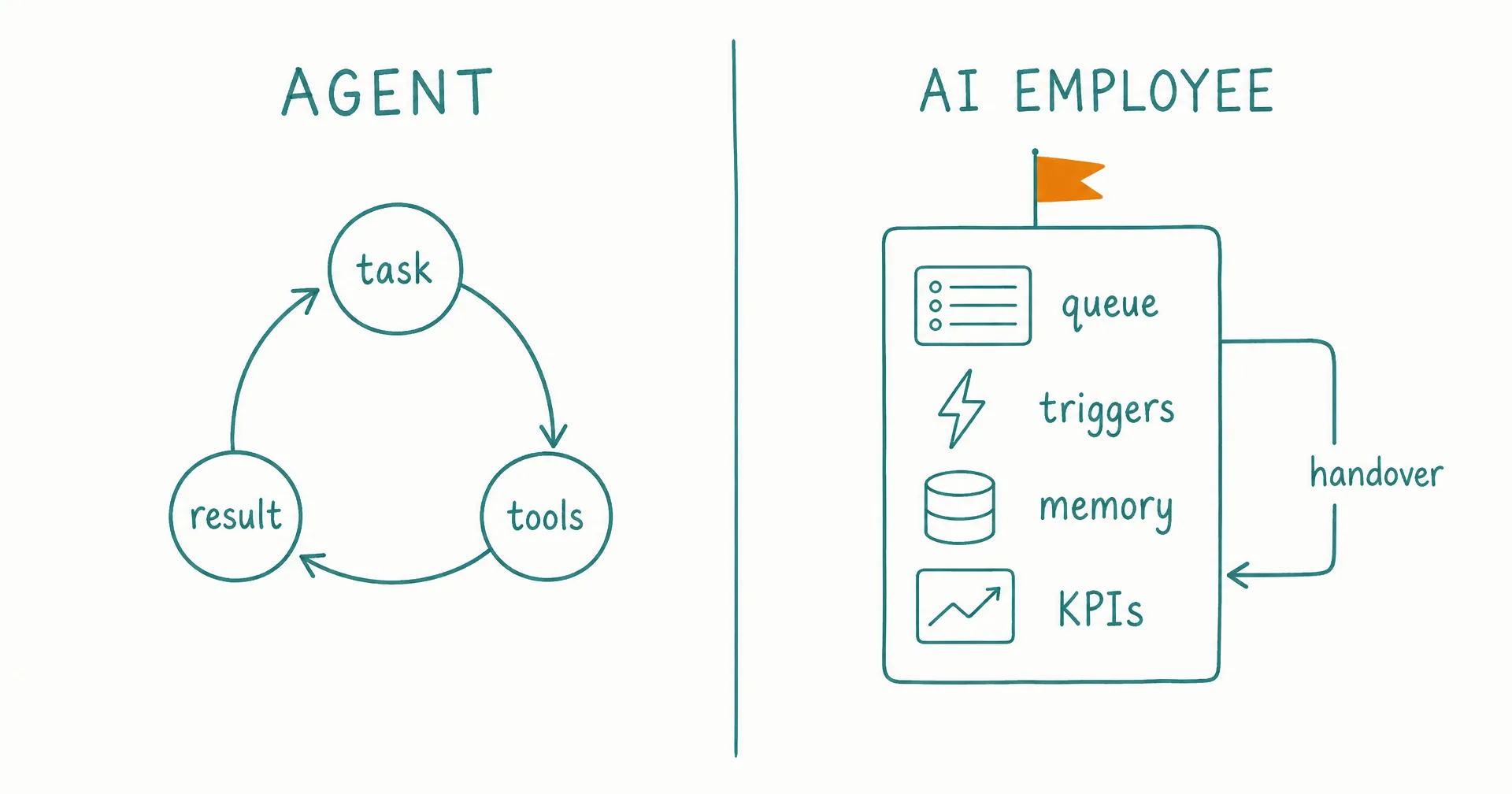
Napkin-style schematic contrasting an AI agent task loop with an AI employee role card carrying a queue, triggers, memory, and KPIs
06 JUL 2026 CellCog Runs on Fable 5: The Model That Makes AI Employees Possible Every chat on CellCog now runs on Fable 5, Anthropic's Mythos-class frontier model - and why AI employees were not truly possible before it. Product UpdatesChangelog 6 min
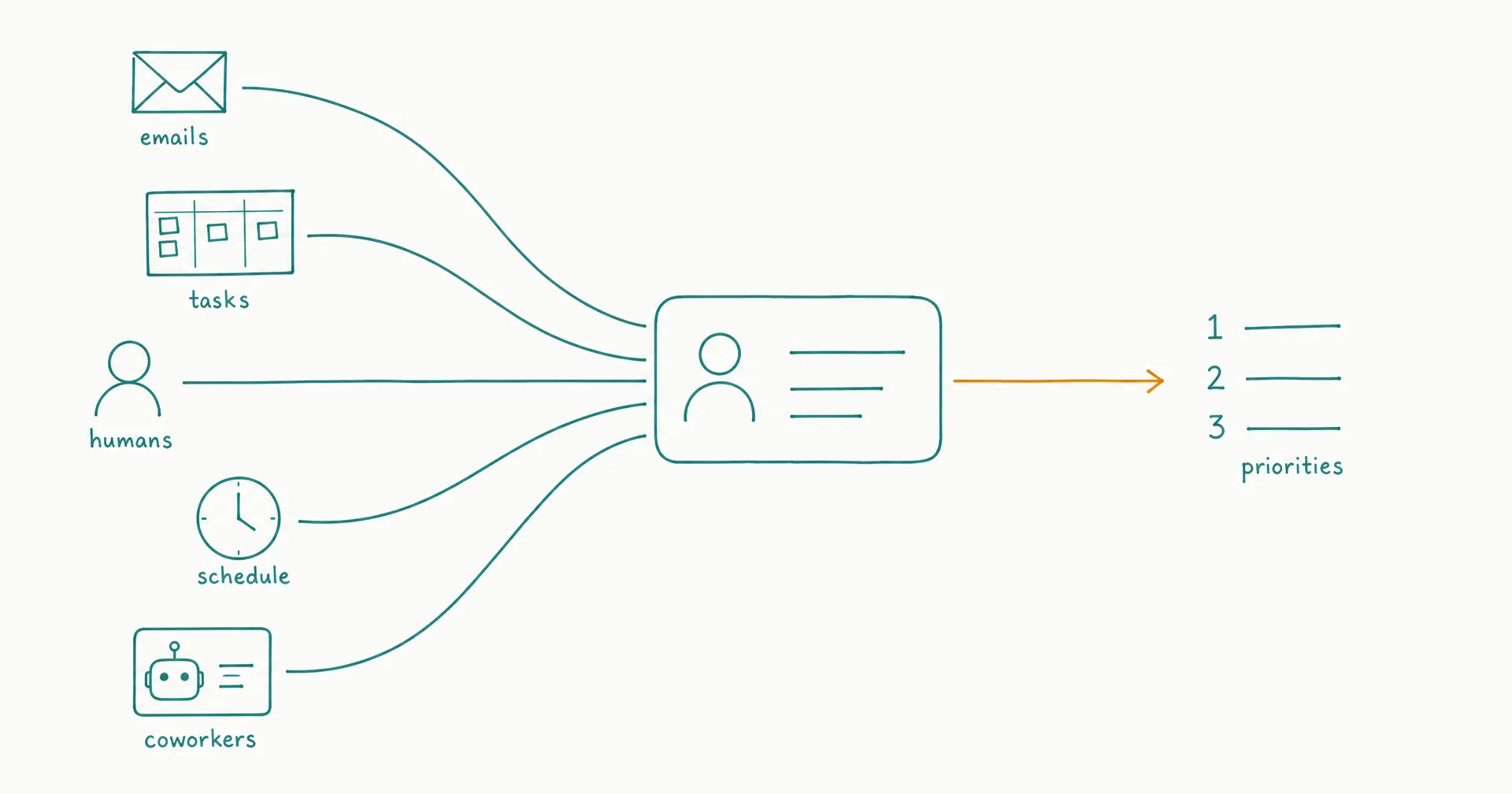
Hand-drawn diagram of many signals - emails, tasks, messages, schedules, coworker requests - converging on a single AI employee card that outputs one prioritized queue