CellCog now supports Seedance 2.0 - ByteDance’s most advanced video generation model.
“I’ve been personally waiting for this moment for quite some time, and Seedance 2.0 has definitely blown past my expectations. CellCog’s video generation was already doing really well with previous models. With 2.0, I think it’s the start of a new era - with a single prompt, we can generate Hollywood-grade full-motion content. That said, we’re just getting started. We’ve barely scratched the surface. Reference-to-video, for example, is still something we’re figuring out how to integrate into our video suite. In the coming weeks, expect to see even more of Seedance 2.0’s power unlocked as we learn to fully harness it.”
Nitish Garg, Founder, CellCog
- CellCog now supports Seedance 2.0, ByteDance’s most advanced video generation model - live since April 7, 2026.
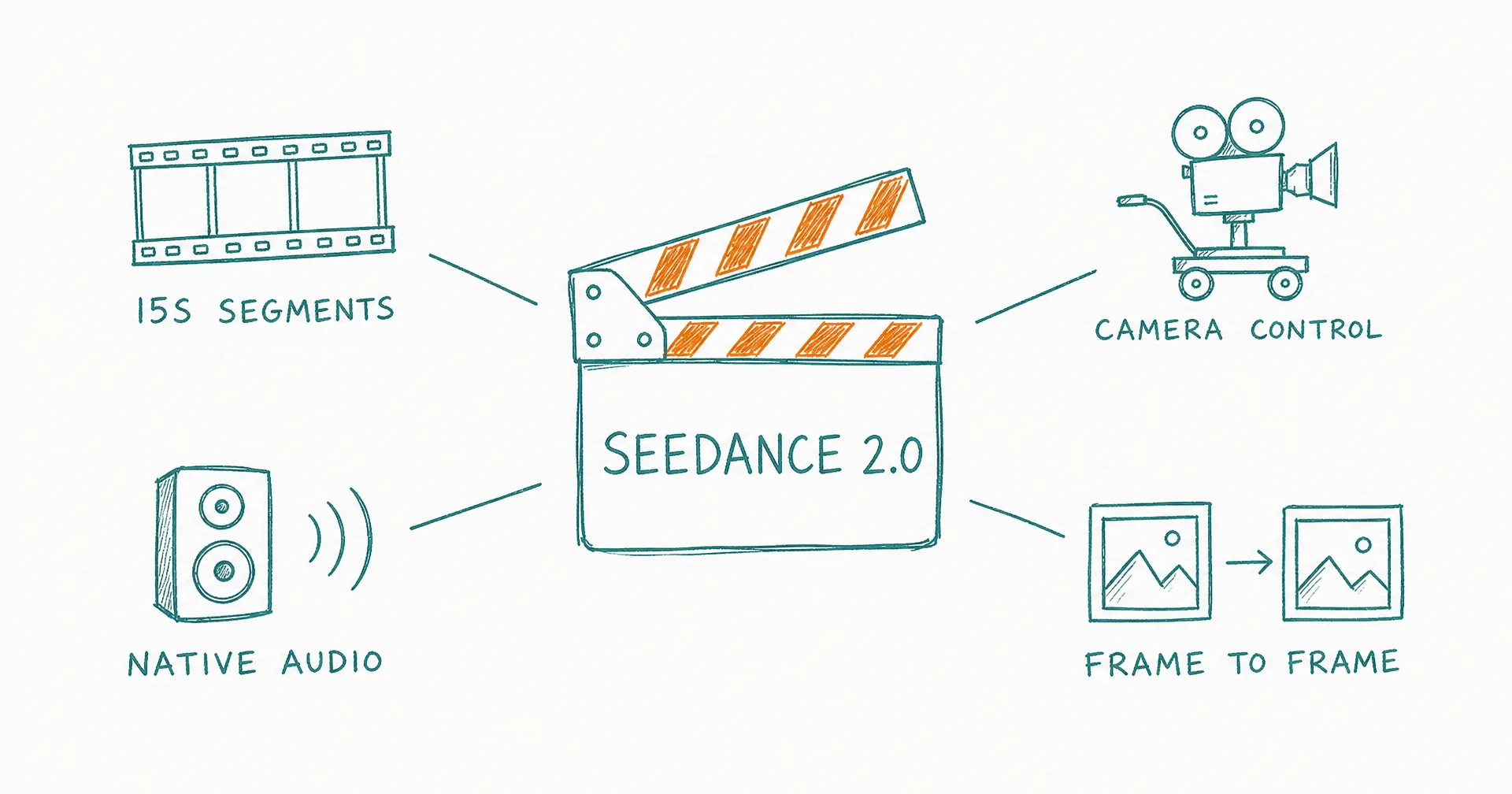
- Higher cinematic quality with real-world physics and director-level camera control.
- Segments run up to 15 seconds, up from 12 on Seedance 1.5.
- Native audio generation: synchronized sound effects and dialogue inside the segment.
- Frame transitions between start and end images enable precise keyframe-driven storytelling.
- At launch, the agent asks which model you want per task: Seedance 1.5 for budget-friendly production, 2.0 for premium cinematic output.
§ 01What’s New
- Higher cinematic quality with real-world physics and director-level camera control
- Up to 15 seconds per segment, up from 12 seconds on Seedance 1.5
- Native audio with synchronized sound effects and dialogue generated inside the segment
- Frame transitions between start and end images, for keyframe-driven storytelling
The quality jump shows up most in the things that break immersion when they’re wrong: how fabric moves, how light falls, how a camera tracks a subject. Motion that previously took several regenerations to get right lands far more often on the first take.
§ 02How It Works
When you ask CellCog to create a video, the agent asks which model you’d like to use - Seedance 1.5 for budget-friendly production, or Seedance 2.0 for premium cinematic output. You’re always in control of the cost-quality trade.
Native audio deserves a special mention: sound effects and dialogue are generated synchronized with the visuals, not layered on afterward. Combined with the longer segments and frame transitions, a single generation now carries a complete story beat - which is exactly the unit a multimodal agent assembles into full films, ads, and reels.
§ 03Availability at Launch
Seedance 2.0 launched for business accounts outside the US and Japan - eligible users saw the option automatically when starting a video task. (Two days later we removed the gating entirely; that story is here.)
§ 04The Honest Caveats
Premium output carries premium per-generation cost, which is why the 1.5-or-2.0 choice is yours per task. Reference-to-video - driving a generation from your own character and scene images - wasn’t yet fully harnessed at launch, and unlocking it is the roadmap. And frontier video models remain probabilistic: the director’s workflow is still generate, review, refine, one segment at a time.
Q1What is Seedance 2.0?
ByteDance’s most advanced video generation model at its April 2026 release: cinematic motion with real-world physics, director-level camera control, native synchronized audio, and segments up to 15 seconds.
Q2How is it different from Seedance 1.5?
Higher visual fidelity and physics, three extra seconds per segment, native audio with synchronized effects and dialogue, and frame transitions between start and end images for keyframe-driven work.
Q3Do I have to use it for every video?
No. At launch the agent asked per task whether you wanted 1.5 (budget-friendly) or 2.0 (premium cinematic) - and 1.5 remained available for cost-sensitive work after 2.0 became the default.
Q4What are frame transitions?
You specify a starting and an ending image, and the model generates the motion between them - precise keyframe control for long-form videos, expressed through simple descriptions.
Q5What does native audio mean?
The model generates synchronized sound effects and dialogue inside the video segment itself, rather than audio being layered on afterward - so a door slams when the door slams.