A mathematician at Anthropic says he and Claude have proved the Riemann Hypothesis. In a four-page note posted on November 20, 2026, Levent Alpöge writes: “I believe I have, working with Claude, discovered a proof of the Riemann Hypothesis.” The note went to the top of Hacker News within hours.
It is a claim, not yet a result. Below is what the note says, what has and has not been checked, and why the Lean files are the part that matters.
On this page · 6 sectionsOpen
 Levent Alpöge, a mathematician at Anthropic, posted a four-page note on November 20, 2026 saying that he and Claude found a proof of the Riemann Hypothesis, and of the Generalized Riemann Hypothesis too.
 He says he and Claude formalized the argument in Lean, a language a computer can check line by line, and he posted only the Lean files, split into 14 parts.
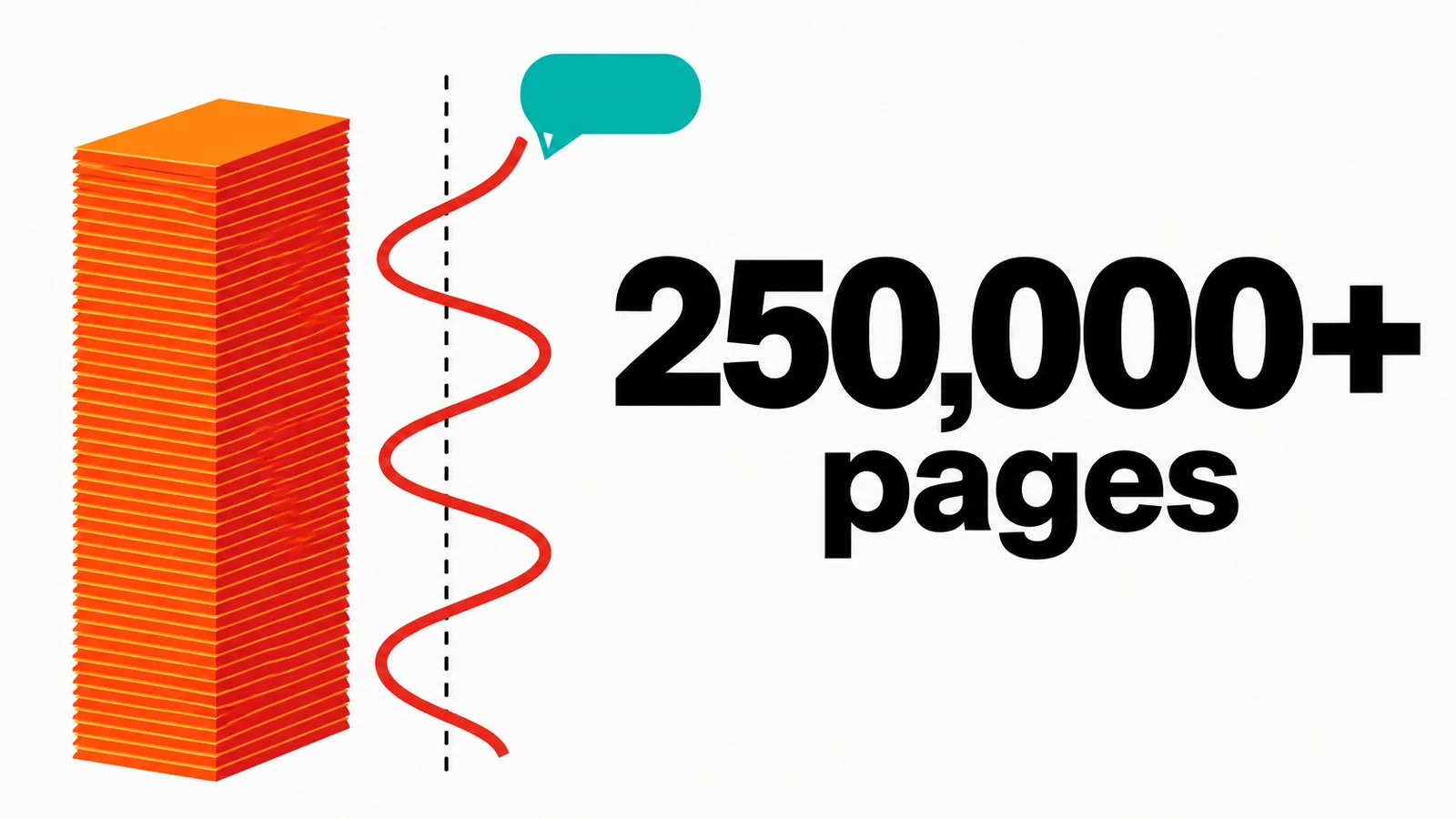
 There is no paper. A footnote says a generated write-up ran past 250,000 pages, and he calls his own short timeline a summary that ‘might make zero sense’ in places.
 Nobody outside has reported checking the Lean files yet, and Anthropic has said nothing on X since the note went up. Treat it as a claim until a check is published.
 The note came the day after Anthropic’s stock market debut. Alpöge calls the timing horrible and says the cynical reading of it is false.
§ 01What the note claims
- The proof. A proof of the Riemann Hypothesis that, he writes, “easily extends much further”, to the Generalized Riemann Hypothesis.
- The check. “Claude and I have also formalized the arguments without assumptions.” The formal proof is in Lean, linked from the note in 14 parts.
- No paper. He says producing a readable write-up would take time, so “I decided to only present Lean.” A footnote says a generated write-up passed 250,000 pages.
- Claude’s part. He says he steered the work toward the right setting and that “Claude far outpaced me near the finish line.”
- The dates. His own timeline runs from October 6, 2026 to November 16, 2026, the day the Generalized Riemann Hypothesis fell, by his account.

§ 02What has not been checked
| Part of the claim | What the note says | What we could check |
|---|---|---|
| The proof | Found with Claude | Only the note itself; no paper |
| The Lean files | Finished, no assumptions | Linked in 14 parts; not run by us or reported checked by others |
| The timeline | October 6 to November 16 | His own summary, which he says may be rough |
| Anthropic | He consulted leadership | No post from Anthropic’s accounts on X |
| Outside review | A few trusted mathematicians consulted | No published review |
We did not download or run the Lean files. A check needs a working Lean setup and time, and it is a job for people who can judge whether the formal statement is the real hypothesis.
§ 03Why a Lean proof matters here
Lean is a proof language: a program checks every step, so a proof that compiles does not depend on anyone reading it. That is why a claim with no paper can still be taken seriously. Three things decide it: whether the formal statement really says the Riemann Hypothesis, whether any step leans on an unproved assumption, and whether the files compile. The note says the second holds. The first and third are for others to confirm.
His own words set the bar. He calls parts of his timeline a paraphrase of a summary that “might make zero sense”, and says “the Lean should suffice to clarify everything.”
§ 04The timing
The note appeared the day after Anthropic’s shares began trading on Nasdaq. Alpöge addresses it directly: “The precise timing is horrible.” He writes that he messaged Dario Amodei to ask about announcing, that “there was a constraint to respect”, and that “There is an obvious cynical view, to do with the timing, but it is false”. We have no way to check that, and we report it as his account.
Coverage started fast. One widely shared X post quotes the first press report: “Levent Alpöge, a mathematician and employee at artificial intelligence company Anthropic, claimed on Friday to have proven the most famous problem in all of mathematics using an LLM.”
§ 05What it means if you hand real work to AI
The pattern in the note is the one we see in everyday work: a person who knows where to aim, and an AI that carries the technical load faster than expected. The difference here is the check. A machine-checkable proof is the strongest way there is to show your work, and the question for anyone handing work to AI is the same at any scale: what would let someone else verify it without trusting you?
§ 06Sources
- Levent Alpöge, Remark (the note), PDF created 12:52 UTC, November 20, 2026
- Hacker News discussion, posted 14:16 UTC, November 20, 2026
- An X post quoting the first press report, 15:10 UTC, November 20, 2026
- CellCog, OpenAI’s 722 AI Math Papers: What’s Proved, What’s Checked
Q1What is the Riemann Hypothesis?
A statement from 1859 about where the zeros of the Riemann zeta function lie. If true, it pins down how evenly prime numbers are spread out. It is one of the most famous open problems in mathematics.
Q2Why does a Lean proof matter?
Lean checks every step mechanically. If the files state the real hypothesis, use no unproved assumptions and pass the checker, the proof stands without anyone reading 250,000 pages. Those three things are what checkers will look at first.
Q3Did Anthropic announce this?
No. The note is on Alpöge’s personal site. He says he asked Anthropic’s leadership about announcing it, and Anthropic’s own accounts had posted nothing about it by 15:14 UTC.
Q4Would this win the Clay prize?
The Clay Mathematics Institute offers $1 million for a proof, but only after it is published and broadly accepted by mathematicians, which takes years.
Q5What does this have to do with AI at work?
It is the clearest case yet of a person directing the work while an AI does much of the technical heavy lifting, with a machine check standing in for trust.