A new AI data company says four of the five frontier labs already buy from it. On November 20, 2026, co-founder Anshuman launched Arcfront on X with co-founder Naman Bhalla: “In under a year, four of the five frontier labs became customers.” The post passed 160,000 views within three hours.
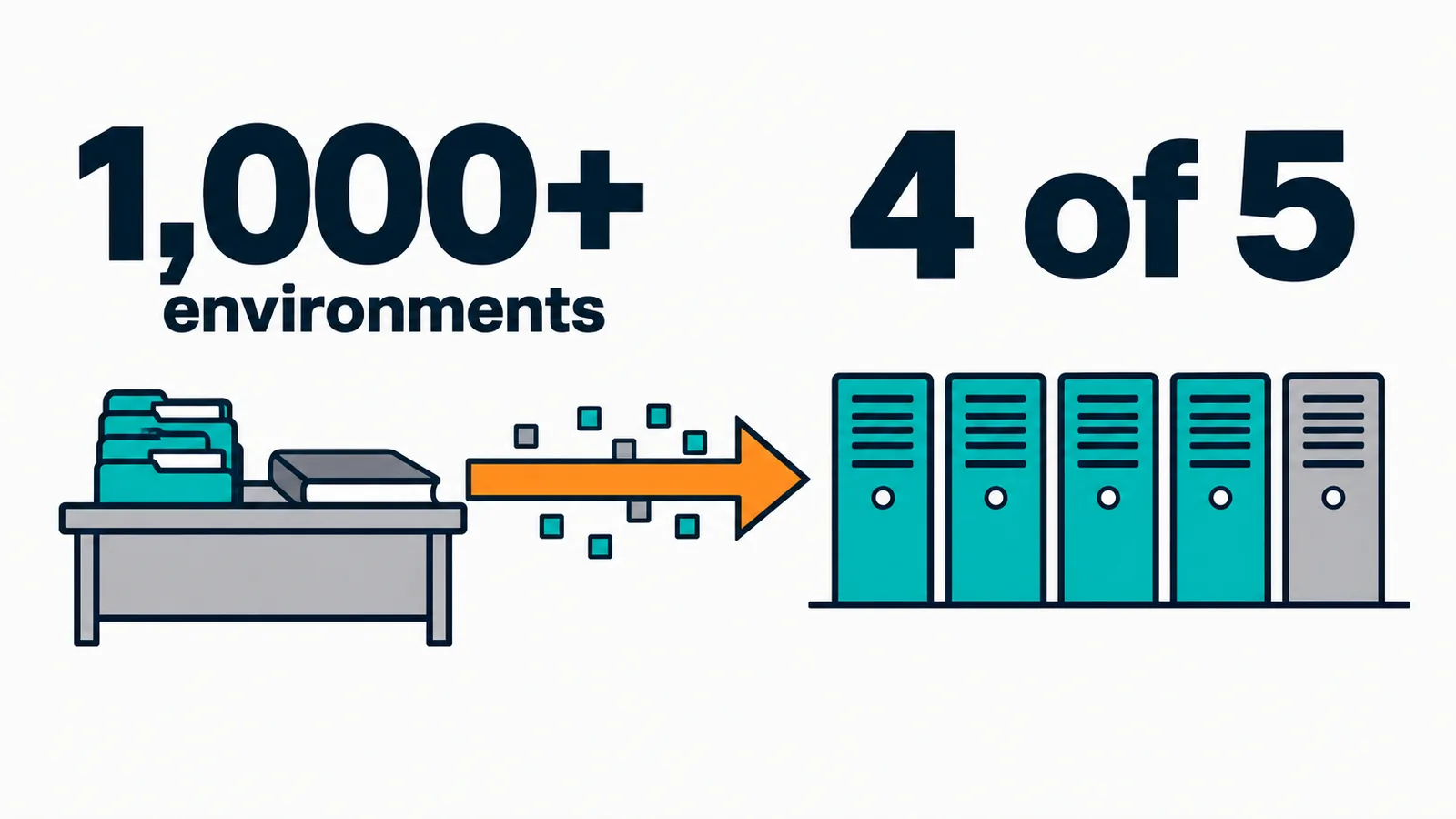
The company’s own account put it in one line: “We turn the record of how experts build judgment into training data, RL environments and evals for frontier models.” It added 300+ enterprise partners and 1,000+ RL environments, and said it is hiring in San Francisco and Bengaluru.
On this page · 6 sectionsOpen
 Arcfront launched publicly on November 20, 2026. Co-founder Anshuman posted the launch with co-founder Naman Bhalla.
 The company says four of the five frontier AI labs already work with it, and that it has 300+ enterprise partners and 1,000+ RL environments. It names none of the labs.
 Its pitch: AI that beats the best humans at coding contests still fails on day one as a finance manager, because real jobs need context, taste and judgment.
 Arcfront says it builds training data and evals from timestamped records of expert work and from evals designed with enterprises in each sector.
 No funding, investors, revenue or customer names were announced in anything we read. Every figure here is the company’s own.
§ 01What Arcfront says it has
| Claim | Figure |
|---|---|
| Frontier labs working with it | 4 of 5 |
| Enterprise partners | 300+ |
| RL environments | 1,000+ |
| Time to reach those labs | under a year |
| Hiring locations | San Francisco, Bengaluru |
| Labs named | none |
None of these figures came with a lab name, a partner name or an outside source. No lab has confirmed being a customer in anything we read.
§ 02The pitch: contest skill is not job skill
The launch post builds on one comparison. “In 2025 an AI solved all 12 problems at the ICPC World Finals. The best human team solved 11.” Anshuman writes that he competed in two of those finals.
Then the turn: “And yet, put that same AI inside a company as a finance manager, or in almost any other job, and it fails on day 1.”
| Solver | Problems solved |
|---|---|
| AI system | 12 |
| Best human team | 11 |
Asked in replies what is missing, he answered: “Context gathering, taste, judgement.” A month-end management report, he wrote, has a different excellent answer for every company depending on its sector, its investors and its risks. “Plus real world data is messy.”
§ 03How it says it builds the data
In another reply, Anshuman described two routes:
- Derived evals. Patterns in data from the apps people already work in. Everything is timestamped, which he calls fuzzy but possible.
- Enterprise-designed evals. Companies in each sector define how good work looks in their own domain, and Arcfront builds evals from that with its own tools.
He added that records alone get only part of the way, and that Arcfront works with enterprises on evals they use to judge models in each department. Naman Bhalla framed the mission more broadly, as freeing people from mundane work.
§ 04What has not been said
- No money figures. No funding round, valuation, investors or revenue appear in the launch posts. The post credits deep support from @asxna without saying what that means.
- No names. Neither the four labs nor any of the 300+ partners are named.
- No outside check. Every number on this page is Arcfront’s own, from its launch day posts.
§ 05Why this matters for AI employees
Arcfront is a bet that the hard part of AI at work is practice, not raw intelligence: a model has to see how a real finance team closes a month before it can do it. That matches what anyone running AI on real work finds. The useful jobs are the ones with context written down and the math shown.
§ 06Sources
- Anshuman on X, 18:37 UTC, November 20, 2026, and his replies the same day
- Arcfront on X, 18:40 UTC, November 20, 2026
- Naman Bhalla on X, 19:53 UTC, November 20, 2026
Q1What is an RL environment?
A simulated task with a way to score the result, so a model can practice the task and be rewarded for doing it well. Labs buy them to train models on work they cannot easily collect data for.
Q2How does Arcfront get its data?
Its co-founder described two routes on X: evals derived from patterns in timestamped data from the apps people work in, and evals designed with enterprises that know their own sector best.
Q3Has Arcfront raised money?
It has not said. The launch post credits deep support from one account, @asxna, without saying whether that means investment.
Q4Which labs are the four?
Arcfront did not name them, and no lab has confirmed it in anything we read. Treat the four of five figure as the company’s claim.
Q5Why does this matter for AI at work?
It is a bet that the gap between contest skill and job skill is a data problem: models fail at real jobs because they have not practiced real jobs with real context.