Microsoft’s head of Autopilot has published how he built an agent that reads every meeting invite he gets, decides what to do and only asks him when it is unsure. Omar Shahine, corporate vice president of Microsoft Autopilot, published it on his own site and on X at 05:29 UTC on October 23, 2026, and Microsoft’s Command Line blog reprinted it at 03:21 UTC on October 24. It is a prototype for a feature Autopilot will ship, and it runs on Microsoft-Decision-1, the decision model we covered when it launched.
Two lines in the post matter beyond calendars. Shahine places Autopilot in a category beside Meta’s Muse, OpenAI’s Dots, Claude Duet and Grok Bot, and he says plainly: “Autopilot is built on OpenClaw.” Autopilot was announced at Build in June 2026 as Scout and reached private preview customers in September; our Autopilot explainer has the background.
On this page · 8 sectionsOpen
 Omar Shahine, CVP of Microsoft Autopilot, built a prototype agent that answers his meeting invites every 30 minutes and asks him only when unsure.
 He places Autopilot beside Meta’s Muse, OpenAI’s Dots, Claude Duet and Grok Bot, and says Autopilot is built on OpenClaw.
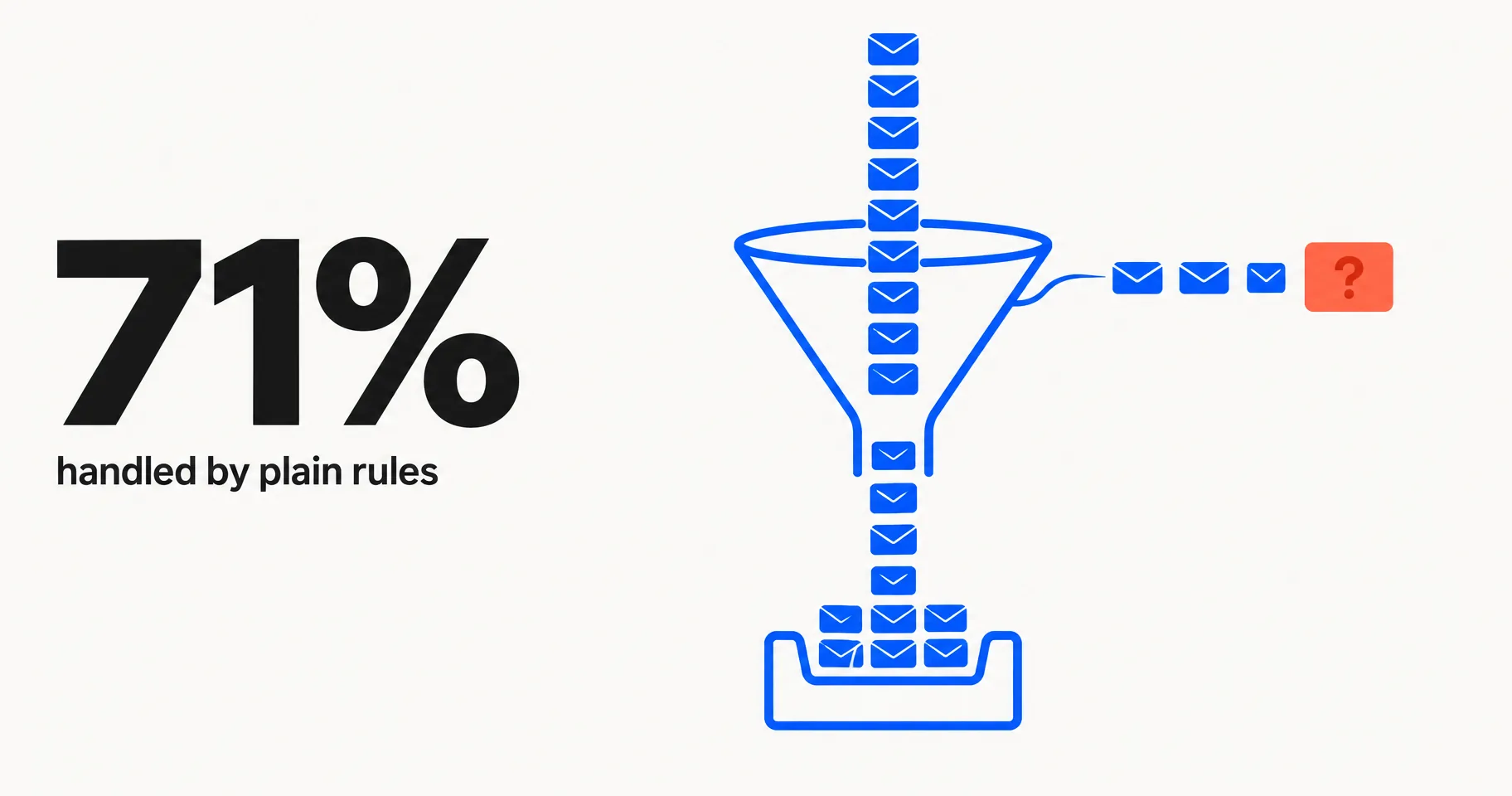
 Plain rules handled 167 of the 236 invites the agent saw, 71%, with no model call: cancellations, past meetings, updates and standing declines.
 Microsoft-Decision-1 judges the rest with four fixed answers, and the agent acts alone only when the model is more than 90% confident.
 In 30 model calls, 17 cleared the bar and the model disagreed with the rules 12 times; a duplicated calendar event was the bug that taught him most.
§ 01What the agent does
The job is the part of an executive assistant’s work that eats the most time: answering invites, updates, time changes and cancellations. Shahine pulled 90 days of his own mail, July 24 to October 22, and counted 1,029 meeting emails, with each meeting arriving more than three times. His design target is how executives with assistants already work in Outlook, where invites go to the assistant and never reach the executive. In his words: “The calendar is the product, not the inbox.”
The prototype runs in Scout, his desktop assistant, every 30 minutes. An inbox rule routes every invite into a folder the agent owns, and the agent answers through his delegated Microsoft Graph access. He writes: “That prototype is now operating 24/7 on my laptop as I continue to learn from it and improve it.”
| Measure | Count |
|---|---|
| Meeting emails in 90 days (July 24 to October 22) | 1,029 |
| Invites the agent has seen | 236 |
| Handled by plain rules, no model call | 167 (71%) |
| Invites judged by the decision model | 30 |
| Model calls that cleared the bar and acted alone | 17 |
| Times the model disagreed with the rules | 12 |
| Questions asked of Shahine since October 16 | 33 |
§ 02Rules first, then the model
The first layer is plain code. Cancellations, meetings already past, meetings he organized and updates to invites he already answered are filed away; titles on his always-decline list and anything while he is out of office are declined. That layer settled 167 of the 236 invites. His summary: “Most of the volume is bookkeeping.”
What is left becomes features before any model sees it. The agent splits conflicts into firm (accepted) and soft (tentative), resolves every mailing list to its real member count so one address is not mistaken for one person, strips the agenda of join links and passcodes, measures how heavy that day already is, labels who is asking (manager, direct report, colleague, external) and counts how he answered the same meeting before. Shahine credits these features, not instructions, with most of the accuracy.
The decision model then gets a typed question with four fixed answers: accept, decline, keep it tentative, or just file the email. It returns one choice, a confidence and a probability for each answer, which is what makes a hard rule possible: “If the model is more than 90% confident, the agent acts. Otherwise it asks me.” Hard constraints such as being out of office override the model, a score under 60% is flagged as low confidence, and a failed call falls back to the rules and sends the invite to him. It never accepts a whole recurring series on its own.

§ 03Where the invites went
Two of his examples show the bar working. A six-person planning review whose agenda asked him to sign off, which he had accepted three times before: the rules said accept, the model said accept at 94%, and the agent answered without him. A company-wide Q&A sent to a list of 812 people that overlapped a meeting he had accepted: the rules said decline, the model said keep it tentative at 71% because he could watch it later. That was under the bar, so it came to him with both answers attached, and his pick became history for next time.

The disagreements are the point for him. The model overruled the plain rules 12 times in 30 calls, and he writes that “the rules know my calendar, the model knows my habits.” Every answer he gives is saved as a past verdict, and anything he says “always” about becomes a rule, so the number of questions keeps falling.
§ 04The bug that taught him most
He had declined a large Q&A, then found it back on his calendar as tentative. The organizer had sent an update, Outlook made a new copy of the event with his answer reset, and the agent’s decline hit the old copy, got a not-found error and logged it as done. The fix checks every live copy of a meeting before calling the job finished. His conclusion: “An EA would have noticed this just by glancing at the calendar. My agent has to check on purpose.”
§ 05What it tells you about the category
- Microsoft names its peers. Autopilot sits, in its own lead’s words, beside Muse, Dots, Claude Duet and Grok Bot: assistants that act on your behalf, not chat windows.
- Autopilot runs on OpenClaw, the open agent framework, with Microsoft’s own decision model making the judgment calls.
- The design is the lesson. Rules for bookkeeping, a decision model with fixed answers and a confidence score for judgment, one confidence bar for acting alone, and a short question to a person for the rest.
- It is still a prototype. The numbers are one person’s calendar over a few weeks, on his laptop. The Autopilot feature has no date in the post.
§ 06Where CellCog stands
Our conflict, declared: we build CellCog, a platform where a business hires AI employees that keep memory and work as a team, and Shahine’s post puts Autopilot in the category we compete in. Our agent tiers run Claude Opus 5.5, and we do not use Microsoft-Decision-1. We follow this work because the hard part he describes, knowing when to act and when to ask, is the same question every AI employee answers all day.
§ 07What we are watching for
- A date for the meeting-invite feature in Autopilot.
- Microsoft’s next Autopilot step out of private preview.
- Other teams publishing how they use decision models inside agents.
§ 08Sources
- Omar Shahine, Building a fully autonomous meeting invite capability for Autopilot, his site, and his post on X, October 23, 2026, 05:29 UTC.
- Microsoft, Command Line reprint, October 24, 2026, 03:21 UTC.
Q1Who wrote the Autopilot meeting agent post?
Omar Shahine, corporate vice president of Microsoft Autopilot. It first ran on his own site on October 23, 2026, and Microsoft’s Command Line blog reprinted it on October 24.
Q2What is Microsoft Autopilot built on?
Shahine writes that Autopilot is built on OpenClaw. It was announced as Scout at Build in June 2026 and reached private preview customers in September.
Q3What is Microsoft-Decision-1?
Microsoft’s decision model, released October 9, 2026. Instead of chatting it scores a fixed set of answers and returns a choice, a confidence and a probability for each.
Q4How often did the agent act without asking?
Rules settled 167 of 236 invites. Of 30 invites the model judged, 17 cleared the 90% bar and were handled alone. He was asked 33 questions since October 16.
Q5Can a CellCog AI employee answer my meeting invites?
Yes, within the limits you set. A CellCog AI employee has its own inbox and can answer invites and scheduling mail; it runs on Claude Opus 5.5, not Microsoft-Decision-1.