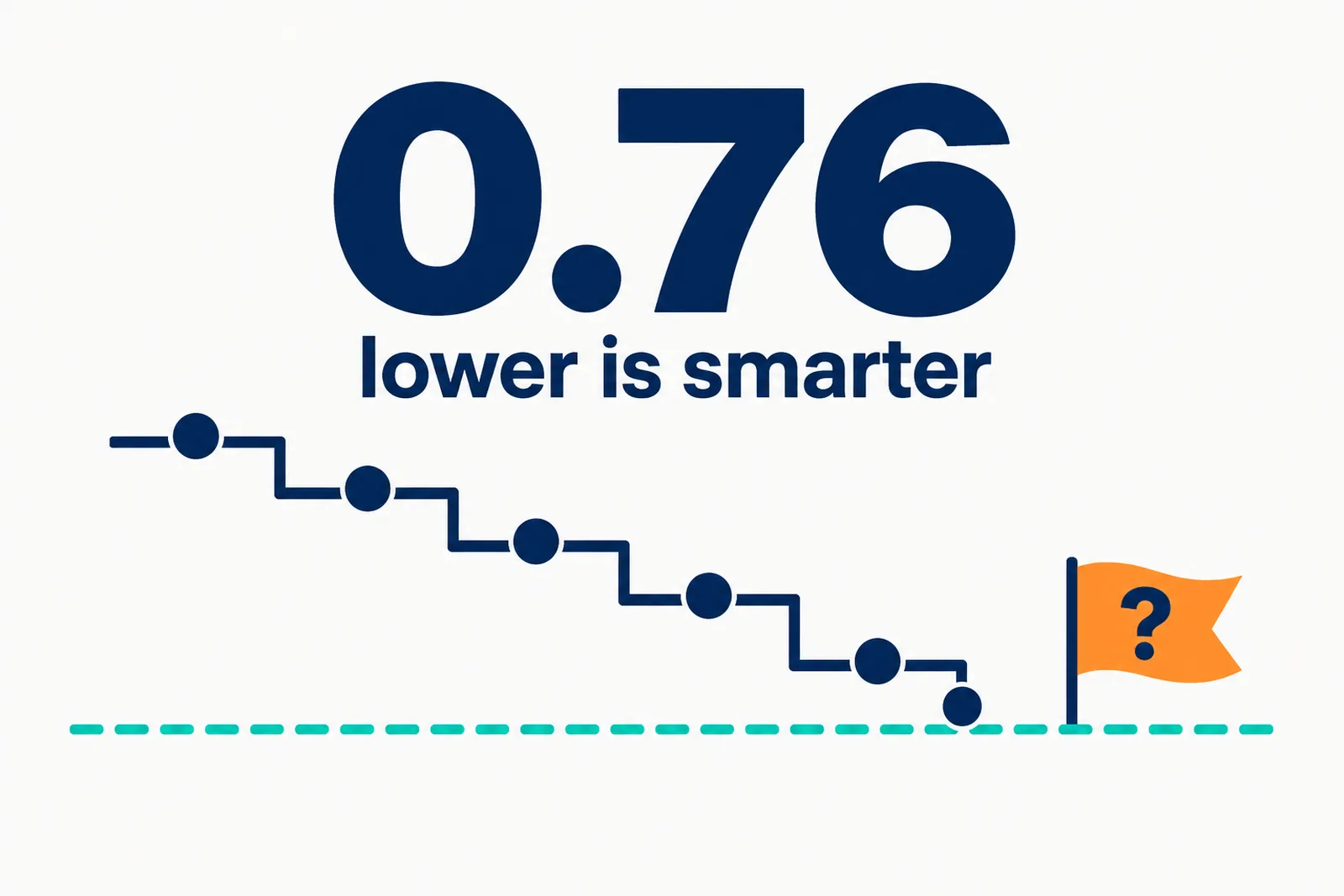
OpenAI has published how far its base models have come, and asked rival labs to agree on where to stop. In a post on X at 17:03 UTC on November 22, 2026, chief scientist Jakub Pachocki wrote: “We decided to provide more transparency into pretraining progress at OpenAI for the sake of moving toward shared safety bars.” His essay, Perplexity and Intelligence, argues for “common limits based on perplexity and other measurements, with progress beyond them gated on our ability to understand AI behavior.”
Labs rarely publish pretraining numbers, because they show competitors how close a lab is to its next model. Here is what the chart discloses, what Pachocki proposes, and what is still open.
On this page · 6 sectionsOpen
 OpenAI chief scientist Jakub Pachocki published a chart of base-model log-perplexity for every major GPT from GPT-3.5 to GPT-6.2 Astra on November 22, 2026.
 The chart also shows an unnamed internal model below GPT-6.2 Astra, at about 0.73 on OpenAI’s scale, and a shaded band below about 0.71 marked with a question mark.
 Pachocki proposes common limits based on perplexity and other measurements that labs would agree not to cross until AI behavior can be understood and monitored better.
 He wants a metric tracked across labs and shared norms for evaluating and red-teaming frontier models before first use.
 Sam Altman called it the most important thing OpenAI has published in a while. No numeric limit was proposed, and no other lab had replied by 17:40 UTC.
§ 01What the chart shows
Perplexity measures how well a model predicts text it has not seen; lower means a stronger base model. OpenAI’s chart plots base-model log-perplexity on its own evaluation set for every major GPT since GPT-3.5, plus one model it has not named. The values below are read off the chart image and rounded:
| Model | Log-perplexity (about) |
|---|---|
| GPT-3.5 | 0.99 |
| GPT-4 | 0.91 |
| GPT-4.5 | 0.88 |
| GPT-5.5 | 0.85 |
| GPT-5.6 Sol | 0.83 |
| GPT-6 Astra | 0.78 |
| GPT-6.2 Astra | 0.76 |
| Internal model | 0.73 |
The drop was slow for three years and steep in 2026: from GPT-5.5 to GPT-6.2 Astra, the score fell about as much as it did from GPT-3.5 to GPT-4. Below the internal model, OpenAI shades a band under about 0.71 and marks it with a question mark.
OpenAI also drew dotted lines at levels it ties to abilities:
| Line | Log-perplexity (about) | First model at or below it |
|---|---|---|
| Fluent conversation | 0.99 | GPT-3.5 |
| Benefits from thinking before answering | 0.91 | GPT-4 |
| Useful coder | 0.87 | GPT-5.5 |
| Cybersecurity expert | 0.83 | GPT-5.6 Sol |
| Solved a Millennium Prize math problem | 0.76 | GPT-6.2 Astra |
The last line links to OpenAI’s claim this month on a Millennium Prize problem, which we covered in our Navier-Stokes post. GPT-6.2 Astra, released on November 17, is the newest public model on the chart (our launch record).
§ 02What Pachocki proposes
Sam Altman quoted the core of the proposal. Pachocki asks frontier developers to “jointly endeavour to establish shared norms for how to evaluate such models and red-team safety cases for them by the time they are first used,” including shared transparency standards. He then proposes common limits that labs commit not to cross until their ability to monitor AI behavior reaches a concrete milestone, “such as the development of a successor to CoT monitors.” In short, he wants “an industry standard that specifies a first limit on development, measured by some key metric we can track across labs,” and a definition of what must be achieved before going past it.
Chain-of-thought monitors read a model’s written reasoning to catch bad behavior; the milestone he names is a better tool than that.
§ 03The reaction
Altman shared the essay nine minutes later: “This is the most important thing OpenAI has published in awhile.” He added that OpenAI is providing a lot of transparency into its pretraining progress and hopes the industry can agree on common limits. When we read them at 17:40 UTC, Pachocki’s post had 134,784 views and Altman’s 115,846.
§ 04What is not settled
- The number. Neither post names a value for the first limit.
- Comparability. The scores are on OpenAI’s own evaluation set; other labs would need a shared test before their numbers meant the same thing.
- The internal model. OpenAI does not name it or say when it ships.
- Other labs. No reply from Anthropic, Google DeepMind, Meta or xAI by 17:40 UTC on November 22.
§ 05What we are watching
- Replies from other labs. Whether any publishes its own perplexity curve or backs a shared limit.
- A shared evaluation set. Who would host it and who would audit it.
- The internal model. Its name and release, and where it lands against the capability lines.
§ 06Sources
- Jakub Pachocki on X, 17:03 UTC, November 22, 2026, with OpenAI’s chart
- Sam Altman on X, 17:12 UTC, and his quote of the essay, 17:13 UTC, November 22, 2026
Q1Who wrote it and when?
Jakub Pachocki, OpenAI’s chief scientist, announced it on X at 17:03 UTC on November 22, 2026. Sam Altman shared it nine minutes later.
Q2What do the capability lines on the chart mean?
OpenAI drew dotted lines at levels it links to abilities, such as useful coder and cybersecurity expert, with GPT-6.2 Astra sitting at the line labelled solved a Millennium Prize math problem.
Q3Is there a number for the limit?
Not in the posts. Pachocki asks for a first limit on a key metric tracked across labs and for what must be achieved before going past it.
Q4Can labs compare perplexity scores?
Only on the same data. The chart uses OpenAI’s own evaluation set, so other labs’ numbers would need a shared test.
Q5Does this change CellCog?
No. CellCog does not route to GPT models; we report this as AI research and policy news.