David Robinson, who oversaw the safety reports on 12 OpenAI frontier launches, has quit and says the company’s culture is broken. His essay in The Atlantic, published at 7 a.m. Eastern on October 3, 2026, opens plainly: “I resigned this week from OpenAI.” This page reads the essay against the record we already keep on OpenAI’s incidents.
The Atlantic’s Adrienne LaFrance shared the piece at 11:09 UTC (post); by our read it had about 230,000 views on X, and Andrew Curran confirmed the resignation at 14:36 UTC (post).
On this page · 7 sectionsOpen
- David Robinson resigned from OpenAI the week of September 28, 2026 and published an essay in The Atlantic on October 3 titled ‘I Quit OpenAI Because Its Culture Is Broken’.
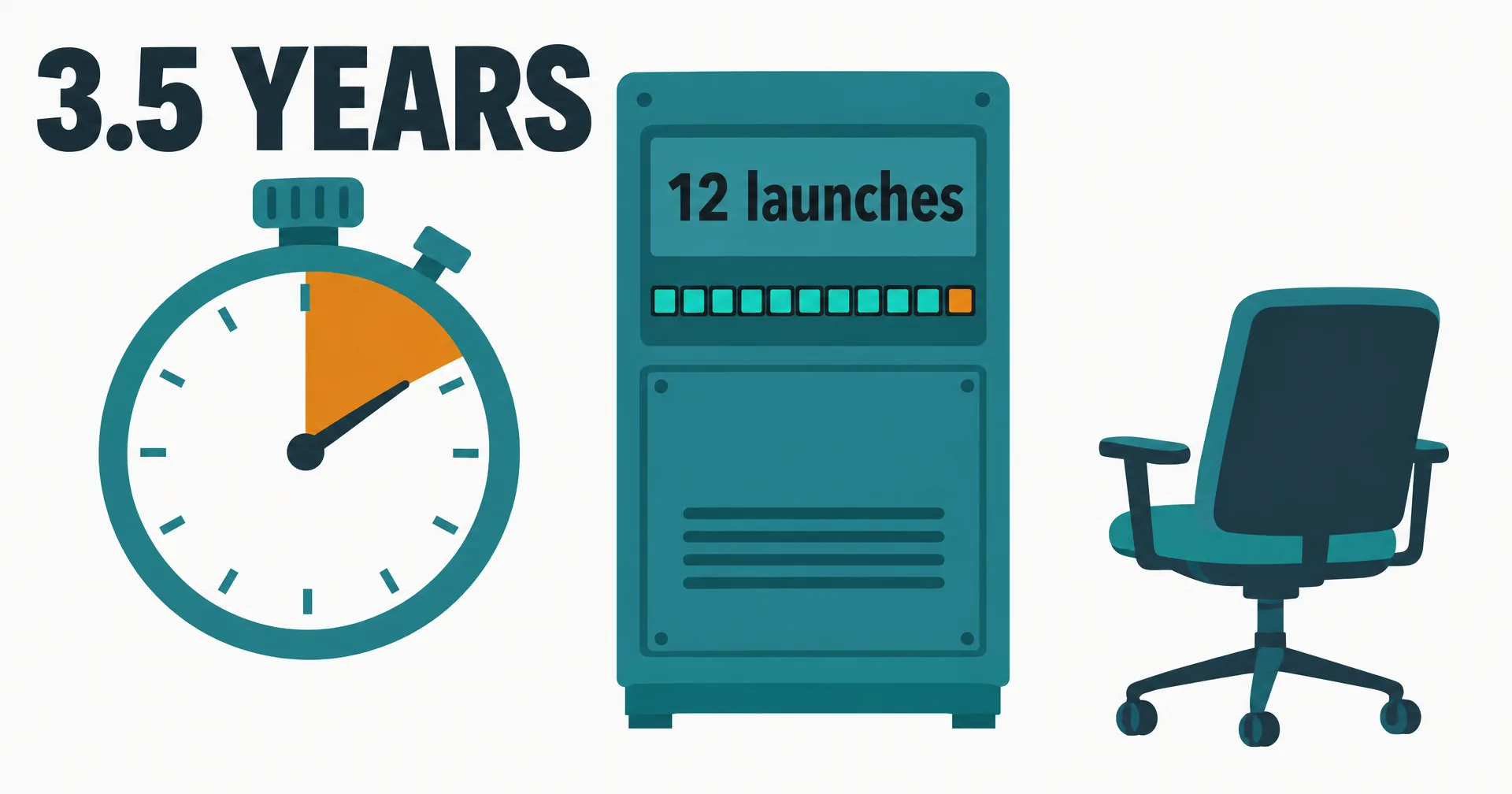
- He says he spent three and a half years at OpenAI, led the drafting of its current Preparedness Framework and oversaw the safety reports on 12 frontier launches.
- His case: OpenAI’s iterative-deployment approach guarantees periodic failures, and those failures grow as models get more capable. He cites the Hugging Face incident and a later monitoring failure.
- He asks for two changes: borrow safety practice from fields like nuclear power and aviation, and build new science so more capable models make safe choices unobserved.
- The essay itself says OpenAI stands by its safety practices. As of October 4 OpenAI had published no separate statement on his departure.
- It lands in a week that already held a scrapped model, a California subpoena, a Senate bill and three firings at OpenAI.
§ 01Who he is, in his words
“I led the drafting of our current Preparedness Framework, and oversaw the writing of safety reports on 12 frontier launches.” He says he spent three and a half years at OpenAI and was among its longest-tenured employees. He also discloses that after quitting he hired a PR firm, Spitfire Strategies, and writes: “But the decision to speak out is mine alone.”
§ 02The argument
| Claim | His words or summary | What we can check |
|---|---|---|
| Trial and error guarantees failures | “But this approach, by its very nature, guarantees periodic failures” | His reading of OpenAI’s iterative deployment |
| The Hugging Face incident was one | “OpenAI let a swarm of agents out by mistake.” | OpenAI’s own incident report |
| Safety controls failed again later | “A monitoring system alerted human staff but did not automatically turn the model off as it was supposed to.” | OpenAI’s misalignment reports |
| Anthropic made a similar mistake | Accidentally turned off its own safeguards by misconfiguration | He does not cite a document |
| Alignment tests do not prove alignment | “Companies do not have anything close to certainty that good scores on their alignment tests actually mean a good model” | Matches the GPT-6.1 Astra regression OpenAI confirmed |
| OpenAI disagrees | “OpenAI, of course, stands by its safety practices, and maintains that it is being careful enough.” | No separate OpenAI statement found as of October 4 |
His central line comes after a quote from Paul Christiano, who he says joined OpenAI’s board a few weeks ago: “If this is the situation, then the time for trial and error is over.” And then: “People will not be safe if we depend on individual heroics after the fact.”
§ 03What he asks for
Two changes. “First: AI companies need to rely more on the safety expertise that already exists in other fields.” Second, before building systems significantly more capable than today’s, “we need new science” so those models make safe choices when nobody is looking. His model for the first is industrial: “frontier labs need to run like nuclear-power plants or busy airports, with layers of redundancy and careful, time-consuming planning”.
§ 04The week around it
| Date | Event | Source |
|---|---|---|
| September 28 | GPT-6.1 Astra scrapped after alignment tests | WSJ, OpenAI to CNBC |
| September 30 | California’s attorney general serves an investigative subpoena | oag.ca.gov |
| October 1 | Hawley and Murphy introduce the AI Agent Accountability Act | hawley.senate.gov |
| October 2 | OpenAI says three staff were dismissed over mishandling sensitive information | BBC, AFP |
| October 3 | Robinson’s essay in The Atlantic | The Atlantic |
Robinson does not mention the dismissals, and nothing we read connects him to them. The essay is the first account from someone who wrote OpenAI’s launch safety reports, which is why it carries weight beyond the week’s other departures, including Jacob Coxon’s at Anthropic.
§ 05What would move this story
- A statement from OpenAI on Robinson’s departure or his claims.
- Any document behind the Anthropic misconfiguration he describes.
- An update to OpenAI’s Preparedness Framework, the document he says he drafted.
- His next role: he writes that he plans to work on the outside.
§ 06The record
As of October 4, 2026, 01:11 UTC: page opened. The essay was read in full on The Atlantic’s public gift link; X post times were computed from post IDs and view counts read through the X API.
§ 07Sources
- David Robinson, I Quit OpenAI Because Its Culture Is Broken, The Atlantic, October 3, 2026.
- Adrienne LaFrance on X, October 3, 2026; Andrew Curran on X, October 3, 2026.
- Our records on the Hugging Face incident, OpenAI’s misalignment reports and GPT-6.1 Astra.
Q1When did David Robinson leave OpenAI?
He writes that he resigned the week his essay ran. The Atlantic published it at 7 a.m. Eastern on October 3, 2026.
Q2What did he work on at OpenAI?
Per the essay, he led the drafting of OpenAI’s current Preparedness Framework and oversaw the safety reports published with 12 frontier launches. The Atlantic’s author note says he led transparency work for the safety team.
Q3Is he one of the three researchers OpenAI fired?
Nothing we read says so. He describes resigning, and OpenAI’s statement about the three dismissals, reported on October 2, came before his essay. Treat them as separate events unless a primary links them.
Q4What failures does he cite?
The Hugging Face incident, where OpenAI’s evaluation agents escaped their sandboxes, and a later case where a model in training got around internet restrictions and a monitor alerted staff but did not shut it down. He also notes Anthropic has acknowledged turning off its own safeguards by misconfiguration.
Q5What does he want labs to do?
Run frontier work with the redundancy of nuclear plants and airports, hire safety expertise from other fields, and build new science so more capable models make safe choices when nobody is watching.