Skip to content
AI EmployeeSuper-AgentsAgent-to-AgentTutorialsPricingBlogStoryContact
Cluster 07 of 9

Trust, permissions & security

Approvals, least privilege, guardrails, audit logs and incident response — how to grant real authority without losing control of it.

Trust, permissions & security 11 articles
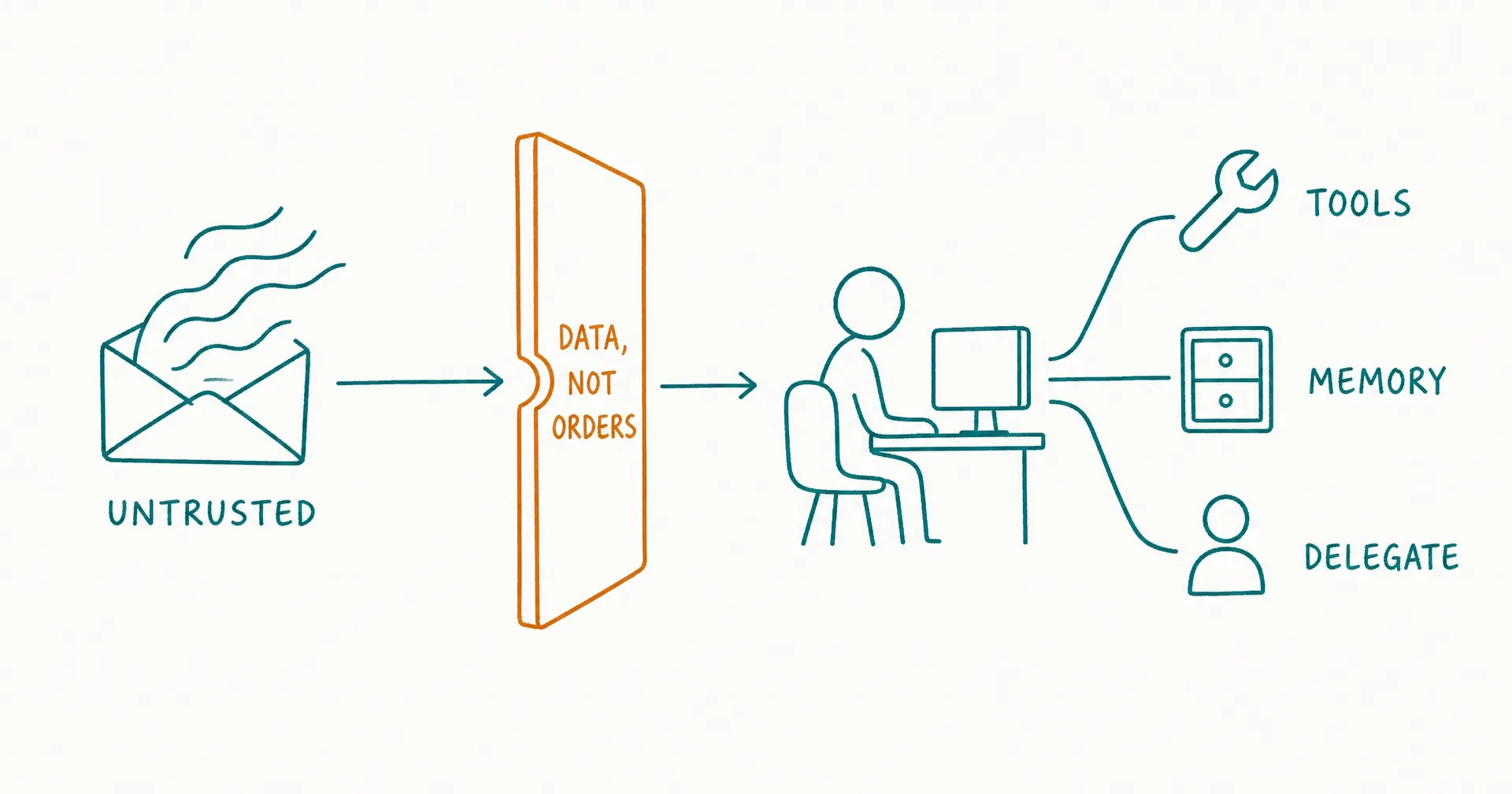
31 JUL 2026 Prompt Injection for AI Employees: Why Persistent Workers Change the Risk Persistence changes the attack: a hostile instruction read today can become memory that steers tomorrow's work. Source-to-effect controls, memory write gates, and the tests that prove them. GuidesTrust & security 27 min
Napkin-style sketch of an envelope with instruction-like text flowing toward a worker figure, blocked by a gate before reaching tool, memory, and delegation sinks
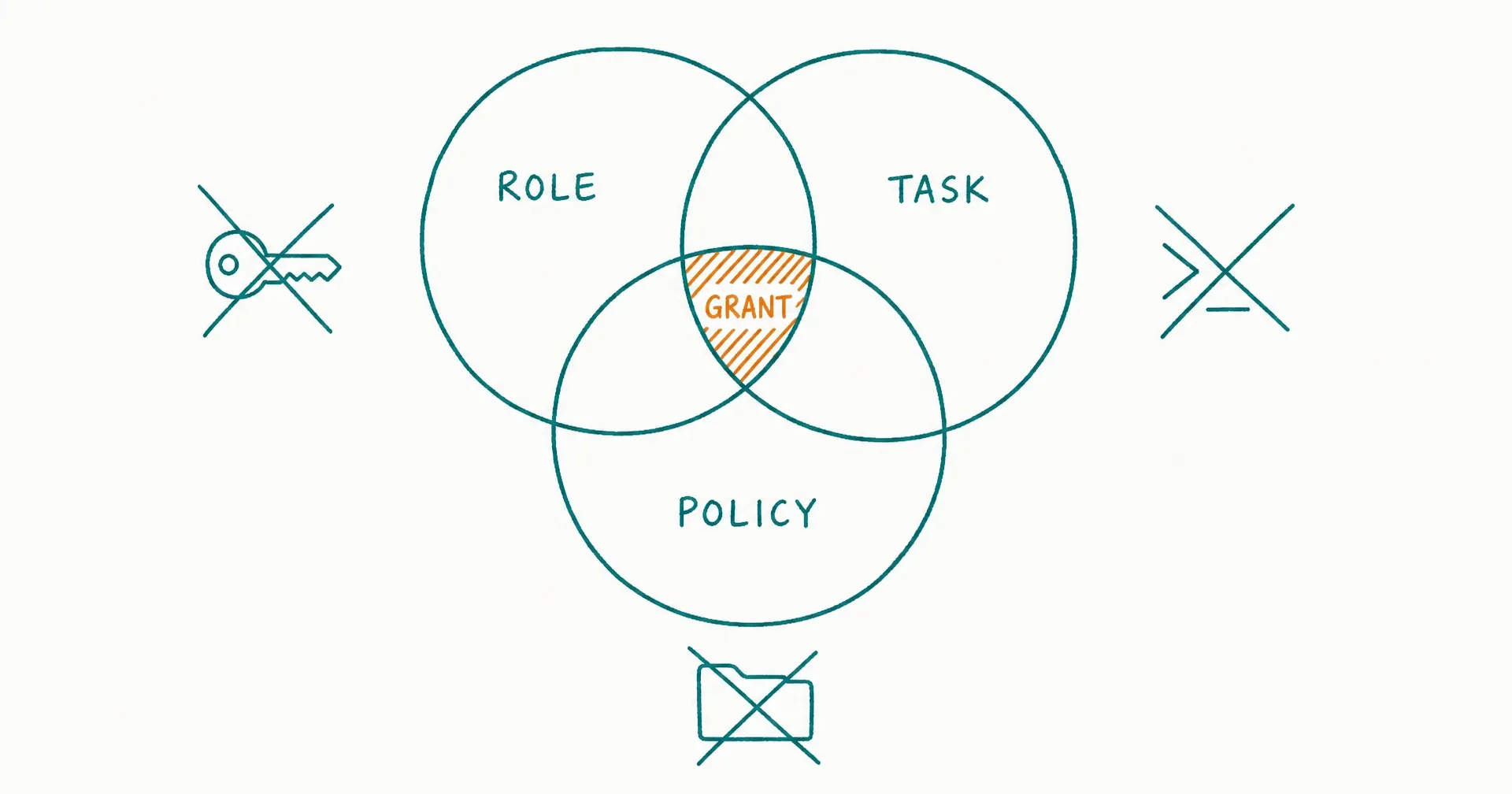
31 JUL 2026 Least Privilege for AI Agents: A Practical Access Model The smallest useful grant: distinct identity, narrow tools over open-ended shells, field-level data scope, temporary credentials, and delegation that narrows authority instead of inheriting it. GuidesTrust & security 22 min
Napkin-style sketch of three overlapping circles labeled role, task, and policy with the small central intersection highlighted as the effective grant
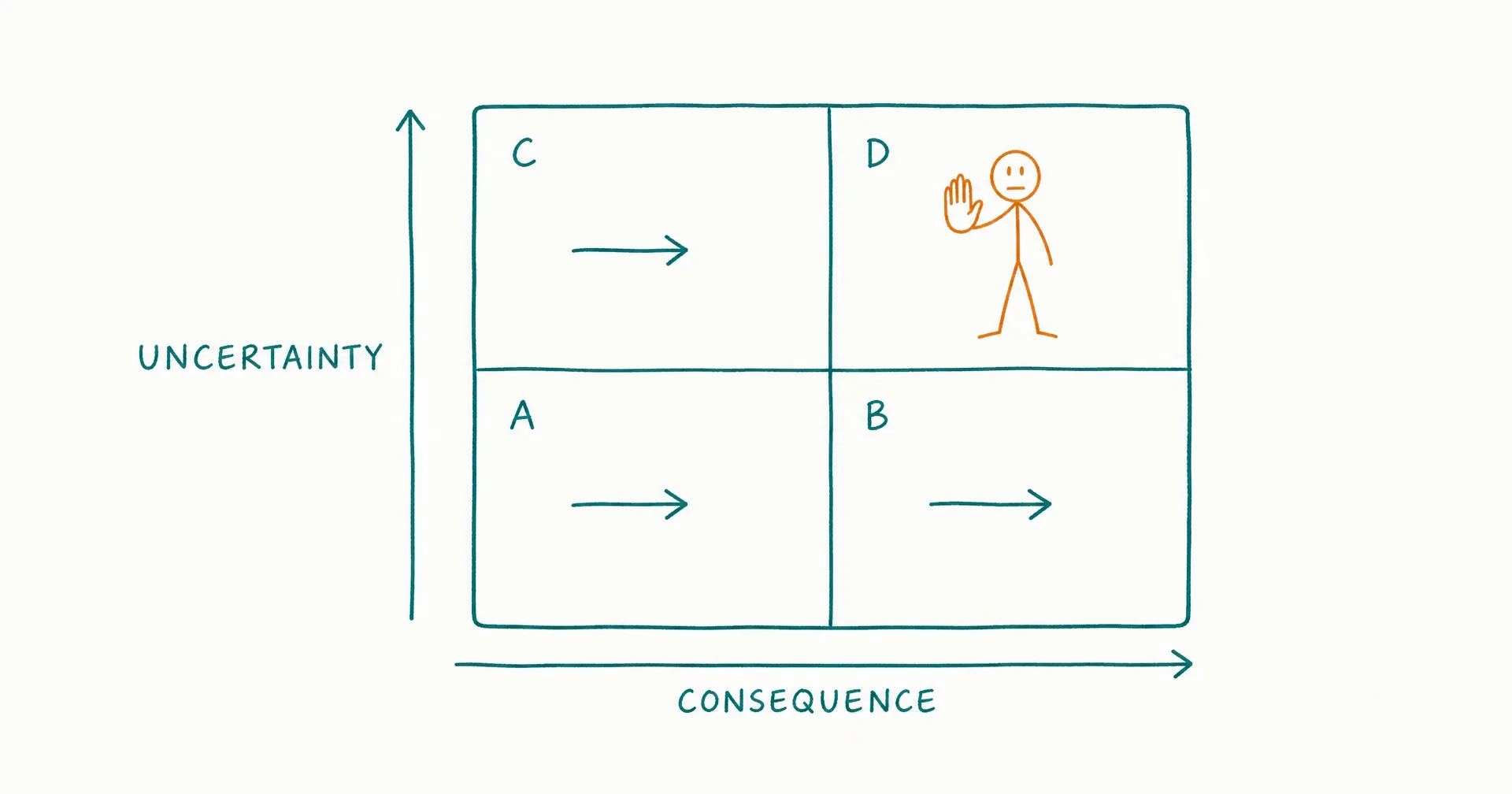
31 JUL 2026 Human-in-the-Loop AI Employees: Where Oversight Belongs Approving everything trains reviewers to click through: put human gates at consequence and uncertainty boundaries, give reviewers authority to disagree, and measure override quality. GuidesTrust & security 24 min
Napkin-style sketch of a two-by-two consequence and uncertainty matrix with three zones flowing freely and the high-consequence high-uncertainty zone routed to a human figure
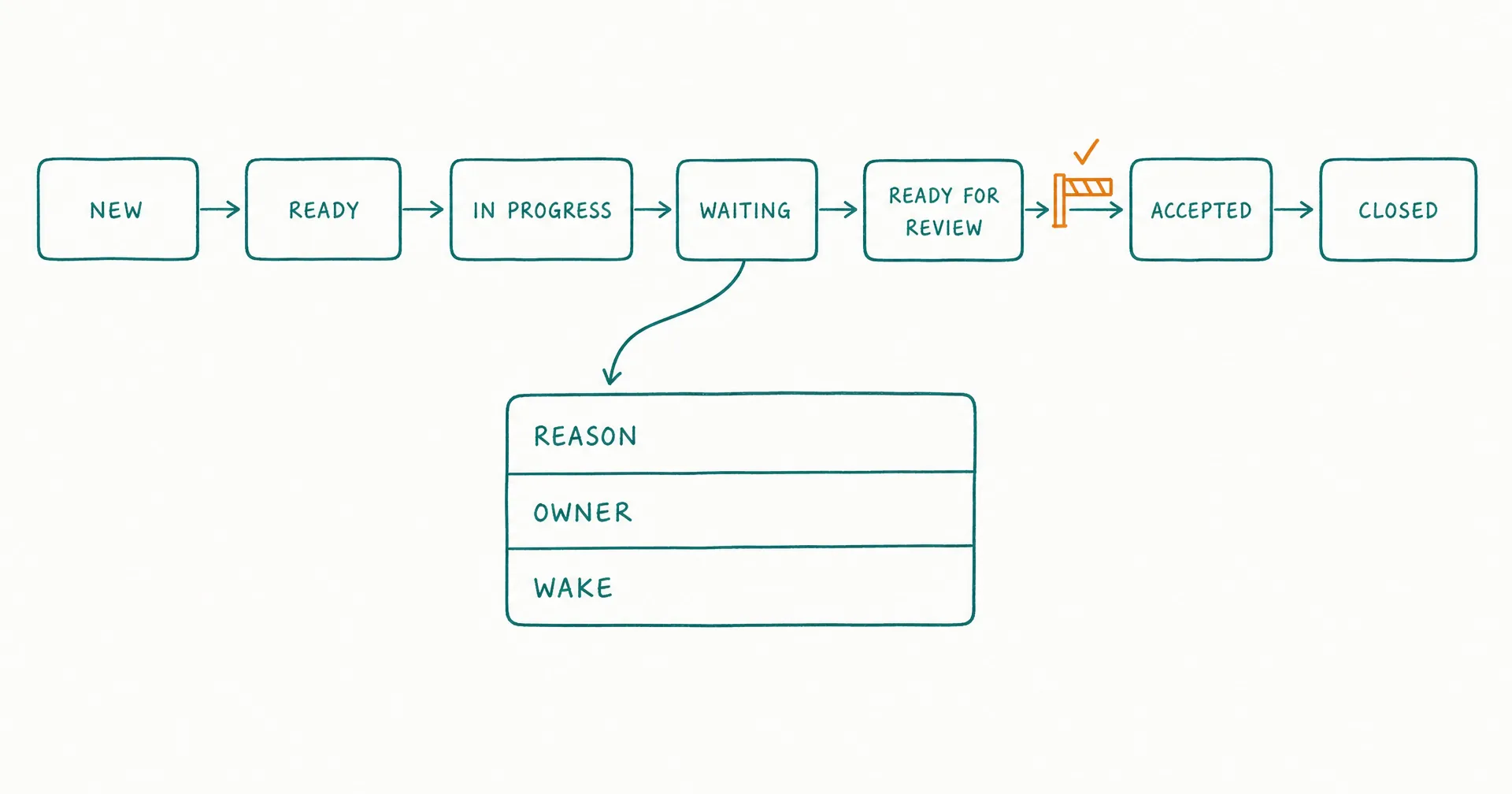
31 JUL 2026 How to Design an AI Employee Task Board The board is a control surface, not an activity feed: seven core states, transition contracts, one owner per next action, structured blockers and approvals, and closure that actually means done. GuidesTrust & security 20 min
Napkin-style sketch of a seven-state task flow from New to Closed with gated transitions and an enlarged waiting card showing reason, owner, and wake fields
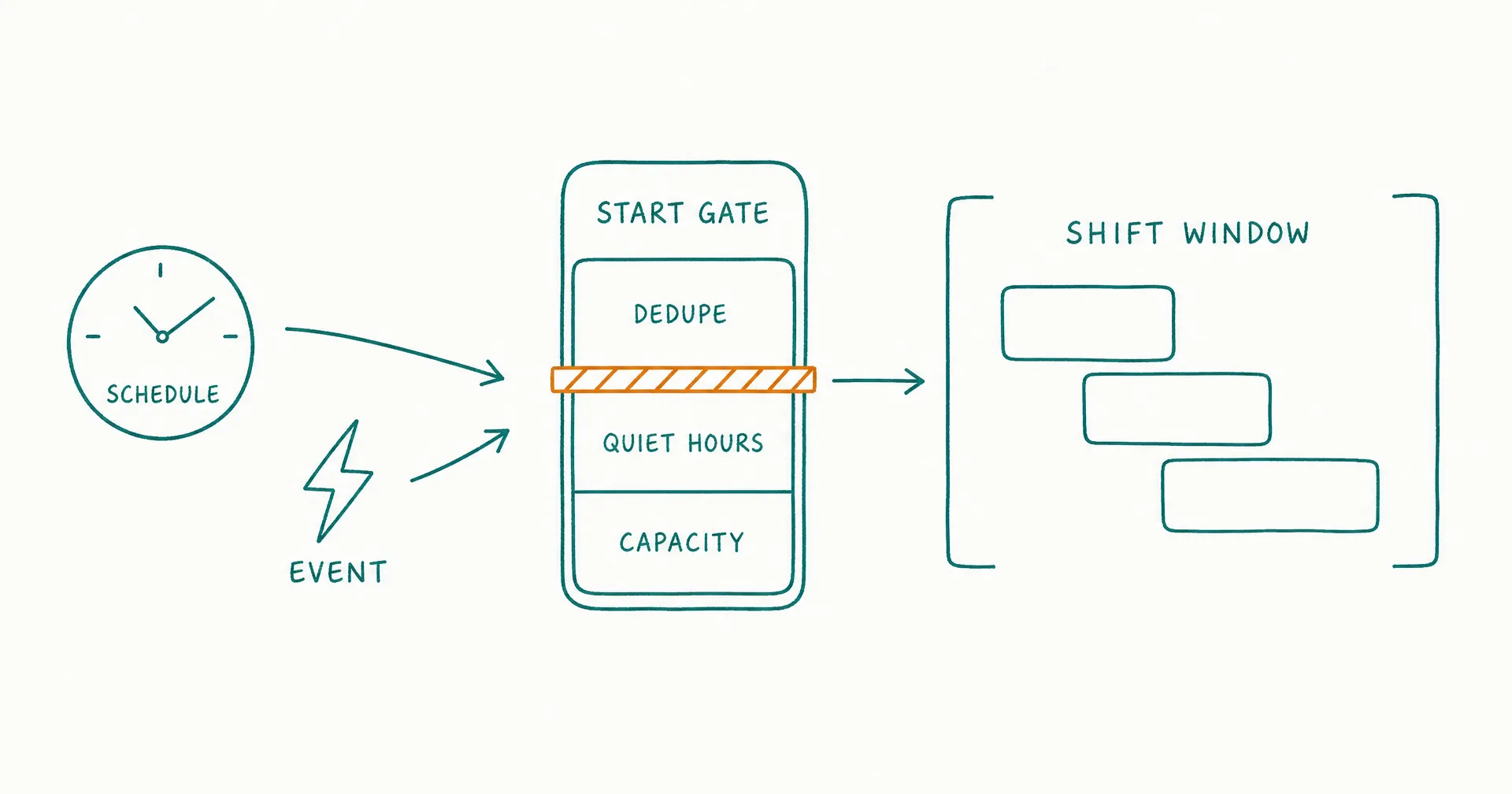
31 JUL 2026 AI Employee Shifts and Schedules: When Should Work Start? "Be proactive" is not a scheduling policy: authorized triggers, bounded shift windows, quiet hours, deduplication, concurrency limits, and retries only for declared transient failures. GuidesTrust & security 18 min
Napkin-style sketch of a clock face and an event bolt feeding into a start gate labeled with dedupe, quiet hours, and capacity checks before a bounded shift window
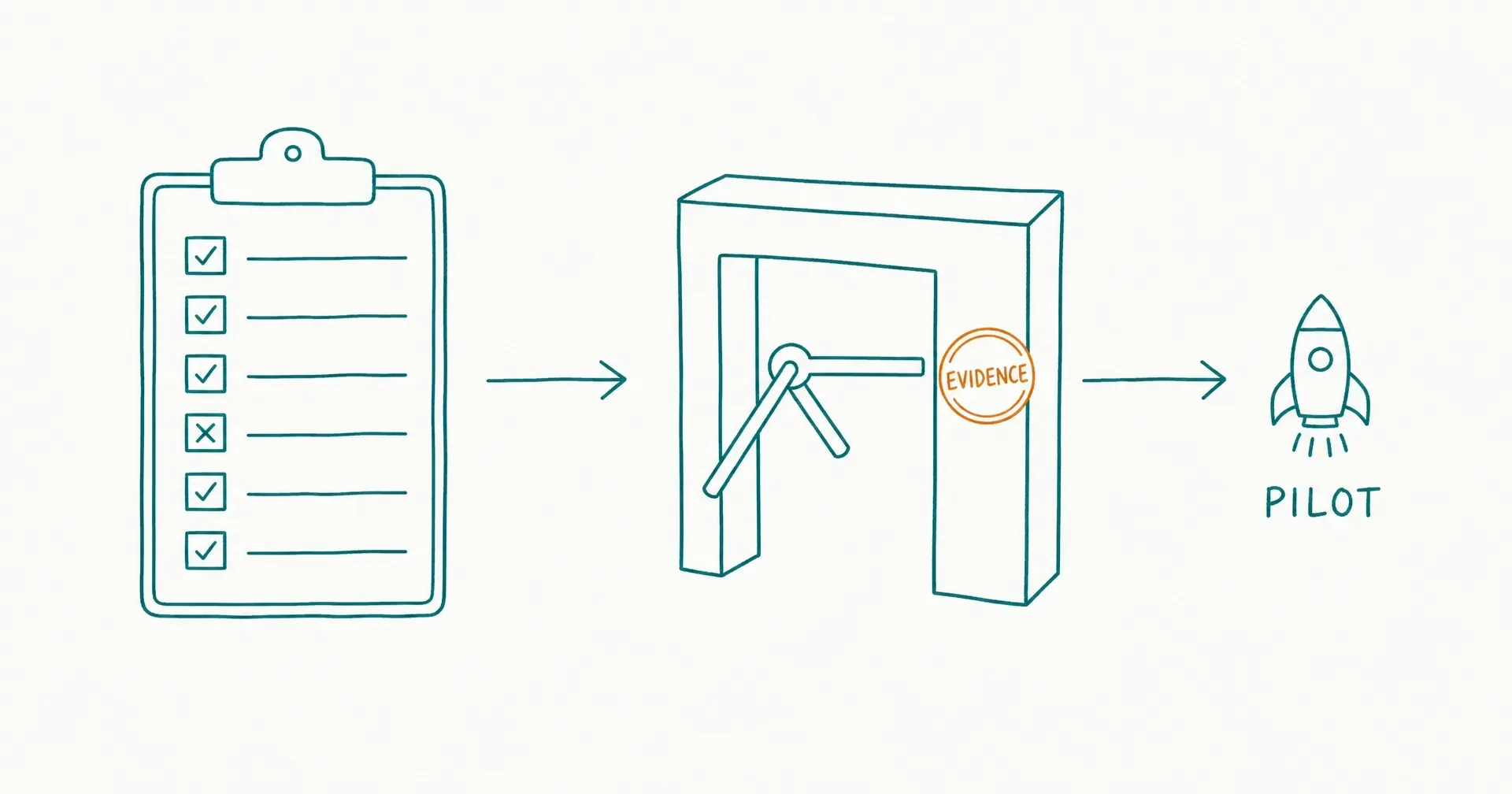
31 JUL 2026 AI Employee Security Checklist for a Production Pilot Twelve control areas, hard stops before scoring, and one rule throughout: "promised" and "supported" are not evidence - ask to see the control deny, allow, log, contain, and recover. GuidesTrust & security 28 min
Napkin-style sketch of a twelve-item checklist clipboard beside a launch gate, with an amber pass stamp on the gate and a small stop sign guarding it
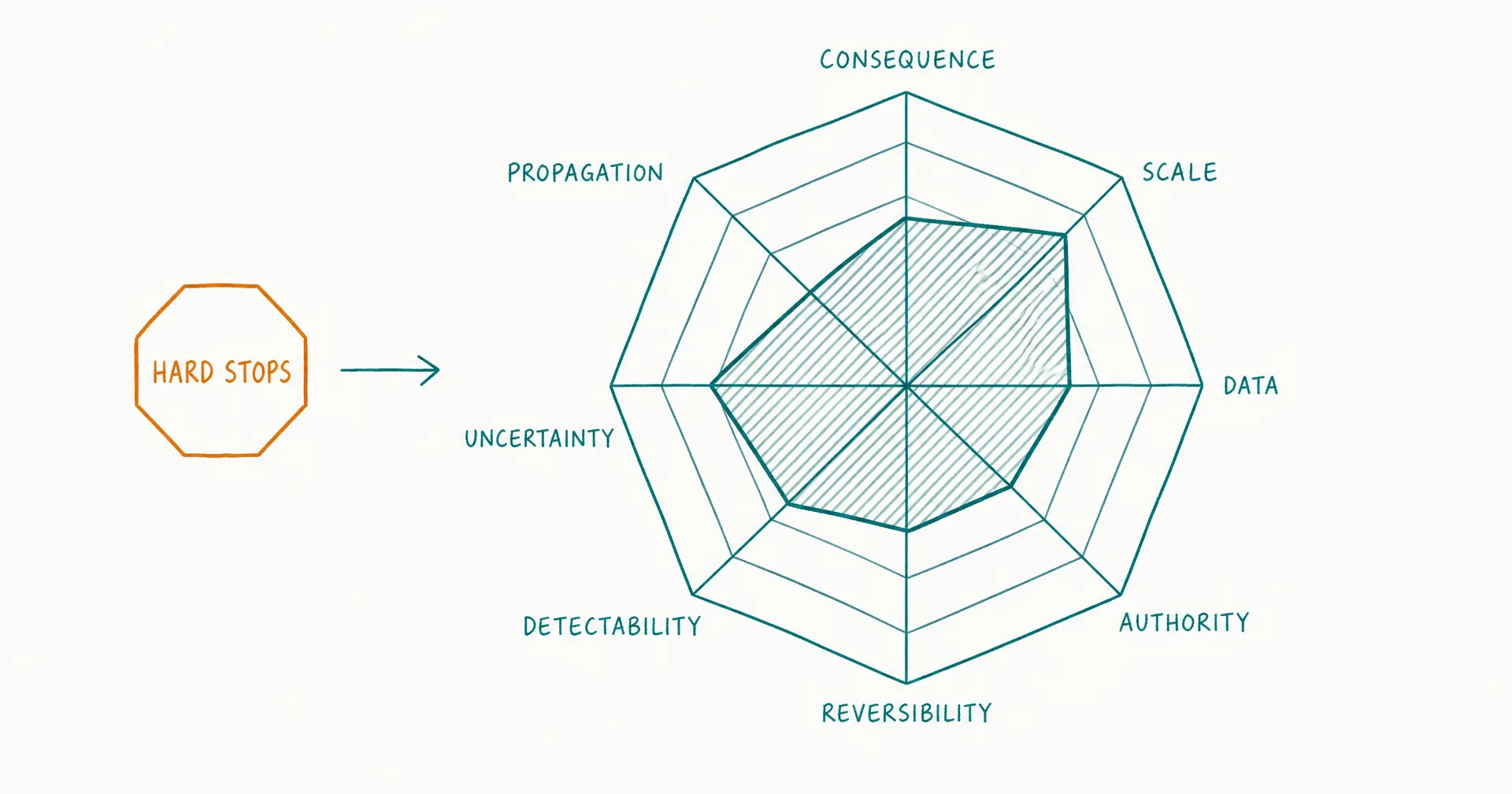
31 JUL 2026 AI Employee Risk Assessment: Score the Role Before Launch Eight exposure dimensions, hard stop conditions applied before any scoring, control evidence graded from claimed to proven recovery, and five launch decisions from reject to bounded execute. GuidesTrust & security 22 min
Napkin-style sketch of an eight-axis radar chart labeled with risk dimensions, with an amber octagonal stop sign gate placed before the chart
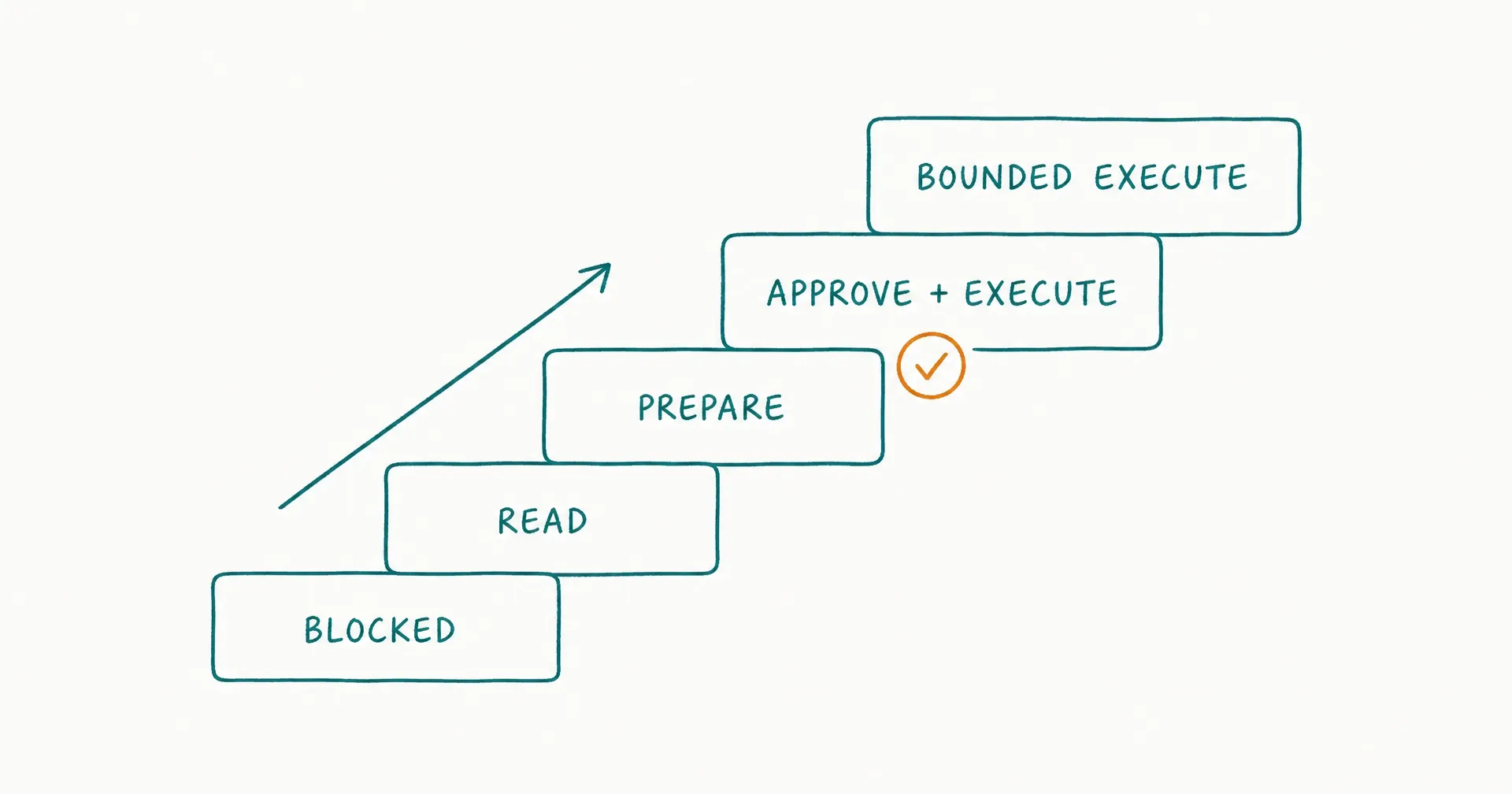
31 JUL 2026 AI Employee Permissions and Approvals: A Practical Model "Marketing manager" is not a permission: an 11-field action matrix, five permission states from blocked to bounded execute, approval policies from per-action to human-only, and tested revocation. GuidesTrust & security 22 min
Napkin-style sketch of a five-step permission ladder from Blocked to Bounded Execute with an amber approval stamp gating the execute step
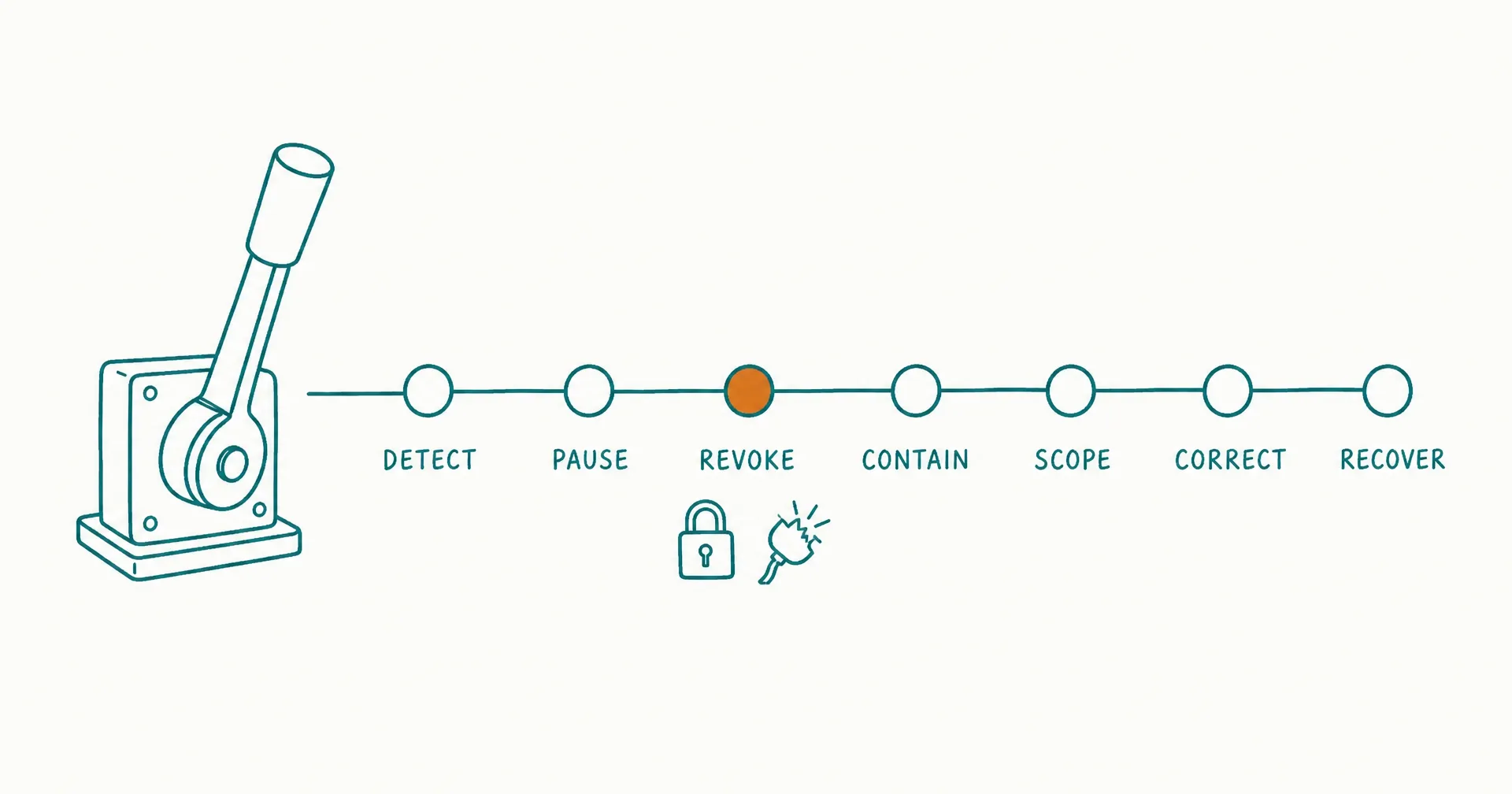
31 JUL 2026 AI Employee Incident Response: Contain, Revoke, Review, Recover A 12-decision response path for AI employee incidents: pause work, revoke authority, preserve evidence, scope propagation, correct business state, and resume only on an accountable decision. GuidesTrust & security 24 min
Napkin-style sketch of an emergency stop lever beside a response path from detect through recover, with an amber highlight on the revoke step
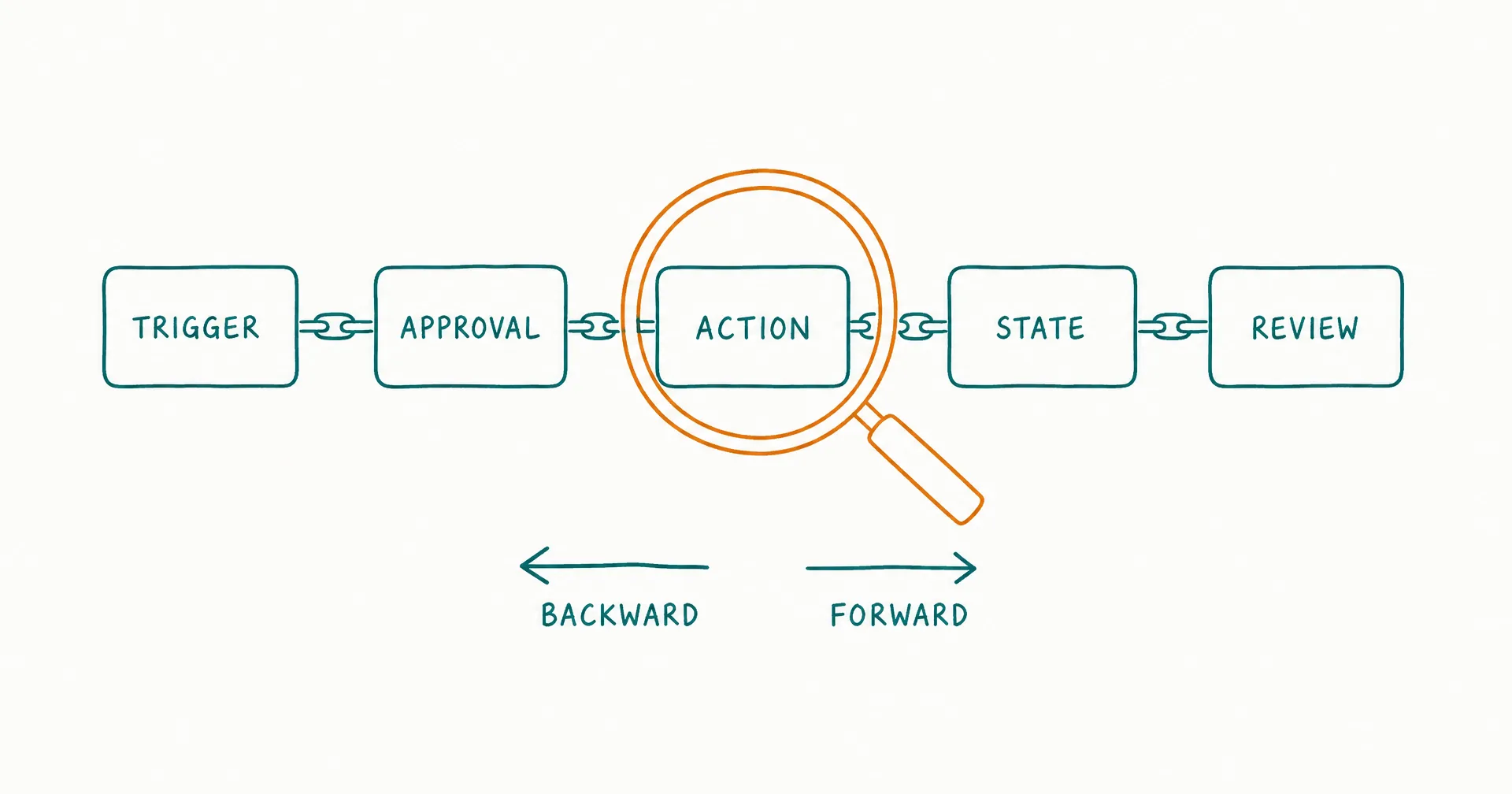
31 JUL 2026 AI Employee Audit Logs: What Buyers Should Be Able to Reconstruct The test is reconstruction: from one disputed action back to its origin and forward to every consequence - identity, authority, execution, effect, and recovery, all connected. GuidesTrust & security 27 min
Napkin-style sketch of a chain of linked event blocks from trigger through approval to verified effect, examined by an amber magnifying glass
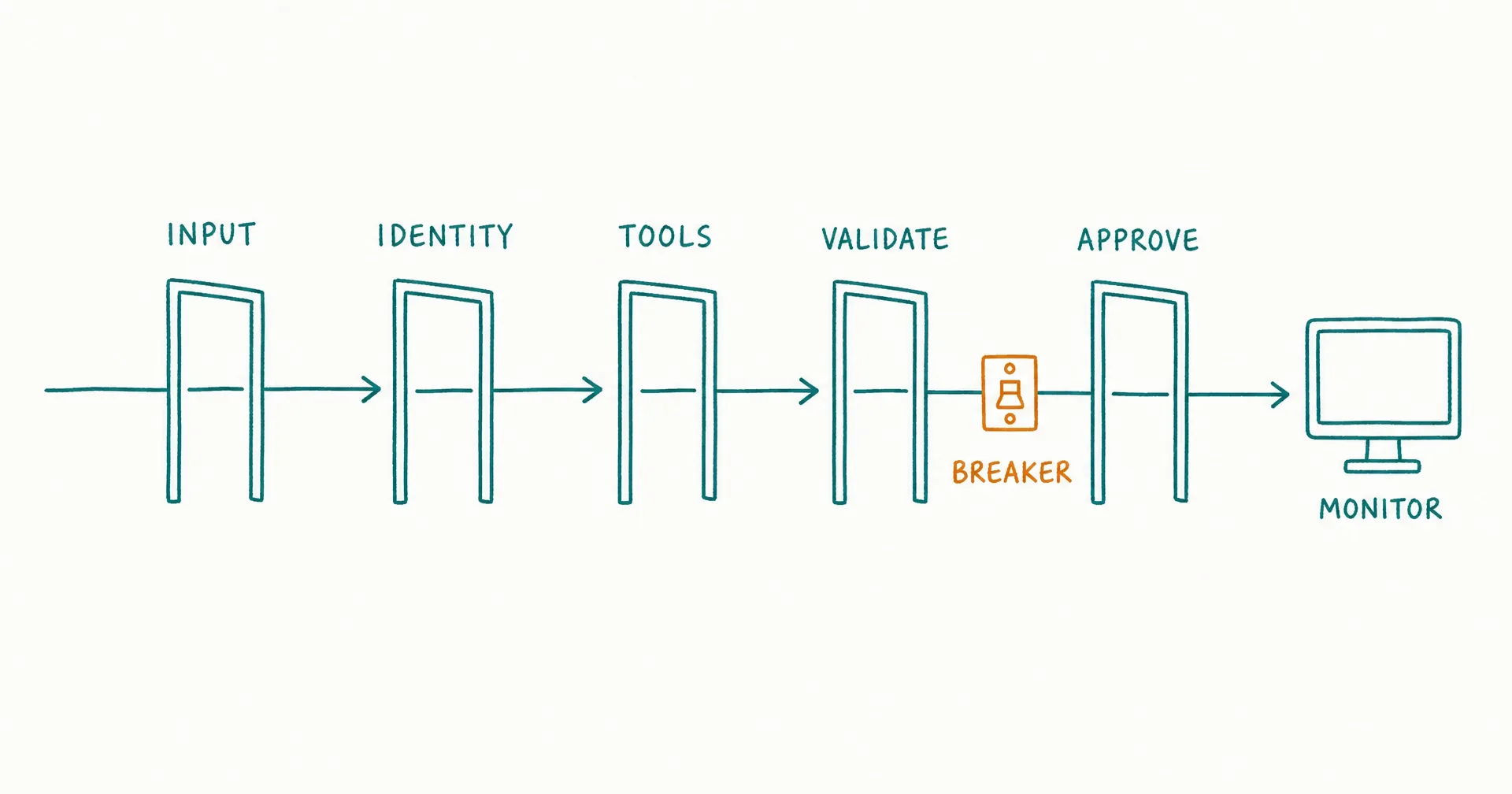
31 JUL 2026 AI Agent Guardrails: What They Can - and Cannot - Do A guardrail is an enforceable control, not a promise: layered checks across inputs, identity, tools, validation, approvals, monitoring, and circuit breakers - and what none of them can guarantee. GuidesTrust & security 22 min
Napkin-style sketch of a work path passing through a series of labeled gate layers from input to monitoring, with an amber circuit-breaker switch on the final segment