Dario Amodei answered a public critique of Anthropic point by point on October 21, 2026, conceding three items and defending the rest. His reply on X, posted at 02:26 UTC, quotes a long post by safety advocate Nathan Calvin and opens with thanks before the turn: “That said, I disagree with the thrust of your post.”
Calvin’s post, from October 19 at 21:29 UTC, had 127,000 views by October 21; Amodei’s reply passed 63,000 within an hour. This page reads both in full and sets the two lists side by side.
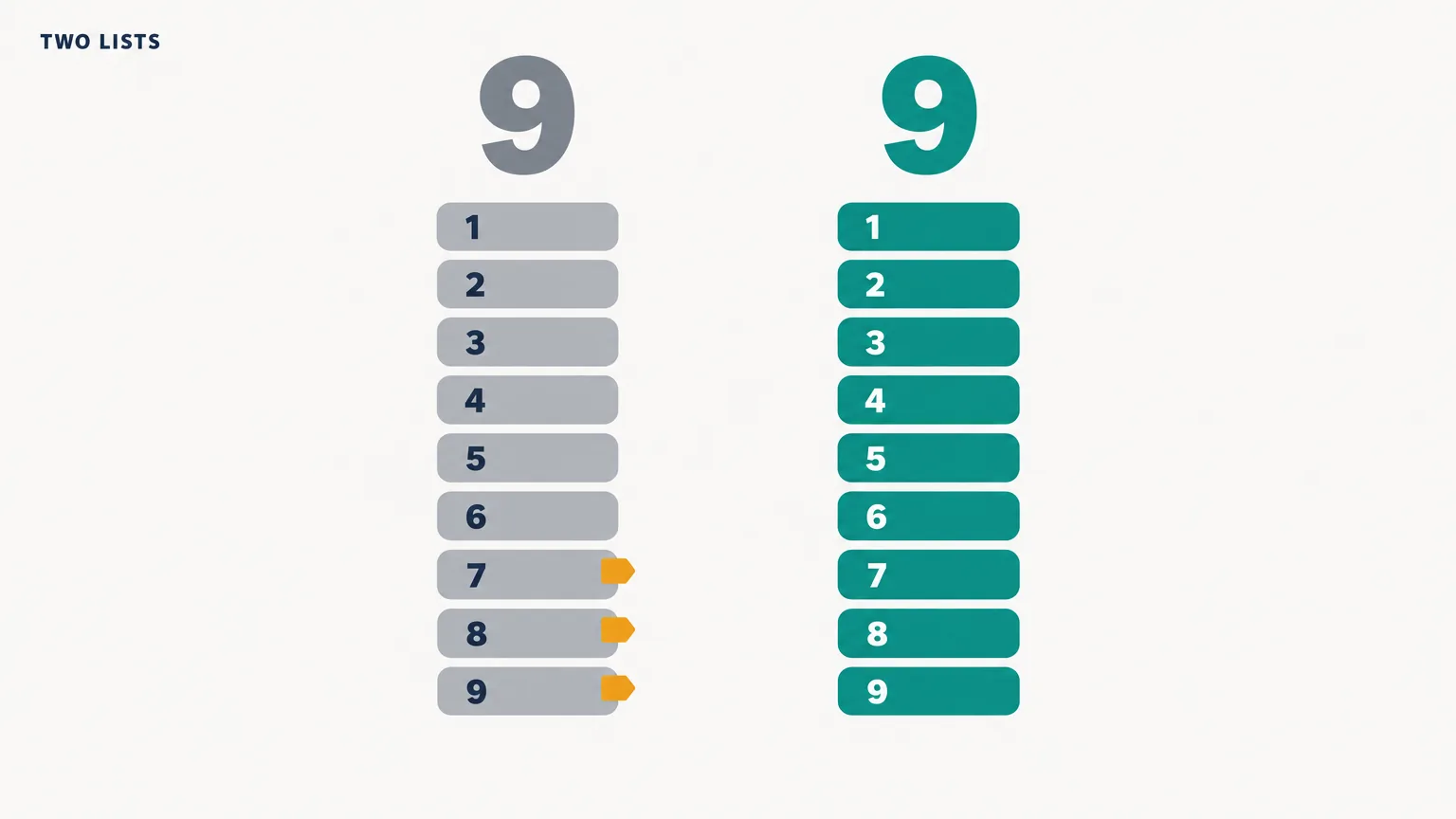
 On October 19, 2026, safety advocate Nathan Calvin posted a nine-item list of Anthropic actions he reads as racing to superintelligence; the post had 127,000 views by October 21.
 Dario Amodei replied on October 21 at 02:26 UTC with his own nine costly safety decisions, from bio safeguards to a five percent public benefit fund.
 Amodei conceded three of Calvin’s points, a walked-back letter to Congress, a remark after the White House accords and the draft bill, and said he takes responsibility as CEO.
 He defended items one to four as ordinary frontier competition under Anthropic’s race-to-the-top strategy, and called the scaling-policy change the most substantive point.
 The exchange started with a leaked draft federal AI safety bill Anthropic has been pushing, which Calvin says protects Anthropic more than the public.
§ 01How it started
The thread began with a draft federal AI safety bill. On October 17, Calvin wrote that the draft Anthropic has been pushing “seems often far more preoccupied with protecting Anthropic from government overreach than it is with protecting the public”. On October 18, Anthony Cimino, who leads Anthropic’s federal affairs team, posted a response after a version of the draft was shared with the press. Calvin answered Cimino the next day with the long post Amodei then quoted.
- October 17, 01:11 UTC: Calvin criticizes the draft bill.
- October 18, 21:29 UTC: Cimino responds for Anthropic.
- October 19, 21:29 UTC: Calvin’s nine-item post.
- October 21, 02:26 UTC: Amodei’s nine-item reply.
§ 02Calvin’s list, and what Amodei said to each
Calvin asks what Anthropic is: a tech company that could IPO “at 2 trillion dollars (a number it has been reportedly targeting)”, a safety organization, or a lab racing to build its successors. He concludes the evidence “seems most consistent to me with the view that Anthropic is primarily trying to win the race to super intelligence, and that other considerations (including safety) are fundamentally secondary”. He adds: “Of course, this is a deliberately one sided list.”
| # | Calvin’s item | Amodei’s answer |
|---|---|---|
| 1 | Custom silicon chip team for faster inference | Ordinary frontier competition; stands by it |
| 2 | More than $500 billion in compute deals (The Information) | Ordinary frontier competition; stands by it |
| 3 | Claude leads 26% of AI development tasks by August, from 0% in March | Ordinary frontier competition; stands by it |
| 4 | Large share of compute spent on internal AI R&D | Ordinary frontier competition; stands by it |
| 5 | Responsible Scaling Policy V3 drops unilateral pause commitments | The most substantive item; defends the change |
| 6 | A frontier compliance framework with no binding internal-deployment rules | Will look into it further |
| 7 | A letter to Congress, later walked back | Could have been handled better |
| 8 | The comment that you can’t do safety from second place | Could have been handled better |
| 9 | The draft federal bill preempting state law | Could have been handled better |

On items 1 to 4, Amodei writes: “Your items 1-4 are all simply examples of what it means to compete at the frontier, and we stand by them”. On 7 to 9: “I agree we could have handled your items 7, 8, and 9 better.” He blamed fast-moving communication across a company that “is over 5,000 people”, then added: “I am of course the CEO, and I take responsibility.”
On the scaling policy: “Your 5th item (the change to our RSP) is the most substantive item, and people can debate this”. He argues the old version forced costly work that did little for safety, while the new one brought risk reports and external review. On the compliance framework: “I promise to look into it further”.
§ 03Amodei’s counter-list
| # | Decision | Cost he names |
|---|---|---|
| 1 | Backed SB 53 and argued for a stronger version | Political risk when regulation was unpopular |
| 2 | Strict biological safeguards | False positives that frustrate biologists and help competitors sell |
| 3 | Held Mythos-class models from February to June for cyber safeguards | A significant chunk of a several-month lead |
| 4 | Called for government power to block model releases | Intense attacks |
| 5 | Its stance in the events of February 2026 | Possible serious damage to the company |
| 6 | Chip export controls on China | Friction with industry partners it depends on |
| 7 | Refused AI sales to PRC-controlled companies; cracked down on distillation | Forfeited short-term business |
| 8 | Detailed reports, model cards and public risk advocacy | Effort implausible for a pure profit maximizer |
| 9 | 5% of the company into a public benefit fund | Equity |
His summary: “I think that even if I conceded every item in your list, I would happily hold up mine next to it”. He also concedes the pacing question is getting harder: on the point where acceleration outruns safety, “We are nearing that point”.
§ 04What to watch
Amodei closes: “I will have more to say soon about how we are going to further live our values in this moment of rapid change.” The open items are that promised statement, his review of the compliance framework, and the federal bill text, which has circulated but not been published. The exchange lands a week after his call to pace the frontier, three days after the public benefit fund, and a day after METR’s review of Anthropic’s risk report, which Calvin recommended reading.
We build AI employees on Claude, so the governance of the model under our product is not an abstract debate for us. We have no view on who won the exchange; both lists are on the record above.
Q1Who is Nathan Calvin?
A California AI policy advocate who worked on SB 1047 and SB 53, the California frontier AI safety bills. He has publicly criticized Anthropic’s draft federal AI safety bill since October 16, 2026.
Q2What were Calvin's nine items?
A custom chip team, more than $500 billion in compute deals as reported by The Information, Claude leading 26% of AI development tasks by August, heavy internal R&D compute, Responsible Scaling Policy V3, a frontier compliance framework, a walked-back letter to Congress, the second-place remark, and the draft federal bill.
Q3What were Amodei's nine costly decisions?
Backing SB 53, strict biological safeguards, holding Mythos-class models back from February to June, calling for government power to block releases, the February 2026 events, chip export controls, refusing PRC-controlled customers, detailed public risk reporting, and the public benefit fund.
Q4Did Anthropic publish the draft bill?
No. A version circulated to the press on October 18, and Anthropic’s federal affairs lead Anthony Cimino posted about it that day. Calvin’s reply was to Cimino.
Q5Does CellCog run on Anthropic models?
Yes. CellCog’s agents run on Claude Opus 5.5, so how Anthropic governs its models matters to us and to the businesses whose AI employees run on it.