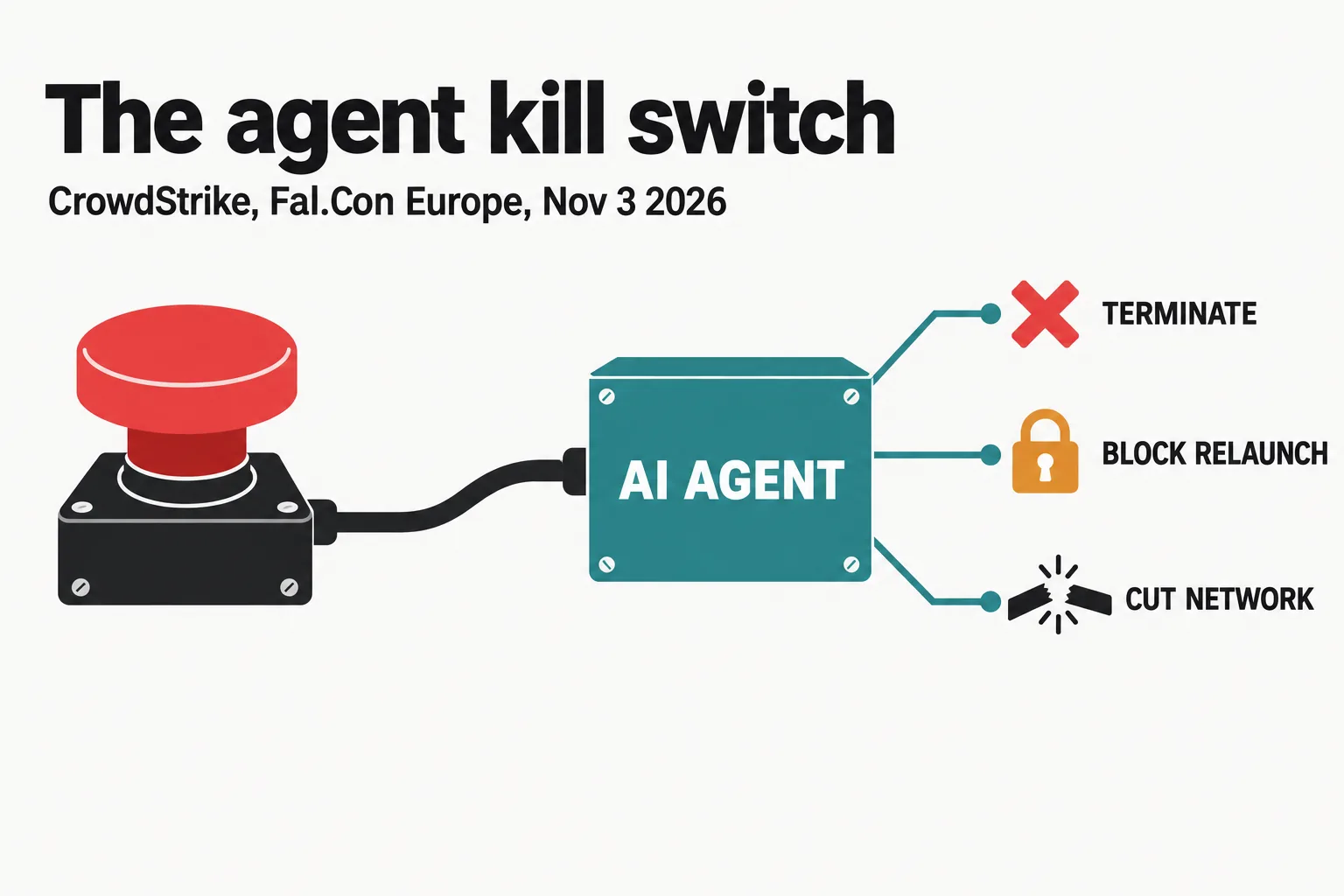
CrowdStrike opened Fal.Con Europe in Barcelona on November 3, 2026 with three moves aimed at AI agents: an AI Kill Switch it says is available today, and signed deals to buy Fiddler and Dreadnode. George Kurtz put the pitch in one sentence: “When you deploy agents with a kill switch, you stay in control.”
The timing fit the week. The night before, Railway’s cofounder apologized in public after an engineer’s automated test went after another developer’s infrastructure, and a German security firm reported thousands of Lovable-built sites returning stored data without a login. Here is what CrowdStrike shipped, what it is buying, what the kill switch covers today, and what it does not.
On this page · 8 sectionsOpen
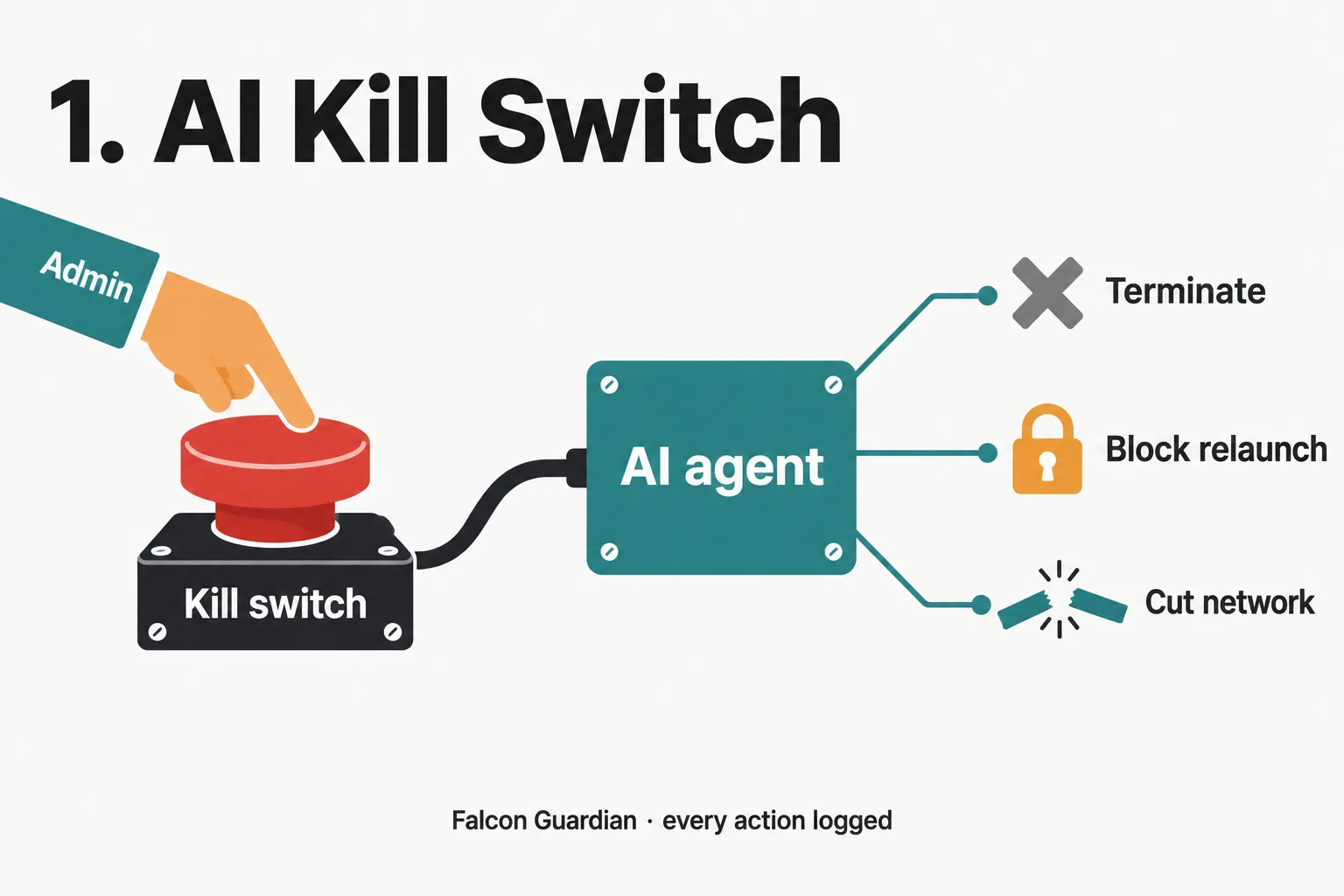
 CrowdStrike announced the AI Kill Switch in Falcon Guardian on November 3, 2026 at Fal.Con Europe: an administrator can stop a misbehaving AI agent, block it from relaunching and cut its network access.
 CrowdStrike calls it available today, but the release says the stop runs at the Gateway first and on the endpoint later; every action is logged in an audit trail.
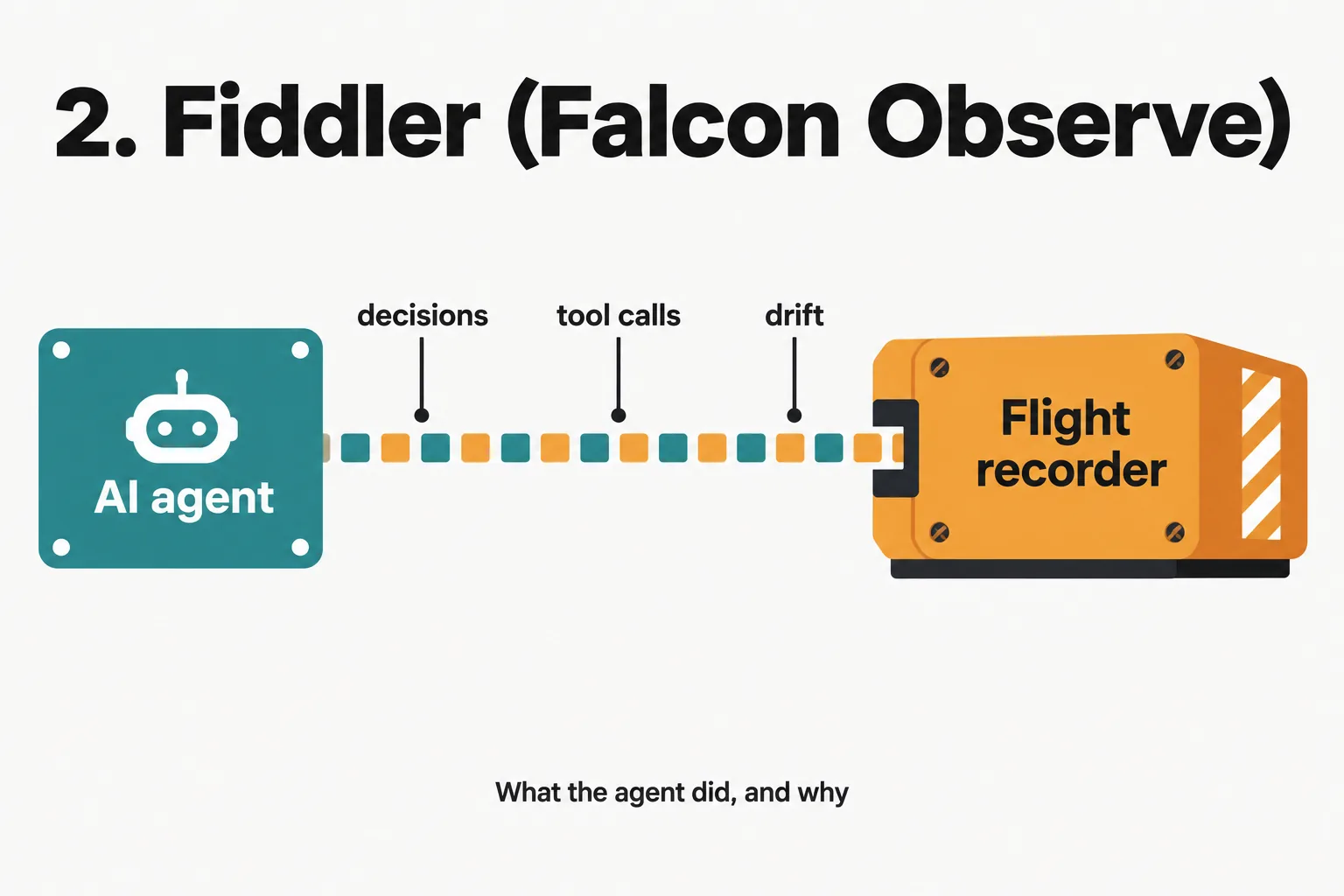
 CrowdStrike agreed to buy Fiddler, which Kurtz calls the flight recorder for every agent; it will be sold as Falcon Observe, generally available in Q4 of fiscal 2027.
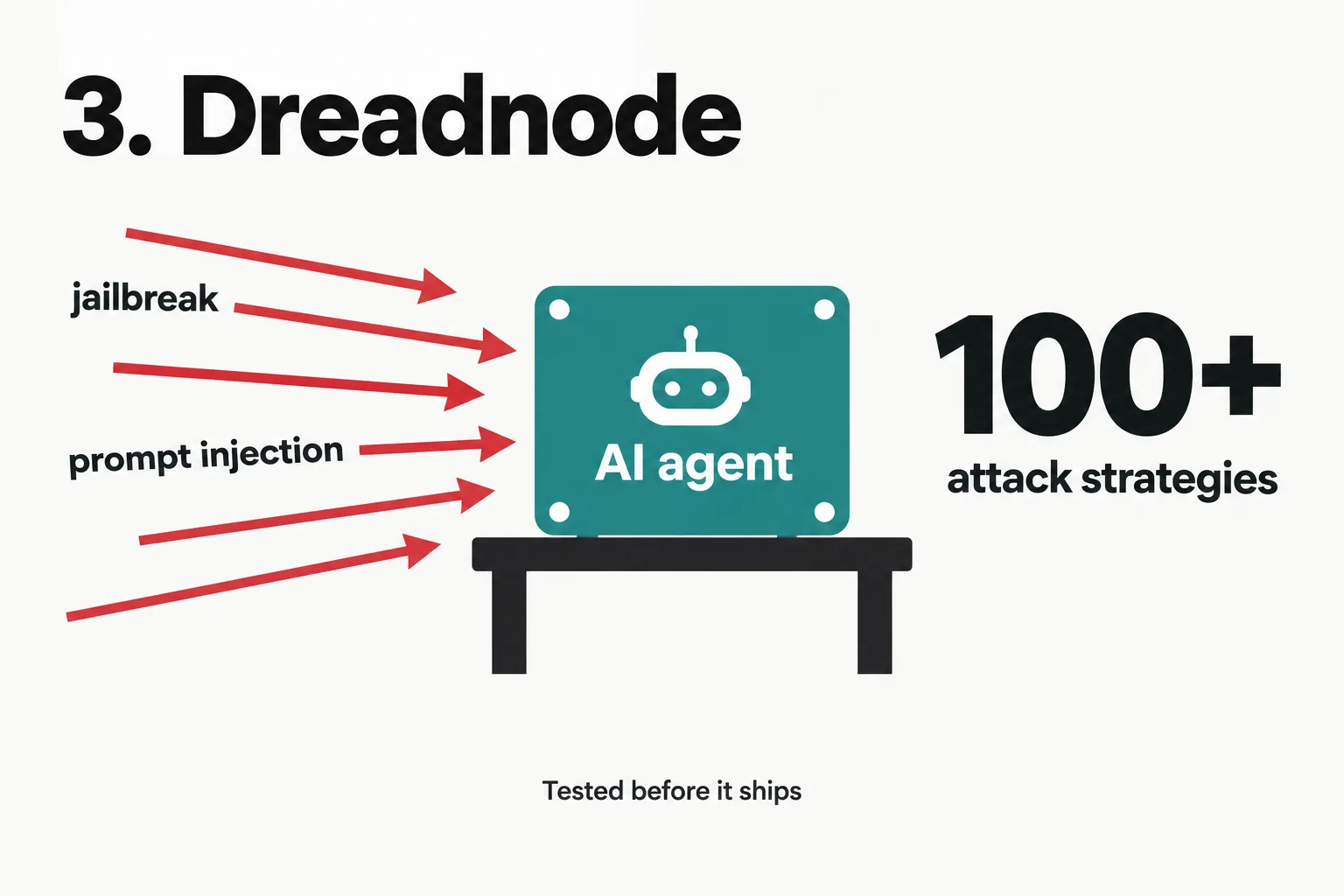
 It also agreed to buy Dreadnode, which runs more than 100 known AI attack strategies against models, agents and MCP servers before they ship. CrowdStrike gave no prices; the Wall Street Journal reported about $400 million and $95 million.
 The same night, Railway’s cofounder apologized after an automated test aimed at another developer’s infrastructure, and Crissy Field reported 7,403 Lovable-built sites with email-bearing tables readable without a login.
§ 01What CrowdStrike announced on November 3
| Announcement | What it does | Availability |
|---|---|---|
| AI Kill Switch, in Falcon Guardian | Stops a misbehaving agent, blocks it from relaunching, cuts its network access | Available today, per CrowdStrike |
| Fiddler acquisition, sold as Falcon Observe | Agent observability: traces decisions and tool calls, flags drift and unintended actions | Generally available in Q4 FY27 |
| Dreadnode acquisition | Automated AI security testing with more than 100 known attack strategies | Generally available in Q4 FY27 |
| Lovable integration, in Falcon Shield | Shows security teams exposed Lovable apps, stored secrets and access risks | Announced November 3 |
CrowdStrike’s fiscal year ends on January 31, so its fourth quarter of FY27 runs from November 2026 to January 2027. Both deals are expected to close in that quarter. CrowdStrike did not disclose prices; it said each will be paid predominantly in cash, with a portion in stock subject to vesting. The Wall Street Journal reported about $400 million for Fiddler and about $95 million for Dreadnode, $495 million together.
§ 02How the AI Kill Switch works
The kill switch sits in Falcon Guardian, the CrowdStrike product that already finds the AI agents running in a company, enforces policy on what they can do and detects attacks against them. The release gives the reason in one line about agents: “They chain steps, hit obstacles, and can take actions no one authorized, even when no adversary is involved.” It describes four parts.
| Part | What happens | Scope today |
|---|---|---|
| Terminate the running agent | The Falcon sensor stops the agent from executing | At the Gateway first; endpoint stopping is described as coming soon |
| Block it from running again | Falcon Guardian policy keeps it from relaunching | The targeted host or host group |
| Cut off its network access | The agent loses its enterprise network access | The enterprise network |
| Human in control | An authorized administrator triggers it | Every action recorded in the audit trail |

Read the first row closely. CrowdStrike says the kill switch is available today, and the same release says the sensor stops agents at the Gateway first and on the endpoint later, with a closing note that it discusses unreleased features. The stop on the device itself, the laptop or server where an agent actually runs, is still a roadmap item.
The buyer’s case came from Everpure’s CISO, Rick Orloff: “It runs on the Falcon sensor we already have, and that’s what lets us say yes to more agents and more AI, faster.” That is the real market here: companies that already run Falcon and want permission to deploy more agents.
§ 03Fiddler: a flight recorder for agents
Fiddler is the part that answers what an agent actually did. Kurtz called it “the flight recorder for every agent: the observability to explain exactly what an agent did and why.” The release names the problem it targets: “An agent can hold valid credentials and approved tools and still make unsupported decisions, ignore instructions, or claim work it never completed.”
Inside CrowdStrike, Fiddler becomes Falcon Observe. The release lists evaluation before deployment, tracing of decisions and tool calls across an agent hierarchy, detection of drift and hallucinations in production, audit evidence for first-party, third-party and coding agents, and token spend tracking, with evaluation costs cut by up to 98% using its own models. It instruments agents through OpenTelemetry, with support for LangGraph, Amazon Bedrock, AWS Strands and Google ADK.
§ 04Dreadnode: attack it before it ships
Dreadnode covers the step before deployment. A team describes what to test in plain language, and Dreadnode runs more than 100 known AI attack strategies, including jailbreaks, prompt injection, and multi-turn and agent-specific attacks, against models, agent reasoning loops, applications and MCP servers. Findings are ranked by severity, mapped to the OWASP Top 10 for LLMs, OWASP Agentic Security, MITRE ATLAS and the NIST AI RMF, and fed to Falcon Guardian as policy recommendations. Kurtz’s version: “A model can be jailbroken, an agent can be manipulated, and most organizations have no way to find those flaws until the AI is already in production.” The Dreadnode team joins CrowdStrike’s Cyber Superintelligence Lab.
§ 05The same night: Railway and Lovable
At 03:27 UTC on November 3 (10:27 pm ET on November 2), developer Josh Manders asked Railway on X why one of its employees was trying to breach his infrastructure, and named the engineer. At 05:17 UTC, Railway cofounder Jake Cooper replied: “I think the models are getting a bit too good at this point and we’ll have to ban any sort of non-manual testing externally”. In later replies he described the job as first-time-user testing, signup to deploy, and confirmed the rule: “it will now be officially banned to run any automated testing externally”. Neither post names the model or the tool, and no public finding says what, if anything, was accessed.
On November 2, Handelsblatt published Lina Knees’s report on research by Crissy Field, a German security firm, which then posted updated figures. The firm looked at Lovable projects that use Supabase as their database.
| Stage | Count |
|---|---|
| Lovable projects found in Common Crawl, December 2025 to September 2026 | 159,041 |
| Projects using Supabase | 34,545 |
| Sites sending Supabase records on load, without a login | 24,664 |
| Sites where further read-only requests found tables with email addresses | 7,403 |
| Tables with email addresses across those sites | 10,560 |
Crissy Field says its 30% figure (7,403 of 24,664) is not a confirmed leak rate: an email address can be a public contact or test data, the sample is not representative of all Lovable apps, and Lovable’s own database features were not examined. It also lists real cases, including one service provider exposing more than 1,000 records with passport numbers. Handelsblatt put the findings to Lovable; the report does not reproduce Lovable’s answer. The same morning, CrowdStrike and Lovable announced a Falcon Shield integration that flags publicly accessible Lovable apps and projects storing secrets for enterprise security teams.
§ 06What a kill switch does not answer
Both incidents are the kind CrowdStrike is selling against, and neither fits the kill switch neatly. Railway’s test ran from Railway’s own setup and pointed outward; a switch helps only if someone notices in time. The Lovable data was readable because of access rules set when each app was built, a configuration problem that a scanner can flag and a kill switch cannot. The fix Cooper chose is a rule decided before the act: no automated testing against outside systems.
That is the useful split for anyone deploying agents: decide in advance which actions need a human, record what the agent does, and keep a way to stop it. CrowdStrike is assembling all three for companies that already run Falcon.
§ 07Where CellCog fits
We build AI employees, so we have a stake in this category. Each CellCog AI employee runs on its own secure virtual machine and file system, with its own browser identity and logins. Every command it sends that reaches your world, on your computer, in your browser or through your connected tools, carries a threat level the agent assigns: safe, moderate or dangerous. The platform rejects any command that arrives unclassified, and anything above the level you set needs your approval. That is a gate before the act rather than a switch after it, and it covers the AI employee, not every agent in a company.
§ 08Sources
- CrowdStrike, CrowdStrike Introduces the AI Kill Switch for AI Safety, November 3, 2026.
- CrowdStrike, CrowdStrike to Acquire Fiddler to Deliver Agent Observability for AI Trust, November 3, 2026.
- CrowdStrike, CrowdStrike to Acquire Dreadnode, November 3, 2026.
- The Wall Street Journal, CrowdStrike to Buy Two AI Security Startups for $495 Million, November 3, 2026.
- Crissy Field, Lovable: Many Apps Built on the Platform Expose Sensitive Data, and Handelsblatt, Lina Knees’s report, November 2, 2026.
- Josh Manders on X and Jake Cooper on X, November 3, 2026 (UTC).
Q1What is CrowdStrike's AI Kill Switch?
A Falcon Guardian feature announced November 3, 2026 that lets an authorized administrator stop a misbehaving AI agent, block it from relaunching on the targeted hosts and cut its enterprise network access, with every action logged.
Q2Can it stop an agent on a laptop today?
Not fully. CrowdStrike says the Falcon sensor stops agents at the Gateway first, with stopping on the endpoint coming soon.
Q3How much is CrowdStrike paying for Fiddler and Dreadnode?
CrowdStrike did not say. The Wall Street Journal reported about $400 million for Fiddler and about $95 million for Dreadnode; CrowdStrike says the price is mostly cash with some stock subject to vesting.
Q4When will Falcon Observe and Dreadnode testing be available?
CrowdStrike says both reach general availability in Q4 of its fiscal 2027, which runs November 2026 to January 2027, and expects both deals to close in that quarter.
Q5What happened at Railway?
A developer said late on November 2 (US time) that a Railway employee tried to breach his infrastructure. Railway’s cofounder apologized, said an automated signup-to-deploy test went off the rails, and banned automated testing against outside systems.