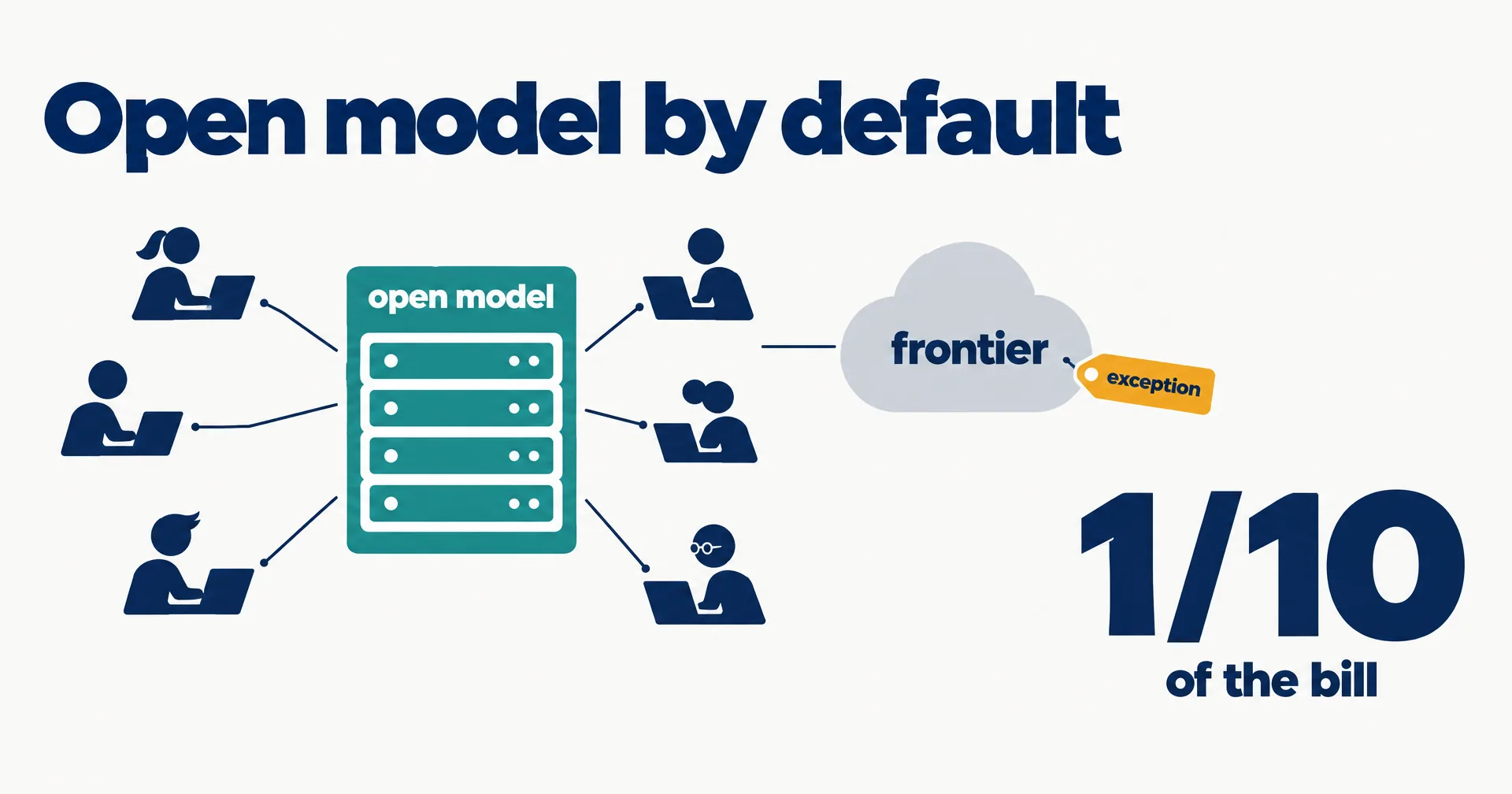
Revolut gave its 2,000 engineers Claude Code and watched some of them spend $1,000 to $10,000 a month with little to show for it. Its answer, described by AI ops lead David Abitbol at AI Engineer NYC on October 13, 2026, was to host an open model itself and make the frontier tools the exception. The talk spread on X on November 2, with one summary post passing 250,000 views. Here is what he actually said, with the numbers from his own slides and transcript.
Abitbol’s line on the costs that started it: “we were seeing engineers spend a thousand a month,” and “10,000 a month with not so much ROI.” His summary of where Revolut landed: the billing is flat “and the frontier is the exception.”
On this page · 8 sectionsOpen
 Revolut’s David Abitbol told AI Engineer NYC on October 13, 2026, that the bank’s coding default is now a self-hosted open model, GLM 5.3, with Claude Code and Codex kept as the exception.
 Serving about 2,000 engineers takes roughly 56 Nvidia B200 GPUs, at a blended cost of about 30 cents per million tokens.
 Abitbol says the invoice is now one tenth of what Revolut spent on Anthropic and OpenAI, after engineers had run up $1,000 to $10,000 a month on frontier tools.
 Revolut’s own chart: Gemini brought a 10% gain in lead time; the move to self-hosted GLM 5.1 in April brought 70% in lead time and 60% in coding time.
 Tuning mattered more than hardware: on the same GPU count, time to first token fell from over 10 seconds to about 1.6 while demand rose 76% by Abitbol’s count.
 The talk went viral on X on November 2, three weeks after it was given, with one summary post passing 250,000 views.
§ 01The move in three steps
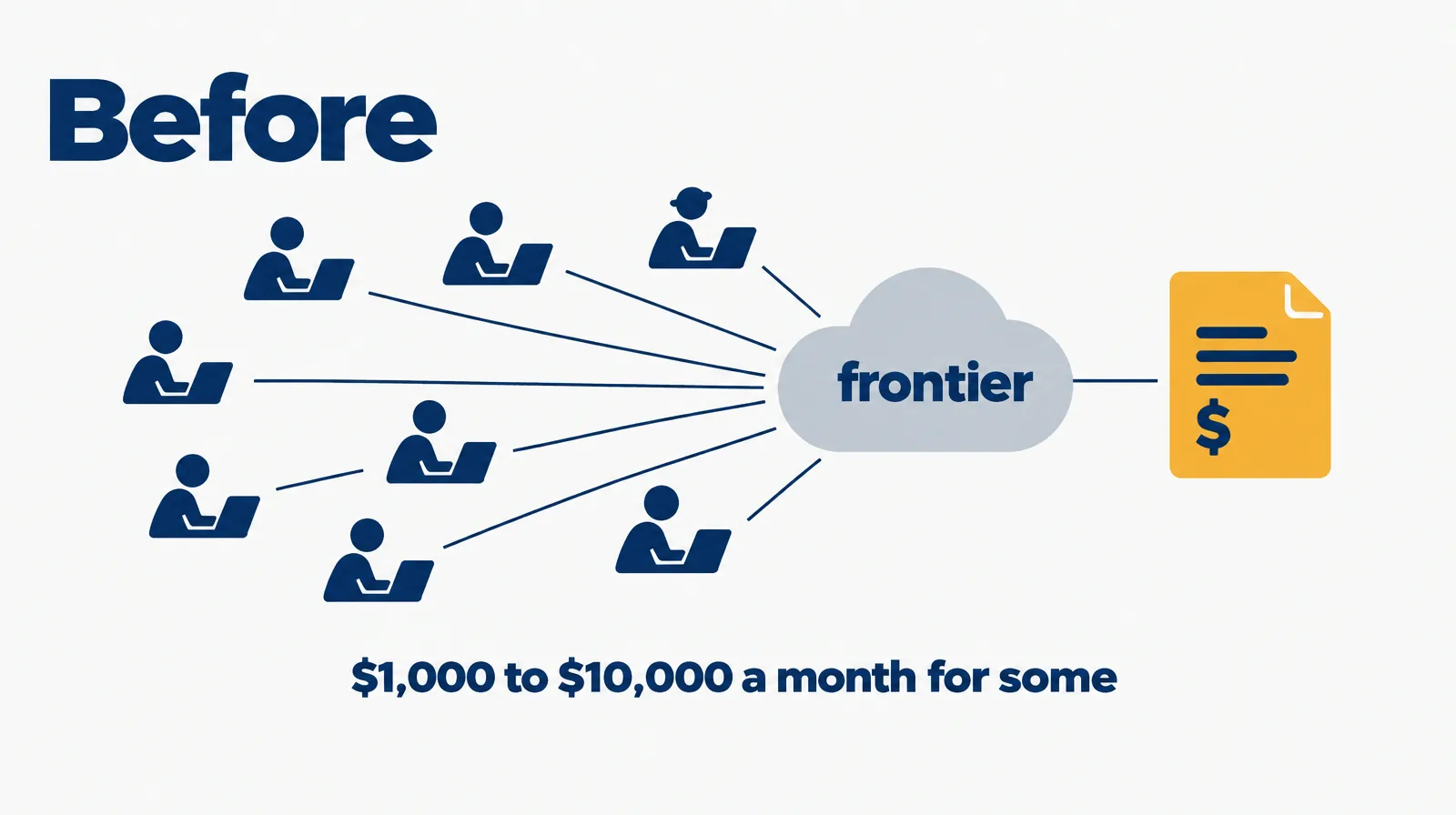
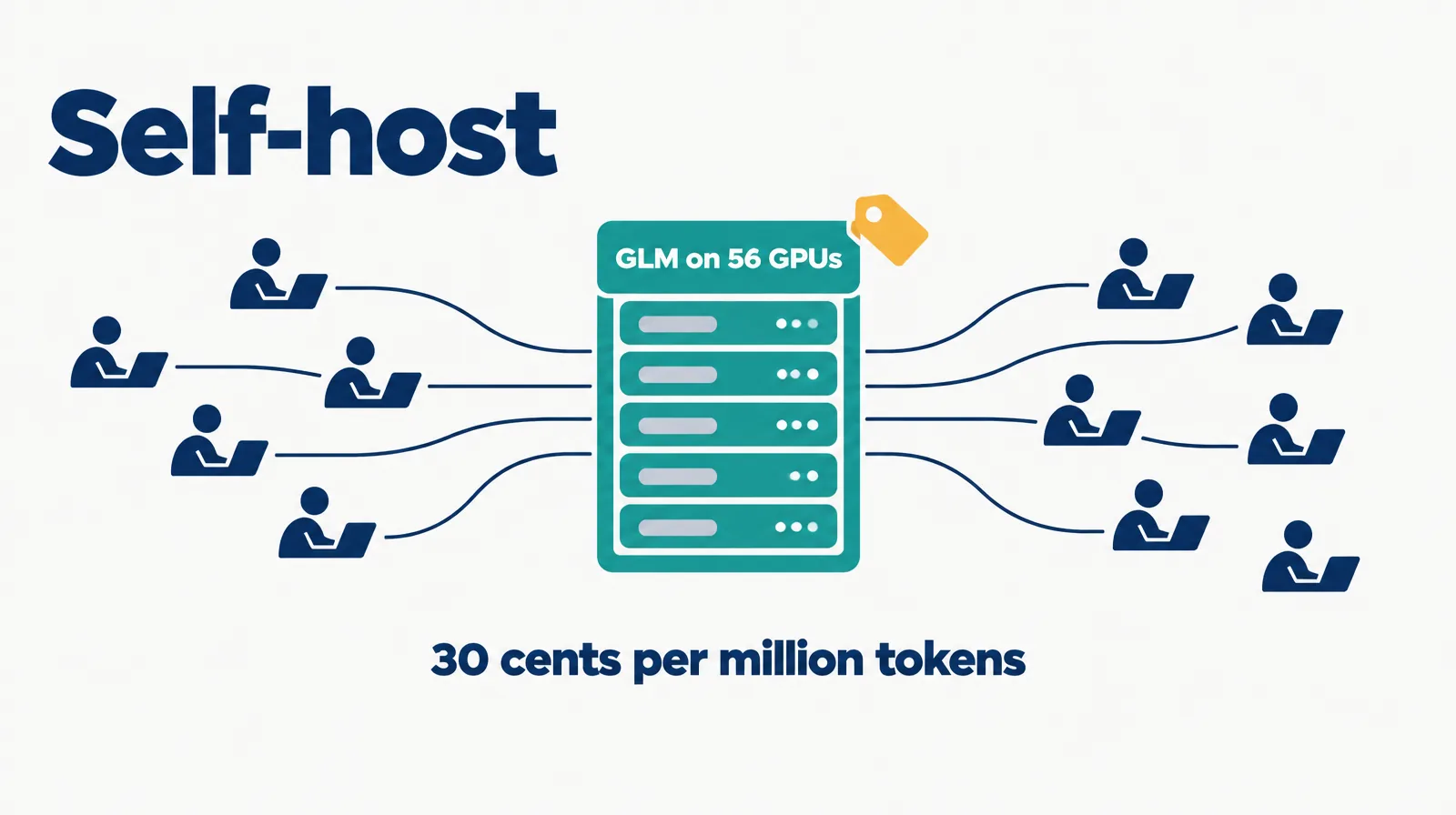
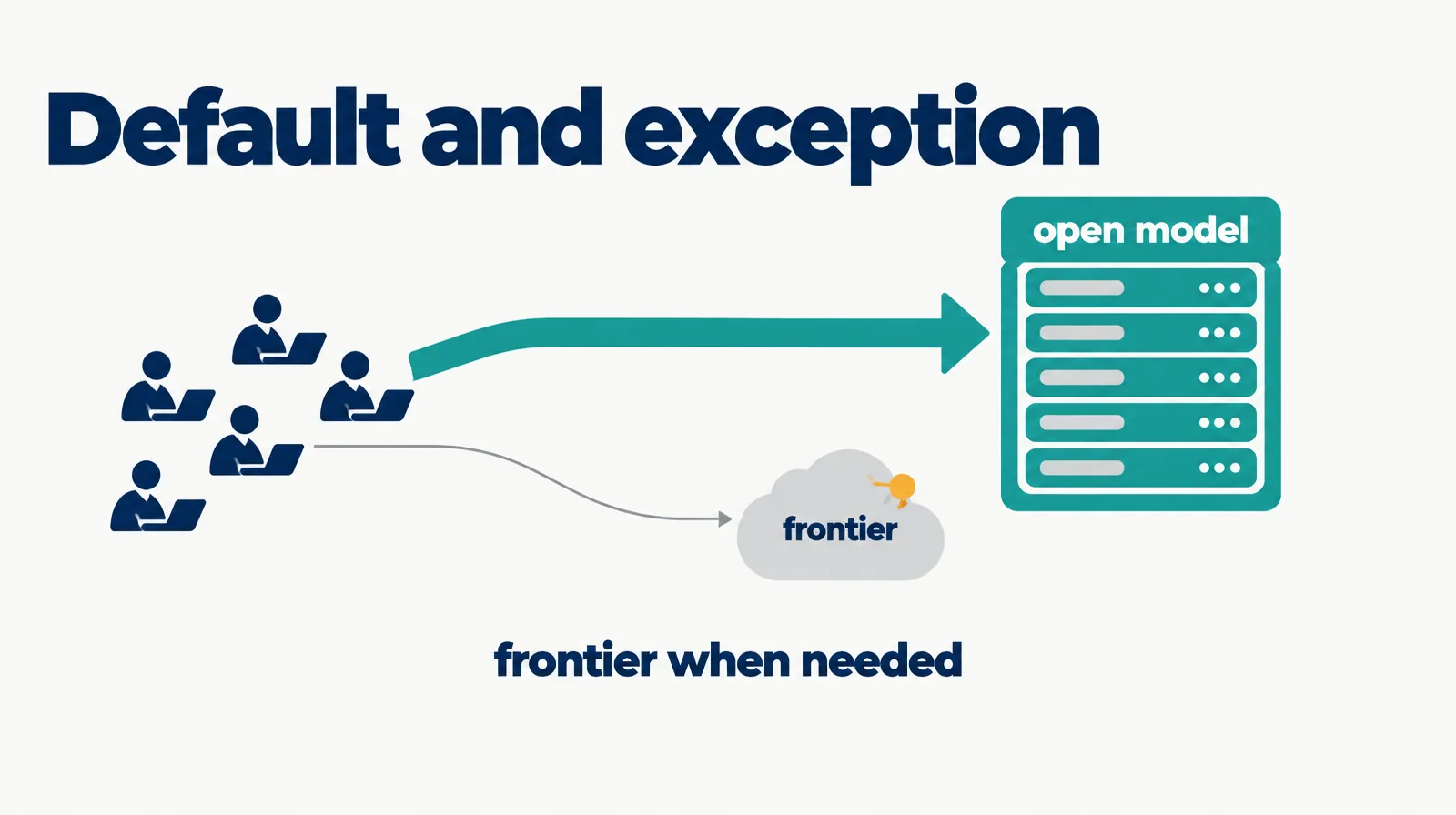
Revolut first brought AI in with Gemini in January 2025, then trialed Claude Code and launched it at scale with strict budget limits. In April 2026 it started self-hosting open models, beginning with GLM 5.1, and today it serves GLM 5.3. Abitbol is clear that the frontier did not disappear: “So obviously we keep using codex, code code.” They stay available; the open model is simply what engineers reach for first.

§ 02Revolut’s numbers, from the talk
| Measure | Reported value |
|---|---|
| Engineers served | About 2,000 |
| Model | GLM 5.3 (Z.ai), self-hosted |
| Hardware | About 56 Nvidia B200 GPUs |
| Blended cost | About 30 cents per million tokens |
| Bill vs before | One tenth of the Anthropic and OpenAI spend |
| Earlier frontier spend | $1,000 to $10,000 a month for some engineers |
| Target first-token time | Under 3 seconds (complaints start past 5) |
| Speed engineers accept | About 200 tokens per second (800 after 5 p.m.) |
| Context served | 256K tokens, not the full million |
| Precision | FP4 on Blackwell, about 40% less GPU footprint than FP8 |
For scale, Anthropic lists Claude Opus 5.5 at $4 per million input tokens and $20 per million output tokens, and the cheapest GLM 5.3 host on OpenRouter lists $0.07 in and $1.40 out (both read November 3, 2026). Revolut’s 30 cents is a blended figure on its own GPUs, so it is not directly comparable to either list price, but the gap explains the decision.
§ 03What each step did for delivery speed
| Rollout | Lead time | Coding time |
|---|---|---|
| Gemini (January 2025) | 10% | 20% |
| Claude Code at scale, with budget limits | Little impact, per Abitbol | Little impact, per Abitbol |
| Self-hosted GLM 5.1 (April 2026) | 70% | 60% |
Lead time is the days from picking up a feature to merging it; coding time is the hours spent writing it. Abitbol’s reading is that the gain came from use, not from model quality alone: with a flat bill, engineers “no longer have to save” tokens for hard tasks, so they used AI for inbox, Jira and Confluence work too. The bigger win on lead time than on coding time is his evidence that writing code was never the main bottleneck.
§ 04Tuning before buying more GPUs
On the same number of GPUs, Revolut took time to first token from over 10 seconds in April to about 1.6 in August, while requests per second rose from about 3 to over 7. Abitbol calls it an 88% improvement in performance for a 76% increase in demand, and his advice is that “you really need to resist scaling.” His list of levers:
| Lever | Abitbol’s advice |
|---|---|
| Context length | Serve 256K tokens; he calls a million-token context a scam for coding |
| Precision | FP4 on Blackwell GPUs |
| Parallelism | GLM fits on 4 GPUs, but 8 can leave more room for cache |
| Cache hits | Above 90% for coding traffic |
| Vision | GLM is text only: route images to Gemini or Luna, or use a GLM vision model |
| Harness | OpenAI-compatible endpoints, used inside OpenCode and Codex |
§ 05The bank’s answer on Chinese models and regulators
Abitbol addressed the obvious objection directly. Revolut does not send requests to an endpoint in China; it downloads the weights and serves them on its own GPUs in countries covered by data-adequacy rules (he names the US, EU, UK and Israel). For the regulator, coding agents run in a sandbox with a human in the loop, with rules such as allowing grep but not gradle, so they are not treated as autonomous agents. Strong OpenTelemetry logging covers incidents.
§ 06What it means for everyone else
Most companies do not have 2,000 engineers or a team to tune 56 GPUs, so the lesson is not “self-host”. It is the shape of the decision: measure delivery time rather than token counts, put a cheap default under routine work, and keep the most capable model for the tasks that need it. CellCog runs its AI employees on Claude Opus 5.5 and bills by the work assigned, which is the same question from the other side: what each finished task costs, not what each token costs.
§ 07Update log
- November 3, 2026: explainer animation added.
- November 3, 2026: page opened, from the AI Engineer NYC transcript of David Abitbol’s October 13, 2026 talk.
§ 08Sources
- AI Engineer NYC 2026, Shipping like a startup, regulated like a bank, David Abitbol (Revolut), October 13, 2026, and its transcript.
- Anthropic, Claude pricing, read November 3, 2026.
- OpenRouter, GLM 5.3 providers, read November 3, 2026.
Q1Which model does Revolut self-host?
GLM 5.3 from Z.ai for coding. GLM is text only, so Abitbol routes image work to Gemini or Luna, or uses a GLM vision model.
Q2Is it safe for a bank to run a Chinese open model?
Abitbol’s point is that Revolut downloads the weights and runs them on its own servers in an approved country, so no request goes to a Chinese endpoint. Every coding task also keeps a human in the loop inside a sandbox.
Q3What hardware does it take?
About 56 Nvidia B200 GPUs for roughly 2,000 engineers, run in FP4 with a 256K-token context instead of the full million, according to the talk.
Q4Why did the open model improve lead time more than Claude Code had?
Abitbol says engineers stopped rationing tokens. With a flat bill they used AI for inbox, Jira and Confluence work too, and the biggest bottleneck was not writing code.
Q5Should every company copy this?
Only at scale. Self-hosting pays when thousands of engineers send steady traffic and a team can tune the serving stack; Abitbol stresses that untuned GPUs give terrible performance.