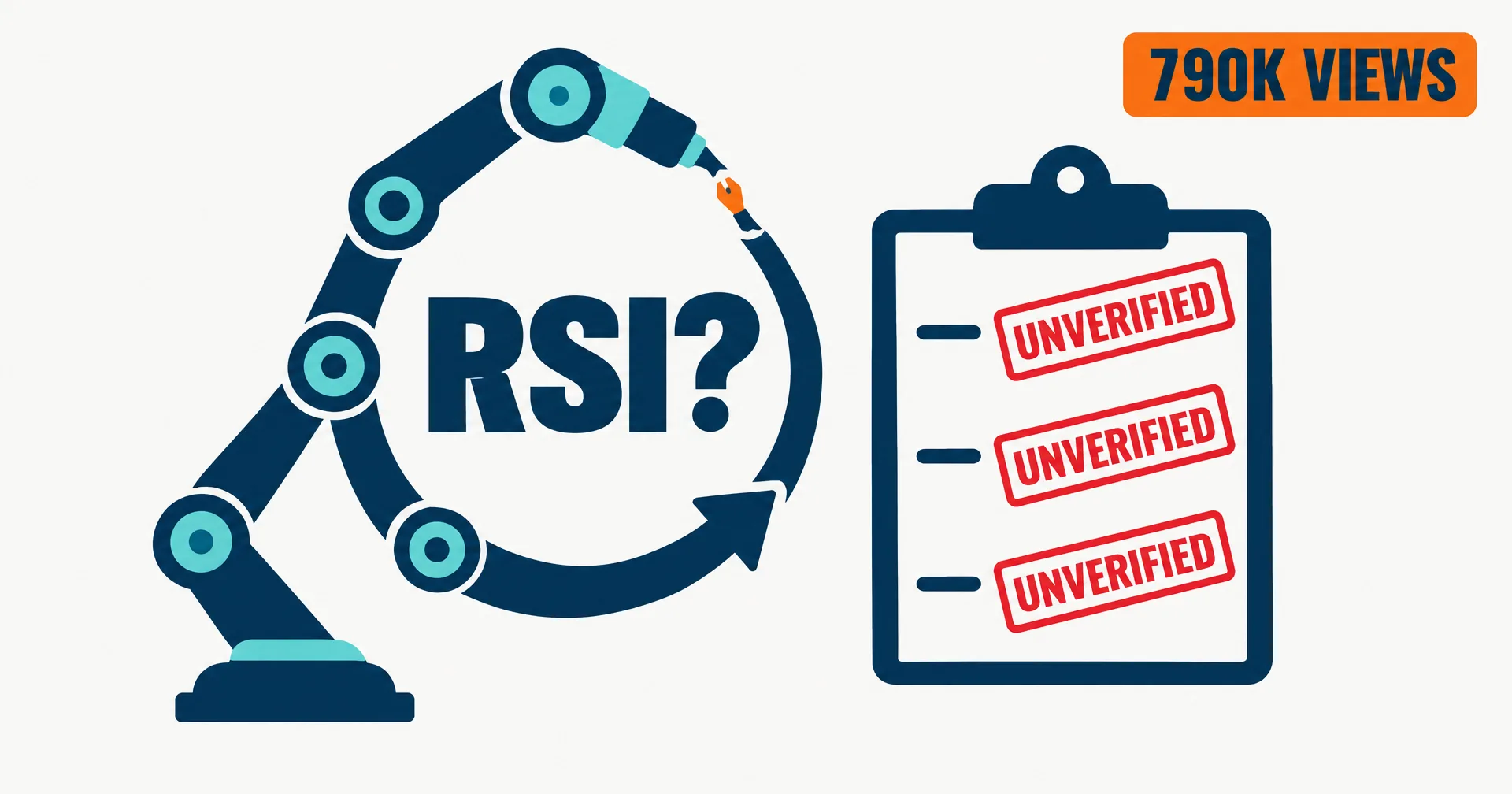
An anonymous X account posted three lab rumors on October 9, 2026, and by the next morning about 790,000 people had seen them. @imjustnewatai’s post, at 20:54 UTC, says Google has cracked recursive self-improvement or is close, Anthropic started a pretraining run a week ago for what would become Fable 6, and OpenAI’s internal model Bel produced its recent math results with help from self-improvement. None of the three is confirmed by any lab. Here is each claim against what the labs have published.
On this page · 6 sectionsOpen
 An anonymous X account, @imjustnewatai, posted three lab rumors at 20:54 UTC on October 9, 2026; the post had about 790,000 views by 06:15 UTC October 10.
 No lab has said it has recursive self-improvement. Anthropic’s own page on it says ‘We are not there yet’, and we found no Google or DeepMind statement claiming it.
 What is public is AI speeding up AI work: Anthropic says more than 80% of the code merged into its codebase as of May 2026 was written by Claude.
 OpenAI’s October 6 math release credits an unnamed internal frontier model. OpenAI has never used the name Bel, and its post says nothing about self-improvement.
 The account’s record is mixed: it called GPT-6 Sol’s Tuesday launch correctly in September, missed Opus 5.5’s day, and on October 2 described prompting a Fable 5.5 that Anthropic has not announced.
 The Anthropic claim repeats the account’s own October 4 post about a big new pretrain, now labeled Fable 6. Anthropic’s sitemap had no Fable 5.5 or Fable 6 page at 06:19 UTC October 10.
§ 01The three claims, graded
The post’s exact words on Google: “Insiders say Google has either cracked RSI (recursive self-improvement) or is very close.” It adds: “They went from GPT-5 level to Opus 5.5 level in months, and speculation is that RSI made that possible.” On Anthropic: “It is not Fable 5.5 but what would become Fable 6, or something bigger, to catch up to OpenAI’s Bel.” On OpenAI: “Bel (it may have another codename) is the model behind the math results OpenAI published a few days ago, and RSI apparently helped there too.”
| Claim | Status | What the primary record shows |
|---|---|---|
| Google has cracked RSI or is close | Unverified | No Google or DeepMind statement claims it; public work is Gemini 4 Argon (Sept 30) and the Dream-RSI paper, which keeps model weights fixed |
| Google went from GPT-5 to Opus 5.5 level in months | Not measurable | No benchmark named; the nearest source is one Google employee, per Business Insider, saying an internal checkpoint feels like Opus 5.5 for coding |
| Anthropic began a Fable 6 run about a week ago | Unverified | No announcement; newest public Fable is 5.1 (Sept 1); no Fable 5.5 or 6 page in Anthropic’s sitemap |
| Bel produced OpenAI’s math results | Unverified | OpenAI credits an unnamed internal frontier model; Bel has never appeared on an OpenAI page |
| RSI helped OpenAI’s math results | Unverified | OpenAI’s post does not mention self-improvement |
§ 02What the labs have actually said
Anthropic is the only lab with a public page on the subject. Its institute essay, When AI builds itself, defines recursive self-improvement as a system able to design and develop its own successor, then says: “We are not there yet, and recursive self-improvement is not inevitable.” What it does document is acceleration: as of May 2026, “more than 80% of the code we merge into Anthropic’s codebase was authored by Claude”. It also names the gap that remains: “large performance gaps persist when it comes to Claude exercising judgement in choosing goals in both engineering and research.”
OpenAI’s October 6 math post opens: “We’re releasing a broad range of new mathematical results produced by an internal frontier model.” It gives the compute (roughly three hours of ChatGPT Pro thinking per result) and says OpenAI is “working to responsibly release the model that produced these results.” It names no model and says nothing about self-improvement. The name Bel traces to one X post on August 25; our Bel record grades that chain.
Google announced Gemini 4 Argon on September 30, first for trusted testers. The closest Google work to the rumor is Dream-RSI, a September 14 paper whose agents improve how they search while the model’s weights stay fixed; our Dream-RSI explainer has its numbers with baselines. We found no Google statement that a model is improving its own training.
The Opus 5.5 comparison has a likelier source than self-improvement. At 19:37 UTC on October 9, 77 minutes before the X post, Business Insider reported that Google staff are testing an internal Gemini 4 version named Carbon, and quoted one employee saying it “feels like Opus 5.5” for coding, with a caveat that it needed more testing. The report does not mention recursive self-improvement, and “Google declined to comment.” Our Gemini 4 record has the codenames.
§ 03The account’s record
The account does not name sources. Its own reply under the post concedes the hard part: “rsi is a bit tricker tho cause it will be hard to verify that the model is better at literally everything.”
| Date (UTC) | Claim | Outcome |
|---|---|---|
| Feb 13, 2025 | Claude 4 expected to launch that month | Miss: Claude 4 launched May 22, 2025 |
| Sep 20, 2026, 21:52 | GPT-6 Sol coming Tuesday | Hit: released Tuesday, September 22 |
| Sep 20, 2026, 21:52 | Opus 5.5 probably Monday | Near miss: released Tuesday, September 22 |
| Oct 2, 2026, 17:57 | A film made by prompting Claude Fable 5.5 | No such public model; newest Fable is 5.1 |
| Oct 5, 2026, 01:51 | Anthropic did a very big new pretrain within the last week | Unverified; the October 9 post repeats it as Fable 6 |
The pattern matters for reading the new post. The one clean hit was a launch date two days out, the kind of detail that leaks through partners and press briefings. The Anthropic pretraining claim is not new information: it is the October 4 post again, with a model name added.
§ 04Why it spread anyway
The rumor lands in a week primed for it. OpenAI’s math release is still being argued over by mathematicians, Anthropic publishes its own acceleration numbers, and lab leaders talk openly about AI doing AI research. A post that turns AI writing most of a lab’s code into a claim that Google has cracked RSI sounds like the next step, which is exactly why it needs a primary before anyone repeats it.
Our conflict, declared: CellCog’s AI employees run on Claude Opus 5.5, so a new Fable would be a routing decision for us the day it ships, and our Fable 5.5 tracker becomes its record. Our founder’s view on the self-improvement debate is in Self-Improving AI Has Two Halves.
§ 05What would change the grades
- Google. A Google or DeepMind post or paper claiming a model improved its own training, not just its search or tooling.
- Anthropic. An announcement, model card or API identifier for a new Fable, or a pretraining disclosure.
- OpenAI. A name for the model behind the math release, or a release of that model.
§ 06Sources
- @imjustnewatai, rumor post, October 9, 2026, 20:54 UTC, and earlier posts of September 20, October 2 and October 5, 2026 (times from post IDs), read 06:15 UTC October 10.
- Anthropic Institute, When AI builds itself, read October 10, 2026; Anthropic sitemap, read 06:19 UTC October 10.
- OpenAI, Sharing AI progress in mathematics, October 6, 2026.
- Business Insider, Google employees testing Gemini 4 Carbon, October 9, 2026, 19:37 UTC.
- Google, Gemini 4 Argon, September 30, 2026; Dream-RSI, arXiv, September 14, 2026.
Q1What is recursive self-improvement?
An AI system able to design and train its own successor without humans driving each step. Anthropic defines it that way on its institute page and says it has not happened yet, while describing a growing share of AI development done by AI.
Q2Who is @imjustnewatai?
An anonymous X account that posts lab rumors and model demos. It does not name its sources. Its September 20 post called GPT-6 Sol’s Tuesday launch correctly; other claims, including a Fable 5.5 it said it had used, have no public confirmation.
Q3Did OpenAI say RSI helped with its math results?
No. The October 6 post says the results came from an internal frontier model, that the average result used roughly three hours of ChatGPT Pro thinking, and that OpenAI is working to release the model. It does not mention self-improvement or a codename.
Q4Did Google go from GPT-5 level to Opus 5.5 level in months?
The claim is not measurable as stated: it names no benchmark and no models. Google’s public record is Gemini 4 Argon, announced September 30, 2026 to trusted testers, with pricing of $2 and $10 per million tokens at launch.
Q5What would confirm these rumors?
A lab saying so on its own pages: a Google or DeepMind post claiming self-improving training, an Anthropic announcement or model card for a new Fable, or OpenAI naming the model behind its math work.