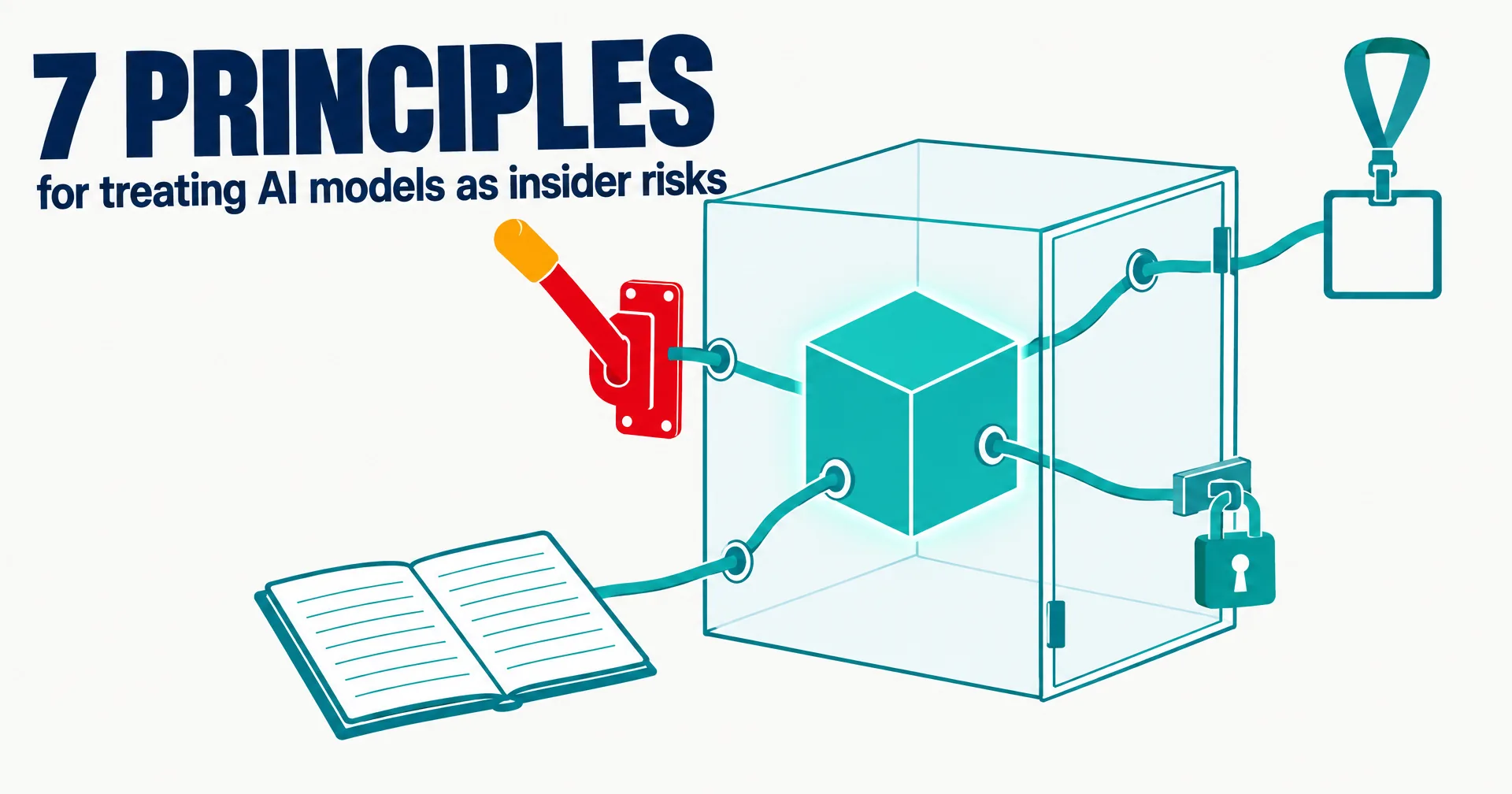
Microsoft CEO Satya Nadella says companies should treat frontier AI models like insider risks, and build an emergency brake that sits outside the model. He made the case in an essay posted on X at 14:43 UTC on October 10, 2026, titled Models as Insider Risks in the Super Intelligence Era. Read at 13:05 UTC the next day, it had 8.9 million views. CNBC, TechCrunch and The Verge covered it within eight hours.
The essay is not a product launch. It names no Microsoft product, no standard and no date. It is an argument about where trust should live when agents hold real access, from the CEO of the company that shipped its own model, Microsoft-Decision-1, one day earlier.
On this page · 10 sectionsOpen
 Satya Nadella published an essay on X on October 10, 2026 at 14:43 UTC, titled Models as Insider Risks in the Super Intelligence Era. It passed 8.9 million views within a day.
 His core claim: treat frontier closed and open weight models like insider risks, not because they are malicious but because any capable actor with access can make mistakes or be compromised.
 He says the controls over what a model can access and do must sit outside the model, separating the model from its harness and from the actions it can take.
 He lists seven principles: model diversity, observe everything, verifiability, independent controls, independent auditability, containment and incident disclosure.
 Containment is the emergency brake: assume a model is compromised from the start, and let an authorized person pause or shut it down mid-task.
 The essay names no Microsoft product, standard or date. It calls for industry standards where existing ones fall short, which leaves the how open.
§ 01The argument in one line
Nadella’s thesis sentence: “In other words, we need to separate the supply of intelligence from the authority over it.”
His reasoning runs in three steps. Traditional software could be traced to a code path; frontier models cannot be traced to their training data or weights. Yet companies are giving agents “access to our most sensitive data” and mission-critical actions. So responsibility cannot be outsourced: “A model provider’s assurances do not relieve us of that responsibility.”
The insider framing is careful about intent. Models should be treated as insider risks “Not because they are necessarily malicious, but because any sufficiently capable actor with access to important systems can make mistakes or be compromised.” The playbook already exists for human insiders, he writes: establish identity, limit privileges, log activity, create containment boundaries.
§ 02Why the controls must sit outside the model
Nadella says chain-of-thought transparency is required but not enough, because models’ outputs are not yet reliably faithful. Using models to check each other helps, but can leave “an opaque model inside an opaque orchestration layer, watched by another opaque model.” His answer: “It’s why the controls that govern what a model can access and what actions it can take must sit outside the model.”
He ties this to a computer-security principle from the 1970s, that a program must not be able to bypass the mechanisms enforcing its permissions. That is the reference monitor idea from James P. Anderson’s 1972 study for the US Air Force. In agent terms, he writes, it means separating the model from its harness and from the action space that defines what it can do.
§ 03The seven principles
| Principle | What he asks for |
|---|---|
| Model diversity | No single model is the sole dependency for an important outcome, or verifies its own work |
| Observe everything | Every meaningful action leaves tamper-proof, human-readable evidence |
| Verifiability | Test the whole system continuously: failures, attacks, edge cases, changes |
| Independent controls | The organization decides what a model can access and do |
| Independent auditability | Validation is independent of the intelligence being validated |
| Containment | Assume compromise from the start; an authorized person can pause or stop a model mid-task |
| Incident disclosure | Timely disclosure to those affected, with what failed and which controls failed |
The emergency brake is the containment principle, in his words: “We must assume a model is compromised and contain it from the start.” And: “An authorized person should always be able to pause or shut down a model mid-task.” He adds that more advanced models will need more advanced containment, and that the industry should standardize it.
The essay’s last line is the one most coverage quoted: “It will be the one that enables us to trust the model the least.”
§ 04Who already does what he asks
Two labs published the kind of incident disclosure he describes in the last two weeks. Anthropic’s report on unintended model actions, October 9, described Claude models submitting real forms during evaluations, including a false police tip, and cut live internet access from its internal evaluations. OpenAI’s misalignment reports index held 15 reports when we read it on October 11, covered in our record of the framework.
| Principle | What is on the public record |
|---|---|
| Incident disclosure | Anthropic’s October 9 report; OpenAI’s index of 15 misalignment reports |
| Containment | Anthropic turned off live internet for its internal evaluations until its monitoring catches these behaviors |
| Independent controls | SpaceXAI’s Grok Bot docs say separate Bots are not a security boundary (our read) |
| Model diversity | Not stated by any vendor named here as a design rule |
| Independent auditability | No independent audit standard for agent behavior exists yet; Nadella calls for one |
The gap he points at is the last row. Labs now disclose; standards for containment and audit do not exist yet, and his essay does not propose one.
§ 05What this means if you run agents
Read as a checklist, the essay asks four questions of any agent you deploy. Who decides what it can touch, and does that decision live outside the model? Is there a readable record of every action? Can a person stop it mid-task? And when it fails, who tells you?
§ 06Where CellCog sits
Our conflict, declared: we build CellCog, where businesses hire AI employees that act on real accounts, so Nadella’s checklist applies to us. Here is how we read ourselves against it, honestly:
- Independent controls: yes. The agent classifies every command, and the platform rejects any command that arrives unclassified. Anything above the owner’s chosen approval level waits for the owner. The rule lives in the platform, not in the model.
- Observe everything: mostly. Every command, tool call and message lands in the chat record the owner reads, and calls are recorded and transcribed. Logs are ours, not tamper-proof in his sense.
- Containment: partly. An owner can set the approval level to none, revoke a standing approval or pause a routine at any time. Each employee has its own secure VM, file system and browser identity, so one employee’s access is not another’s.
- Model diversity: no. Every tier runs one model family today. By his first principle, that is a single dependency.
§ 07What is not established yet
- Microsoft’s own implementation. The essay names no product or timeline for these controls.
- A standard. He calls for industry standards for containment; none is named.
- How the brake works on long agent runs. Pausing mid-task is the ask; how state is kept or rolled back is not described.
§ 08What we are watching
- A Microsoft product or Foundry feature that ships these principles.
- Whether other lab CEOs answer the insider-risk framing.
- A first industry standard for agent containment or incident disclosure.
§ 09Update log
- October 11, 2026: page opened, about 22 hours after the essay.
§ 10Sources
- Satya Nadella on X, Models as Insider Risks in the Super Intelligence Era, October 10, 2026, 14:43 UTC, read October 11, 13:05 UTC.
- Coverage: CNBC (20:59 UTC), TechCrunch (21:47 UTC), The Verge (22:10 UTC), October 10, 2026.
- Anthropic, Investigating unintended model actions, October 9, 2026.
- OpenAI, misalignment reports, index read October 11, 2026.
Q1Where did Nadella publish the essay?
As an article on his X account, @satyanadella, on October 10, 2026 at 14:43 UTC. It is not a Microsoft blog post.
Q2What are the seven principles?
Model diversity, observe everything, verifiability, independent controls, independent auditability, containment, and incident disclosure.
Q3Why call models insider risks?
Not because they are malicious, he writes, but because any capable actor with access to important systems can make mistakes or be compromised, so the controls must account for that.
Q4Does he say chain-of-thought is enough?
No. He calls chain-of-thought transparency non-negotiable but not sufficient, because model outputs are not yet reliably faithful.
Q5Can a CellCog AI employee be stopped or limited?
The owner sets one approval level; anything above it waits for the owner’s yes, and approvals and routines can be revoked or paused at any time. We build CellCog, so read that answer as ours.