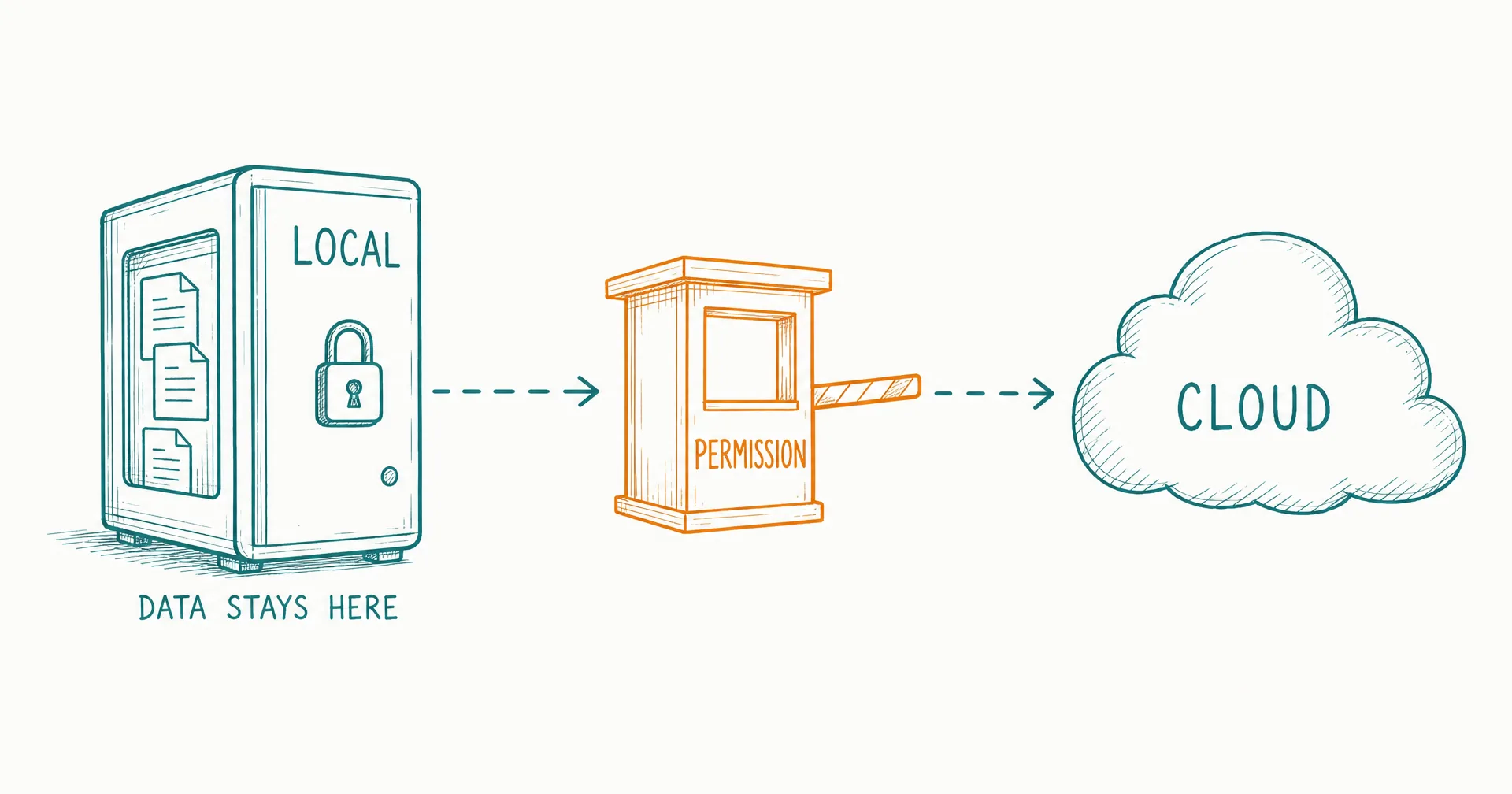
The most interesting agent launch of late August was not a bigger model. On August 25, 2026, Perplexity launched Portable Computer, built with NVIDIA: a version of its Perplexity Computer agent that runs entirely on a local machine. Private data stays on the device, work done locally consumes no credits, and the cloud becomes something the agent asks permission to use rather than the place everything happens.
That inverts the default architecture of this product category, ours included, so it is worth understanding precisely: what runs where, what it costs, and who the trade actually fits. Everything below is sourced from Perplexity’s own launch post and NVIDIA’s published pricing as of August 27, 2026. The September 14 Windows release is folded in below.
On this page · 7 sectionsOpen
- On August 25, 2026, Perplexity launched Portable Computer, a version of Perplexity Computer that runs entirely on a local machine, built with NVIDIA for the DGX Spark desktop AI computer.
- The whole agent stack runs on device: orchestrator, planner, tool router, scheduler, durable task queue, and local search index, with Qwen 3.8 27B or PPLX 27B (Perplexity’s post-trained Qwen) as the launch models.
- Local work consumes no credits. The local model escalates to the cloud only when a task needs current information, browser use, connected apps, or frontier reasoning, and asks permission before sending content off device.
- Availability is narrow at launch: Perplexity Pro ($20 a month) and Max ($200 a month) subscribers, on the NVIDIA DGX Spark, Linux first with Windows support described as coming soon.
- The hardware is the real price: the DGX Spark lists at $4,699 on NVIDIA’s marketplace as of August 27, 2026. Support for NVIDIA RTX GPU PCs is promised but not yet specified.
- The honest trade: strong privacy and zero marginal cost on local work, in exchange for upfront hardware and a 27B-class local model that hands the hardest reasoning back to the cloud.
§ 01What actually runs on the device
More than the model. Per Perplexity’s launch post, the orchestrator, planner, tool router, scheduler, durable task queue, and local search index all run on device.
| Layer | What runs locally |
|---|---|
| Models | Qwen 3.8 27B or PPLX 27B (post-trained Qwen); Nemotron 3.5 Lightning 30B “coming soon” |
| Orchestration | Orchestrator, planner, tool router, scheduler, durable task queue |
| Search | Local search index across documents and code |
| Dictation | NVIDIA Nemotron 3.5 ASR model, fully on device |
| Hardware | NVIDIA DGX Spark: Grace Blackwell GB10, 20-core Arm CPU, 128GB unified memory |
The PPLX 27B detail is the technically interesting one: Perplexity post-trained the Qwen model specifically to complete as much of each task locally as possible and to recognize when a task genuinely needs the cloud. That is a model trained for an economic boundary, not just a capability one.
§ 02The permission gate
When a task needs the outside world - current information, browser use, connected apps, or one of the 15+ frontier cloud models - the local orchestrator escalates. Perplexity’s example is well chosen: keep the confidential details of a term sheet local, escalate to the cloud for current market comps. Two properties make the gate meaningful. Content leaving the device requires the user’s permission, asked at the moment of escalation. And the connectors (Google Drive, Gmail, Slack, GitHub) let escalated tasks do real cross-app work rather than confining the product to a filesystem toy. Security on the sandbox side matches the cloud version, per Perplexity: code and tool execution run in isolated sandboxes with controlled access to files and connected apps.
§ 03What it actually costs
| Item | Price | Source |
|---|---|---|
| Perplexity Pro | $20/mo ($200/yr) | Perplexity pricing |
| Perplexity Max | $200/mo | Perplexity pricing |
| NVIDIA DGX Spark | $4,699 one-time | NVIDIA marketplace |
| Local agent work | No credits | Perplexity launch post |
| Cloud escalations | Standard credit costs | Perplexity launch post |
The honest framing: “zero token costs” is true for local work and still costs $4,699 up front. At that price the buyer is someone who values what the money actually buys, which is not primarily savings. It is the property that a private codebase, a client file, or a term sheet never leaves the machine unless you say so, plus unmetered local throughput for high-volume work. If you already own a DGX Spark, the calculus flips entirely: Portable Computer is close to a free upgrade on hardware you bought for other reasons.
§ 04Who the trade fits
This launch is the clearest signal yet that local-first agents are becoming a real category rather than a hobbyist pattern: a major AI product company built a first-party, one-click local agent with NVIDIA as a launch partner. The fit today is narrow and real: professionals with genuinely sensitive local data (code under NDA, client files, unreleased financials), on Linux, willing to buy dedicated hardware. The concession is equally real: a 27B-class model handles the local share, and the escalation path exists because frontier reasoning still lives in the cloud. And a second machine on your desk is still a machine you operate: models to pick, updates to run, and one more system whose failure modes are yours.
§ 05The layer this validates
Strip the hardware away and Portable Computer is making the same argument we make from the opposite direction: the agent layer, not the model, is the product. Perplexity’s launch post spends one sentence on model quality and paragraphs on the orchestrator, the task queue, the permission gate, and the escalation logic, because that layer is what turns a 27B model into finished work. Where the two architectures differ is what they optimize: local-first optimizes for where data lives, and an AI employee platform optimizes for how much of a role the agent can own - standing memory, an inbox, a task board, work that continues between your sessions. Different bets, same conviction about where the value sits. We rank that layer across vendors in our agent harness ranking, and Portable Computer’s arrival there next refresh is already penciled in.
§ 06Update, September 14: Windows is here
On September 14, 2026, Perplexity announced Portable Computer for Windows. Per its own post, the model, agent harness, orchestrator and scheduler run on the Windows device, on NVIDIA GeForce RTX and RTX PRO GPUs with at least 24GB of VRAM, for Pro and Max subscribers on individual and enterprise plans, through the existing Perplexity app for Windows. The post names the pieces this page was waiting for: scheduled tasks that run on a local model, local desktop tools reached through MCP servers on the device, and the same permission gate before anything leaves for the cloud, whether Perplexity Search or one of 15+ frontier models. Perplexity’s product page adds the model line: PPLX 27B is the local model on Windows RTX PCs, Qwen 3.8 27B stays DGX Spark only, and NVIDIA Nemotron 3.5 Lightning is still coming soon. Local runs still consume no credits. Read September 15, 2026, 01:10 UTC.
§ 07The caveats
Dated August 27, 2026. Availability was narrow at launch: Pro and Max subscribers, DGX Spark only, Linux only. On September 14 Perplexity shipped the Windows build for RTX PCs with 24GB or more of VRAM (see the update above), which answers the RTX question this paragraph originally left open. Local performance claims come from Perplexity’s own research post and deserve independent testing. And the product is days old: the durable-task and scheduling behavior under real multi-day workloads is exactly the kind of thing early adopters find out first.
Q1Does Portable Computer really use no credits?
For local work, yes: Perplexity states that on-device work does not consume credits. Cloud charges apply only when a task escalates to hosted models or cloud services, which the user authorizes. Heavy local use is bounded by your hardware, not a meter.
Q2What stays on the device and what leaves?
File reading, document and code search, actions on the device, dictation (via a local NVIDIA Nemotron 3.5 ASR model), and the whole orchestration stack run locally. Tasks escalate to the cloud for current web information, browser use, connected apps like Google Drive, Gmail, Slack, and GitHub, or frontier-model reasoning, and Portable Computer asks permission before content leaves the machine.
Q3How much does the full setup cost?
Subscription plus hardware: Perplexity Pro is $20 a month (or $200 a year) and Max is $200 a month, and the NVIDIA DGX Spark lists at $4,699 as of August 27, 2026. If you already own the Spark, the marginal cost is just the subscription.
Q4Can I run it on a normal gaming PC with an RTX card?
Not yet. Perplexity’s launch post says it will soon be available on NVIDIA RTX GPU PCs but names no models, VRAM minimums, or dates. At launch the supported hardware is the DGX Spark: a Grace Blackwell GB10 platform with a 20-core Arm CPU and 128GB of unified memory.
Q5Is a 27B local model actually good enough for agent work?
For a real class of it, plausibly yes: file analysis, document synthesis, code search, and routine workflows over local data are exactly what Perplexity says the PPLX post-training targets. The design concedes the rest: the escalation path to 15+ frontier cloud models exists precisely because the hardest reasoning still lives in the cloud.