The August edition of this page opened by pointing out that every major “best AI coding agents” ranking had gone stale in a single week. September did it in two days. Anthropic shipped Claude Fable 5.1 on September 1; Google released Gemini 3.8 Flash and Meta released Muse Spark 1.3 on September 2. Underneath the harnesses in this table, the model layer is not the same one we ranked three weeks ago.
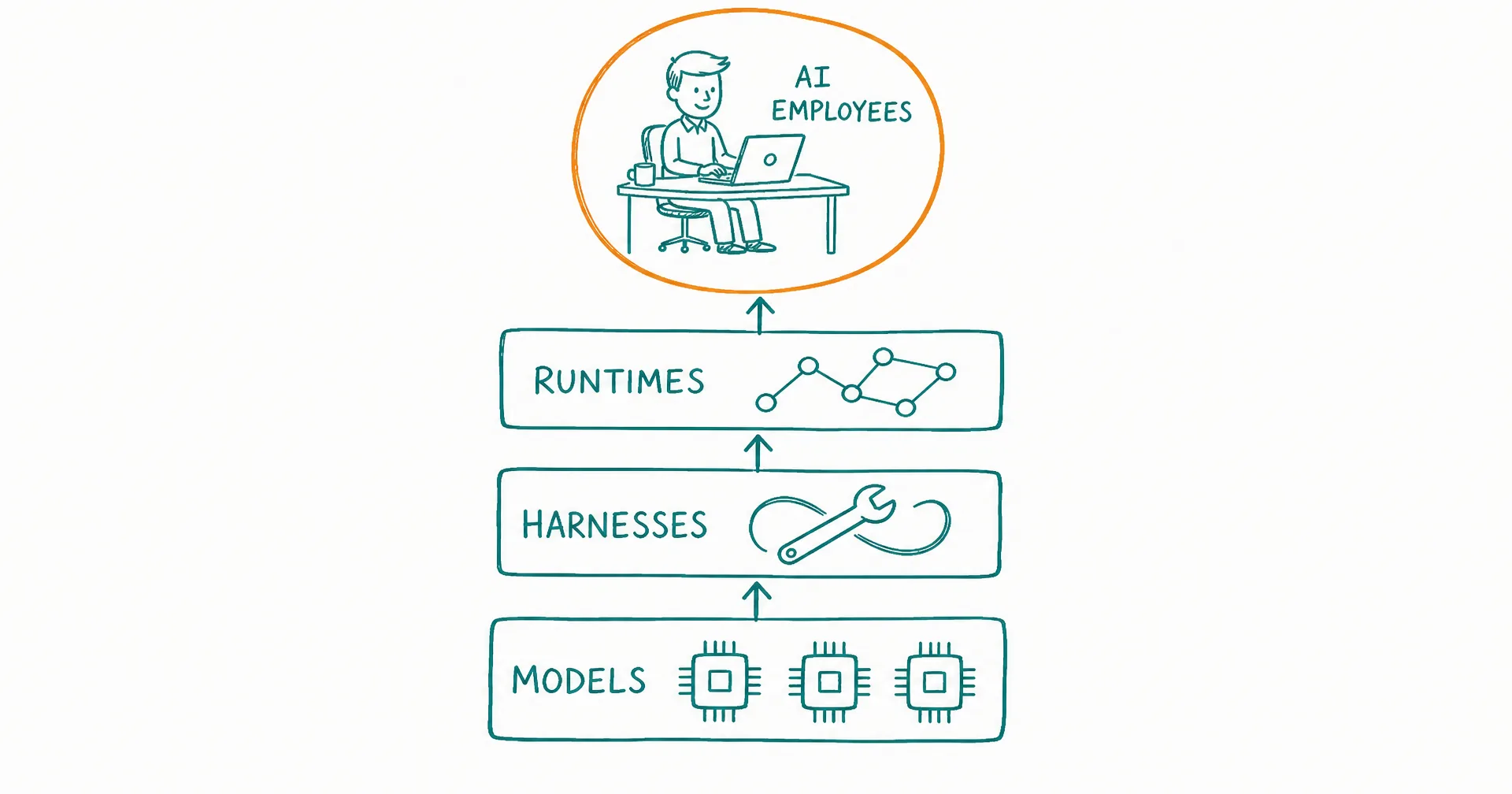
This page is our September 2026 read of the harness landscape, re-ranked on the first of every month at this same URL. It covers three things the usual rankings do not: the freshest model context, honest sourcing for every number, and the full stack. Because “which harness is best” is only the middle question. Below the harness sits the model. Above it sit two layers most rankings ignore entirely: agent runtimes and AI employee platforms.
The research pass behind this article was produced with CellCog Max, the deep research engine ranked #1 on Deep Research Bench (July 2026). And we should be plain about one more thing: we build in this stack ourselves, and we rank ourselves first in the table below. A vendor putting itself at the top of its own ranking is worth exactly as much as the evidence under it, so every claim we make about ourselves is dated and linked to a public leaderboard, or explicitly attributed to a user report. Check them, then discount us however you see fit.
On this page · 9 sectionsOpen
- An agent harness is the runtime shell around a model: the loop, tools, memory, and safety boundaries that turn a chat model into a working agent.
- For September 2026 we rank CellCog first on breadth (research, code, and native video, image and document output), Claude Code first on pure coding depth, Codex CLI on cloud autonomy, and Cursor on in-editor flow. No rank moved since August; the receipts under each one did.
- Three frontier models shipped in the first two days of September: Claude Fable 5.1 (September 1), Gemini 3.8 Flash and Muse Spark 1.3 (September 2). Every ranking page that has not been touched since is already stale.
- Harnesses are one layer of a three-layer stack: coding harnesses run sessions, agent runtimes orchestrate multiple agents, and AI employee platforms own standing roles.
- CellCog enters the comparison in the open: #1 on Deep Research Bench (July 2026), second on that leaderboard’s GPT-5.5-judged tab as of September 3, user-reported coding wins over Claude Code, and the only native video, image, and document output on the page.
- Claude Code now defaults to auto mode and gained a deny-by-default flag for unattended hosts; Cursor’s Grok Bot reached Android; OpenClaw shipped 2.0 and its first patch. The harness layer moved more in two weeks than the model layer did.
- Pick by the job: a harness for coding sessions, a runtime for orchestrating multiple agents, an AI employee platform when the work is a role that persists between sessions.
§ 01What a harness is, in one paragraph
An agent harness is the infrastructure around a language model that turns it from a chat window into a worker: the goal-plan-act loop, tool access (terminal, file system, browser, APIs), context and memory management, subagent coordination, and permission boundaries. The model supplies reasoning. The harness supplies hands, eyes, and guardrails. When people compare Claude Code to Codex to Cursor, they are comparing harnesses, usually running very similar frontier models underneath.
That last point matters more every month. The frontier models have largely converged on coding benchmarks, and this month’s three releases each claim single-digit gains over their predecessors, which is precisely why the harness, and the layers above it, now decide most of the experience.
§ 02The harness rankings, September 2026
| Rank | Harness | Shape | Standout this month | Best for |
|---|---|---|---|---|
| 1 | CellCog | General-purpose super-agent | #1 on Deep Research Bench (July 2026); moved Core and Max tiers to Opus 5.5 and Flash tiers to Gemini 3.8 Flash on their release days; the only harness here that ships video, images, PDFs and dashboards natively | Work that is not only code, and roles that outlive a session |
| 2 | Claude Code | Terminal-first + IDE | Runs Fable 5.1; auto mode is the default; v2.1.259 adds a deny-by-default flag for unattended hosts | Long autonomous sessions, repo-scale work |
| 3 | Codex CLI | CLI + cloud agents | 0.153.0 adds a remote plugin marketplace and better disconnect recovery; a Persistent mode is in testing, not released | Async issue-to-PR workflows |
| 4 | Cursor | AI-native IDE | Grok Bot reached Android September 2; Fable 5.1 available since September 1; cloud agents can now run on your own machines | Daily in-editor coding |
| 5 | Gemini CLI | CLI | Gemini 3.8 Flash at 3.7’s introductory price through December 31 | Google-stack teams |
| 6 | GitHub Copilot | IDE-embedded | Ubiquity, agent modes maturing | Teams already on GitHub |
We publish this ranking and we are in it, at the top. That is a conflict of interest, so we have written the next section to be audited rather than believed: every CellCog claim below is either a dated public leaderboard link or an explicitly attributed user report, and the caveats at the foot of this page apply to us hardest. Discount us as you see fit, then check the receipts.
No rank moved between the August and September editions. What moved is the evidence under each row. CellCog keeps the top slot on breadth rather than depth-in-code: it is the only harness on this page whose deliverable can be a film, a dashboard, or a board-ready PDF instead of a pull request, and the research engine behind it ranked #1 on a public leaderboard. If your work is exclusively code, read the number two slot as your real number one. Claude Code holds that slot on harness depth, and its case got stronger this month: Fable 5.1 is tuned for exactly the multi-hour autonomous work the harness is built around, and the v2.1.259 release added --permission-prompts none, which denies anything that would have prompted while the active permission mode keeps deciding, the right default for a harness left running unattended. Codex CLI is the strongest expression of cloud autonomy, and its 0.153.0 release keeps adding operator polish; the Persistent mode WIRED reported in August is still in testing, so it earns no rank credit yet. Cursor remains the best place to be a human in the loop while agents work around you, now with Grok Bot on every platform and self-hosted machines for cloud agents. Gemini CLI and Copilot are competent defaults for teams already inside those ecosystems.
Windsurf and Devin deserve mention outside the table: Windsurf as an IDE-centered alternative to Cursor, Devin as the fully sandboxed autonomous end of the spectrum.
§ 03Where CellCog stands, angle by angle
Here is the audit trail for the top row. CellCog is a general-purpose super-agent harness: the same loop, terminal, browser, and file tools as the coding harnesses above, pointed at all knowledge work instead of code alone, and extended upward into standing AI employees. A rank is only worth the receipts behind it, so these are ours, angle by angle.
| Angle | Where we stand | The receipt |
|---|---|---|
| Deep research | #1 on Deep Research Bench (July 2026); second on the GPT-5.5-judged tab as of September 3 | Public leaderboard, linked above and below |
| Coding | Ahead of Claude Code on real work, per our users | Same-prompt user score: Claude 7/10, CellCog 8.5/10 |
| Models inside | Core and Max tiers on Opus 5.5 since September 22 (Fable 5.1 from September 1); Flash tiers on Gemini 3.8 Flash since September 2 | Day-one posts linked below |
| Video, images, documents | The only entry on this page with native video, image, PDF, spreadsheet, and dashboard output | Users rate it above Gemini and ChatGPT for image and video work |
| Depth control | Three modes: Agent, Agent Creative, and Agent Team, at Flash, Core, or Max tiers (Creative starts at Core) | Pick speed, everyday depth, or maximum reasoning per task |
| Persistence | Extends into AI employees: inbox, task board, schedule, memory that carries | Covered in the employee layer below |
| Cost | Plans from $8 a month; usage-based | Pay for the work, not the hire: the cost depends purely on how much work you assign |
The research angle is the easiest to audit, so we will state it fully. cellcog-max ranked #1 on Deep Research Bench (July 2026), a public leaderboard anyone can check. As of September 3, 2026, the leaderboard’s GPT-5.5-judged tab lists cellcog-max second, at 55.78 to the leader’s 55.99. We would rather you read that from us than find it yourself. Our own breakdown of the result, scores and methodology included, lives on the benchmarks page.
Coding is where we expect the most skepticism, so we will state the claim carefully. We do not publish a benchmark that beats Claude Code. What we have is a consistent pattern in what users report: people who run the same work through Claude and CellCog tell us, unprompted, that CellCog’s output comes out ahead. One user scored the identical prompt 8.5 out of 10 on CellCog against 7 for Claude. Treat that the way you would treat any vendor-relayed user report, then run your own head-to-head; it is cheap to do.
The models inside are the newest receipt. CellCog’s Core and Max tiers moved to Fable 5.1 on September 1 and to Opus 5.5 on September 22, each the day Anthropic shipped it, and its Flash tiers moved to Gemini 3.8 Flash on September 2, with no change to what users pay. Any harness that lets you pick models can do the same by hand; the point of the receipt is that the routing is the platform’s job, not yours.
The multimodal angle is not close, because it is not contested: no other harness in this ranking generates video at all. CellCog ships it natively, along with images, PDFs, spreadsheets, dashboards, and full web apps, from the same agent that writes the code. Users coming from dedicated generators tell us the video output beats tools built for nothing else, Higgsfield included, and rate it above Gemini and ChatGPT for image and video work. If your agent’s deliverable is ever something other than a pull request, this is the angle that decides.
That is our case. Every claim in it is dated and linked or attributed to user reports, and the caveats at the bottom of this page apply to us as much as anyone.
§ 04What changed since August
Two weeks, eight releases that touch a harness decision. Every row links our primary-sourced write-up.
| Date | Release | Layer | Why it matters |
|---|---|---|---|
| Aug 26 | Ox Alpha revealed as GLM-5.3-Flash (Z.ai), MIT weights | Model | 320B MoE, 18B active, 1M context; launch promo pricing ends September 9 |
| Aug 31 | OpenClaw 2.0 (v2026.8.1) | Runtime | 16,000+ merged PRs; shared cloud sessions; patch v2026.8.2 followed September 1 |
| Aug 31 | DeepSeek V4-Flash-Vision-Exp weights, MIT | Model | First open multimodal V4; 284B total, 13B active |
| Sep 1 | Claude Fable 5.1 (Anthropic) | Model | Same $10 and $50 pricing, cache reads 75% cheaper, Terminal-Bench 4.0 55.8% vs 42.0% |
| Sep 1 | Qwen3.8-Max-0902 (Alibaba) | Model | Same price, post-trained on coding and collaborative agent work |
| Sep 2 | Gemini 3.8 Flash (Google) | Model | Every published benchmark row up on 3.7 Flash at the same introductory price |
| Sep 2 | Muse Spark 1.3 (Meta) | Model | Meta’s frontier claim, level with Opus 5 on agentic work by its own table; max mode not yet public |
| Sep 2 | Grok Bot on Android; Claude Code v2.1.259 | Harness | Grok Bot now on all four platforms; Claude Code gains deny-by-default for unattended hosts |
Fable 5.1 is the release that touched the most rows in the table above: it runs inside Claude Code, is selectable in Cursor since September 1, and is what CellCog’s Core and Max tiers ran until Opus 5.5 replaced it on September 22. Anthropic held pricing at $10 and $50 per million tokens, cut cache reads to $0.25 per million, and reports 55.8% on Terminal-Bench 4.0 against Fable 5’s 42.0%. Our tracker followed it from rumor to release: Fable 5.1 is out.
Gemini 3.8 Flash is a drop-in successor to 3.7 Flash with every published benchmark row moved up and the same introductory price ($0.75 and $3.75 per million) through December 31. It is the model inside Gemini CLI and CellCog’s Flash tiers. Details and Google’s full table: Gemini 3.8 Flash is out.
Muse Spark 1.3 is Meta’s frontier bid: level with Opus 5 on agentic and professional work by Meta’s own table, ahead on long-horizon coding, behind on agentic browsing, with the max reasoning mode still held for safety testing. It matters here as a fourth frontier option for any harness that lets you swap models. Our read of Meta’s table against Google’s: Muse Spark 1.3.
The open-weight wave kept coming. Ox Alpha turned out to be GLM-5.3-Flash, MIT-licensed and priced at $0.15 and $0.50 per million after its September 9 promo ends. DeepSeek opened V4-Flash-Vision-Exp, its first multimodal V4. Alibaba shipped Qwen3.8-Max-0902, a post-trained snapshot aimed at coding and collaborative agent benchmarks at unchanged prices. Self-hosted harness setups have more frontier-grade choices than they did in August; the comparison that started the thread is GLM 5.3 vs Qwen3.8-Max.
The practical takeaway is the same as last month, with more force: if your harness lets you swap models, re-evaluate what runs inside it now.
Since this edition: on September 22, Anthropic shipped Claude Opus 5.5 at $4 and $20 per million tokens, against Fable 5.1’s $10 and $50, and OpenAI shipped GPT-6 Sol the same afternoon. Both land in the October edition, re-ranked on October 1 at this URL.
§ 05The layer above: agent runtimes
One agent working well is a harness problem. Several agents working together is a runtime problem, and it is where the ecosystem is moving fastest.
OpenClaw is the clearest example: a multi-agent runtime whose Agent Client Protocol can spawn and orchestrate external harnesses, including Claude Code, Codex, Cursor, and Copilot, behind one interface. It shipped OpenClaw 2.0 on August 31 (version tag v2026.8.1, roughly half of all pull requests ever merged into the project) with shared cloud sessions as the headline, and a v2026.8.2 patch on September 1 for the day-one issues. OpenHarness plays a similar role in Python. If a harness is a workbench, a runtime is the workshop: it decides which bench gets which job. Rankings that stop at individual harnesses miss that many serious setups now run harnesses inside runtimes. For how agents hand work to each other at this layer, see agent-to-agent communication.
§ 06The layer most rankings miss entirely: AI employee platforms
Here is the gap in every ranking we reviewed this month: none of them treat standing, persistent agents as a category, even though it is the fastest-moving part of the stack, and two of this month’s harness stories are really stories about this layer.
The distinction is structural, not marketing. A harness session ends when you close the terminal. An AI employee owns a role between sessions: it has its own inbox, task board, schedule, and dashboards, and it doesn’t reset; what it learns one day carries into the next. The harness question is “which tool runs my coding session best.” The employee question is “who owns this work when I’m not looking.”
Watch the harnesses reach upward. OpenAI is testing a Codex Persistent mode that keeps the agent working until put to sleep, creating its own follow-up tasks across sessions. Claude Code’s new deny-by-default flag exists because people are leaving harnesses running unattended. SpaceXAI’s Grok Bot, always-on teammates on a persistent cloud computer, added Android on September 2 and is now on every platform. Each is a harness vendor building the first pieces of an employee.
CellCog is our platform in this layer, and the angle-by-angle section above is our full case. The structural points stand on their own: CellCog employees are general-purpose (any role, not a fixed menu) and produce work across research, code, dashboards, spreadsheets, PDFs, video, and images. Our detailed comparison with the most prominent new entrant is Grok Bot vs AI employees, and the honest differences are architectural (per-worker isolation versus a shared computer, memory as structure versus memory as advisory).
§ 07How to choose across the stack
- You need code written this week: pick a harness. Terminal person: Claude Code, on Fable 5.1. Review-queue person: Codex. IDE person: Cursor.
- You want one agent that codes, researches, and produces the deliverables: that is the job CellCog was built for; start with the angle table above and run a head-to-head on your own work.
- You run several agents on different jobs: add a runtime and let it orchestrate your harnesses. OpenClaw 2.0 is the current reference point.
- The work is a role that recurs without you: hire at the employee layer. Our 12-point platform evaluation framework is the long version.
- You care about open weights: GLM-5.3-Flash, DeepSeek V4-Flash-Vision-Exp and Qwen3.8-Max-0902 all arrived since the last edition; start with the GLM 5.3 vs Qwen3.8-Max comparison.
§ 08The honest caveats
Benchmark numbers in this space are vendor-reported more often than independently verified, and harness comparisons are sensitive to the model inside them: the same harness ranks differently with a different engine, and three of those engines are days old. Every September benchmark figure above is the vendor’s own run until third-party evaluations accumulate. Category boundaries are blurring: Devin-style autonomous agents already resemble narrow employees, harness vendors are shipping persistence, and employee platforms increasingly embed harness-grade coding ability. And we are a participant here, not a referee: treat our self-placement with the same skepticism you would apply to any vendor, and check the receipts we linked, including the one where we are currently second. We re-rank this page on the first of every month precisely because the half-life of any ranking here is now measured in weeks.
§ 09Update log
- September 3, 2026: September edition. Title, receipts and the “what changed” section re-dated; Fable 5.1, Gemini 3.8 Flash, Muse Spark 1.3, GLM-5.3-Flash, DeepSeek V4-Flash-Vision-Exp, Qwen3.8-Max-0902, OpenClaw 2.0, Grok Bot Android, Claude Code v2.1.259 and Codex CLI 0.153.0 added; CellCog’s current Deep Research Bench standing stated alongside the dated July result. No rank changed.
- September 25, 2026: CellCog’s model receipts updated for its September 22 move to Opus 5.5; Opus 5.5 and GPT-6 Sol noted for the October edition. No rank changed.
- August 16, 2026: First edition.
Q1What does an AI agent harness actually do?
A harness wraps a language model in everything it needs to act: a goal-plan-act loop, tool access such as terminals and file systems, context and memory management, multi-agent coordination, and permission boundaries. The model provides the reasoning; the harness provides the hands, eyes, and guardrails. Claude Code, Codex CLI, Cursor, Copilot, and Gemini CLI are the most compared harnesses in 2026.
Q2Which AI coding harness is best right now?
For code specifically, as of September 2026: Claude Code has the deepest harness (hooks, subagents, dynamic workflows, auto mode on by default) and now runs Anthropic’s Fable 5.1, so it is the default for long autonomous sessions. Codex CLI leads for cloud-based, PR-shaped autonomy. Cursor is the strongest in-editor experience. The right answer depends on whether you live in a terminal, an IDE, or a review queue. We rank CellCog first overall on the breadth of work it covers, not on beating Claude Code at pure repo-scale coding.
Q3How does CellCog compare to Claude Code and the other harnesses here?
CellCog is our platform, so weigh the source. The checkable parts: cellcog-max ranked #1 on Deep Research Bench (July 2026), a public leaderboard, and sits second on its GPT-5.5-judged tab as of September 3; users who run the same work through both tell us CellCog’s coding output beats Claude Code, with one same-prompt score of 8.5 versus Claude’s 7; and it is the only entry on this page that natively produces video, images, PDFs, spreadsheets, and dashboards alongside code. It runs in three modes (Agent, Agent Creative, Agent Team) at Flash, Core, and Max depth tiers (Creative starts at Core), moved its Core and Max tiers to Fable 5.1 and then Opus 5.5, and its Flash tiers to Gemini 3.8 Flash, the day each shipped, and extends into standing AI employees. Plans start at $8 a month; you pay for the work, not the hire, and the cost depends purely on how much work you assign.
Q4What is the difference between an agent harness and an agent runtime?
A harness runs one agent well. A runtime such as OpenClaw orchestrates many: it can spawn and coordinate multiple harnesses, route work between them, and expose them through one protocol. If a harness is a workbench, a runtime is the workshop.
Q5When should I use an AI employee platform instead of a harness?
When the work is a role rather than a session. A harness closes when your terminal does. An AI employee owns outcomes between sessions: it has its own inbox, task board, schedule, and memory, and it doesn’t reset; what it learns one day carries into the next. For a coding sprint, use a harness. For a job that runs every day without you, hire an employee.
Q6How were these rankings researched?
The research pass behind this article was run with CellCog Max, the deep research engine that ranked #1 on Deep Research Bench (July 2026). Benchmark figures are drawn from each vendor’s published materials and the public leaderboards linked in the text, as of September 3, 2026. Claims about CellCog itself are either dated and linked or explicitly attributed to user reports. This page is re-ranked on the first of every month at the same URL.