Every chat on CellCog now runs on Fable 5 - the biggest leap in reasoning we’ve ever shipped. Fable is a frontier model, priced like one, but you mostly won’t feel it. Because Fable is so good at following instructions and understanding tools in context, we were able to rebuild our agents from the ground up: the eagerly-loaded portion of the system prompt is down roughly 79% for Agent mode and 70% for Agent Team. The net effect: Agent mode runs on a frontier model at the same price as before, and Agent Team costs 30-40% more for a serious capability jump - including deep research that is meaningfully stronger across the board.
That’s the announcement. The more interesting story is why this model, specifically, is the one we rebuilt everything around.
- Every chat mode on CellCog now runs on Fable 5, Anthropic’s first generally available Mythos-class frontier model, released June 9, 2026.
- Fable 5 is priced like a frontier model, but you mostly won’t feel it: its instruction-following let us rebuild our agents with ~79% less eagerly-loaded system prompt in Agent mode and ~70% less in Agent Team.
- The net effect: Agent mode runs on a frontier model at the same price as before; Agent Team costs 30-40% more for a serious capability jump, including meaningfully stronger deep research.
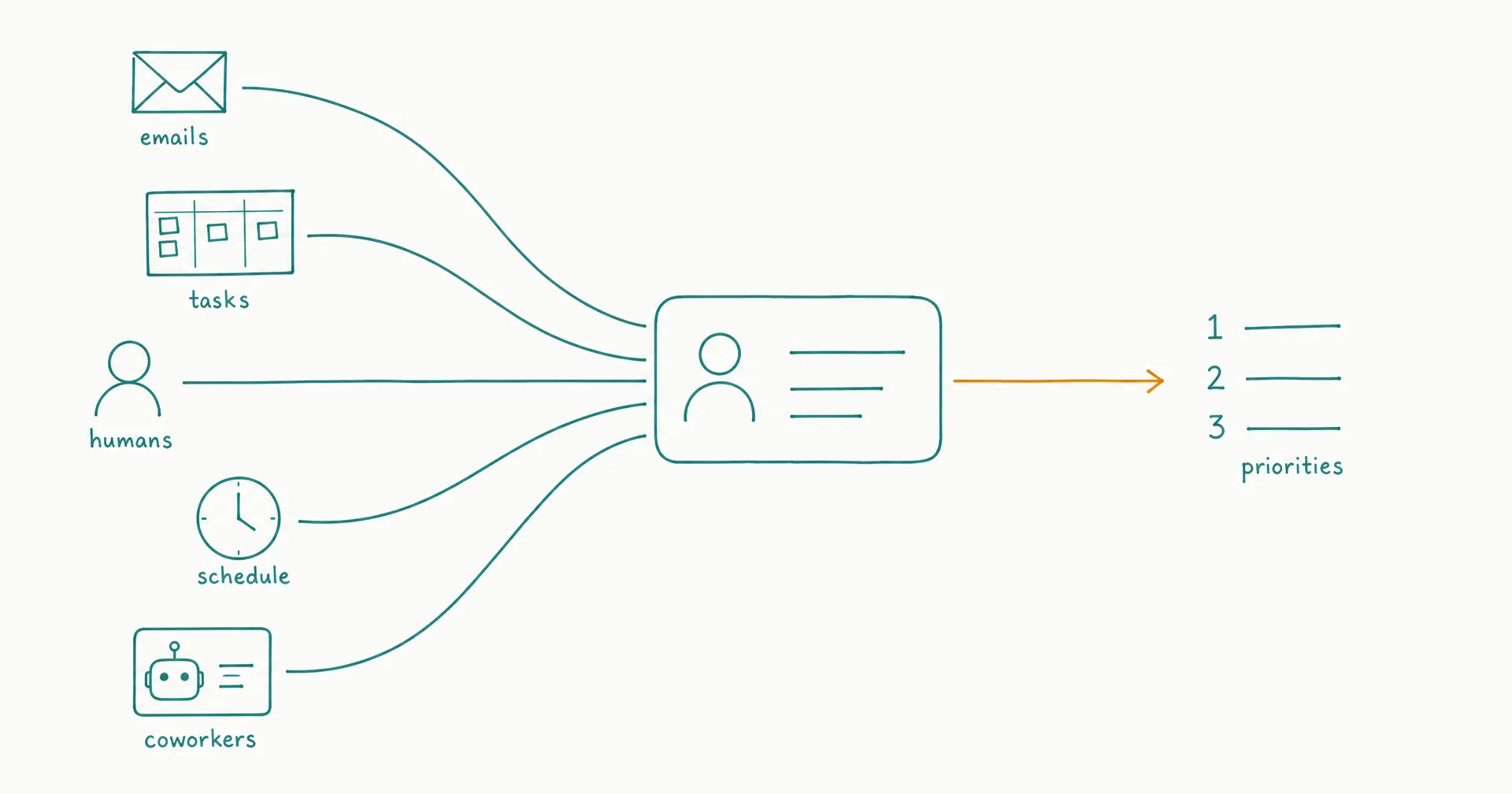
- The deeper story is AI employees. An employee lives in a signal-dense world - emails, tasks, owner messages, wake conditions, coworker delegations - and must prioritize them like a person would.
- Earlier models could execute one task well; they could not hold many unordered signals at once and decide what matters. Fable 5 is the first model we’ve run that can.
- That is why we call Fable 5 the unlock: CellCog’s AI employees in their current form were built after - and because of - this model.
§ 01What Fable 5 Is
Fable 5 is Anthropic’s first generally available Mythos-class frontier model, publicly released on June 9, 2026. The launch numbers were remarkable: a 1,000,000-token context window, up to 128K output tokens, and - per independent aggregators at release - the top position on Artificial Analysis’s Intelligence Index, leading scores on agentic-work evaluations, and reported results around 95% on SWE-bench Verified and 80% on SWE-bench Pro. Benchmark leaderboards specifically ranked it #1 in the agentic category: multi-step plans, tool use, long-horizon execution.
Those last words are the ones that matter for this post. Plenty of models are good at answering. Fable 5 is the first one we’ve run that is genuinely good at working.
§ 02The Problem Fable 5 Solves: Signals From Every Direction
A chatbot lives in a simple world: one human, one thread, one question at a time. The model’s whole job is to respond well to the message in front of it.
An AI employee lives in a different world entirely. Consider what a single working shift actually contains on CellCog:
- Emails arriving in the employee’s own inbox - some from customers, some from coworkers, some spam that deserves no reply at all
- Tasks on its board, each with a priority, a due date, and dependencies on other tasks
- Messages from its owner, which outrank everything but arrive whenever the owner happens to be awake
- Scheduled triggers and wake conditions - the shift itself, recurring work coming due, a metric crossing a threshold
- Delegations from coworker AI employees, arriving mid-shift with their own context and urgency
- Its own memory - handovers from previous shifts, half-finished threads, promises already made
None of this arrives in order. None of it comes pre-ranked. The job - the actual, irreducible job of being an employee rather than a tool - is to hold all of those signals at once, understand what each one implies, and decide what matters first. A human employee does this without noticing. It is, in a real sense, most of what “judgment” means at work.
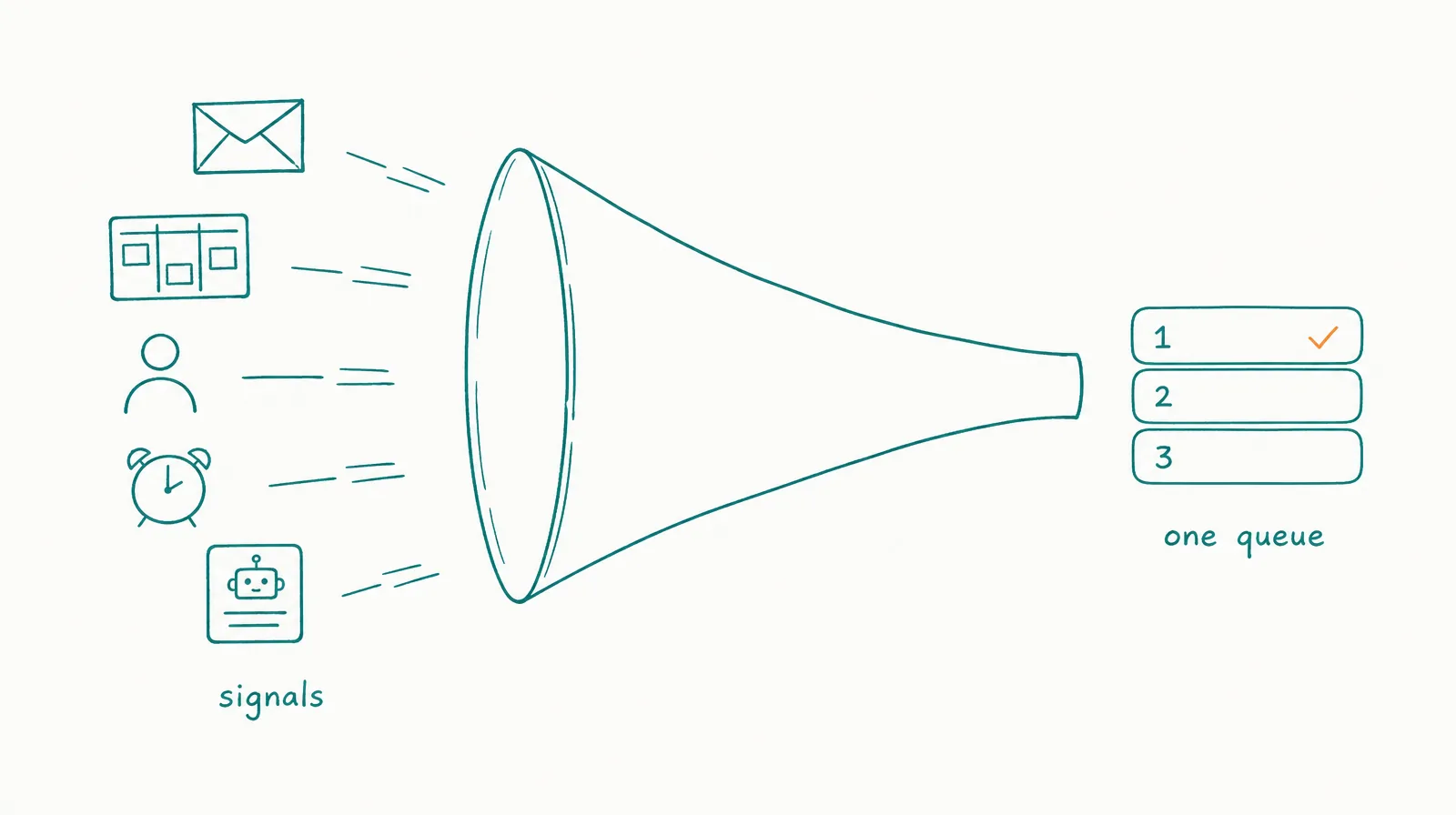
Earlier frontier models could not do this reliably. Give them one well-framed task and they executed beautifully. Give them a shift’s worth of unordered signals and the seams showed: the urgent email got a formulaic reply while a low-priority task consumed the budget; the owner’s offhand comment got treated as equal in weight to a stranger’s; context from the last shift silently fell out of the reasoning. The output read like a chatbot cosplaying an employee.
We know because we tried. CellCog paused its own internal AI employees for a period precisely because the output quality wasn’t at the bar the architecture deserved - the scaffolding (inboxes, shifts, task boards, memory, handovers) was ready before a model existed that could drive it.
§ 03Why Fable 5 Is the Unlock
Fable 5 changed that in three specific ways:
1. It holds the whole world in context. A 1M-token window means an employee’s shift can carry its memory, its open task list, the full email thread it’s replying to, and its owner’s standing instructions - simultaneously, without lossy summarization deciding in advance what might matter.
2. It prioritizes rather than just executes. The same long-horizon, agentic capability that tops the benchmarks shows up in practice as something mundane and precious: the model weighs signals against each other. It notices that the customer email is stale-dated, that the owner’s message changes the plan for a task it was about to start, that two signals are actually the same request arriving twice. That triage behavior - not raw intelligence - is what makes multi-workstream roles possible.
3. It follows instructions well enough to need fewer of them. This is the quiet economic story. Earlier models needed enormous, defensive system prompts - walls of rules re-stated because the model would otherwise drift. Fable 5’s instruction-following let us delete most of that: ~79% of the eagerly-loaded prompt in Agent mode, ~70% in Agent Team. Fewer tokens per turn is what let us absorb frontier-model pricing without passing it to Agent mode users.
Put simply: AI employees, in the form CellCog ships them today, were built after - and because of - Fable 5. The category needed a model that could make sense of signals from all directions, and this is the first one that can.
§ 04What You’ll Notice
- Every chat mode - Agent, Agent Core, Agent Team, Agent Team Max - runs on Fable 5 automatically. No model picker, no migration steps.
- Agent mode: same price as before. Frontier reasoning, absorbed by the prompt rebuild.
- Agent Team: 30-40% more than before, for a serious jump - deep research in particular is meaningfully stronger across the board.
- AI employee shifts benefit most of all: better triage of inboxes and task boards, better handovers, fewer dropped threads across a long shift.
§ 05The Honest Caveats
Fable 5 is a frontier model, and frontier models are moving targets: benchmark positions shift, and pricing and availability are Anthropic’s decisions, not ours. The figures above - release date, context window, benchmark placements - reflect the model’s public launch reporting in June 2026. What we can stand behind directly is our own experience: across the real workloads CellCog runs every day, this is the largest single quality jump we have shipped, and it is the model our AI employee architecture was waiting for.
Your agents are already running on it. The best way to feel the difference is to give one a genuinely messy job - the kind with signals from every direction - and watch what it chooses to do first.
Q1What is Fable 5 and who makes it?
Fable 5 is Anthropic’s first generally available Mythos-class frontier model, publicly released on June 9, 2026. At launch it posted a 1M-token context window and led several agentic and coding benchmarks, including top scores reported on SWE-bench Pro and agentic-work evaluations.
Q2Why did CellCog migrate to Fable 5?
Two reasons. Its long-horizon reasoning and instruction-following are the best we have tested for agentic work. And its ability to hold many simultaneous signals in context is what finally made our AI employee architecture - inboxes, task boards, shifts, wake conditions - work the way it was designed to.
Q3Will my costs go up?
Agent mode runs at the same price as before the migration, because rebuilding our agents around Fable 5 cut the eagerly-loaded system prompt by roughly 79%. Agent Team costs 30-40% more than before, in exchange for a serious capability jump including stronger deep research.
Q4What does 'signal-dense' mean for an AI employee?
A standing worker doesn’t receive one prompt at a time. In a single shift it may face inbound emails, tasks on its board, a message from its owner, a scheduled trigger, and a delegation from a coworker agent - all unordered, all competing for attention. Deciding what matters first is the job.
Q5Could AI employees run on earlier models?
We tried. Earlier models could execute a single well-framed task, but they degraded when many unordered signals had to be weighed against each other - the output read like a chatbot with a to-do list, not an employee. We paused our own internal AI employees until a model could clear that bar. Fable 5 did.
Q6Do I need to do anything to get Fable 5?
No. Every chat mode and every AI employee shift on CellCog runs on it automatically - there is no model picker, no migration step, and no data export.