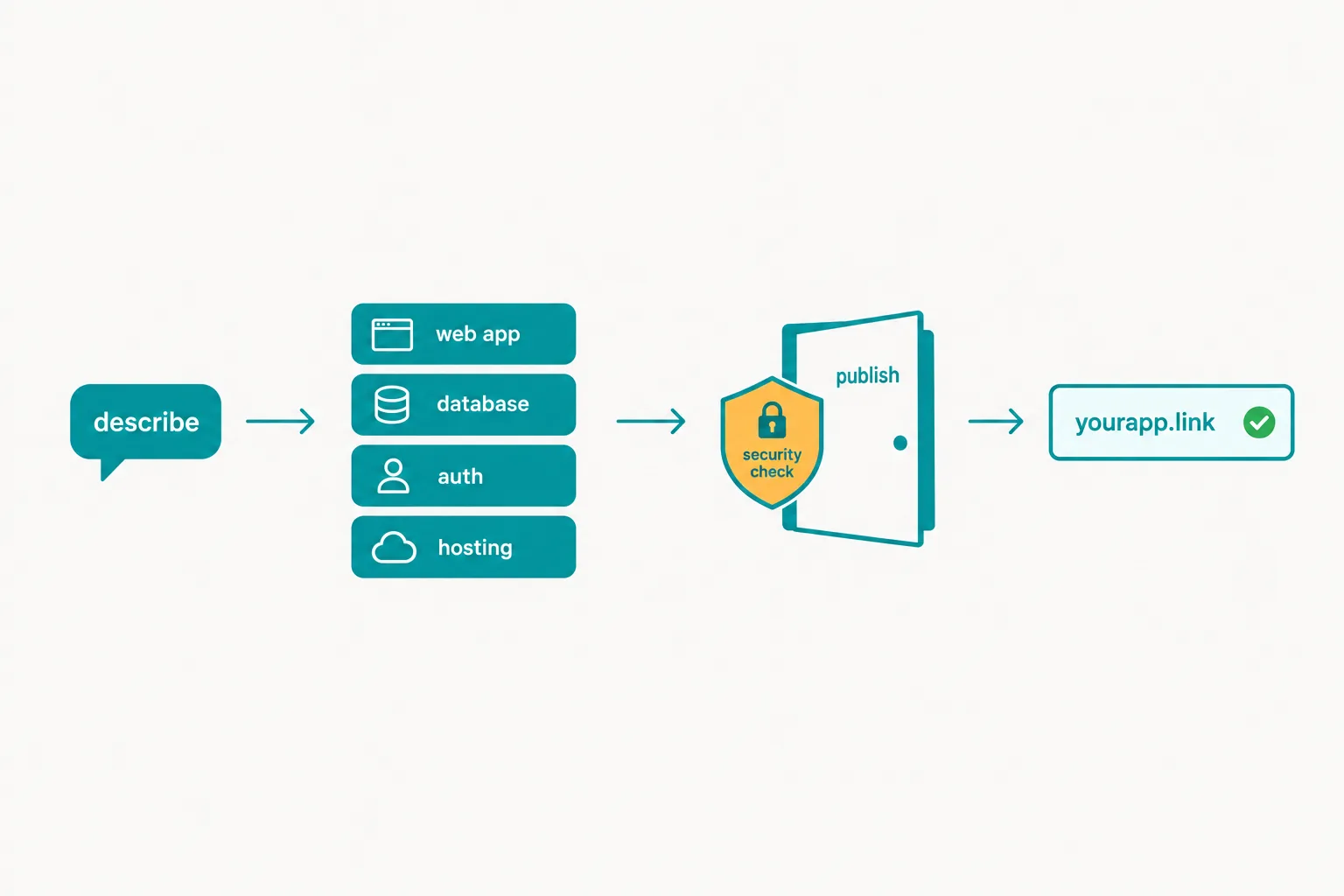
Cursor shipped a feature on November 5, 2026 that pushes it past writing code into shipping software: you can now describe an app, and Cursor builds it, gives it a database, sets up login, runs security checks, and deploys it to a shareable link. The pitch is pointed at a real gap. Agents made writing code cheap, but, as Cursor puts it, “most apps and tools that users build never make it off of localhost.”
This is the move a lot of AI coding tools are making at once: from assistant to builder. It is also the exact thing CellCog’s AI employees already do, so it is worth looking at closely.
On this page · 6 sectionsOpen
 Cursor released Live Apps on November 5, 2026: you describe an app and it builds, databases, authenticates, security-checks and deploys it to a shareable link.
 Cursor scaffolds the web app, spins up a Postgres database if needed, puts login behind Cursor SSO, and provisions hosting from new or existing repos.
 Nothing goes live until deterministic and agentic security checks pass and you explicitly publish; admins can see every app and secret and unpublish any app.
 Cursor frames the gap plainly: agents made writing code cheap, but most apps users build never make it off localhost.
 It is the assistant-to-builder move several coding agents are making at once, and the same thing CellCog’s AI employees already do as part of a role.
 The difference is the unit: Cursor sells a build feature a developer drives; CellCog sells an employee you hire, who builds the tool while doing the job.
§ 01What Cursor shipped
You start a cloud agent and tell it you want to build an app. From there Cursor scaffolds the web app, spins up a Postgres database if it needs one, puts authentication behind Cursor’s own SSO, and provisions hosting. If the app has to reach your systems, like a data warehouse, it asks for the secrets it needs. To go live, you pick a domain and Cursor hands back a live link. It can deploy from new or existing repos across Cursor Origin and GitHub, with GitLab support described as coming soon.

| Step | What Cursor does |
|---|---|
| Describe | You tell a cloud agent to build an app |
| Build | Scaffolds the web app |
| Database | Spins up a Postgres database if needed |
| Auth | Puts login behind Cursor SSO |
| Deploy | Provisions hosting, you pick a domain, get a live link |
| Guardrails | Runs security checks before anything goes live |
§ 02The guardrails are the interesting part
Cursor is careful about the risk of letting an agent deploy live software. When you publish, it runs “deterministic and agentic security checks” for things like secrets written into app files or exposed credentials. If a check fails, the agent tells you what to fix, and nothing goes live until the checks pass and you explicitly publish. Team admins can see every app and secret, add their own rules to the review, approve a publish the review blocked, and unpublish any app.
That shape, an agent that builds and deploys but gates the dangerous step behind an explicit human publish and an admin’s oversight, is the same pattern serious agent platforms are converging on.
§ 03Where CellCog fits
CellCog is our product, an AI employee platform, and building-and-shipping-an-app is not a new feature for us, it is how our employees have worked from the start. A CellCog AI employee builds an interactive app or dashboard, deploys it to a shareable link, and keeps its own memory of the project between conversations, so the tool gets maintained, not just generated once. The difference in framing is the unit: Cursor sells a tool inside a coding environment that a developer drives; CellCog sells an employee you hire for a role, who builds the tool as part of doing the job.
| Cursor Live Apps | CellCog AI employee | |
|---|---|---|
| What it is | A build-and-deploy feature in a coding tool | A hired worker who builds as part of a role |
| Who drives it | A developer in the editor | You, by assigning the outcome |
| Deploy | Live link, Cursor SSO, security checks | Live link, served from the employee’s workspace |
| Memory | The repo | The employee’s own project memory across sessions |
If you want to build internal tools without a developer in the loop at all, an AI software engineer takes the description and ships the working app. For a fuller picture of how our employees build software, our record on apps and dashboards an AI employee ships.
§ 04What is not established yet
- Scale and limits. Cursor has not published quotas, pricing for hosted apps, or how these apps perform under real load.
- Lock-in. Apps lean on Cursor SSO and Cursor-provisioned hosting; portability off Cursor is not spelled out.
- The security checks. “Agentic security checks” are promising, but their real catch rate on live deployments is not yet measured by anyone outside Cursor.
§ 05Where to watch
- Whether other coding agents follow with their own build-and-deploy-live features.
- Pricing and limits for the hosted apps, once Cursor publishes them.
- How the admin controls hold up as teams deploy real internal tools on them.
§ 06Sources
- Cursor, Build Live Apps in Cursor, changelog entry dated November 5, 2026, read 21:47 UTC.
- @cursor_ai on X, the announcement post, November 5, 2026.
- Cursor, Origin code hosting, the hosting the feature deploys from.
- Our record on apps and dashboards an AI employee ships.
Q1What is Cursor Live Apps?
A feature, released November 5, 2026, where a Cursor cloud agent builds a web app from your description, provisions a Postgres database and Cursor SSO login, runs security checks, and deploys it to a link you can share.
Q2Where does it deploy from?
New or existing repos across Cursor Origin and GitHub, with GitLab support described as coming soon.
Q3Is it safe to let an agent deploy live apps?
Cursor runs deterministic and agentic security checks for issues like exposed secrets; nothing goes live until they pass and a human explicitly publishes, and admins can unpublish any app.
Q4How is this different from CellCog?
CellCog’s AI employees have built and deployed shareable apps and dashboards from the start, as part of doing a role, not as a feature inside a code editor a developer drives.
Q5Can CellCog build internal apps too?
Yes. A CellCog AI software engineer takes a description, builds the working app, deploys it to a shareable link, and maintains it with its own project memory.