Skip to content
AI EmployeeSuper-AgentsAgent-to-AgentTutorialsPricingBlogStoryContact
Cluster 04 of 9

Multi-agent & AI organizations

Delegation, handoffs, org charts and orchestration — what changes when one AI employee becomes a team of them.

Multi-agent & AI organizations 18 articles
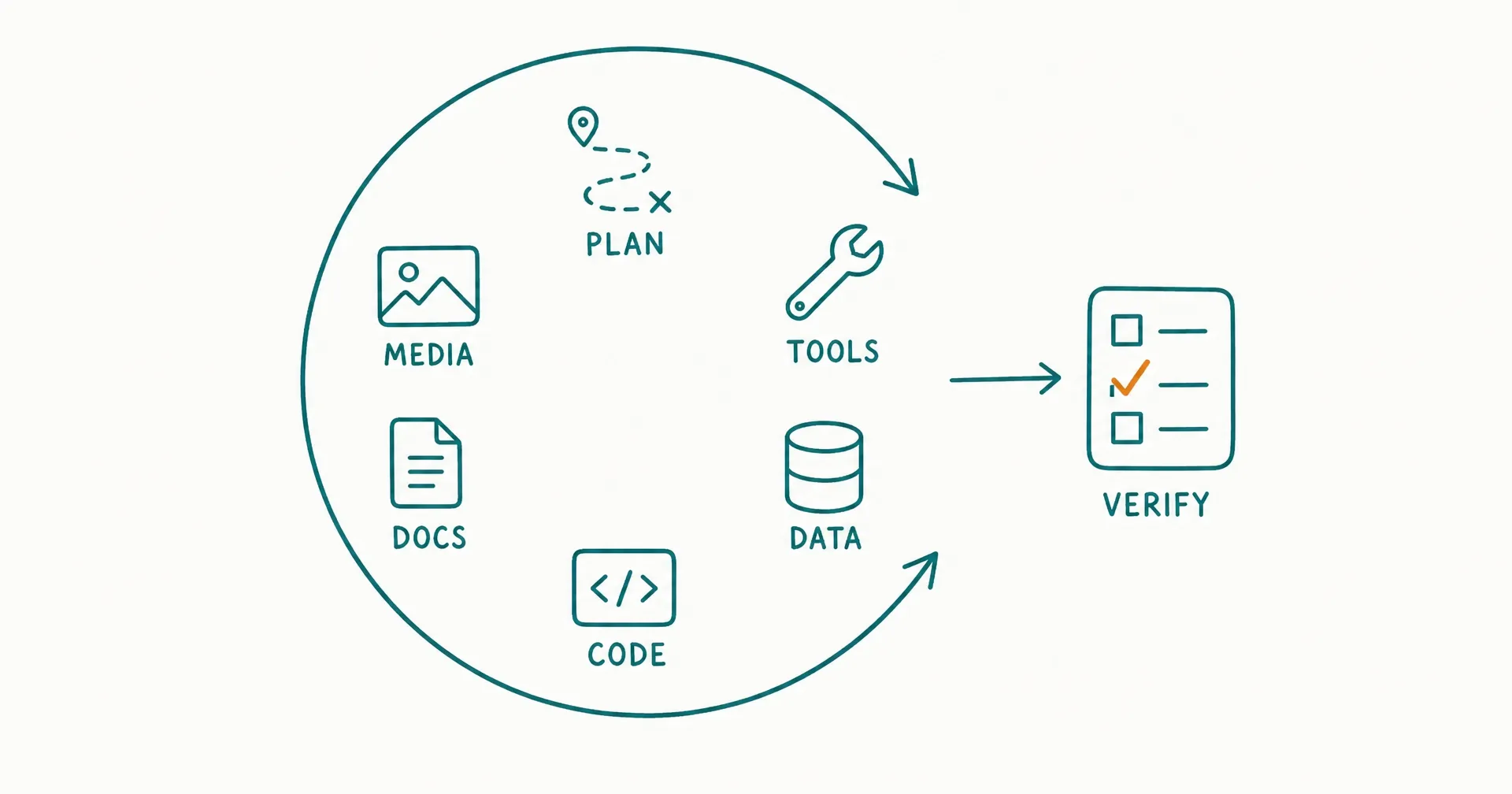
31 JUL 2026 What Is a Super-Agent? Capability Breadth Without Category Hype A super-agent carries one goal across planning, tools, modalities, state, verification, and recovery in one loop. Breadth is a claim to test on a complete workflow, not a feature count. InsightsMulti-agent 26 min
Napkin-style sketch of one large agent loop circling icons for planning, tools, documents, data, code, and media, with a checklist gate at the loop's exit and an amber highlight on the verification checkmark
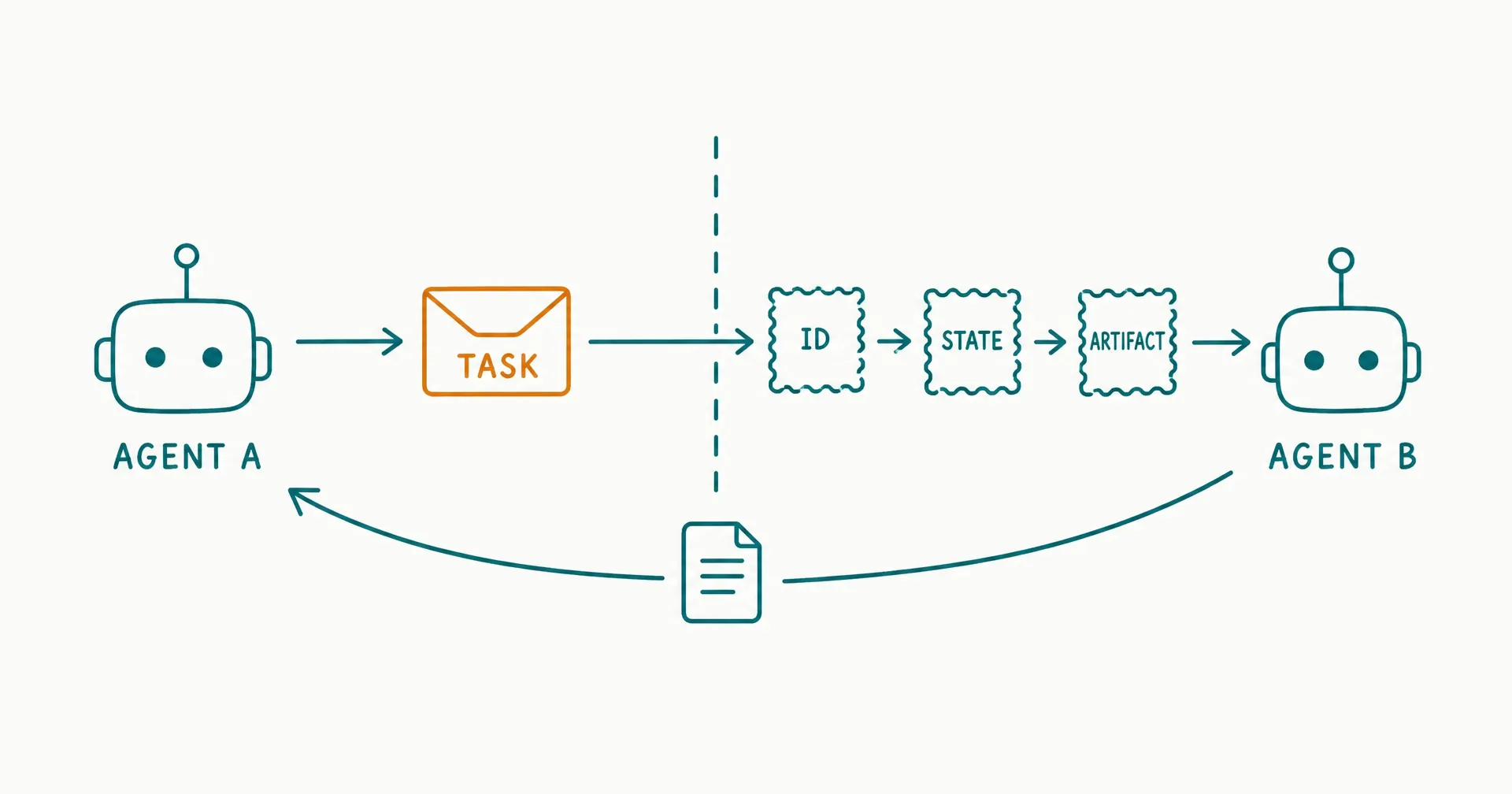
31 JUL 2026 What Is Agent-to-Agent Communication? Discovery, Tasks, and Results Sending messages is not enough. A reliable exchange names the participants, task, authority, state, and result artifact - and knows when a plain API is the better interface. InsightsMulti-agent 28 min
Napkin-style sketch of two agent nodes exchanging a labeled task packet across a boundary line, with small stamps for identity, state, and artifact along the path, and an amber highlight on the task contract packet
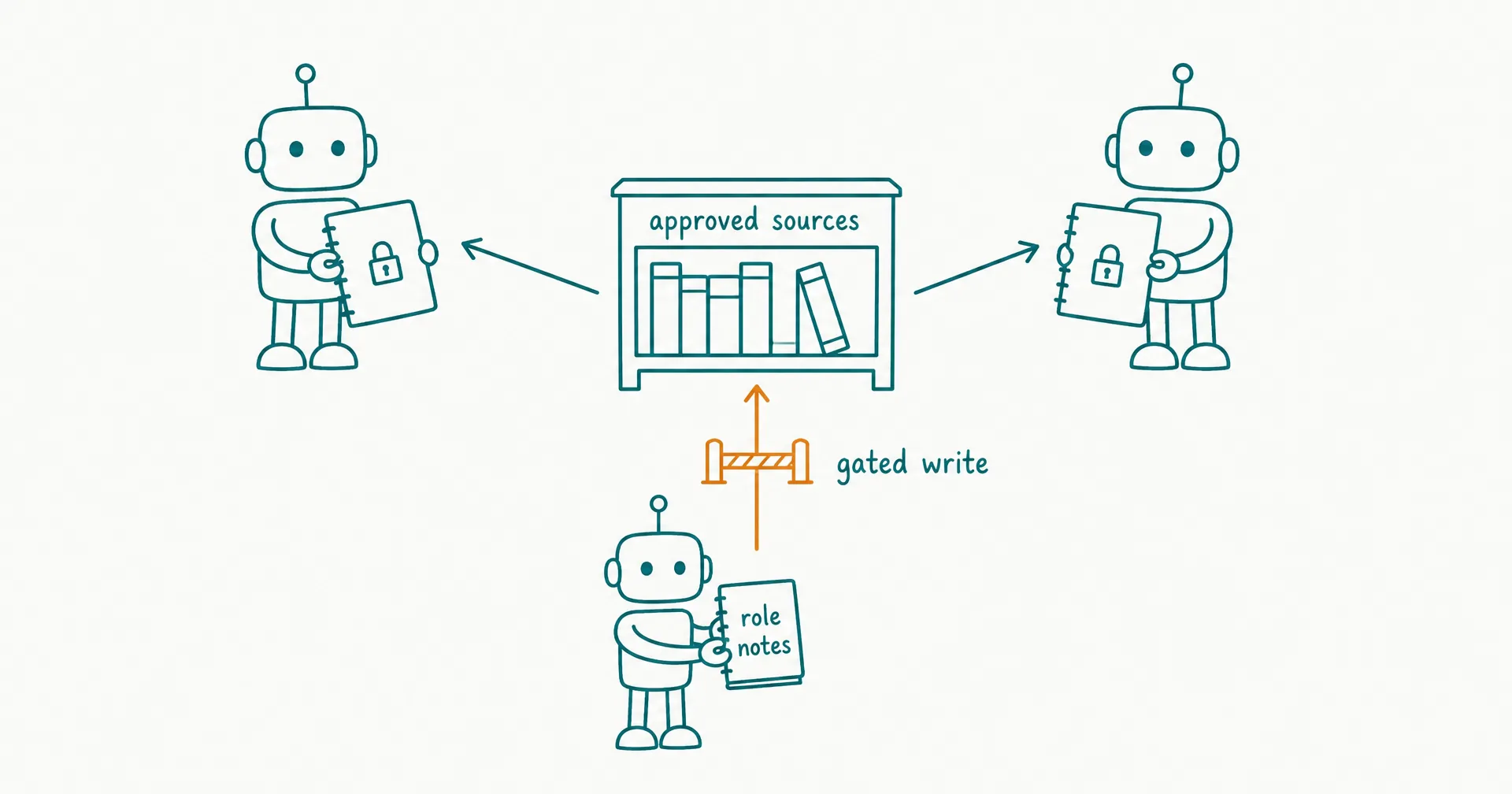
31 JUL 2026 Shared vs Role-Specific AI Memory AI agents should not share all memory. The safe default is isolation. Sharing is an explicit policy decision based on purpose, provenance, sensitivity, authority, freshness, and blast radius. InsightsMulti-agent 19 min
Napkin-style sketch of a central labeled bookshelf of approved sources with read arrows to three robots, each robot keeping its own small locked notebook, with an amber highlight on the single gated write arrow into the shelf
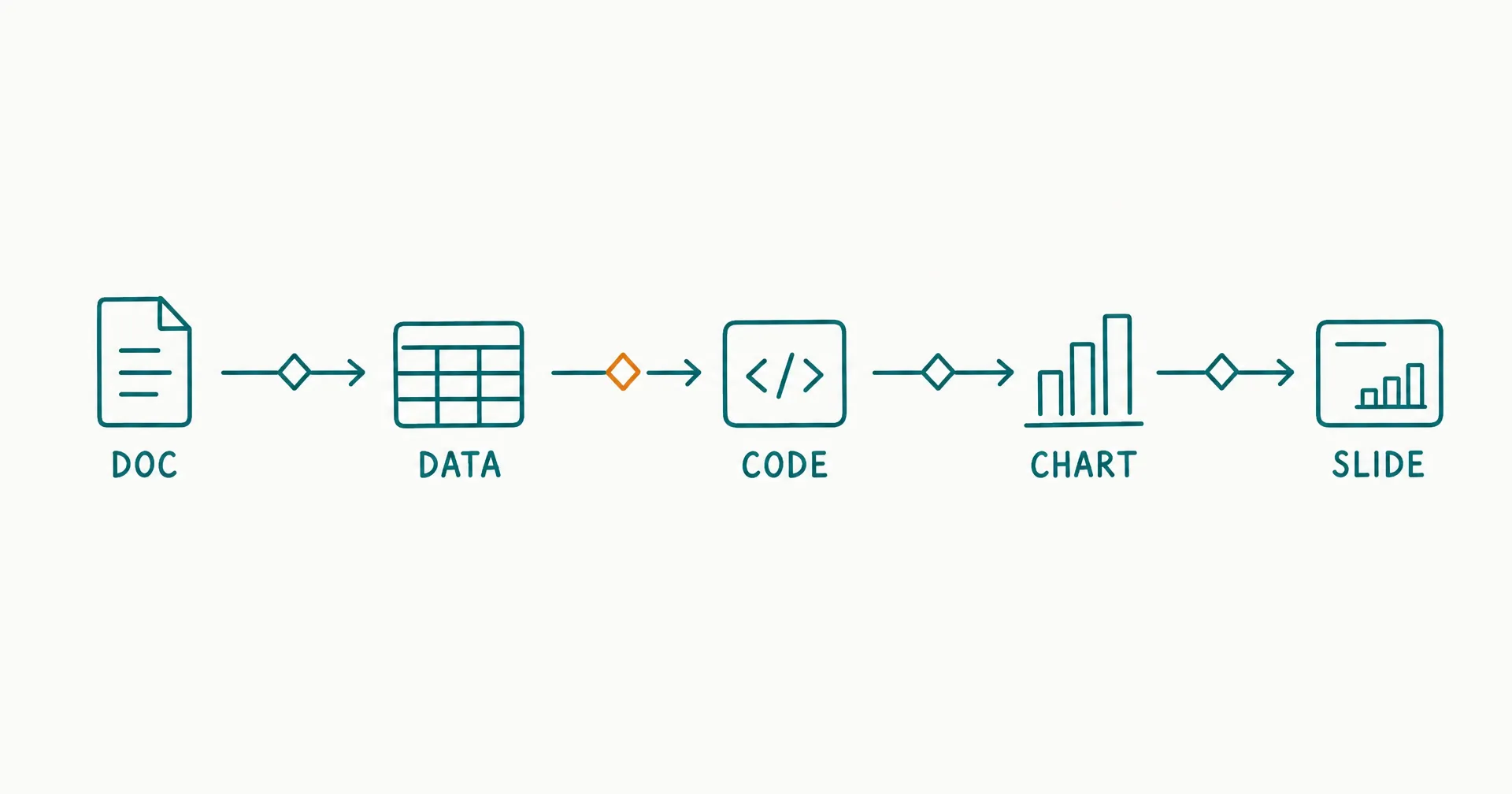
31 JUL 2026 Multimodal AI Agents: When Work Crosses Text, Data, Code, and Media The value is not making text and images. It is continuity: a source becomes data, code validates it, a chart shows it, and the deck keeps the same facts. Every transition can lose meaning. InsightsMulti-agent 23 min
Napkin-style sketch of a chain of artifacts - a document, a data table, a code block, a chart, and a presentation slide - connected by arrows with small checkpoint gates between them, and an amber highlight on one checkpoint gate
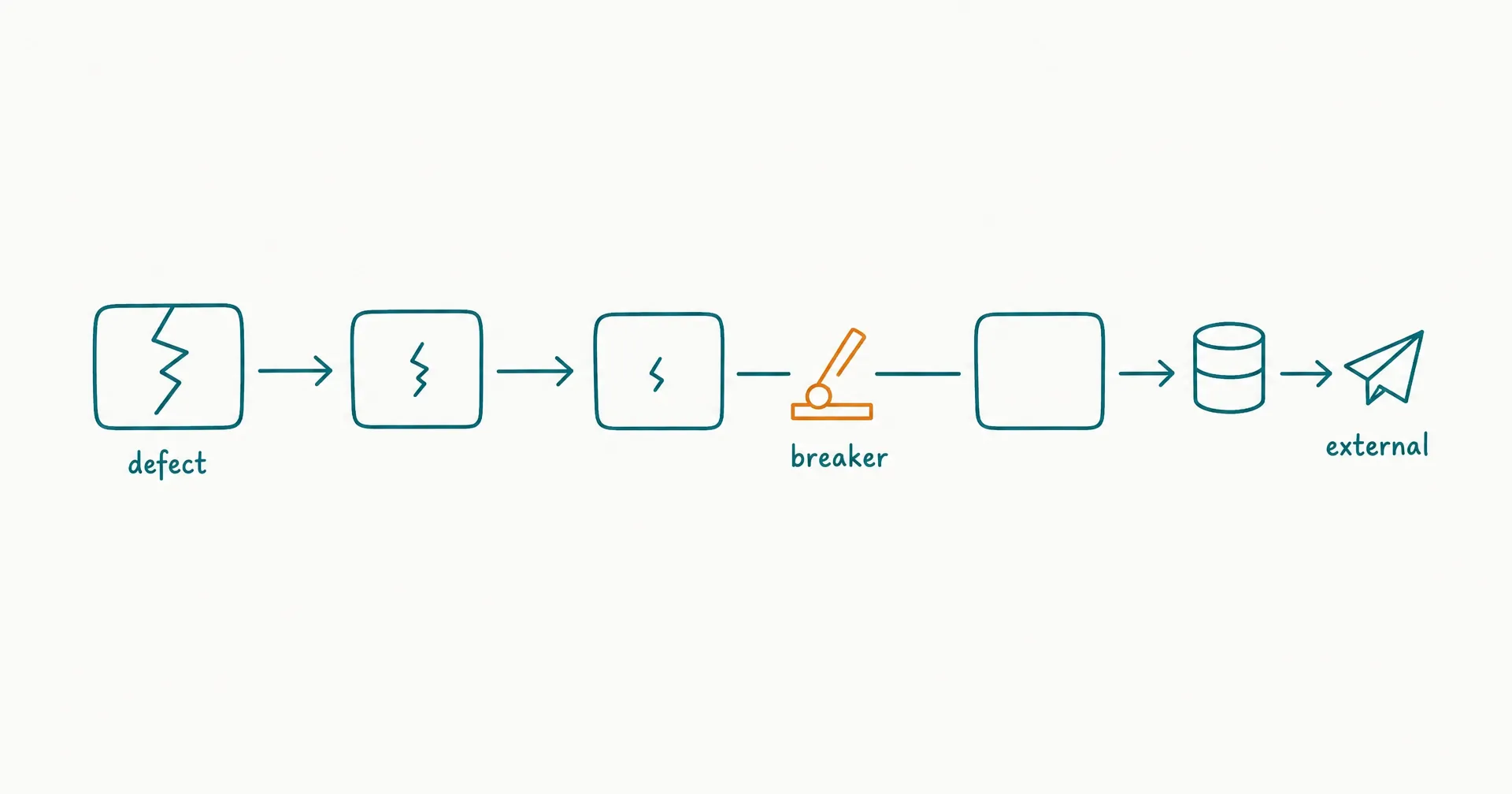
31 JUL 2026 Multi-Agent System Failure Modes: How Errors Propagate The first mistake may be small. The danger is propagation: another agent accepts the mistake as input, acts on it, stores it, or sends it farther. Assume one component will eventually be wrong. InsightsMulti-agent 28 min
Napkin-style sketch of a small crack in one box spreading along arrows through a chain of agent boxes, memory cylinder, and an external send icon, with an amber highlight on a circuit-breaker switch that cuts the chain
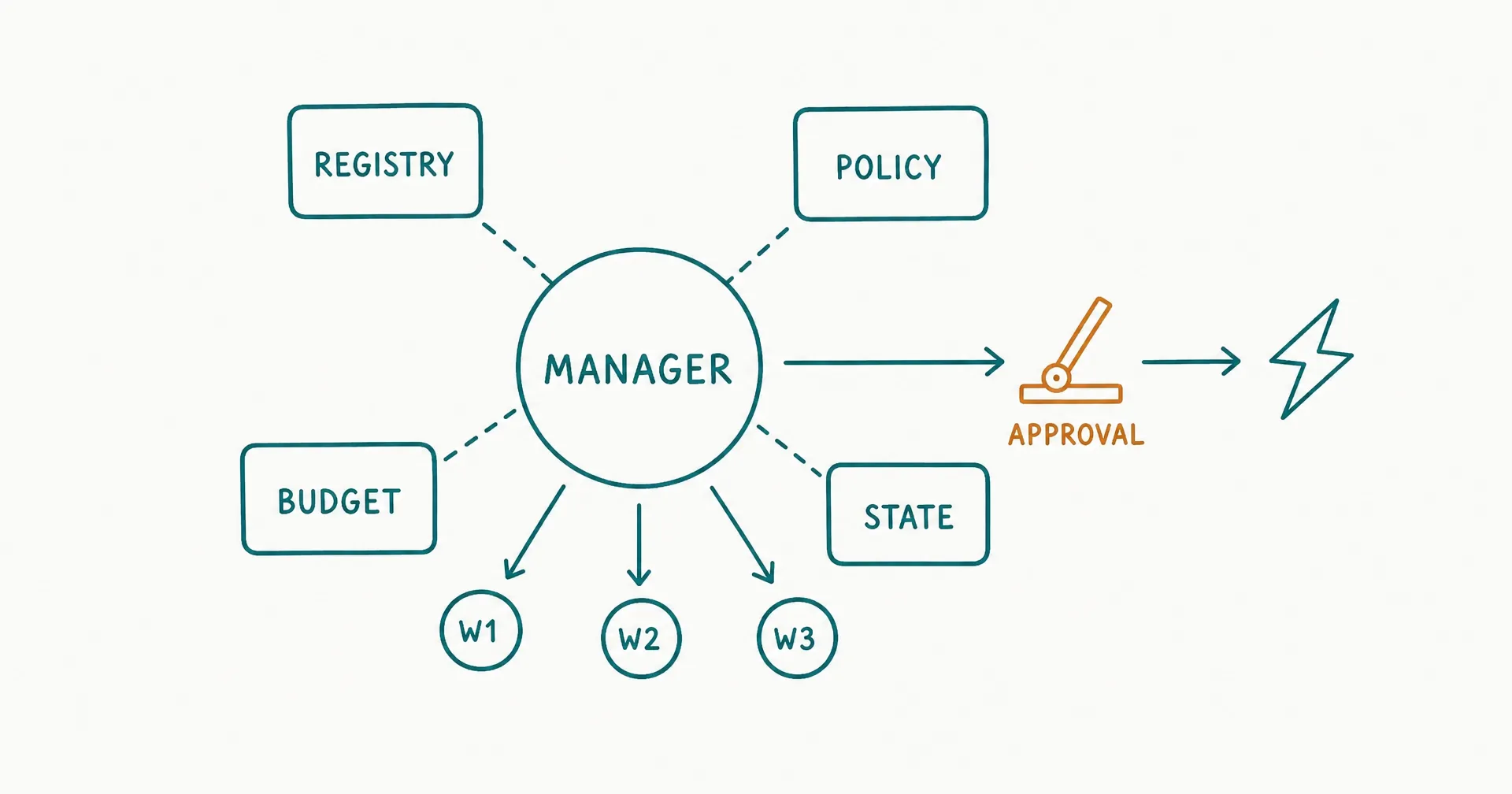
31 JUL 2026 Manager-Agent Architecture: Routing, Review, State, and Failure Containment The manager is a coordination role, not an all-powerful agent. Identity, policy, budgets, state, and approvals stay deterministic - the controller proposes, services enforce. InsightsMulti-agent 24 min
Napkin-style sketch of a central manager node connected to three specialist worker nodes, surrounded by four small deterministic-service boxes labeled registry, policy, budget, and state, with an amber highlight on the approval gate between the manager and an external action
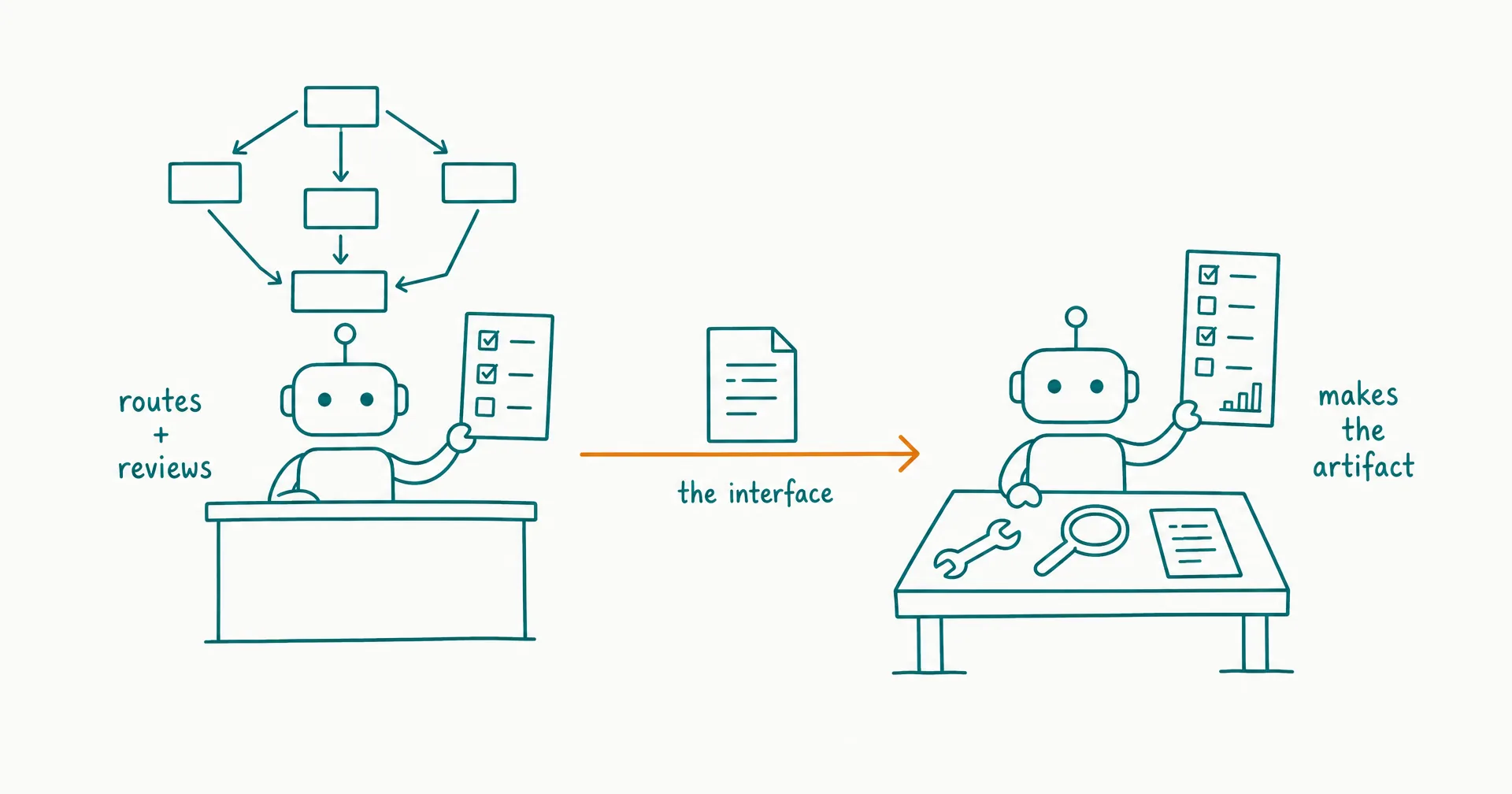
31 JUL 2026 Manager Agent vs Specialist Agent: Different Jobs, Different Evals The manager succeeds when the right work reaches the right specialist and the outcome closes. The specialist succeeds when its artifact meets a domain contract. Do not score both with one number. InsightsMulti-agent 22 min
Napkin-style sketch of a manager robot at a routing desk with a task graph beside a specialist robot at a workbench with domain tools, each holding a different scorecard, with an amber highlight on the interface arrow between them
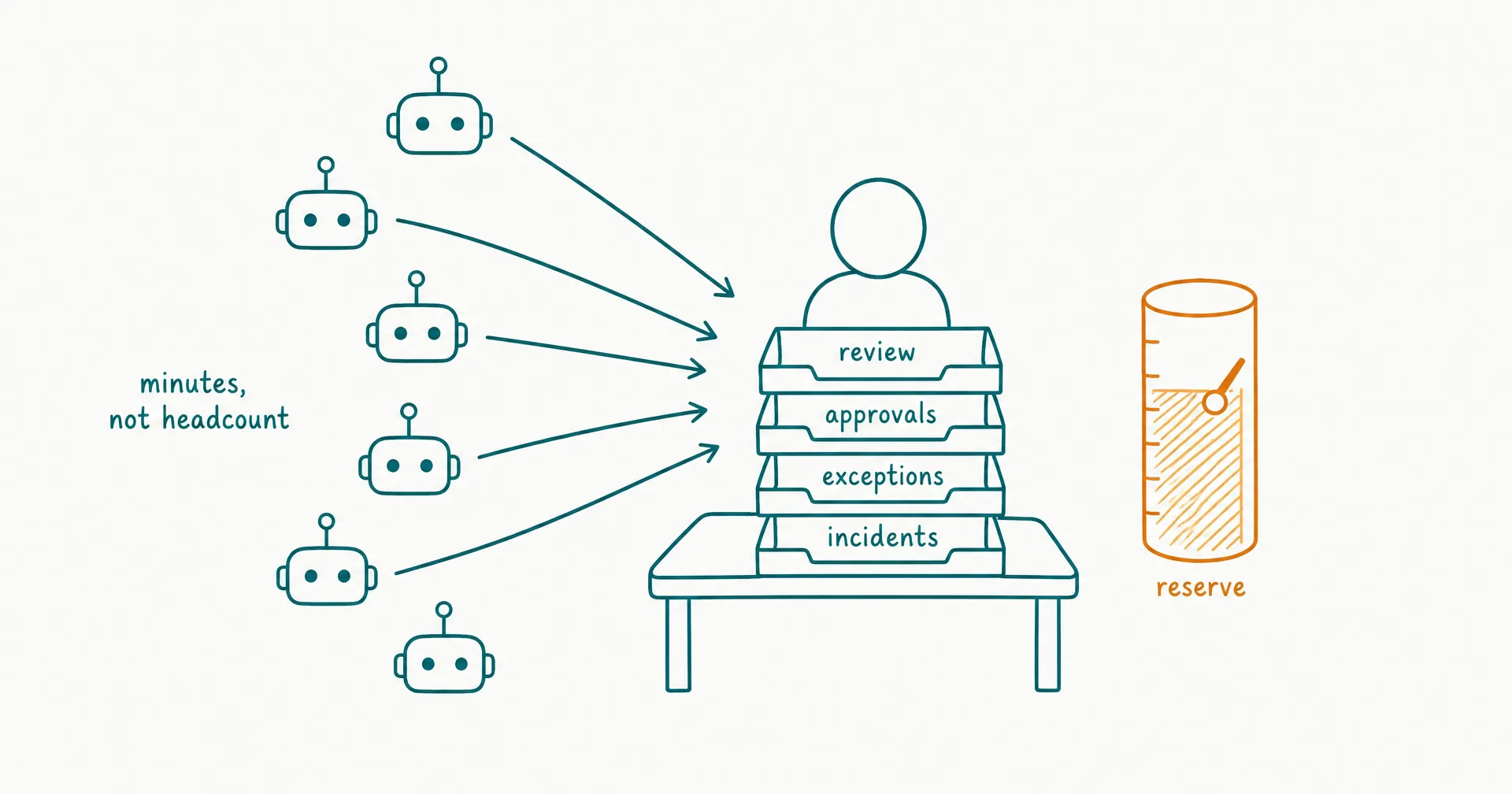
31 JUL 2026 Human Span of Control for AI Agents: A Workload Model for Safe Supervision There is no universal number of AI agents one human can supervise. Agent count is an inventory number; human workload comes from the work each agent sends back. InsightsMulti-agent 23 min
Napkin-style sketch of a human figure at a desk with four labeled inbox trays for review, approvals, exceptions, and incidents, fed by arrows from several robot icons, with an amber highlight on a small reserve tank gauge beside the desk
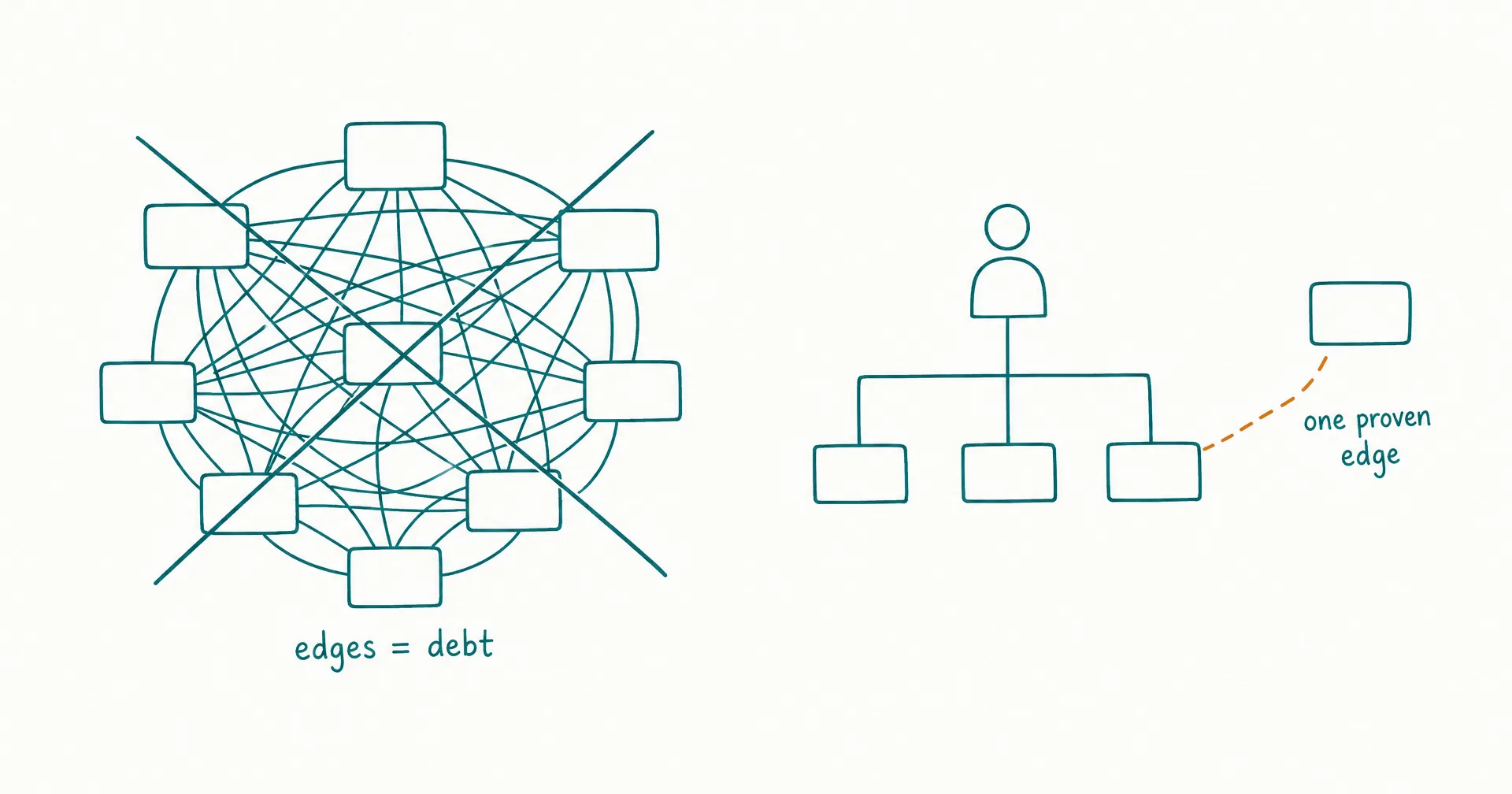
31 JUL 2026 How to Build an AI Organization Without Creating Coordination Debt The objective is not the largest agent org chart. It is the smallest human-AI operating model that produces more accepted work without moving the burden into delegation, review, and supervision. InsightsMulti-agent 22 min
Napkin-style sketch of a small org chart gaining one node while a dense fully connected web of agent boxes is crossed out, with an amber highlight on the single new connection
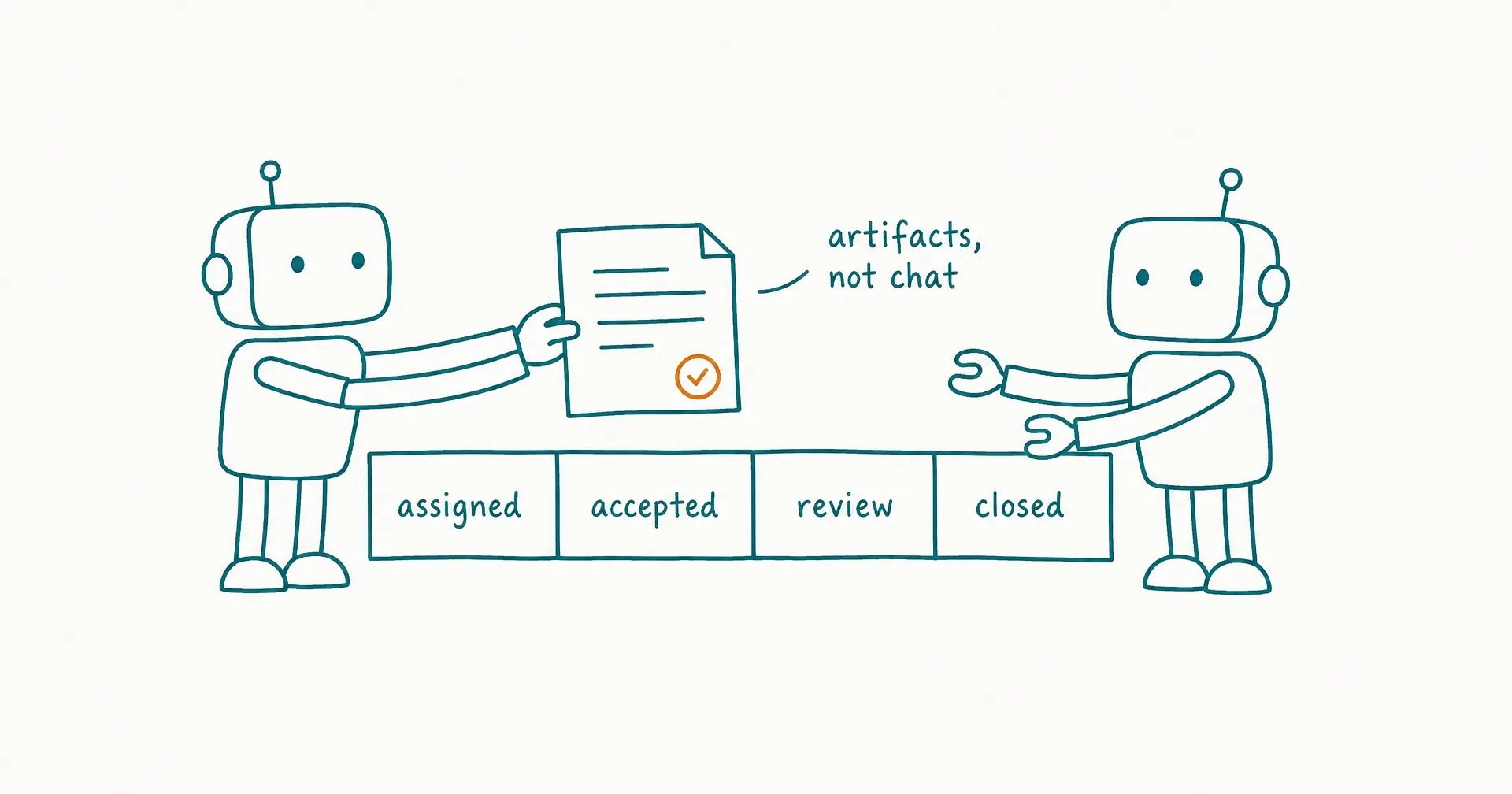
31 JUL 2026 How AI Employees Work Together: Delegation, Handoffs, and Shared Context A useful collaboration has a beginning and an end: one role requests a defined result, another explicitly accepts it, the result arrives as a versioned artifact, and one owner closes the outcome. InsightsMulti-agent 22 min
Napkin-style sketch of two worker figures exchanging a stamped document across a labeled task pipeline with states for assigned, accepted, review, and closed, with an amber highlight on the acceptance stamp
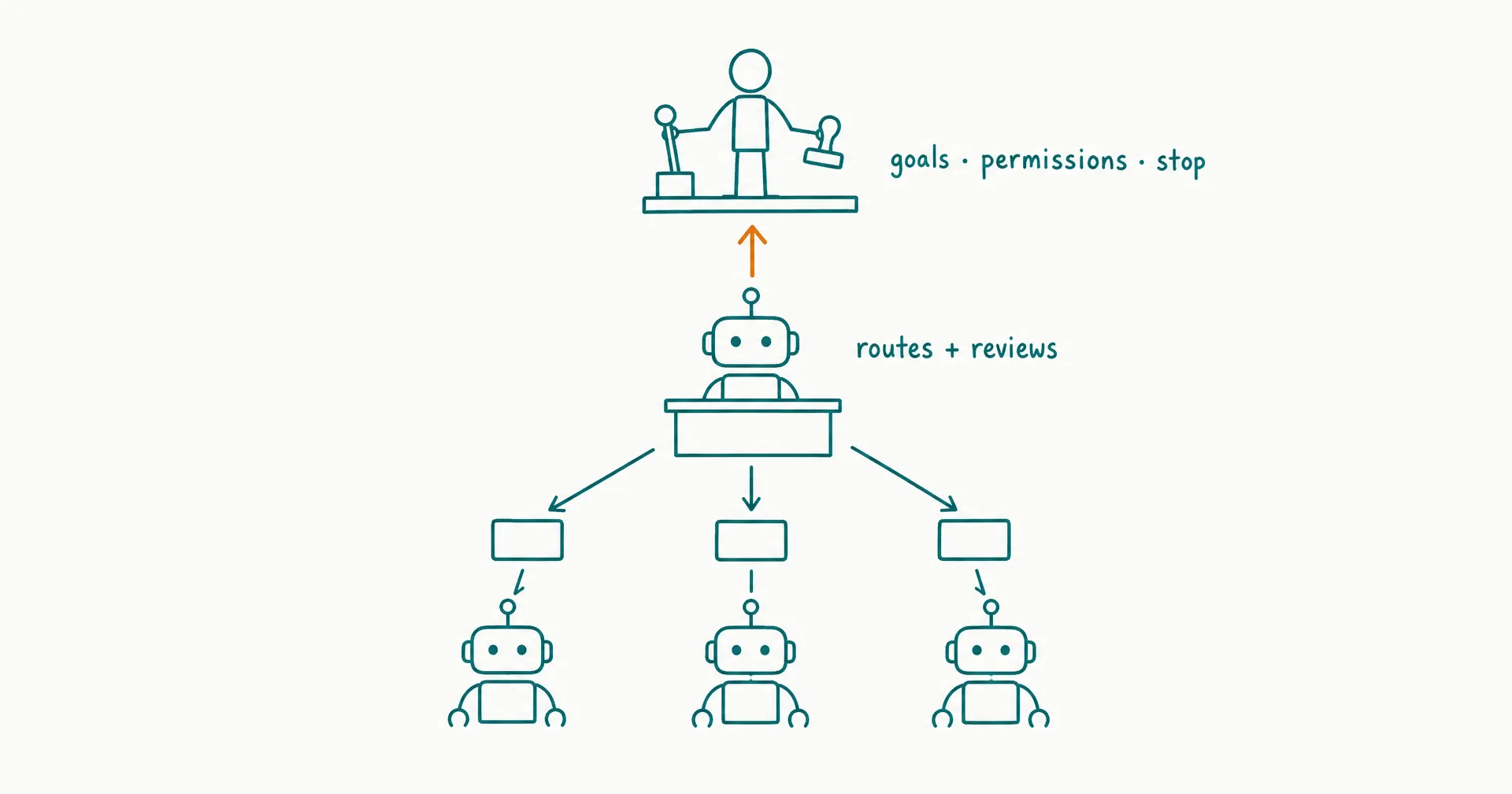
31 JUL 2026 Can AI Employees Manage Other AI Employees? Yes, when 'manage' means bounded coordination: decompose work, assign it, monitor state, review evidence, request repair, escalate exceptions. That does not make the AI manager an executive. InsightsMulti-agent 22 min
Napkin-style sketch of a manager robot at a small desk routing task cards to three worker robots while a human figure above holds a stop lever and an approval stamp, with an amber highlight on the escalation arrow to the human
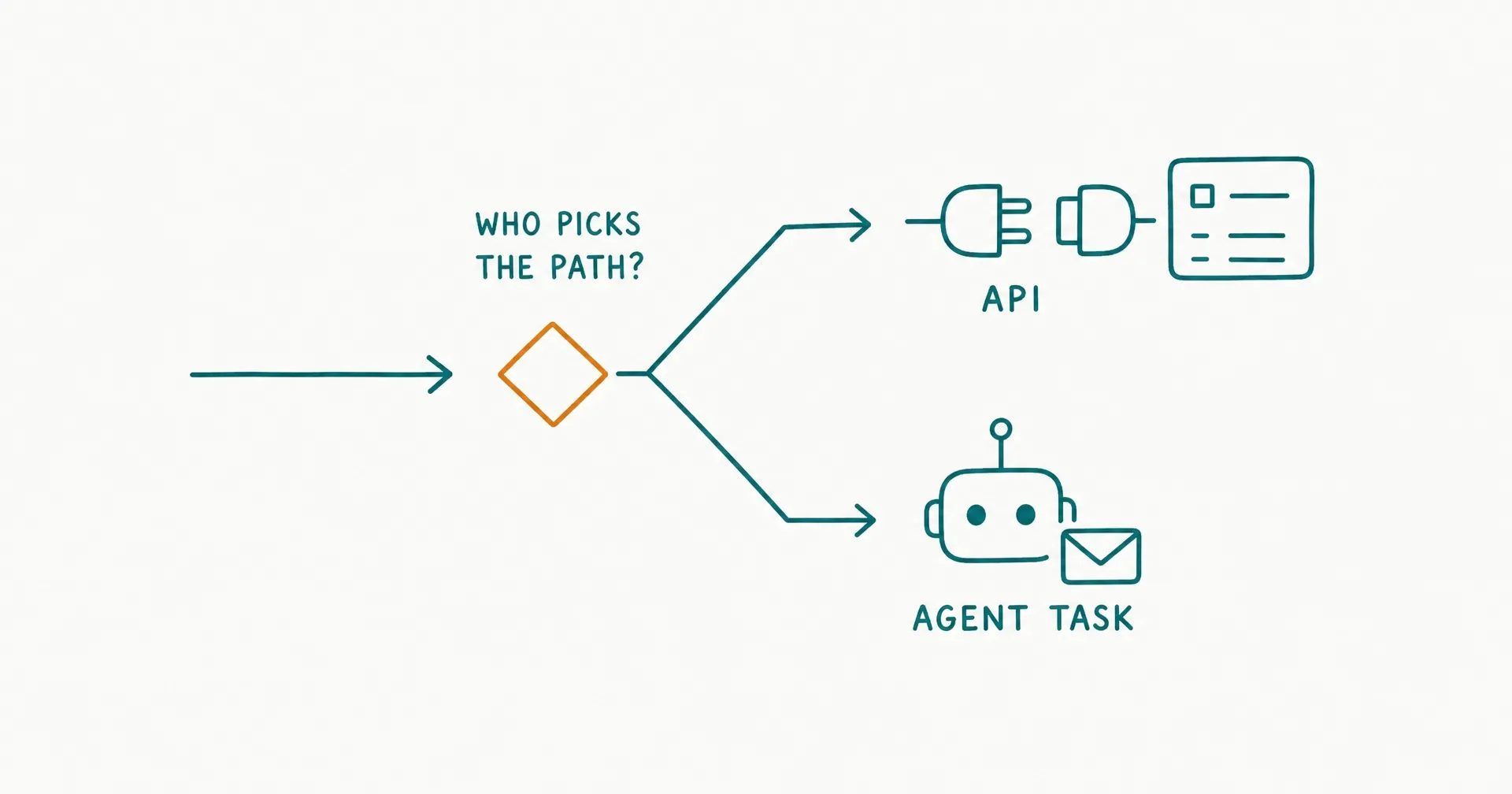
31 JUL 2026 Agent-to-Agent vs API Automation: When Should Software Delegate? Use an API when you can name the operation. Use an agent boundary when the outcome is clear but the path must flex. The transport does not decide - the contract scope does. InsightsMulti-agent 26 min
Napkin-style sketch of a fork in a path: the left branch leads to a plug-and-socket API icon with a typed parameter card, the right branch leads to an agent node holding a task envelope, with an amber highlight on the decision diamond at the fork
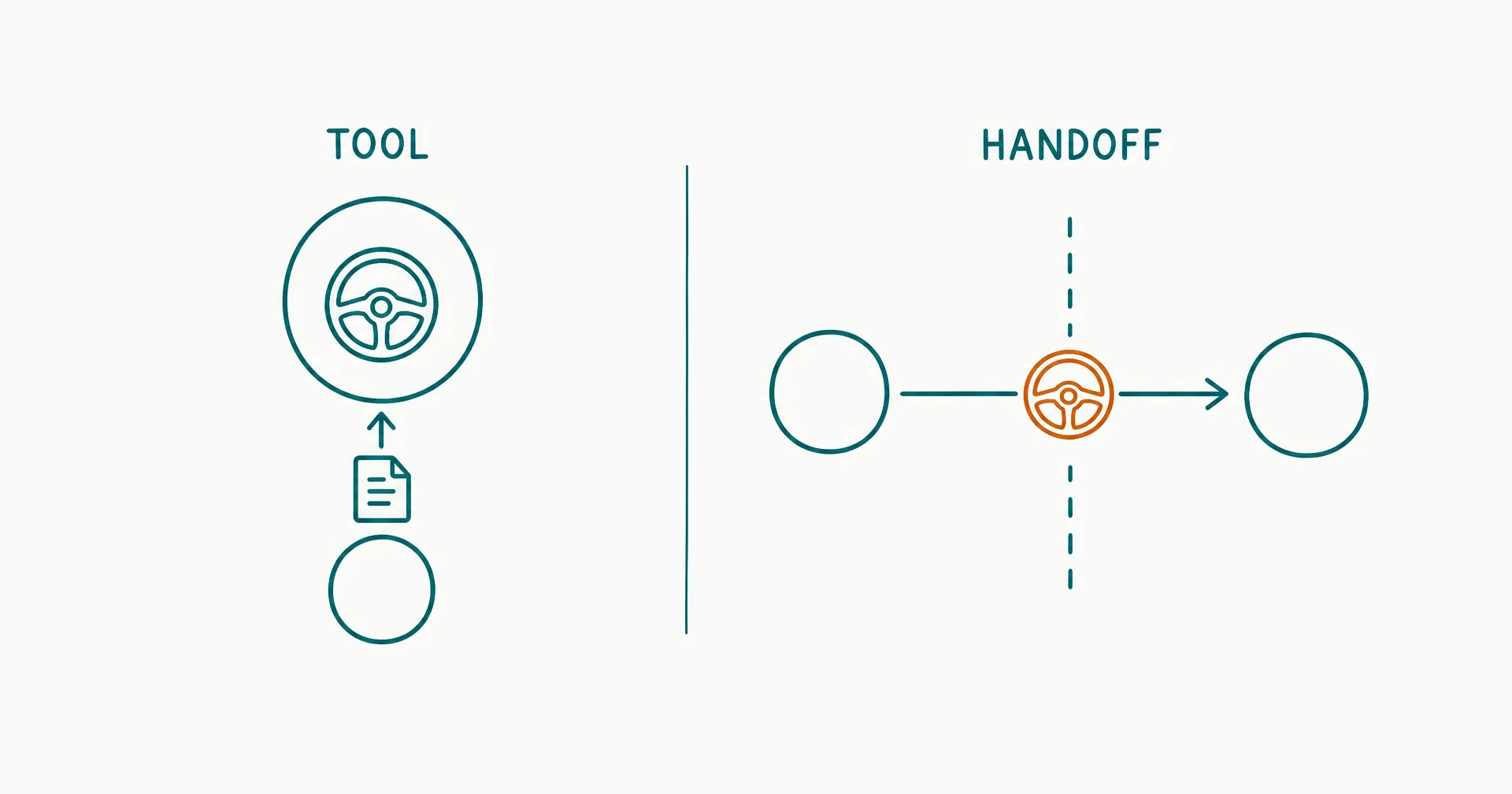
31 JUL 2026 Agent Handoffs vs Agents as Tools: Who Keeps Control? The difference is not how many agents run. It is who controls the interaction and who owns the final result - and what happens to that ownership when something fails. InsightsMulti-agent 22 min
Napkin-style sketch of two panels: on the left a parent agent node holds a steering wheel while a small specialist returns a document to it; on the right the steering wheel is being passed across a dashed boundary to a second agent node, with an amber highlight on the steering wheel in transit
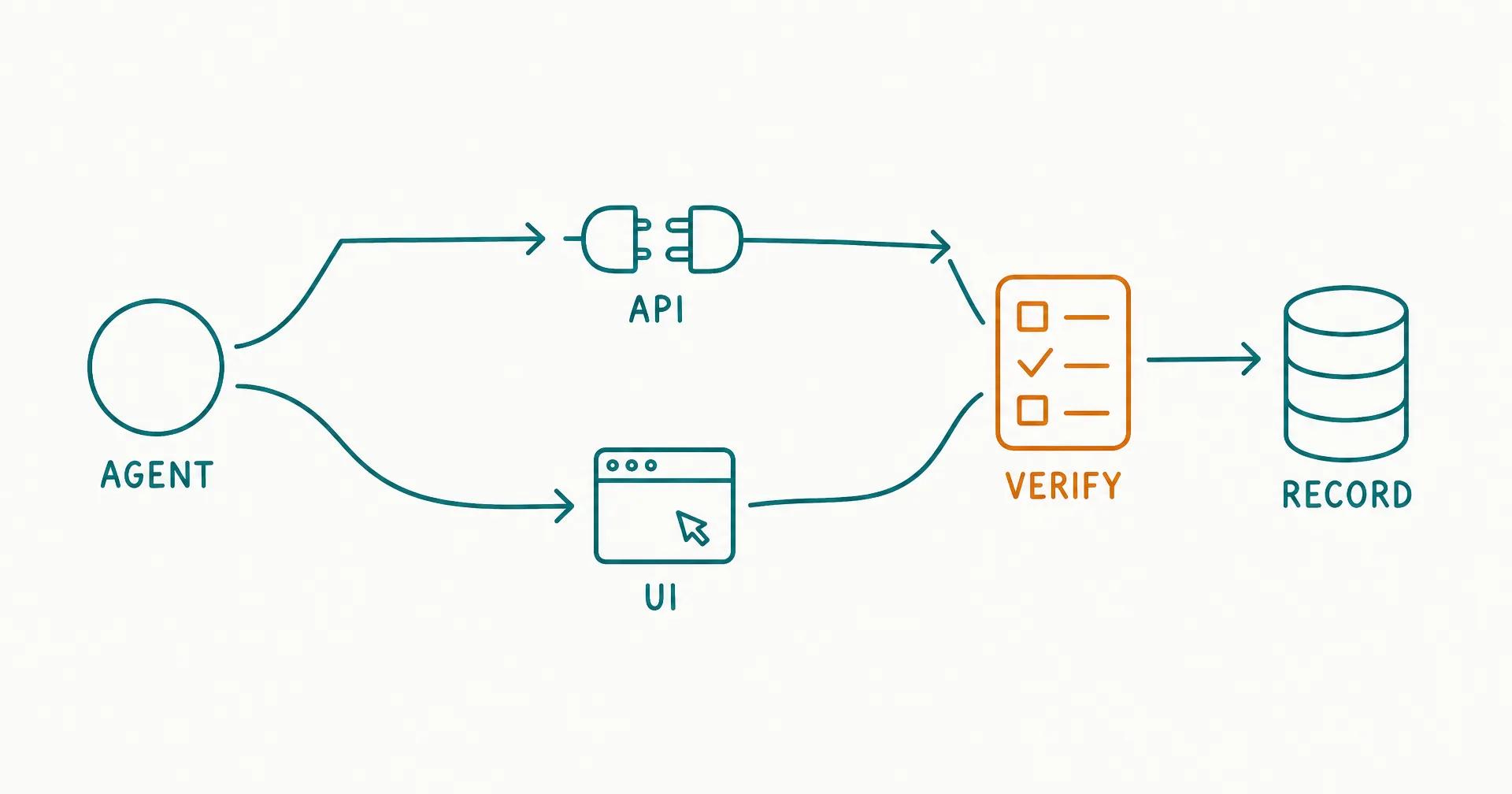
31 JUL 2026 Agent Computer Use vs API Integrations: Reliability, Reach, and Risk A click is not proof of completion. Prefer the most structured action path that can complete the outcome, then verify the resulting state independently - through a different path. InsightsMulti-agent 22 min
Napkin-style sketch of an agent node with two action routes: an upper structured route through a plug-and-socket API icon straight to a database, and a lower winding route through a browser window with a cursor arrow, both converging on a verification checkpoint, with an amber highlight on the verification checkpoint
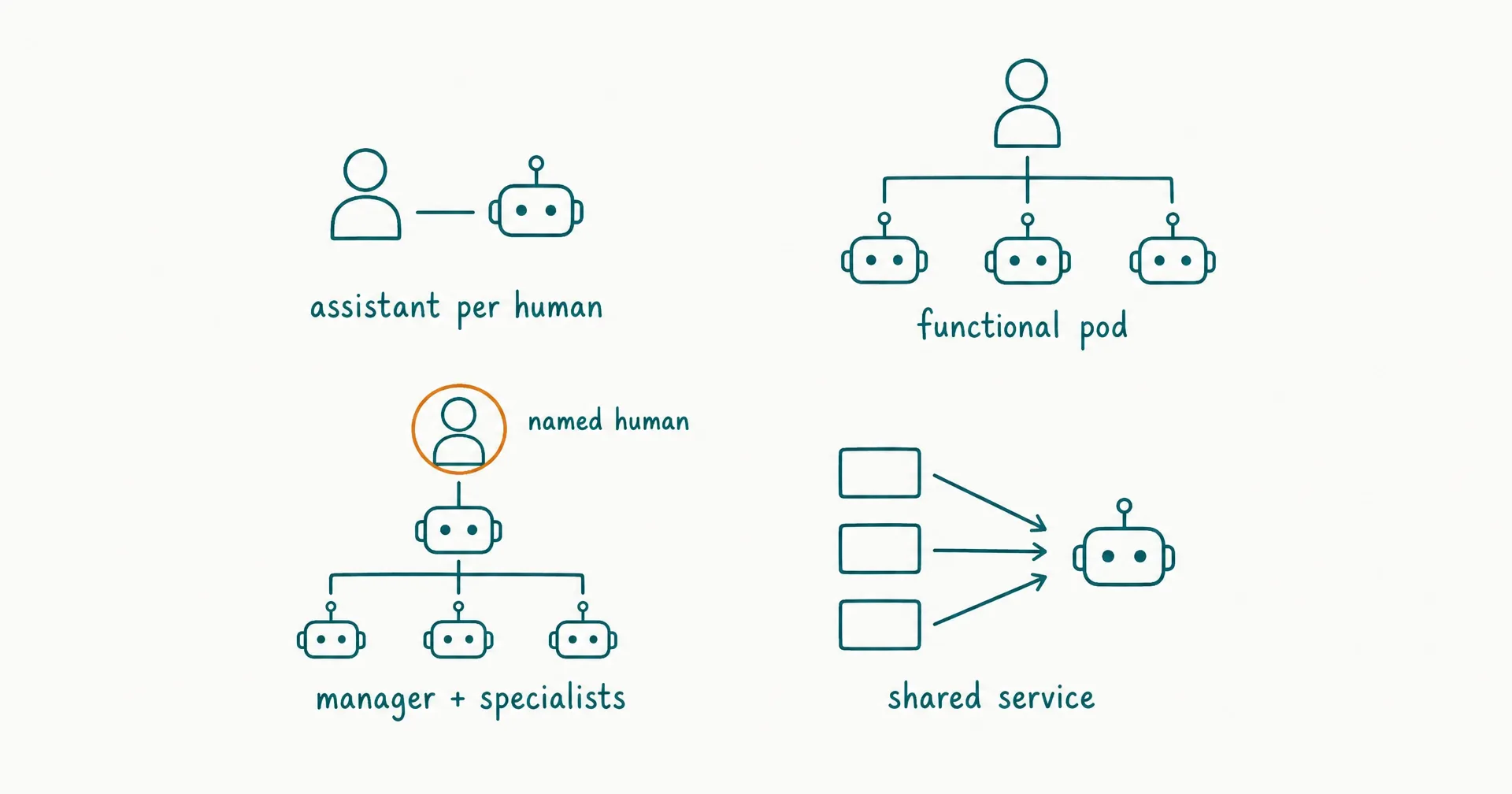
31 JUL 2026 AI Organization Charts: Four Patterns for Human-AI Teams A box-and-line diagram that shows only titles and reporting relationships is incomplete. AI roles act across tools, share memory, and operate at machine speed - the chart needs operating overlays. InsightsMulti-agent 22 min
Napkin-style sketch of four small org chart patterns side by side - assistant per human, functional pod, manager with specialists, and shared service hub - with an amber highlight circling the human accountability marker on one chart
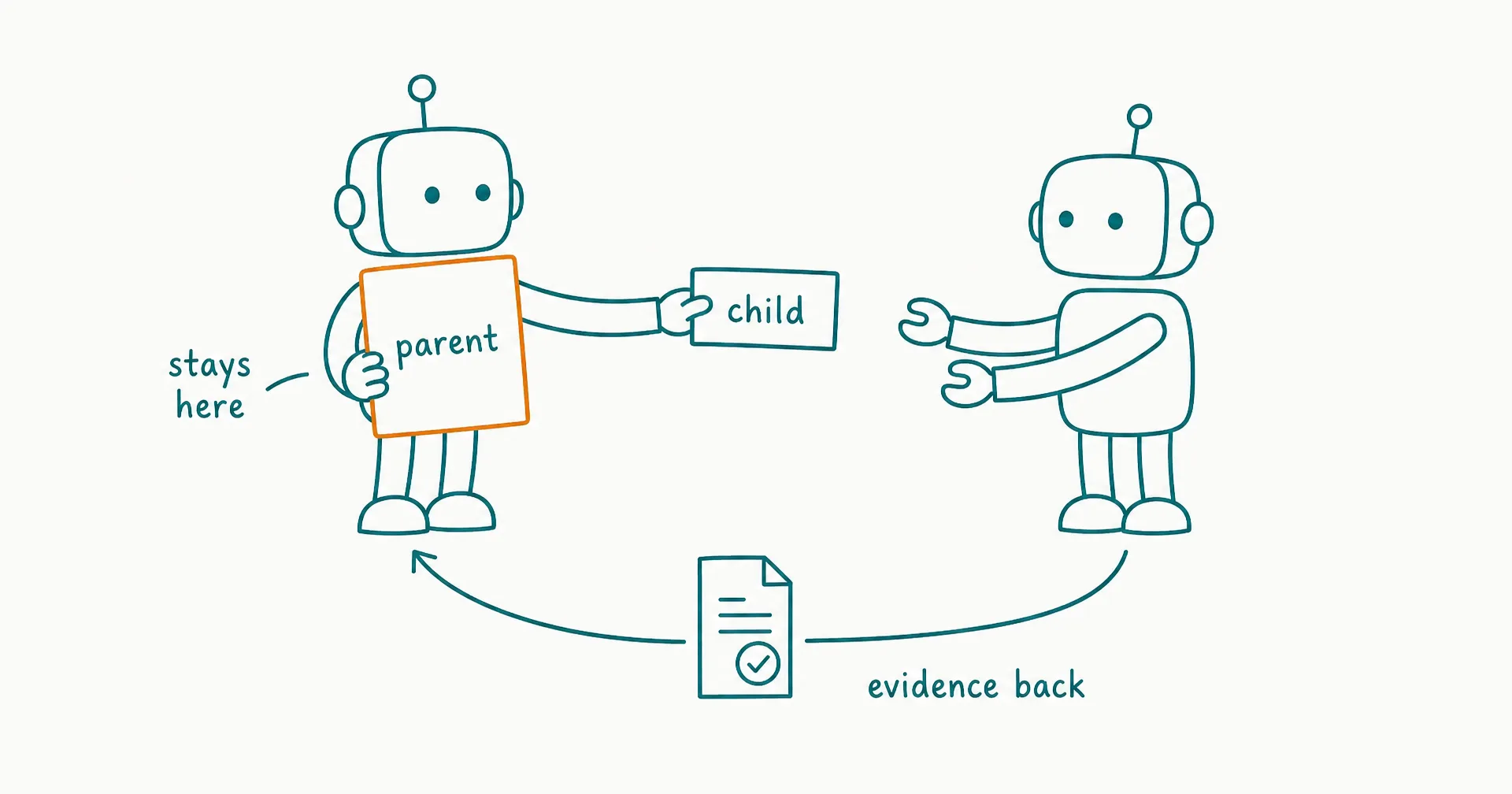
31 JUL 2026 AI Agent Task Delegation: Authority, Acceptance, and Closure The delegating agent keeps responsibility for the parent outcome; the receiving agent owns only the contribution it explicitly accepts. A delivered artifact is not accepted work. InsightsMulti-agent 29 min
Napkin-style sketch of a parent robot holding a large parent task card while handing a smaller bounded child task card to a worker robot, the child card returning along a loop with an evidence stamp, with an amber highlight on the parent card staying in the delegator's hand
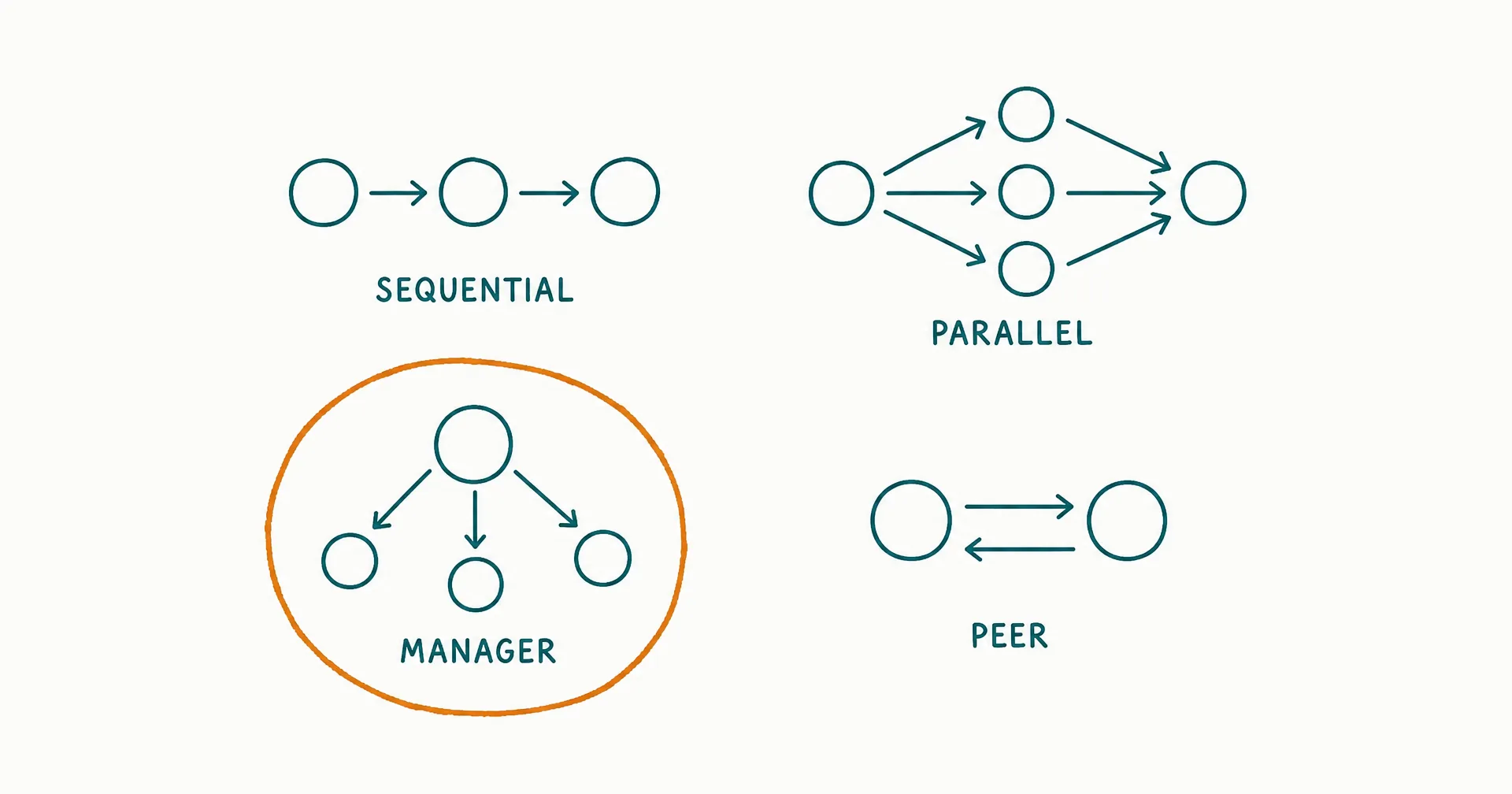
31 JUL 2026 AI Agent Orchestration Patterns: Sequential, Parallel, Manager, and Peer Six patterns cover most deployed designs. The right one is the least complex topology that removes a measured bottleneck - and a single agent plus tools is always the baseline. InsightsMulti-agent 26 min
Napkin-style sketch of four small topology diagrams in a two-by-two grid - a straight chain of nodes, a fan-out of parallel branches rejoining, a hub with spokes to specialist nodes, and two peer nodes exchanging a task - with an amber highlight circling the hub diagram
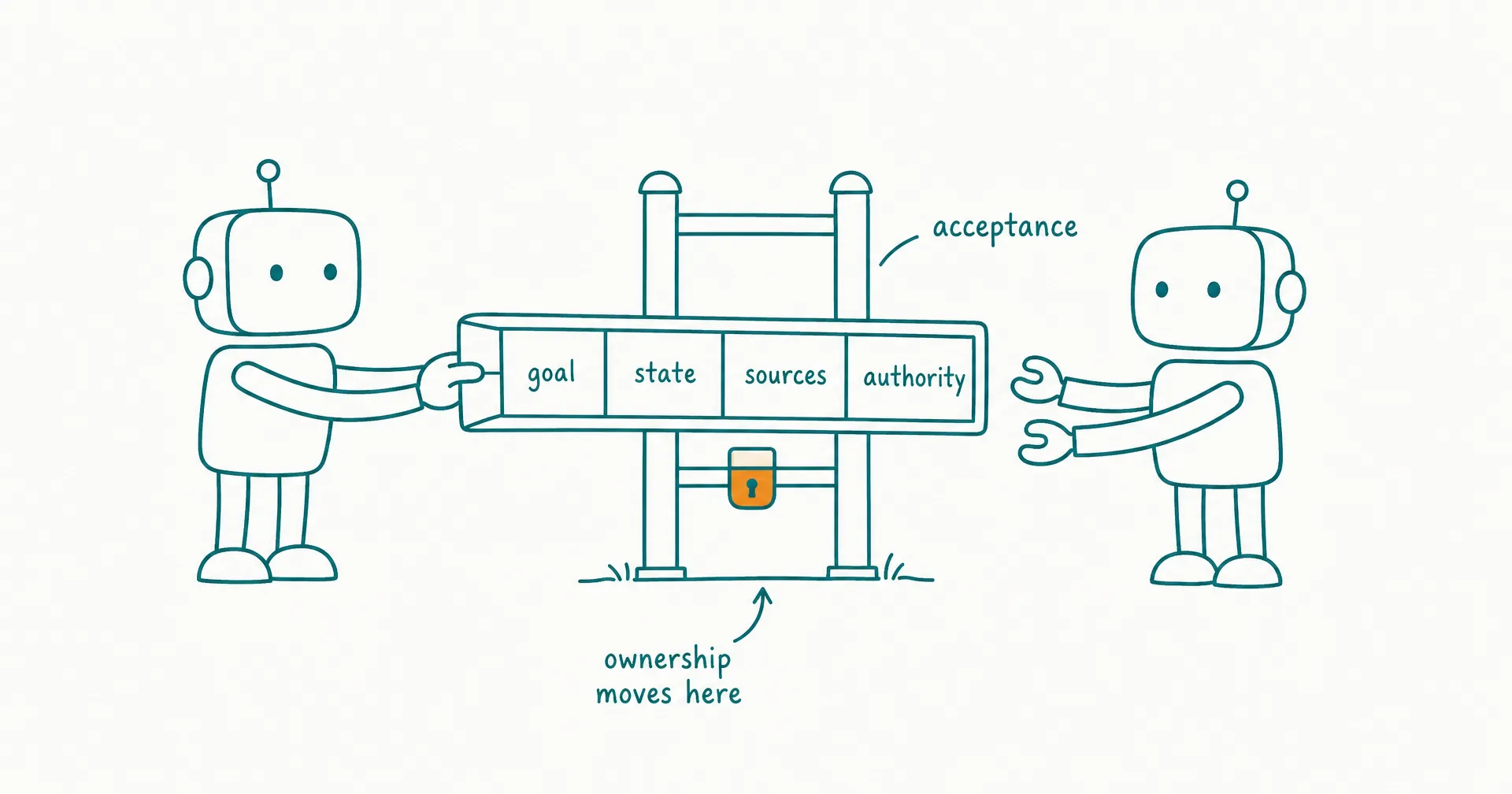
31 JUL 2026 AI Agent Handoff Protocols: What Must Travel With the Task An AI agent handoff should transfer a typed task contract, not a conversation summary. If the sender does not say whether ownership moves, both agents may act - or neither may own closure. InsightsMulti-agent 22 min
Napkin-style sketch of a robot handing a sealed packet across a gate to another robot, the packet labeled with small compartments for goal, state, sources, and authority, with an amber highlight on the acceptance gate latch