Google Cloud CEO Thomas Kurian announced the Gemini agent on October 8, 2026, opening Gemini at Work 2026. Google calls it a “single, universal agent for work”: one agent that answers questions, does knowledge work, creates images and media, and writes and runs code. The part that matters most for anyone choosing an AI employee sits a few paragraphs down: “You simply describe the role you need, and Gemini creates it.”
That role-based agent is what Google calls a coworker agent. This page covers what Google announced, how a coworker agent compares with a CellCog AI employee, and what the keynote left out.
On this page · 7 sectionsOpen
 Google Cloud announced the Gemini agent on October 8, 2026 at Gemini at Work 2026: one agent that answers questions, does knowledge work, makes images and media, and writes and runs code.
 A coworker agent is the team-member version. You describe the role, and the agent gets its own Workspace account with an email address, calendar, Drive and a company directory listing.
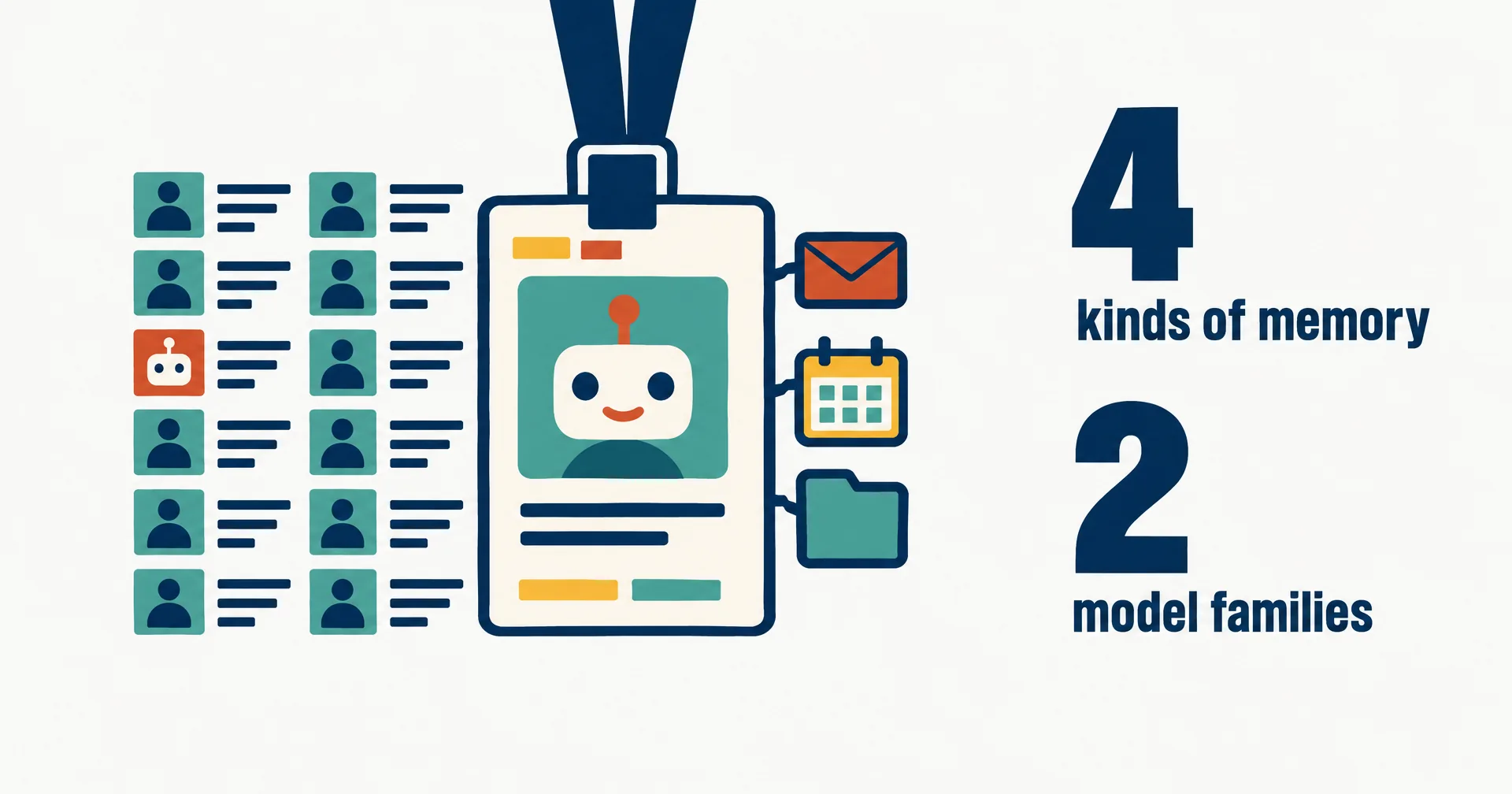
 Google says the agent keeps four kinds of memory, session, semantic, procedural and episodic, and onboards itself the way a new hire would.
 It routes each job across Gemini and Anthropic’s Claude models, and spend caps set per project pause the agent when they trigger.
 The keynote gave no price for the agent or for coworker agents and no availability date for coworker agents. Industry versions for Financial Services and Legal are in preview.
§ 01What Google announced
| Piece | What Google says |
|---|---|
| One agent | Answers questions, does knowledge work, makes images and media, writes and runs code, from one prompt box and one API |
| Coworker agent | A standing role on a team, with its own Workspace account: email, calendar, Drive and a directory listing |
| Where it works | Web, iOS, Android, Windows, Mac, the command line, Workspace, Microsoft 365 and Slack, or headless inside other apps |
| Memory | Session, semantic, procedural and episodic, kept across devices and channels |
| Models | Gemini and Anthropic’s Claude today, chosen per job; other private and open models later |
| Sub-agents | Temporary, job-specific agents, each with its own identity, for multi-step work |
| Controls | An attested identity per agent, least-privilege permissions, Agent Gateway, real-time spend caps per project |
| Industry versions | In preview for Financial Services and Legal; Government, Healthcare and Retail coming |
Google posted a short version on its company blog, and 9to5Google’s write-up covers the Workspace examples in more detail.
§ 02How a coworker agent works
Google describes Gemini working three ways: as your personal assistant, as a team member, and on behalf of a role “like an analyst in your finance department”. The team-member version is the coworker agent. “The agent receives its own Workspace account, including an email address, calendar, Drive, and presence in your company directory.”
Colleagues add it to a Chat space or @mention it. Google’s example: a marketing manager asks an events coordinator agent in a chat group to draft a launch readiness document, and the agent posts it back when it is done. Coworker agents get their own addresses on an agents subdomain of the company’s domain, their own persistent storage, and only the context people give them.
Google says the agent “onboards itself the way a new hire would, learning you, your tools, and your team before it starts.” It keeps four kinds of memory: session memory for the task in hand, semantic memory built from documents and conversations, procedural memory that includes skills it writes for itself, and episodic memory of everything it has done. Work that runs for hours or days keeps going after you close your laptop.
On cost, Google leans on routing. The agent runs each job on the model that fits, “orchestrating across our Gemini family of models and Claude models from Anthropic today”. Spend caps are set per project in the Cloud Billing Console, and “if a spend cap is triggered, that project’s agent pauses” until someone resumes it with a click.
§ 03Gemini coworker agent vs a CellCog AI employee
| Google Gemini coworker agent | CellCog AI employee | |
|---|---|---|
| How you create one | Describe the role; Gemini creates it | Describe the role; you hire it in minutes |
| Identity | Its own Workspace account: email, calendar, Drive, directory listing | Its own email inbox and phone number, and it joins your meetings |
| Computer | Runs in Google’s cloud; code runs in sandboxed virtual machines stamped with its identity | Its own secure VM and file system, plus its own browser identity and logins |
| Memory | Session, semantic, procedural and episodic | Keeps memory, skills and notes from one task to the next |
| Models | Gemini and Claude, chosen per job | Claude Opus 5.5 on every tier |
| Teams | Creates temporary sub-agents and coordinates their work | Employees form teams, onboard and manage each other |
| Approvals | Least-privilege permissions, Agent Gateway, spend caps | Anything above the approval level you set waits for you |
| Price and access | No price or availability date in the keynote | Anyone can start today; try it free, no credit card needed |
The shape is now shared across the big labs. OpenAI’s dots gave each agent its own cloud computer, Grok Bot added team Bots, and Google has given its agent a Workspace identity. What differs is where each one lives. Google’s coworker agent is built for a company that already runs on Workspace and Google Cloud, with the governance an IT department expects. A CellCog AI employee is built for a business of any size that wants someone working in a role today, whatever tools it runs on.
§ 04What Google did not say
- No price. The keynote says per-token prices have dropped 98% since 2024 and explains spend caps, but gives no price for the agent or for coworker agents.
- No availability date for coworker agents. 9to5Google reports the Gemini agent is available in the Gemini Enterprise app, Workspace and third-party services. In the keynote, only the industry versions are labelled as in preview.
- No limits. Nothing on how many coworker agents a company can create or how each one is licensed.
§ 05What this means for buyers
Our conflict, declared: we build CellCog, and we sell AI employees. A large lab naming the same shape (a role, an identity, an inbox, memory, onboarding) makes the category easier to explain to anyone deciding whether to hire one. The choice comes down to where your work lives. A large company on Workspace with an IT team will look at Google first. A small business that wants an employee working today, across any tools, can hire one on CellCog.
§ 06What we are watching for
- Price and availability for coworker agents, and whether they reach Workspace Business plans or stay with enterprise customers.
- The Claude routing. Which Claude models the Gemini agent calls, and for which jobs.
- Limits per company. How many coworker agents an organization can run, and how each is billed.
§ 07Sources
- Google Cloud, Thomas Kurian, Welcome to Gemini at Work 2026: Introducing the Gemini agent, October 8, 2026.
- Google, Google Cloud introduces the Gemini agent, October 8, 2026.
- 9to5Google, Abner Li, Google Cloud announces Gemini agent as universal agent for work, October 8, 2026.
Q1What is the Gemini agent?
A single agent from Google Cloud that answers questions, does knowledge work, creates images and media, and writes and runs code from one prompt box and one API. It works on the web, mobile, desktop, the command line, Workspace, Microsoft 365 and Slack.
Q2What is a Gemini coworker agent?
A version of the Gemini agent that holds a standing role on a team. Google says you describe the role you need and Gemini creates it, with its own Workspace email, calendar, Drive and directory listing. Colleagues add it to a Chat space or @mention it.
Q3Which models does the Gemini agent use?
Google says it runs each job on the model that fits best, across its Gemini family and Anthropic’s Claude models today, with other private and open models to follow.
Q4How is a coworker agent different from a CellCog AI employee?
Both start from a role and get their own identity and memory. Google’s coworker agent lives inside Workspace and Google Cloud for enterprise teams. A CellCog AI employee has its own computer, inbox and phone number, runs on Claude Opus 5.5, forms teams with other employees, and anyone can start one today.
Q5Is the Gemini agent available now?
9to5Google reports it is available in the Gemini Enterprise app, Workspace and third-party services. The keynote gives no availability date for coworker agents, and the industry versions for Financial Services and Legal are in preview.