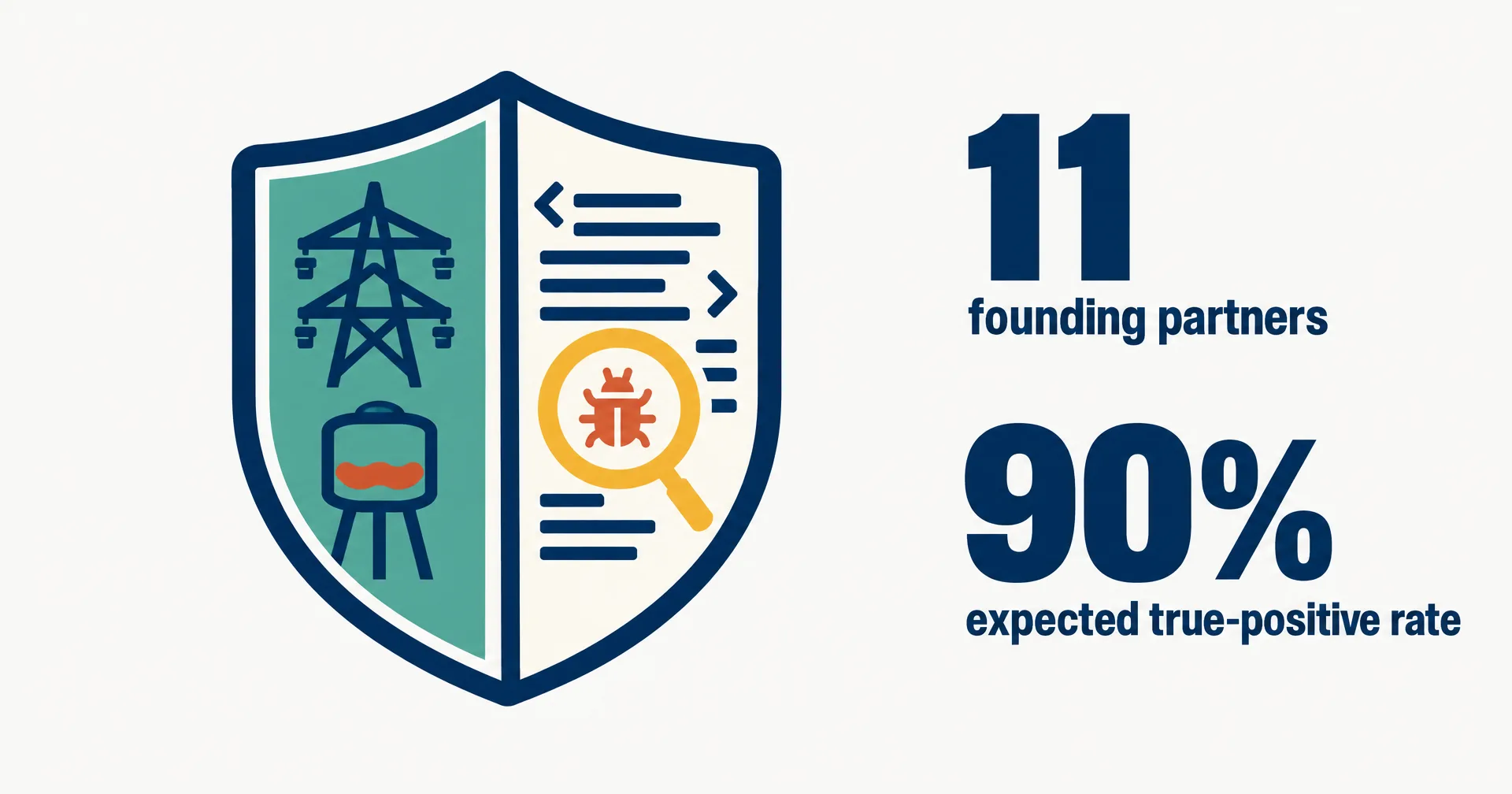
Anthropic launched the Anthropic Cyber Mission on October 8, 2026, calling it “a long-term commitment to securing the systems everyone depends on.” It starts in two places, each with a new program announced the same day. The first is the operational technology behind power grids, water systems and transport networks. The second is the open-source code that most software is built on.
It lands two days after Anthropic folded Project Glasswing into its Cyber Verification Program. That program decides who gets Claude’s full cyber capabilities. The Cyber Mission decides where Anthropic sends its own engineers, models and money.
On this page · 7 sectionsOpen
 Anthropic launched the Anthropic Cyber Mission on October 8, 2026, a long-term effort to support defenders, starting with critical infrastructure and open-source software.
 The Critical Infrastructure Defense Program brings frontier Claude models, on-site engineers and threat research to eleven founding partners, including CrowdStrike, Palo Alto Networks, Deloitte, Dragos and Rockwell Automation.
 OSS Scanner gives enrolled open-source projects free, periodic scans by Anthropic’s strongest models, with a proof of concept and a suggested fix in each report.
 The reports skip human review before sending. Anthropic expects a true-positive rate above 90% and sets no 90-day disclosure deadline on unvalidated findings.
 Anthropic forecasts AI will favor defense within two years, but warns that fixes still take months while exploits have become cheap.
§ 01What launched
| Program | Who it is for | What they get |
|---|---|---|
| Critical Infrastructure Defense Program (new) | Security vendors, integrators and equipment makers that protect operational technology | Frontier Claude models, on-site Anthropic engineers and threat research |
| OSS Scanner (new) | Core maintainers of established, critical open-source projects | Periodic scans by Anthropic’s strongest models, free, with a proof of concept and suggested fix per report |
| Cyber Verification Program (expanded October 6) | Security teams of any size | Access to Claude’s cyber capabilities for defensive work |
| Cyber defense for state and local governments (June) | US state, local, tribal and territorial governments | Frontier Claude models and technical support |
§ 02Critical infrastructure: eleven founding partners
Operational technology means the controllers, control software and industrial networks that run plants and utilities. Anthropic notes these systems “often cannot be taken offline to patch, so known vulnerabilities can stay unresolved for years.” The program does not sell to operators directly. It works through the providers operators already rely on. Its eleven founding partners are Accenture, Booz Allen, CrowdStrike, Deloitte, Dragos, Hitachi, Insane Cyber, Nozomi Networks, Palo Alto Networks, PwC and Rockwell Automation.
“This work is underway,” Anthropic says: several partners already use Claude to fix vulnerabilities. It calls this a first step with “a small cohort of providers”, and other security companies can register interest through a form. The June program for state and local governments, which StateScoop reported as a $15 million commitment, has since offered Claude models and support to “more than half of all US states”, according to Anthropic.
§ 03OSS Scanner: unreviewed reports, by choice
Under Project Glasswing, Anthropic scanned hundreds of widely used open-source projects and sent maintainers human-reviewed reports. By October 2026 it had reviewed more than 6,000 of them, according to the OSS Scanner page. Some maintainers asked for everything the models found, reviewed or not. OSS Scanner is that fast lane, “inspired by Google’s OSS-Fuzz”.
| Question | Answer |
|---|---|
| Cost | Free; Anthropic covers it through its Defender Advantage Fund |
| Who can join | Established projects with critical impact on infrastructure and user security, on OSS-Fuzz style criteria; core maintainers checked by hand |
| How to enroll | A pull request to anthropics/oss-scanner on GitHub adding a project.yaml with the repository, a contact and a Dockerfile |
| What arrives | Emailed reports with a proof of concept, an explanation and a suggested fix where one exists |
| Human review | None before sending; Anthropic expects a true-positive rate above 90% |
| Disclosure | No 90-day deadline on unvalidated findings |
| Scanning setup | Agents run with internet access disabled inside hardened sandboxes |
Anthropic states the trade-off plainly. The reports “are model-generated and sent without human review,” so maintainers get them faster, but “some will contain inaccuracies, such as a wrong severity rating.” The service is meant for projects that already keep up with verified high and critical reports. Everyone else keeps getting human-verified disclosures. Maintainers can also apply to Claude for Open Source for free Claude Max 20x subscriptions.
Anthropic adds that it has funded the Python Software Foundation, Alpha-Omega and OpenSSF through the Linux Foundation, and the Apache Software Foundation. It also supports Akrites and Gold Eagle, which collect and coordinate vulnerability reports so maintainers are not overwhelmed.
§ 04Why now, in Anthropic’s words
Anthropic’s forecast is that “in two years, AI will favor defense”, with bugs easier to catch before they ship. In the near term it warns the opposite may hold: exploiting a vulnerability has become cheap, while verifying and fixing one is slow and still depends on people. “In Glasswing, we often saw months pass between a vulnerability being found and being fixed.” For operational technology, it adds, a fix may wait until it can be applied safely to running machinery.
§ 05What this means if you run agents
Our conflict, declared: we build CellCog, and every tier of our AI employees runs on Claude Opus 5.5. Nothing here changes what a CellCog user can buy. The thread across Anthropic’s posts this week, the Cyber Verification Program, the 2026 Usage Policy and now the Cyber Mission, is that strong models come with rules about who uses them and how. An AI employee that touches your code, inbox or systems needs the same discipline at a smaller scale: permissions you set and approval on anything consequential.
§ 06What we are watching for
- New partners and sectors for the Critical Infrastructure Defense Program, which Anthropic says will grow over the coming months.
- OSS Scanner’s real hit rate. The 90% true-positive figure is Anthropic’s expectation, not a measured result yet.
- A disclosure period. Anthropic says it may later set one for some high-severity findings, with notice and an opt-out.
§ 07Sources
- Anthropic, Introducing the Anthropic Cyber Mission, October 8, 2026.
- Anthropic Frontier Red Team, OSS Scanner overview and FAQ, October 2026.
- Anthropic, Project Glasswing.
- Google, OSS-Fuzz, the program OSS Scanner models its criteria on.
- StateScoop, Keely Quinlan, Anthropic launches $15M cyber defense program for state, local, tribal and territorial governments, June 12, 2026.
Q1What is OSS Scanner?
An opt-in Anthropic service, inspired by Google’s OSS-Fuzz, that sends enrolled open-source projects periodic security scans from Anthropic’s strongest models. Each report includes a proof of concept, an explanation and a suggested fix where one exists.
Q2How do maintainers enroll in OSS Scanner?
Core maintainers open a pull request to the anthropics/oss-scanner repository on GitHub that adds a project.yaml with the repository, a primary contact and a Dockerfile. Anthropic checks by hand that the requester is a core maintainer.
Q3Are OSS Scanner reports reviewed by people?
No. They are model-generated and sent without human review so maintainers get them faster. Anthropic expects a true-positive rate above 90% and says some reports will contain mistakes, such as a wrong severity rating.
Q4How is the Cyber Mission different from the Cyber Verification Program?
The Cyber Verification Program, expanded on October 6, 2026, decides which security teams get access to Claude’s full cyber capabilities. The Cyber Mission is Anthropic deploying its own engineers, models and funding to infrastructure defenders and open-source maintainers.
Q5Does this change anything for CellCog users?
No. Every CellCog tier runs Claude Opus 5.5, and the Cyber Mission is aimed at security providers and open-source maintainers. It does not change what a CellCog user can buy.