Grok Bot is twelve days old as of this writing, and it is the strongest validation the AI-teammates category has received: the biggest lab in consumer AI teaching the whole market that persistent, named AI workers are real. The fair way to read any early beta is generosity about polish and honesty about structure. This page tries to do both.
Everything below is dated and sourced: SpaceXAI’s own documentation, their own forum threads including staff replies, and user reports we can point to. One disclosure before the receipts: we build CellCog, an AI employee platform that competes with Grok Bot, so read our conclusions with that discount and check every source yourself.
On this page · 7 sectionsOpen
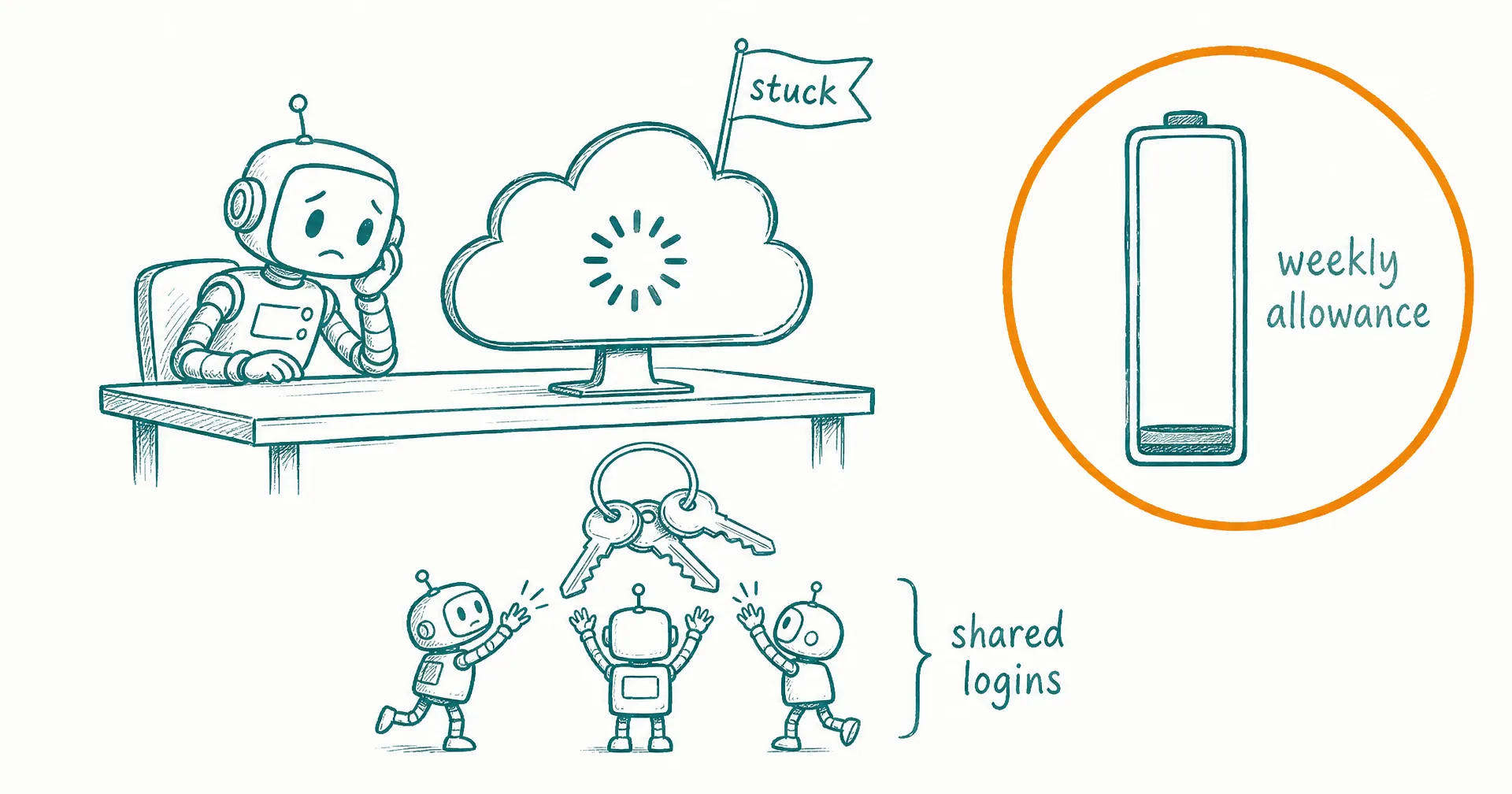
- The August 20 to 21 reliability incident was confirmed by Cursor staff: the shared computer behind a user’s Bots entered a stuck state, and because every Bot on an account runs on that one computer, all of them stopped at once.
- Users are publishing their own quota math: one six-agent business burned 42 percent of a weekly allowance on day one, and another measured about 100 basic completions plus one 10-minute script at 5 percent of a week.
- Access expanded on August 21, announced on the @bot X account, while the docs FAQ still carried the August 11 plan list and the release notes page stayed empty, and users reported contradictory answers on the SuperGrok Heavy and Cursor Ultra bundle.
- The shared-computer boundary is documented, not rumored: SpaceXAI’s own docs say not to use separate Bots as a security boundary, and a business user’s attempt at per-agent Chrome profiles reset daily.
- Context management is a named gap: a founder’s detailed report that each Bot is one unbounded thread was answered by staff confirming there is no fresh-session option, no manual compaction, and no visible context meter.
- The fair counterweight is real: users praise the setup ease, the browser reach on sites without APIs, and the persistence. This is a twelve-day-old beta, and we update this page as things change.
§ 01The reliability record so far
The most serious incident to date ran August 20 to 21, 2026. A user named Scott Rocha reported on the Cursor forum: “None of my agents in grok bot work… nothing works. It is bricked for me.” He had tested macOS and iOS, reinstalled, and created new agents. A Cursor staff member, Colin, confirmed the cause: “the computer behind your Bots got into a stuck state a couple of days ago.” The remedy was resetting the Bot’s computer, and the official troubleshooting docs note that a reset can lose recent unsynced work.
The same window produced a cluster of matching reports. Daniel Seaton documented the “Bot failed to respond” error persisting through restarts, app updates, duplicated Bots, and a deliberately tool-free health check. Matthew Brown reported a fully black window on August 21 and was still locked out on August 23. Earlier, on August 17, a user who bought Cursor Ultra specifically for Grok Bot called it “nearly unusable for me,” citing overloaded-provider errors, agents stuck on basic tasks, and a slow cloud computer.
The structural point matters more than any single outage: every Bot on an account runs on one shared computer. When that computer gets into a stuck state, it is not one worker calling in sick. It is the whole roster at once.
§ 02The quota math users are publishing
Two firsthand measurements stand out. On August 14, a business user running six agents reported: “I used about 42% of my weekly allowance on day one.” On August 22, another user measured the burn precisely: about 100 basic chat completions plus one 10-minute script consumed 5 percent of the weekly allowance, a rate the user called “truly terrible” for real business use.
The same August 22 report flagged routing as part of the cost: even simple work was being sent through the heavyweight model tier, which the user described as inefficient, and the later shift toward a cheaper tier made the Bots “quite stupid at times” in their words.
The weekend of August 23 to 24 added a fresh cluster in the same shape. A Heavy subscriber in a “Is Grok Bot worth it?” thread reported a single workload consuming roughly half a weekly allowance. Another user reverse-engineered their Heavy account’s displayed allowance at roughly 16.4 million tokens and complained that system-prompt overhead eats into every turn. And adjacent Grok Build users suspected their weekly limit had been quietly reduced, though that concerns a sibling product drawing on the same allowance ecosystem, and no official reduction has been announced. One commenter in the worth-it thread alleged a Bot damaged a project and wiped production; that is a single unverified report, and we flag it as exactly that, but it is the kind of report a shared-computer architecture makes hard to bound.
For context, the official position: subscriptions include weekly usage measured in agent steps and tokens, with on-demand overflow available on eligible accounts. Neither SpaceXAI nor Cursor publishes a numeric per-plan allowance, which is why users are doing this math in public.
§ 03Plans that moved, docs that did not
Access at the August 11 launch required SuperGrok Heavy, Cursor Ultra, or Cursor Teams Premium. On August 21, the @bot account on X announced an expansion to SuperGrok Plus, Cursor Pro+, all Cursor Teams plans, and a limited free trial. Days later, the docs FAQ still carried the August 11 plan list and the release notes page remained empty. A second expansion on August 26 brought every SuperGrok and Cursor Pro plan in, putting the individual floor at $20. If you want the full plan-by-plan breakdown, we keep a dated pricing page current.
The bundle question has since graduated from confusion to a dated record. At launch, SuperGrok Heavy included a $0 Cursor Ultra subscription, confirmed by Cursor staff on August 15 (“The subscription remains active at no charge so long as the SuperGrok Heavy plan is active on renewal”). On August 21 at 18:51 UTC, staff announced the promotion had ended, with already-claimed users grandfathered. But the help page describing the benefit stayed live past the cutoff, and buyers who purchased Heavy in that window reported linking successfully, getting Grok Bot, and staying on Cursor Free. Cursor Billing’s written reply to one affected buyer owned the stale page (“The help page was behind. That is on us”) while declining both Ultra provisioning and a refund, since xAI billed the charge; that buyer’s xAI refund tickets were still unanswered on August 23. Several ticket numbers are public, and we track the full entitlement timeline on our pricing page.
§ 04One computer, every login
This one is documented by the vendor, not alleged by users. All of a user’s Bots share one persistent cloud computer: files, browser sessions, and app logins are pooled at the account level. SpaceXAI’s documentation says it plainly: do not use separate Bots as a security boundary.
Users feel this when they try to build isolation on top. The six-agent business user from August 14 created separate Chrome profiles so each agent could hold its own Microsoft login, and reported the profiles resetting daily alongside frequent Chrome crashes. We wrote up the full model, including what deleting a Bot does and does not clean up, in our security explainer.
§ 05Context that never empties
On August 13, Michael Greenhalgh, co-founder and chief architect at Health.AI, filed the most technically detailed complaint of the beta so far: “Each Bot is one unbounded thread.” Every turn reloads the full history, and “obsolete traffic stays in the model context forever.” His conclusion: duplicating a Bot to escape the bloat “explodes the roster, splits memory, and does not fix the product.”
A Cursor staff reply on August 20 confirmed the gaps: long conversations are automatically summarized near the context limit, but there is no same-Bot fresh session, no manual compaction, and no visible working-set meter. Their own docs add the memory caveat we have quoted before: memory can hold stale assumptions, so ask the Bot to check the current source rather than relying on it.
§ 06The fair counterweight
The praise in the same twelve days is just as documented, and it is real. A hands-on reviewer built roughly twelve working Bots in eight hours on August 14 and called it the first consumer-grade multi-agent workspace he would hand to a nontechnical person. The browser-first design earns consistent credit for operating websites that have no API. A launch-day tester found it followed a “draft only, I send” instruction faithfully on real outreach. Another user had it walk through their app’s signup flow like a first-time visitor and surface real UX defects.
This is a twelve-day-old beta from a very well-resourced lab. Some of the list above will get fixed, and when it does, we will update this page the same day. What we would not expect to change quickly are the design decisions: one computer per account, advisory memory, and quota-bundled pricing.
§ 07If the walls start costing you
That distinction, fixable polish versus structural design, is the practical takeaway. If your usage is light and you already pay for an eligible plan, most of this page is survivable. If you are running real business workloads, the reports above are what scaling into Grok Bot currently looks like.
The structural items are exactly what the AI employee category solved by architecture: per-worker isolation instead of one shared machine, memory as the product instead of an advisory cache, and usage-based cost instead of a bundled weekly allowance. As of August 22, 2026, every CellCog employee runs on its own Employee Computer, carries its work from shift to shift through handovers, and costs what you assign it: you pay for the work, not the hire, and the cost depends purely on how much work you assign. We ranked the whole field, ourselves included with the conflict declared, in our alternatives guide. The head-to-head with CellCog covers the same walls feature by feature.
Q1Why does Grok Bot say Bot failed to respond?
The error surfaced widely around August 20 to 21, 2026, when Cursor staff confirmed some shared computers had entered a stuck state. The suggested remedy is resetting the Bot’s computer, and the docs note a reset can lose recent unsynced work. One user reported the failure persisting through reinstalls and freshly created Bots.
Q2How fast does the Grok Bot weekly allowance run out?
Faster than most users expect. Documented reports include 42 percent of a week consumed on day one by a six-agent setup, and a measurement of roughly 100 basic completions plus one 10-minute script costing 5 percent of a week. Neither SpaceXAI nor Cursor publishes numeric per-plan allowances.
Q3Do separate Grok Bots protect logins from each other?
No. All of a user’s Bots share one cloud computer, including files, browser sessions, and credentials. SpaceXAI’s documentation says directly not to use separate Bots as a security boundary.
Q4Can I clear or compact a Grok Bot's context?
Not as of late August 2026. A detailed founder report described each Bot as one unbounded thread, and Cursor staff confirmed there is no same-Bot fresh session, no manual compaction, and no visible context meter. Long threads are auto-summarized near the limit.
Q5Will these problems get fixed?
Some will. Reliability incidents and missing controls are normal beta work. The structural items, one shared computer per account, advisory memory, and quota-bundled pricing, are design decisions that would take a rearchitecture to change. We re-verify this page against their live docs and update it when they ship changes.