Cold outreach usually means duct-taping five tools together - a registrar, a mailbox warmer, a data provider, a sequencer, and a prayer. Today that whole motion moves inside CellCog: your AI employee now handles cold outreach end to end, and it applies a rule no other platform enforces - every email has to be worth receiving.
We shipped this alongside our Fable 5 migration (the model story is here) because outreach is exactly the kind of judgment-heavy, multi-step work that frontier reasoning finally makes trustworthy.
- CellCog AI employees now run the entire cold outreach motion inside one platform: sending domains, pre-warmed mailboxes, lead research, verification, and sequences.
- Dedicated client-owned sending domains keep your primary domain’s reputation out of the blast radius.
- Pre-warmed mailboxes ramp on an automatic warmup calendar, so campaigns start sooner without tripping spam filters.
- The employee researches your ICP and curates a small, sharp, verified lead list instead of a big generic one - and connects to your Apollo data if you use it.
- Every email is written individually for the person receiving it. No templated blasts.
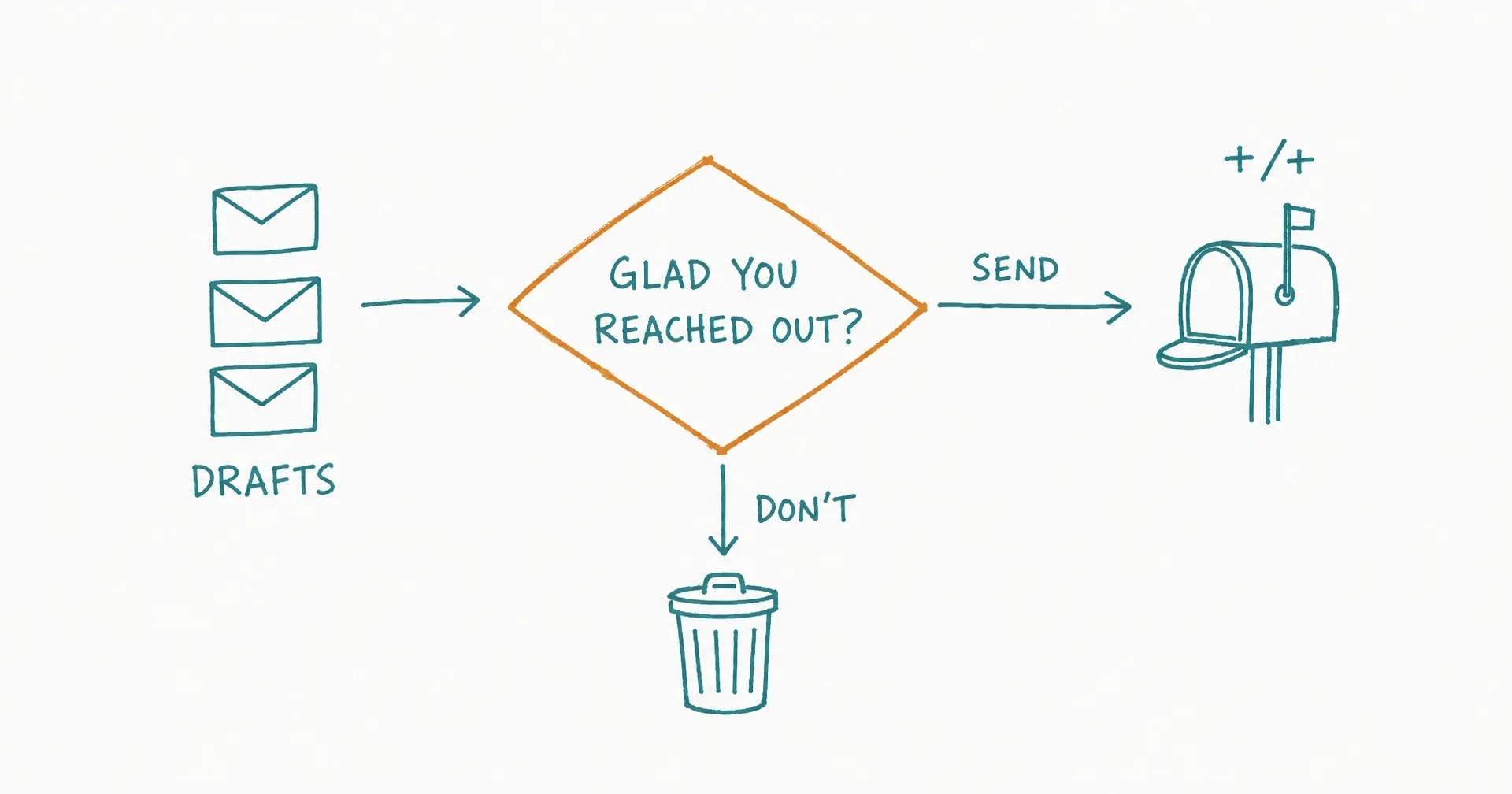
- Before any email sends, the employee runs a non-zero-sum check: would this person be genuinely glad you reached out? If not, it doesn’t send.
§ 01The Whole Motion, One Employee
Here’s what your AI employee now runs without leaving CellCog:
- Buys your sending domains - dedicated and client-owned, so your primary domain never takes the reputation risk.
- Buys pre-warmed mailboxes - ready to send sooner, ramped safely on an automatic warmup calendar.
- Researches your ICP - and curates a small, sharp, verified lead list instead of a big generic one.
- Connects to your Apollo - your data and your leads, working inside the same conversation.
- Builds multi-touchpoint sequences - every email written individually for the person receiving it. No templated blasts.
Each piece used to be a separate subscription and a separate tab. Now it’s one role you hire.
§ 02The Non-Zero-Sum Check
And here’s the part nobody else does: before every single email, your AI employee runs a non-zero-sum game theory check.
The test is simple. If this person saw exactly why you’re reaching out, would they be genuinely glad you did? If the answer isn’t “glad,” the email doesn’t send. Sending it anyway would be a negative-sum move: it burns the receiver’s attention, your reply rates, and your domain’s reputation - three losses for one send.
Most outreach tooling optimizes for volume, because volume is what the tools can measure. But the economics of cold email are reputational: inbox providers watch how recipients react to you, and every ignored or reported email makes the next one less likely to land. A smaller list of genuinely relevant emails outperforms a bigger generic one on the metric that matters - positive replies - while keeping your sending reputation intact.
That’s the difference between cold outreach and optimal outreach: every send is designed to win for both sides. Your prospects get relevance, you get replies, and your sending reputation stays pristine.
§ 03Why This Needed an AI Employee
Old-style sequencers made personalization expensive: a human had to research every recipient, so “personalized” collapsed into a first-name merge tag. An AI employee inverts the cost curve. Researching the person, understanding whether the offer is genuinely relevant to them, and writing an email specific to their situation costs the employee the same effort at lead one and lead one hundred.
That’s also why the non-zero-sum check is enforceable now. A rule like “only send emails the receiver would welcome” is useless if no one has time to apply it. An employee applies it to every draft, every time - and because it works in shifts with persistent memory, it learns which angles actually earn replies and folds that back into the next batch.
Sending remains under your control: outbound email is exactly the kind of action that sits behind your approval rules until you’ve granted standing permission for it.
§ 04The Honest Caveats
Deliverability is earned, not configured. Pre-warmed mailboxes shorten the ramp; they don’t remove the need to send well. Reply rates depend on your offer actually being relevant to the list, and the non-zero-sum check will refuse volume you might be used to sending - that’s the feature working, not a limitation. Regional rules like EU and Canadian opt-in requirements are enforced regardless of what a campaign asks for.
Your pipeline shouldn’t cost you your reputation. Now it doesn’t have to.
Q1Why does cold outreach usually require so many tools?
A typical motion duct-tapes five products together: a registrar for sending domains, a mailbox warming service, a data provider for leads, a sequencer for sending, and a spreadsheet to hold it together. Your AI employee now runs all of it as one continuous motion inside CellCog.
Q2What does the non-zero-sum check actually do?
Before every single email, the employee asks whether the receiver would be genuinely glad to get it, knowing exactly why it was sent. Relevant, well-timed email passes. Generic blasts fail. Sending a negative-sum email burns the receiver’s attention, your reply rate, and your domain’s reputation - so it doesn’t send.
Q3Why dedicated sending domains?
Cold email carries deliverability risk, and that risk should never sit on the domain your business runs on. The employee sets up dedicated, client-owned domains and pre-warmed mailboxes, so your primary domain never takes the reputation hit.
Q4How are the emails written?
Individually, for each person on the list. The employee researches the recipient and writes an email specific to them - the whole advantage of an AI employee over an old-style sequencer is that personalization no longer costs more at scale.
Q5Does it work with my existing lead data?
Yes. Connect your Apollo account and the employee works with your data and your leads inside the same conversation, alongside its own research and verification.
Q6Is this available to everyone?
Cold outreach ships as part of AI employees on CellCog. Hire an employee for an outreach role and it can set up the full motion, with sending always under your approval rules.