Grok Bot launched in beta on August 11, 2026, and the question arrived with it. Twelve days is early to judge any product, so this is an early verdict, built only from things we can date and source: hands-on reviews, forum threads with staff replies, the vendor’s own documentation, and user reports. One disclosure up front: we build CellCog, a competing AI employee platform. Our own pitch sits at the end, after the honest version of theirs, and you should discount it accordingly.
On this page · 6 sectionsOpen
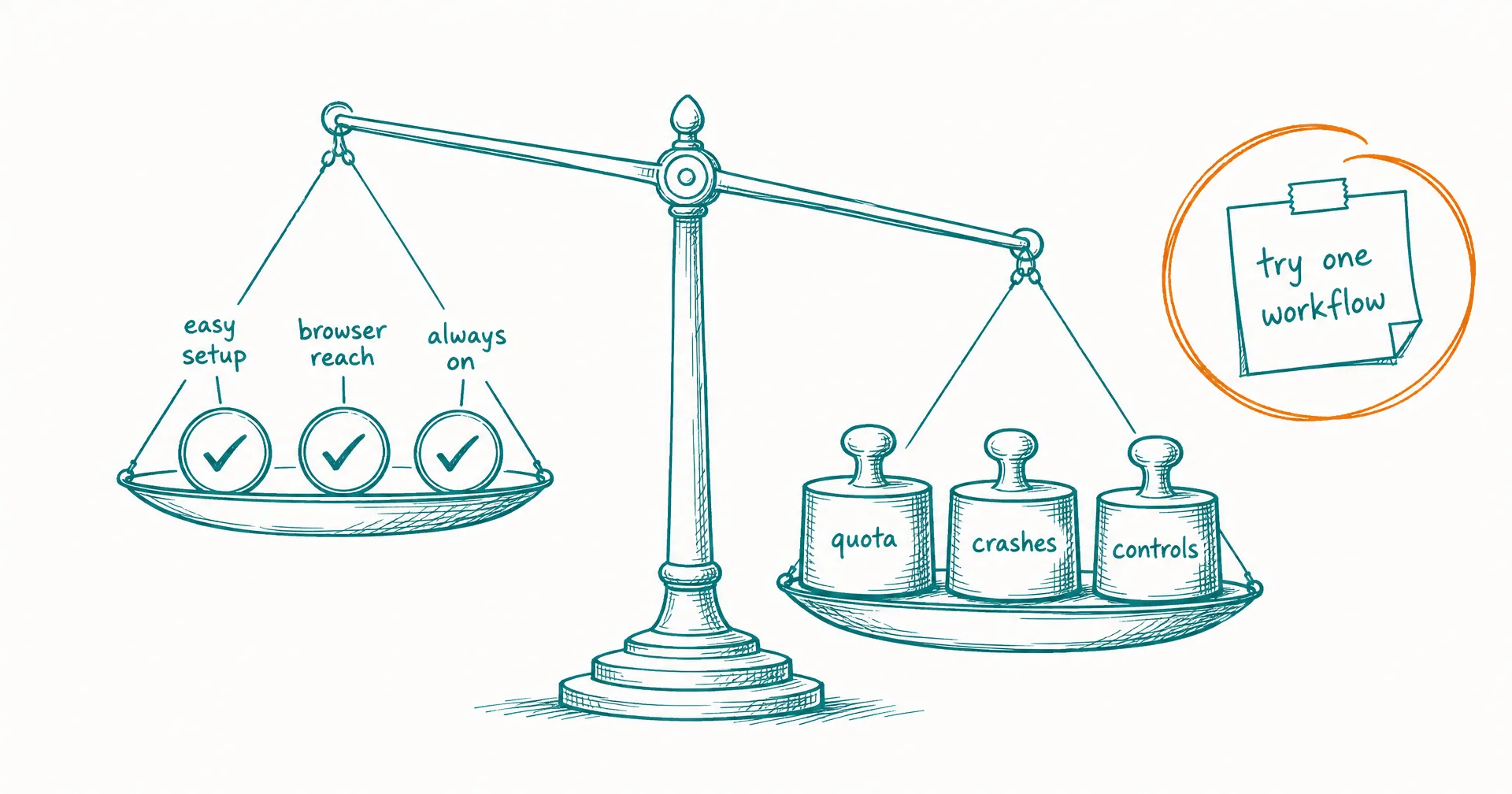
- The verdict from twelve days of public record: Grok Bot is worth trying on one valuable, reversible workflow, and much harder to justify subscribing to on its own, especially before usage economics and browser reliability settle.
- Its documented strengths are real: unusually easy setup, browser reach into sites with no API, persistent background work, and teach-by-demonstration routines.
- The recurring costs are just as documented: weekly allowances that heavy use exhausts in days, browser crashes and profile resets, stalled agents, and missing controls over context and model choice.
- There is still no standalone plan: access is bundled into eight subscriptions as of August 26, from $20 a month via base Cursor Pro, plus a limited free trial announced August 21, and no plan publishes a numeric Bot allowance.
- Best fit: nontechnical operators, people already paying for an eligible plan, and draft-first reversible workflows. Poor fit: heavy multi-agent operations, schedule-critical automation, regulated work, and experienced agent builders.
- We build a competing product and say so: our own pitch sits at the end, dated and linked, after the honest version of theirs.
§ 01The short answer
Worth trying. Not yet worth reorganizing your business around.
The trying part got cheap on August 21, when a limited free trial was announced alongside a big access expansion. The reorganizing part is where the record pushes back: weekly allowances that heavy users exhaust in days, a browser layer that crashes at the center of a browser-first product, and controls that are not there yet. If you would be subscribing solely for Grok Bot, the current evidence says wait.
§ 02What it genuinely does well
Four strengths repeat across independent, dated reports.
Setup is genuinely easy. A newsletter reviewer built roughly twelve working Bots in eight hours on August 14, covering chief-of-staff work, research, Gmail, Slack, and travel, and called it the first consumer-grade multi-agent workspace he would hand to a nontechnical person. A Reddit user comparing it with a rival on August 22 called setup “a breeze” even while ultimately preferring the rival.
The browser reach is real. Because Bots operate a real browser on a cloud computer, they can use websites that have no API. A business user running six agents wrote on August 14 that this removed waiting on integrations entirely, and described a business-development Bot that found and sent requested material, then followed up on its own to ask whether it had been reviewed.
It keeps working when you leave. A launch-day tester ran real outreach and highlighted two things: the Bot kept executing after he closed his laptop, and it respected a “draft only, I send” instruction. Another user had it walk through their app signup like a first-time visitor and return a genuine defect list while they slept that night.
Teach by demonstration. Showing a Bot a browser workflow once and saving it as a repeatable routine draws consistent praise, including from a competitor’s otherwise critical analysis.
§ 03The costs users keep reporting
The other side of the scale is just as documented. The short version: weekly quota burn measured at 5 percent for about 100 completions plus one script, 42 percent of a week consumed on day one by a six-agent business, a staff-confirmed incident where the shared computer behind a user’s Bots got stuck and took every Bot down with it, daily Chrome profile resets, stalled agents, and no way to prune a Bot’s ever-growing context. We keep the full dated record, sources and staff replies included, in our problems and limitations page, and the vendor-documented shared-login model in the security explainer.
The pattern worth noticing: the strengths are mostly product polish, and the recurring costs are mostly architecture. Polish improves in a beta. One computer per account, advisory memory, and quota-bundled pricing are design decisions.
§ 04What it costs to find out
There is still no standalone Grok Bot plan. Access is bundled into eight subscriptions as of August 26, 2026: base Cursor Pro at $20 a month is the cheapest door, base SuperGrok at $30, Cursor Teams Standard at $40 a seat, plus Pro+, SuperGrok Plus, Ultra, Heavy, and Teams Premium above them, and the limited free trial for everyone else. No plan publishes a numeric Bot allowance; usage is measured in agent steps and tokens against a weekly pool. The full breakdown, kept current as their pages move, lives in our pricing explainer.
§ 05Worth it if, not worth it if
Worth it if:
- You already pay for an eligible Cursor or SuperGrok plan, so trying it is marginal cost zero.
- You are a nontechnical operator who wants named AI workers without touching agent infrastructure.
- Your workloads are draft-first and reversible: research, outreach drafts, UX walkthroughs, report preparation.
- You are testing the category to understand what persistent AI teammates can do.
Not worth it if:
- You need dependable schedules, triggers, or always-on throughput. The documented quota math and reliability record both argue against it today.
- Your workers need real boundaries from each other. The vendor’s own docs say separate Bots are not a security boundary; the alternative architecture here is per-worker credential scoping, where you decide which tools and keys each worker can use and the restriction is enforced server-side.
- You are an experienced agent builder. The consistent expert verdict is that you can reproduce the capabilities with more control elsewhere.
- You would be buying a $20 to $300 plan purely for Bot access, before allowances are even published.
§ 06Where we stand
Our conflict, declared again: CellCog is an AI employee platform, and Grok Bot’s launch validated the category we have been building in since October 2025. The differences are architectural, and each one maps to a wall above. Every CellCog employee runs isolated on its own Employee Computer, as of the August 22, 2026 launch. Memory is the product, not an advisory cache: employees do not reset, and what they learn one day carries into the next through handovers and role memory. Cost is usage-based rather than quota-bundled: the cost depends purely on how much work you assign.
And one receipt you can inspect rather than take on faith: we run our own company on the product, with a live org chart of the AI employees doing it. If your work is exclusively code, a coding-native agent is probably your better answer. For standing business roles, we think the comparison favors us, and we wrote up the full side by side so you can check the reasoning. And if you want the whole field ranked in one table, the alternatives comparison carries it.
Q1Is Grok Bot worth it for a small business?
For light, supervised, draft-first workflows, plausibly yes, especially if you already pay for an eligible Cursor or SuperGrok plan. For always-on operations, the documented quota burn and reliability record say wait or look at architectures built for standing work.
Q2Is there a free trial for Grok Bot?
Yes. A limited-usage trial was announced on the @bot X account on August 21, 2026. Trial capacity is consumed by agent steps and tokens, and one large job can use most of it.
Q3What do reviewers say about Grok Bot?
The dated hands-on reviews split by audience: enthusiastic for nontechnical users (one reviewer built twelve working Bots in eight hours on August 14), skeptical for experienced agent builders who can reproduce the capabilities with more control elsewhere.
Q4Who should skip Grok Bot for now?
Teams needing reliable schedules and triggers, regulated or high-stakes workflows, heavy multi-agent operations, and anyone who needs workers isolated from each other, which the vendor’s own docs say the shared-computer model does not provide.
Q5What is the main alternative architecture?
AI employee platforms: standing workers with per-worker isolation, persistent role memory, and usage-based cost. We build one, CellCog, and we keep a full ranked comparison, conflict declared, on our alternatives page.