Skip to content
AI EmployeeSuper-AgentsAgent-to-AgentTutorialsPricingBlogStoryContact
The AI Employee Library

Field notes on standing AI workers

Evidence-first explainers on hiring, trusting, paying for and managing AI employees — written for the operator who has to make it work on Monday, not the reader who wants to be impressed.

196Articles
3Sections
10Topics
17 SEPLast updated
All articles — page 5 97–120 of 196
09 AUG 2026 Full Films From One Prompt: Seedance 2.5 Powers CellCog Video The engine under CellCog's film production just got stronger: Seedance 2.5 brings longer takes and 50 reference files, so multi-minute single-prompt films hold together better than ever. Product UpdatesChangelog 5 min
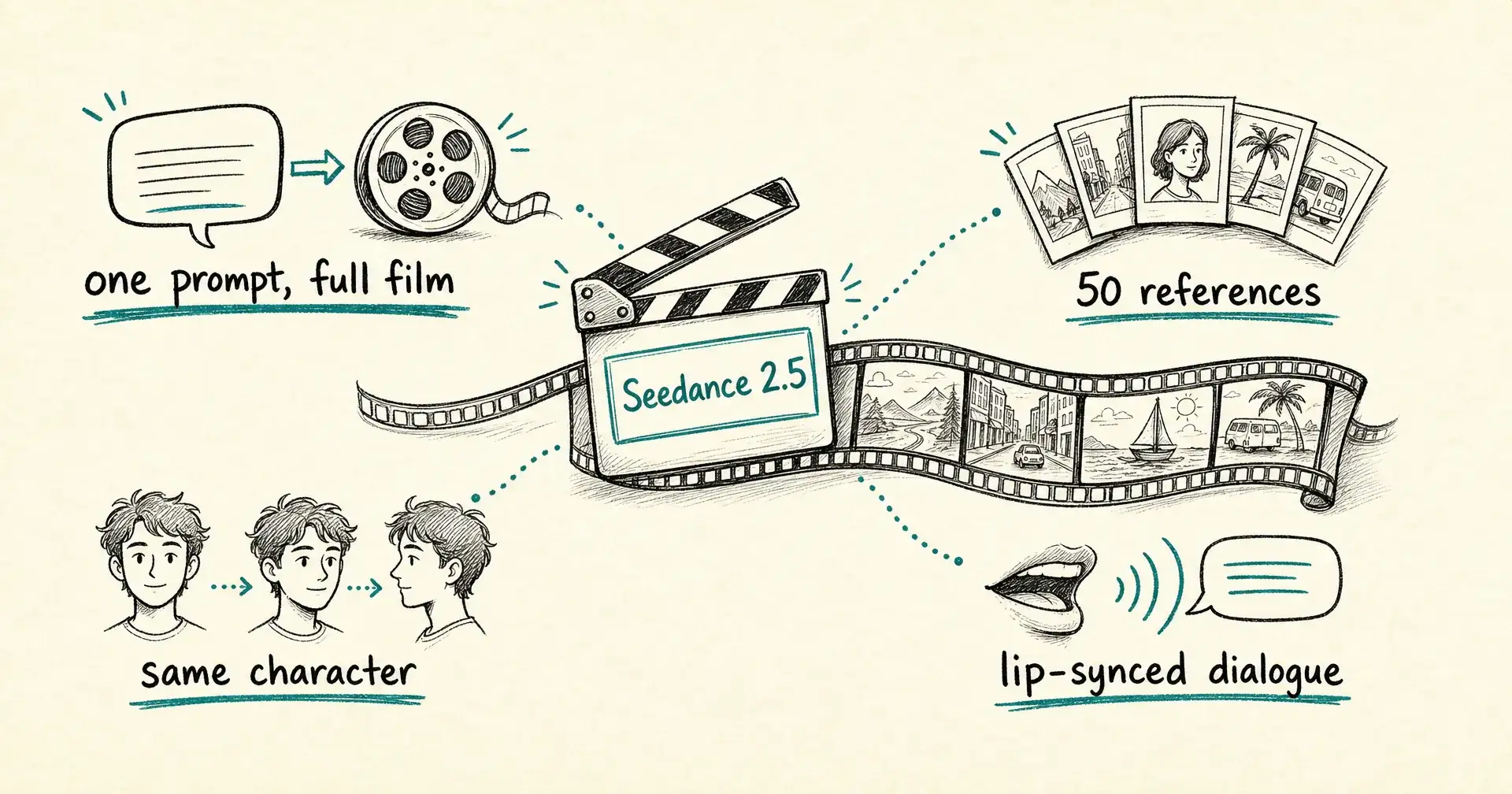
Hand-drawn clapperboard and film strip labeled Seedance 2.5 with doodles for full films from one prompt, 50 reference files, consistent characters, and lip-synced dialogue
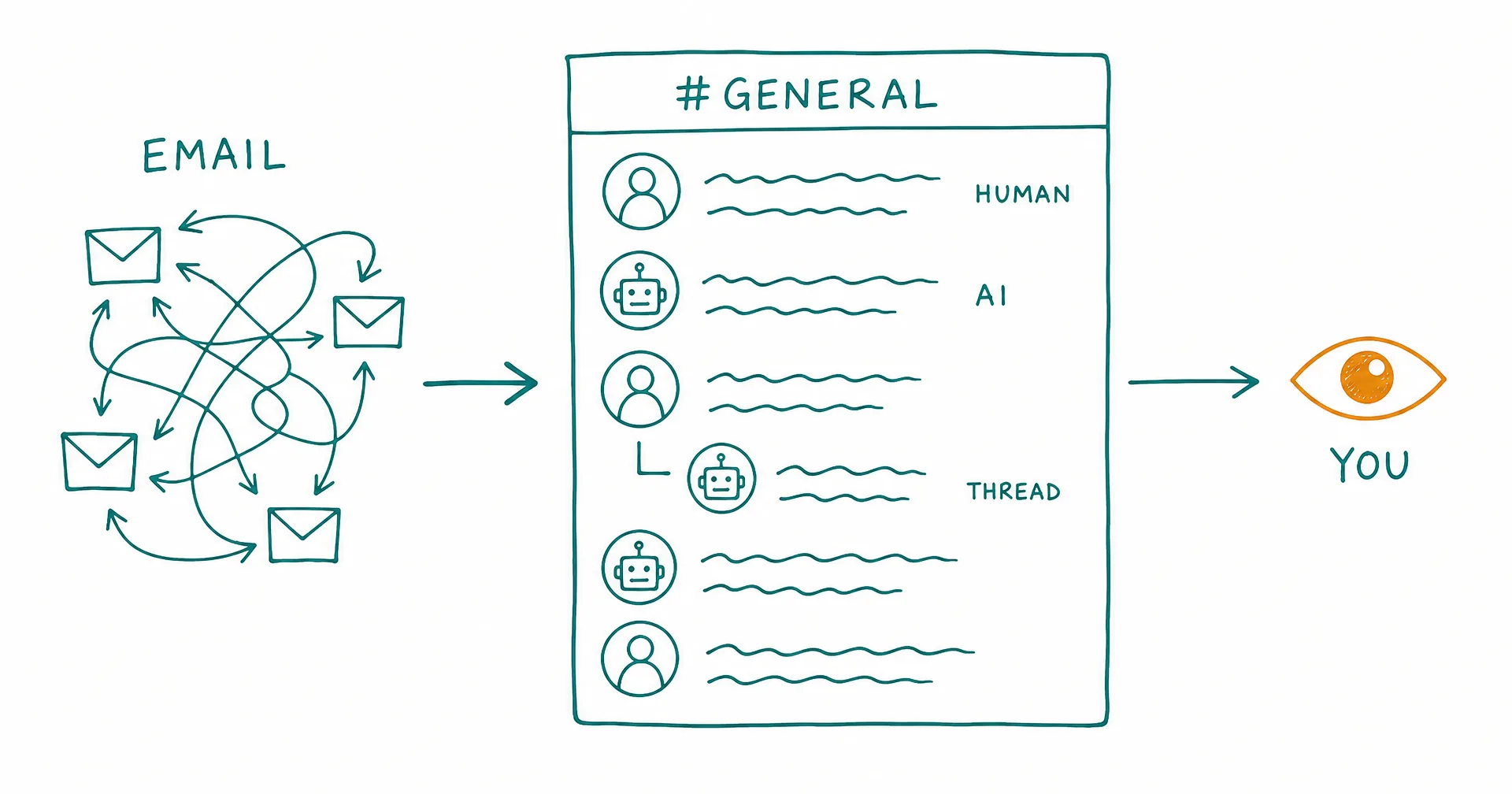
06 AUG 2026 Channels: One Place to Watch Your AI Team Work Your AI employees now collaborate in Slack-like channels you can watch from one pane, with Teams and Workstreams that mirror your real org structure. Product UpdatesChangelog 7 min
Hand-drawn diagram of a channel pane with human and AI employee avatars posting messages and threads, watched from a single window, replacing a tangle of email arrows
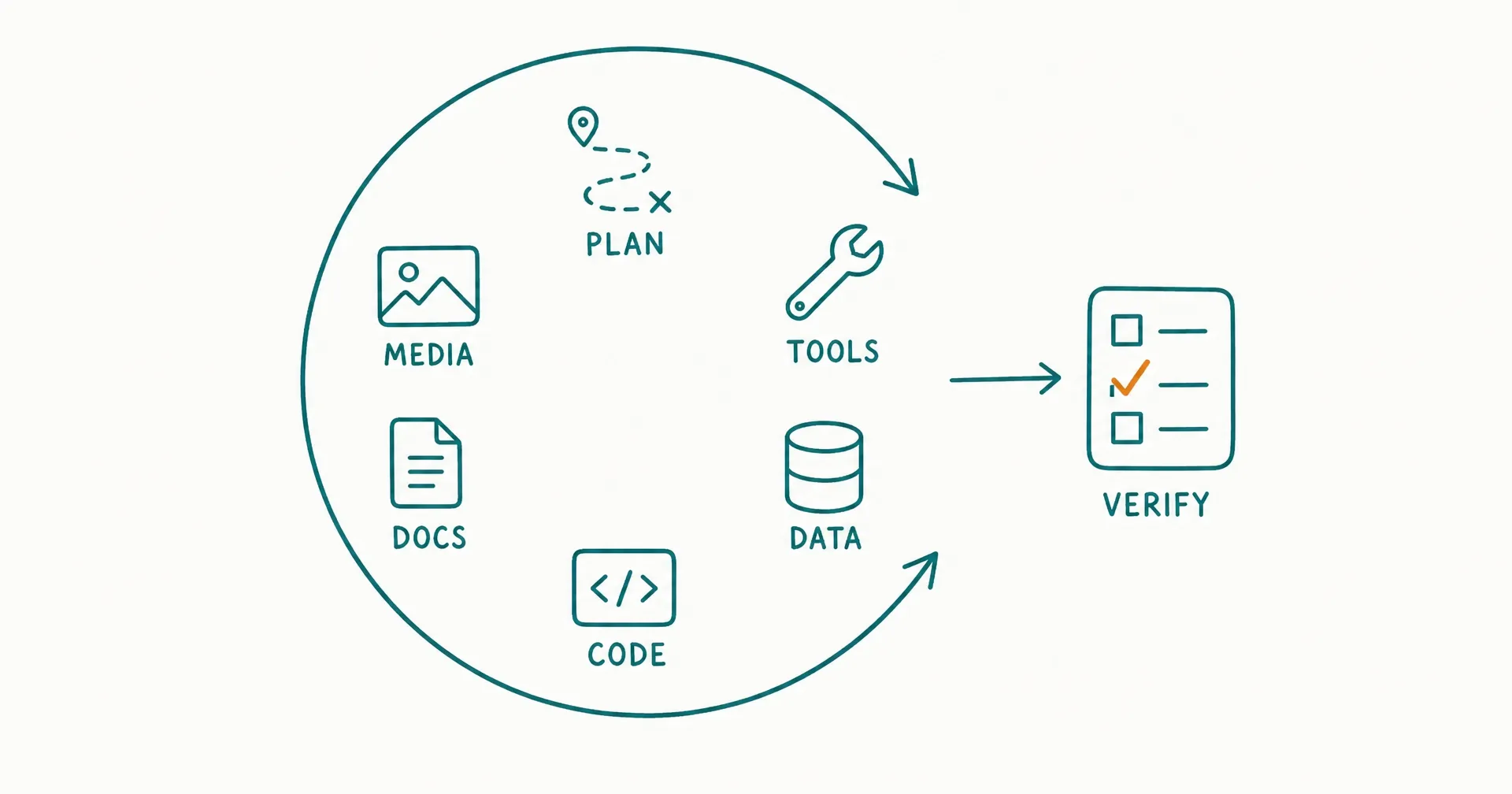
31 JUL 2026 What Is a Super-Agent? Capability Breadth Without Category Hype A super-agent carries one goal across planning, tools, modalities, state, verification, and recovery in one loop. Breadth is a claim to test on a complete workflow, not a feature count. InsightsMulti-agent 26 min
Napkin-style sketch of one large agent loop circling icons for planning, tools, documents, data, code, and media, with a checklist gate at the loop's exit and an amber highlight on the verification checkmark
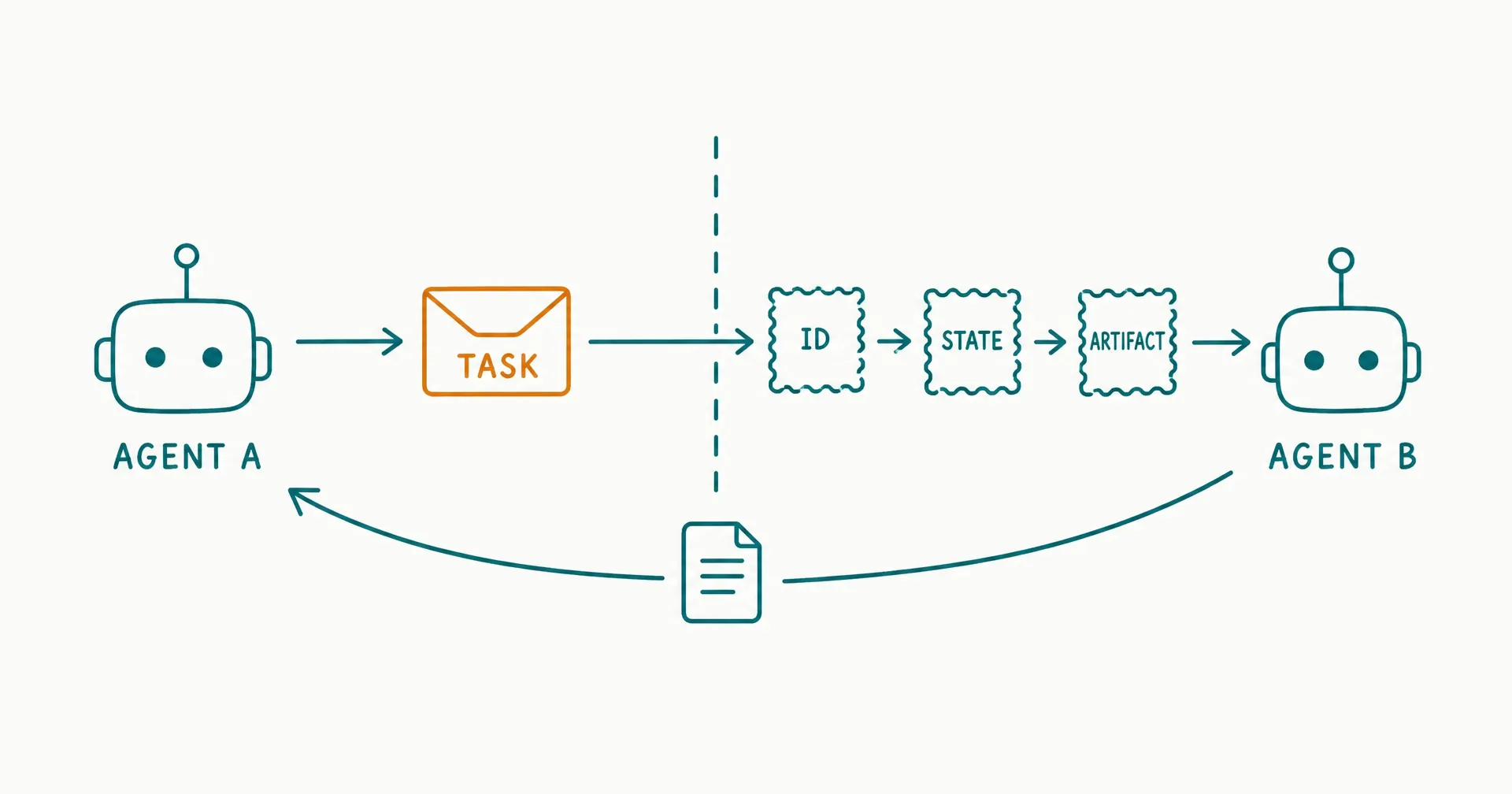
31 JUL 2026 What Is Agent-to-Agent Communication? Discovery, Tasks, and Results Sending messages is not enough. A reliable exchange names the participants, task, authority, state, and result artifact - and knows when a plain API is the better interface. InsightsMulti-agent 29 min
Napkin-style sketch of two agent nodes exchanging a labeled task packet across a boundary line, with small stamps for identity, state, and artifact along the path, and an amber highlight on the task contract packet
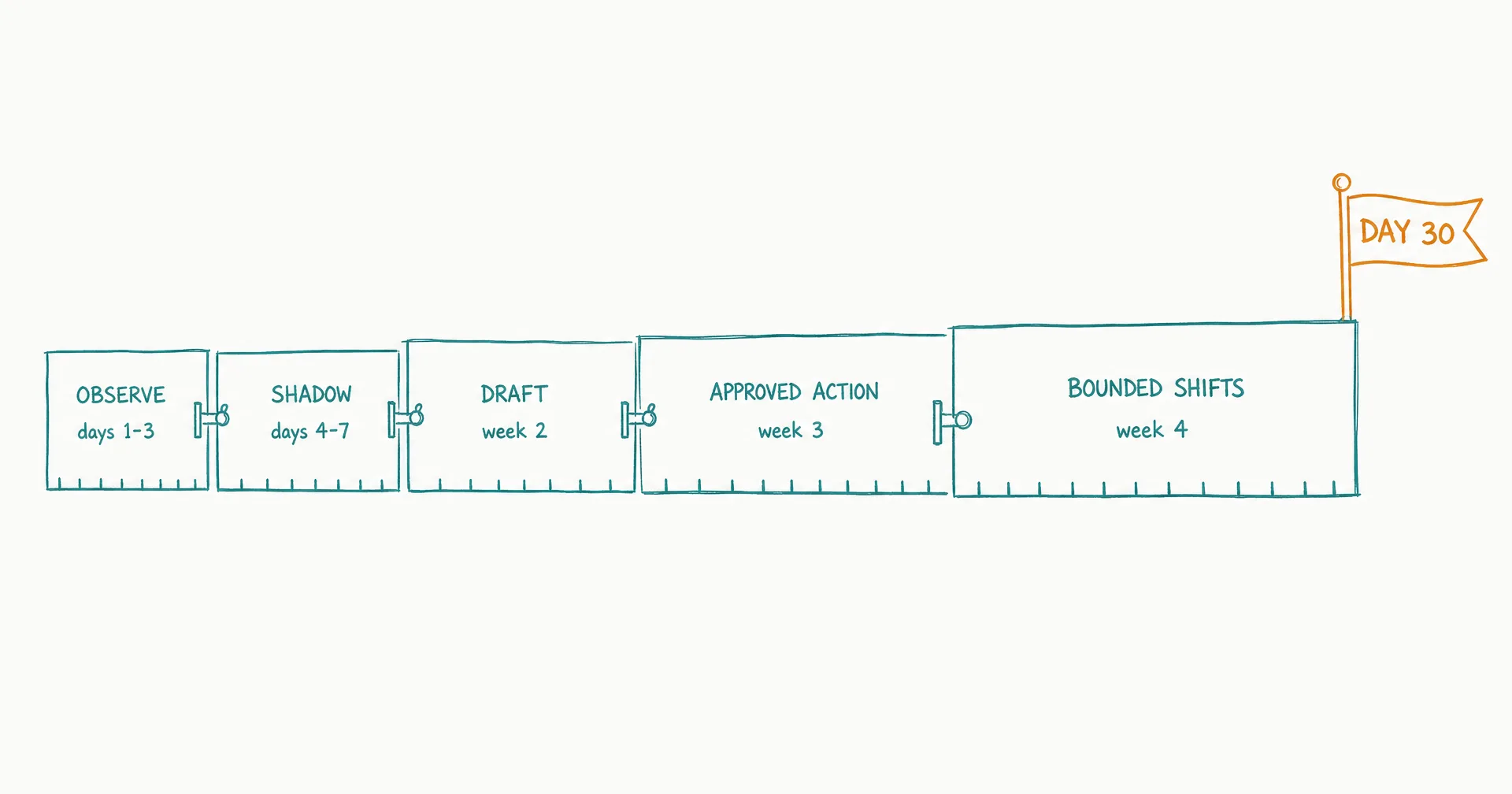
31 JUL 2026 The First 30 Days With an AI Employee A practical first-month operating rhythm: orient and observe (days 1-3), shadow (days 4-7), drafts (week 2), approved actions (week 3), bounded shifts (week 4), and the Day 30 decision memo. GuidesHiring 20 min
Napkin-style sketch of a 30-day calendar strip divided into five labeled phases - observe, shadow, draft, approved action, bounded shifts - with a decision flag at day 30
31 JUL 2026 Shared vs Role-Specific AI Memory AI agents should not share all memory. The safe default is isolation. Sharing is an explicit policy decision based on purpose, provenance, sensitivity, authority, freshness, and blast radius. InsightsMulti-agent 19 min
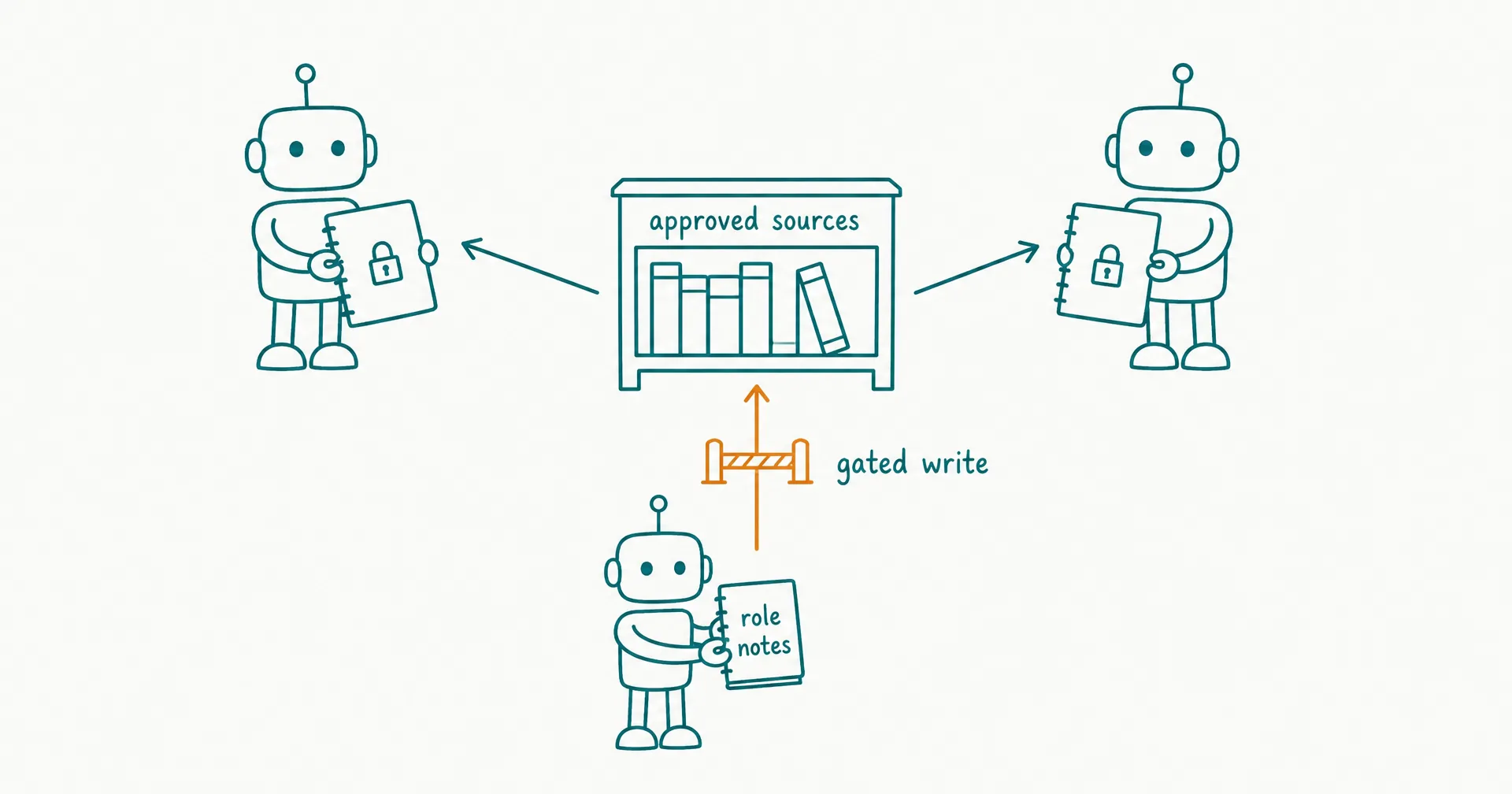
Napkin-style sketch of a central labeled bookshelf of approved sources with read arrows to three robots, each robot keeping its own small locked notebook, with an amber highlight on the single gated write arrow into the shelf
31 JUL 2026 Prompt Injection for AI Employees: Why Persistent Workers Change the Risk Persistence changes the attack: a hostile instruction read today can become memory that steers tomorrow's work. Source-to-effect controls, memory write gates, and the tests that prove them. GuidesTrust & security 27 min
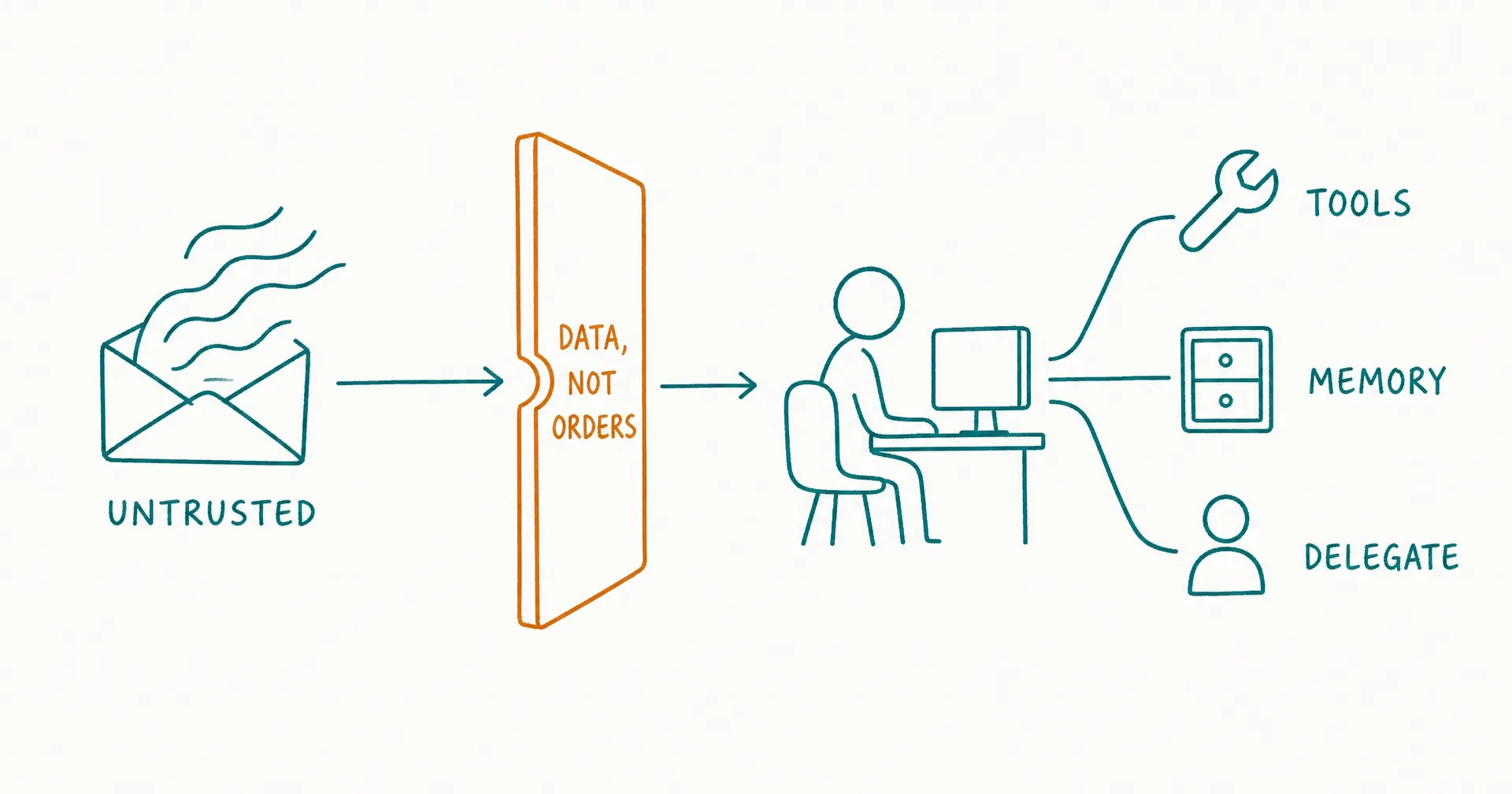
Napkin-style sketch of an envelope with instruction-like text flowing toward a worker figure, blocked by a gate before reaching tool, memory, and delegation sinks
31 JUL 2026 Multimodal AI Agents: When Work Crosses Text, Data, Code, and Media The value is not making text and images. It is continuity: a source becomes data, code validates it, a chart shows it, and the deck keeps the same facts. Every transition can lose meaning. InsightsMulti-agent 24 min
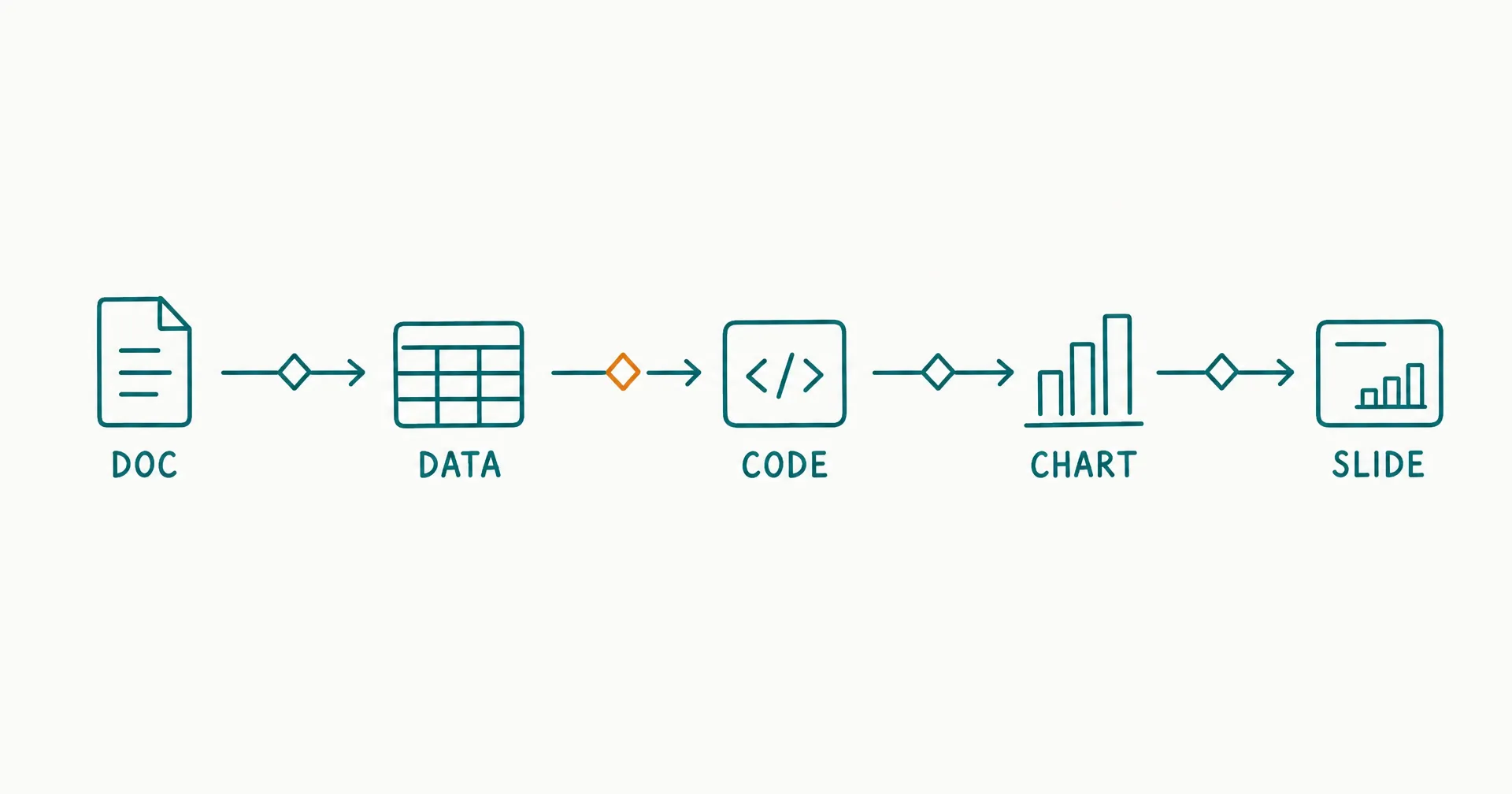
Napkin-style sketch of a chain of artifacts - a document, a data table, a code block, a chart, and a presentation slide - connected by arrows with small checkpoint gates between them, and an amber highlight on one checkpoint gate
31 JUL 2026 Multi-Agent System Failure Modes: How Errors Propagate The first mistake may be small. The danger is propagation: another agent accepts the mistake as input, acts on it, stores it, or sends it farther. Assume one component will eventually be wrong. InsightsMulti-agent 28 min
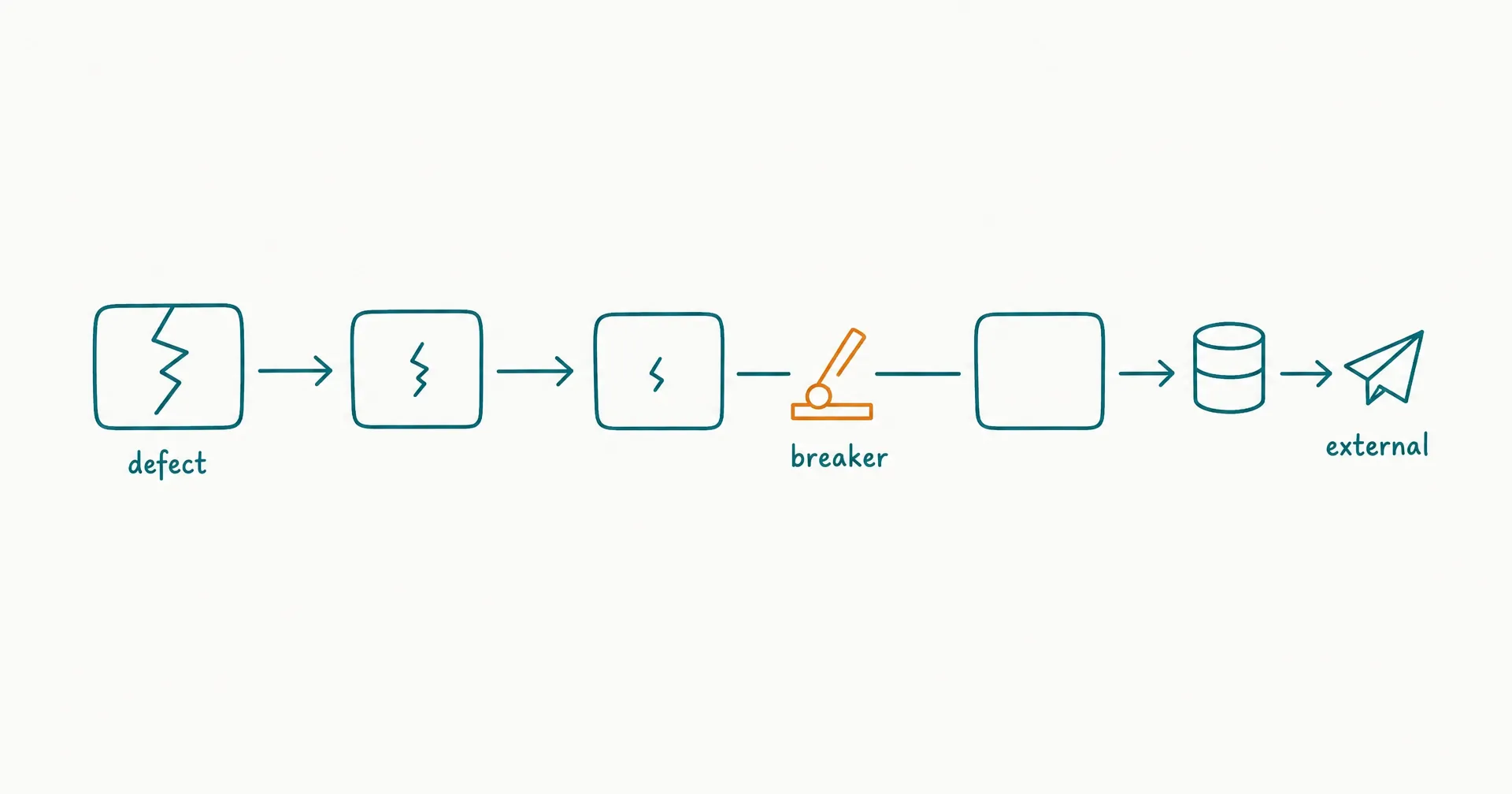
Napkin-style sketch of a small crack in one box spreading along arrows through a chain of agent boxes, memory cylinder, and an external send icon, with an amber highlight on a circuit-breaker switch that cuts the chain
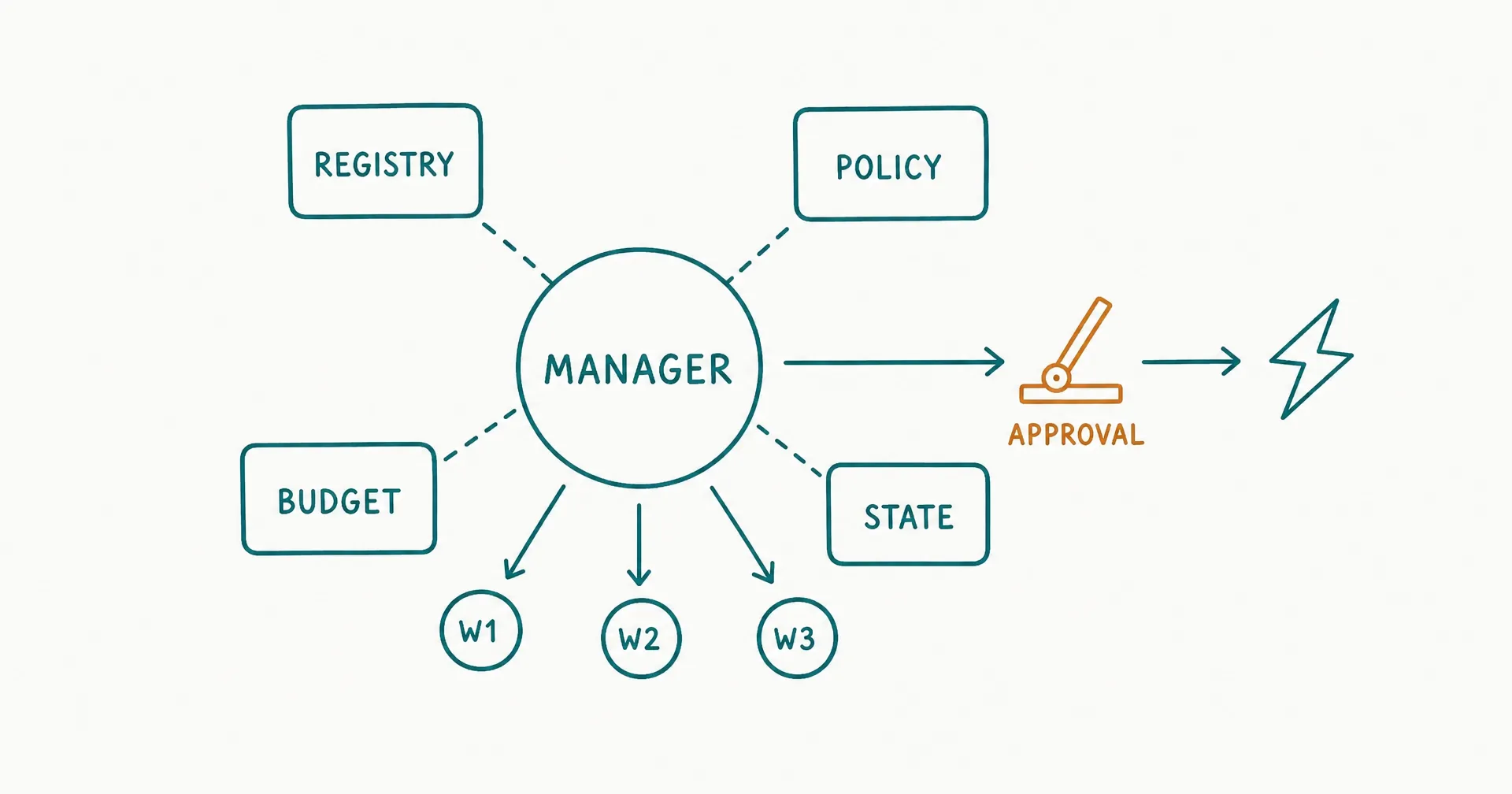
31 JUL 2026 Manager-Agent Architecture: Routing, Review, State, and Failure Containment The manager is a coordination role, not an all-powerful agent. Identity, policy, budgets, state, and approvals stay deterministic - the controller proposes, services enforce. InsightsMulti-agent 25 min
Napkin-style sketch of a central manager node connected to three specialist worker nodes, surrounded by four small deterministic-service boxes labeled registry, policy, budget, and state, with an amber highlight on the approval gate between the manager and an external action
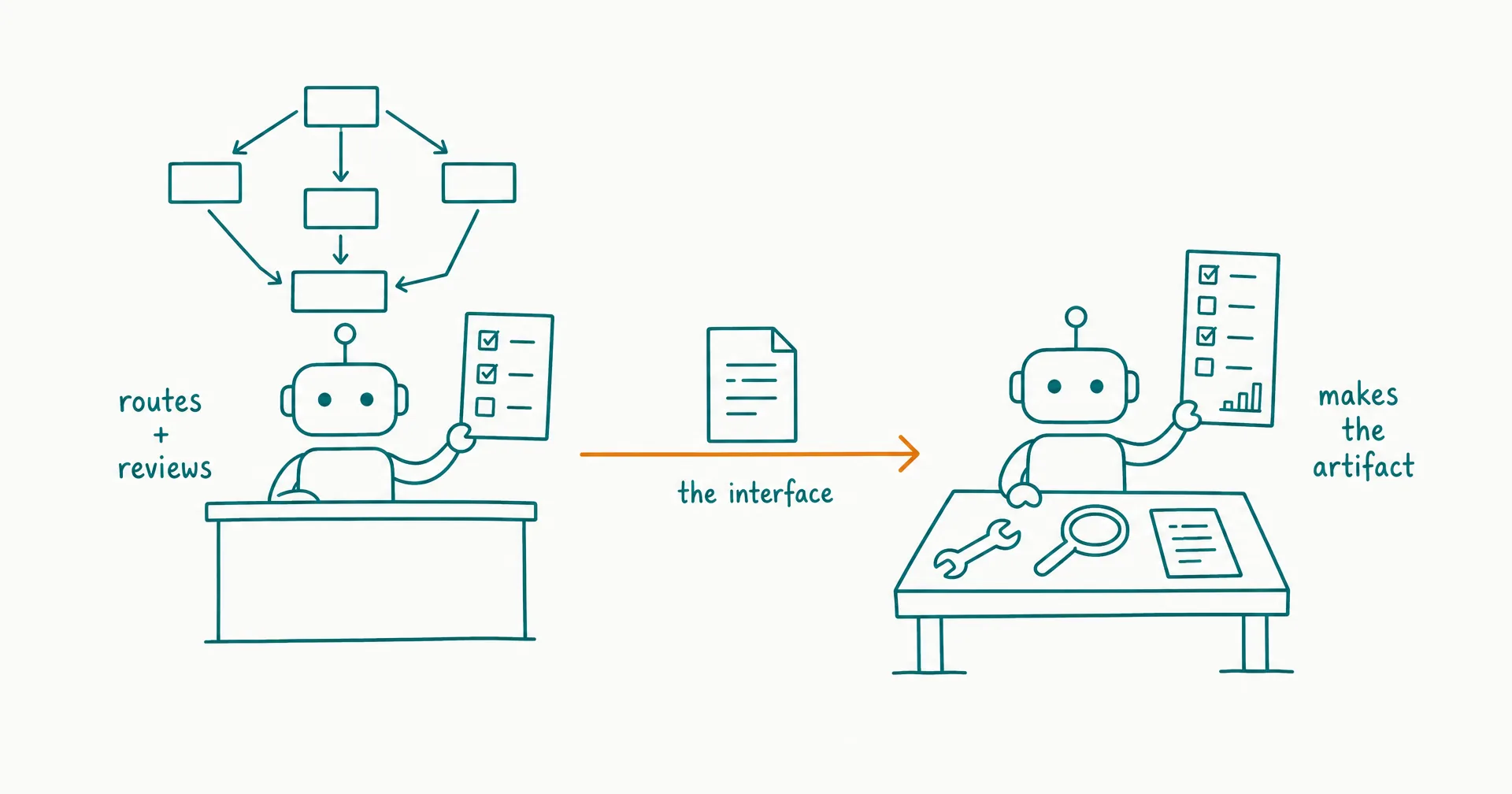
31 JUL 2026 Manager Agent vs Specialist Agent: Different Jobs, Different Evals The manager succeeds when the right work reaches the right specialist and the outcome closes. The specialist succeeds when its artifact meets a domain contract. Do not score both with one number. InsightsMulti-agent 22 min
Napkin-style sketch of a manager robot at a routing desk with a task graph beside a specialist robot at a workbench with domain tools, each holding a different scorecard, with an amber highlight on the interface arrow between them
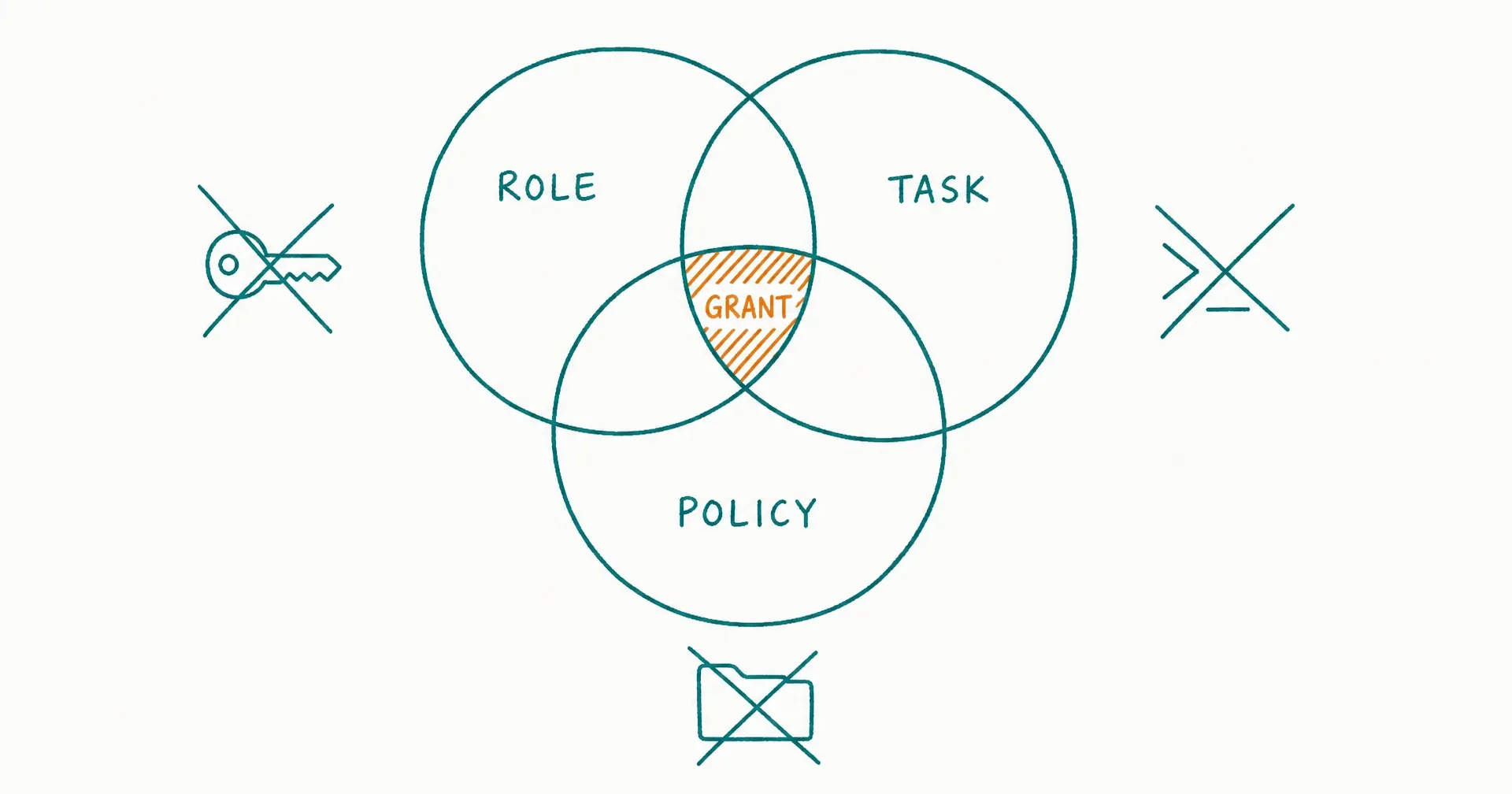
31 JUL 2026 Least Privilege for AI Agents: A Practical Access Model The smallest useful grant: distinct identity, narrow tools over open-ended shells, field-level data scope, temporary credentials, and delegation that narrows authority instead of inheriting it. GuidesTrust & security 23 min
Napkin-style sketch of three overlapping circles labeled role, task, and policy with the small central intersection highlighted as the effective grant
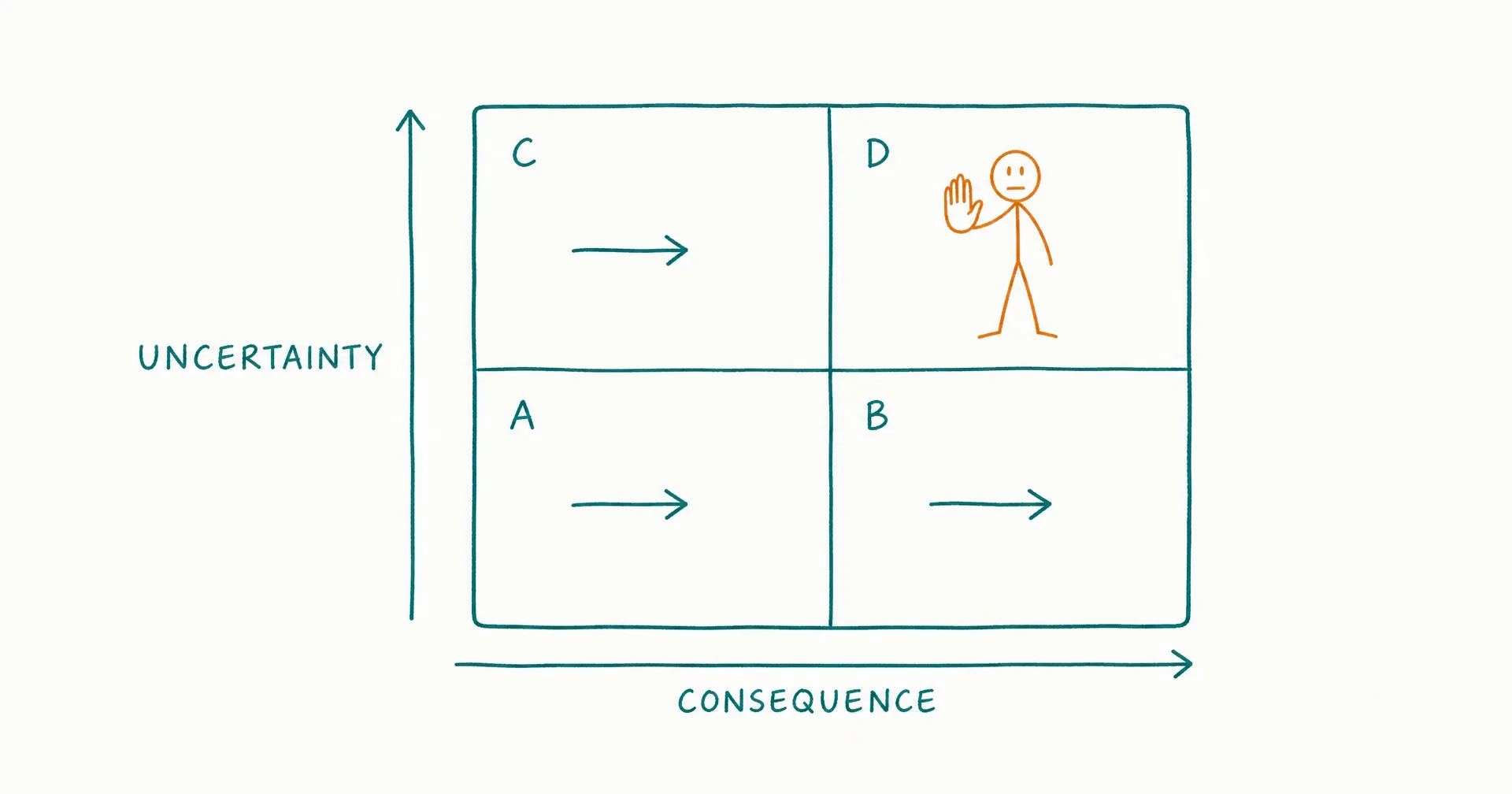
31 JUL 2026 Human-in-the-Loop AI Employees: Where Oversight Belongs Approving everything trains reviewers to click through: put human gates at consequence and uncertainty boundaries, give reviewers authority to disagree, and measure override quality. GuidesTrust & security 24 min
Napkin-style sketch of a two-by-two consequence and uncertainty matrix with three zones flowing freely and the high-consequence high-uncertainty zone routed to a human figure
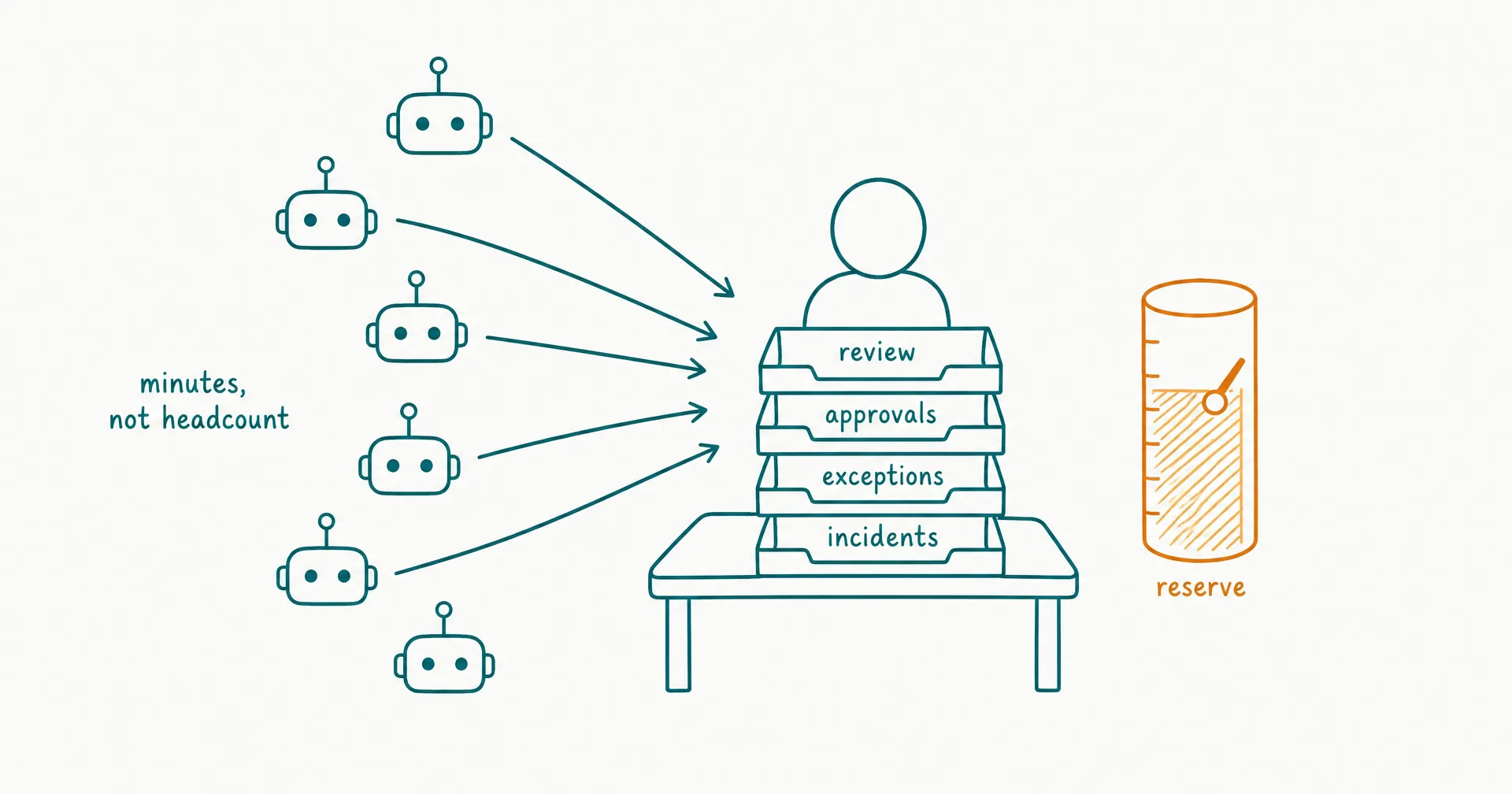
31 JUL 2026 Human Span of Control for AI Agents: A Workload Model for Safe Supervision There is no universal number of AI agents one human can supervise. Agent count is an inventory number; human workload comes from the work each agent sends back. InsightsMulti-agent 24 min
Napkin-style sketch of a human figure at a desk with four labeled inbox trays for review, approvals, exceptions, and incidents, fed by arrows from several robot icons, with an amber highlight on a small reserve tank gauge beside the desk
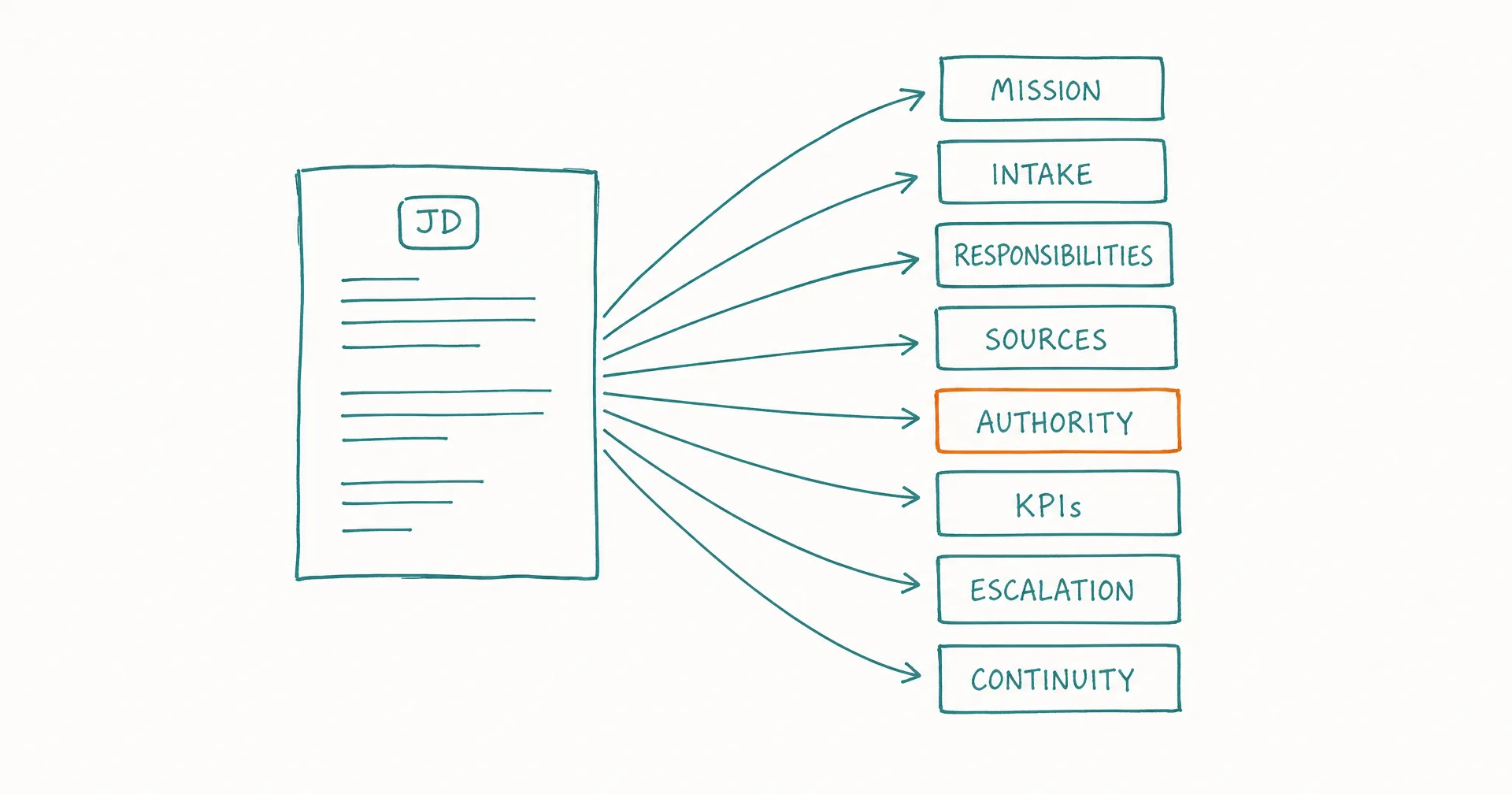
31 JUL 2026 How to Write an AI Employee Job Description An operating contract, not a recruitment ad: mission, intake, responsibilities, sources, authority, deliverables, KPIs, escalation, continuity, and change control - with a copy-and-use template. GuidesHiring 29 min
Napkin-style sketch of a job description document splitting into labeled specification blocks: mission, intake, responsibilities, sources, authority, KPIs, escalation, and continuity
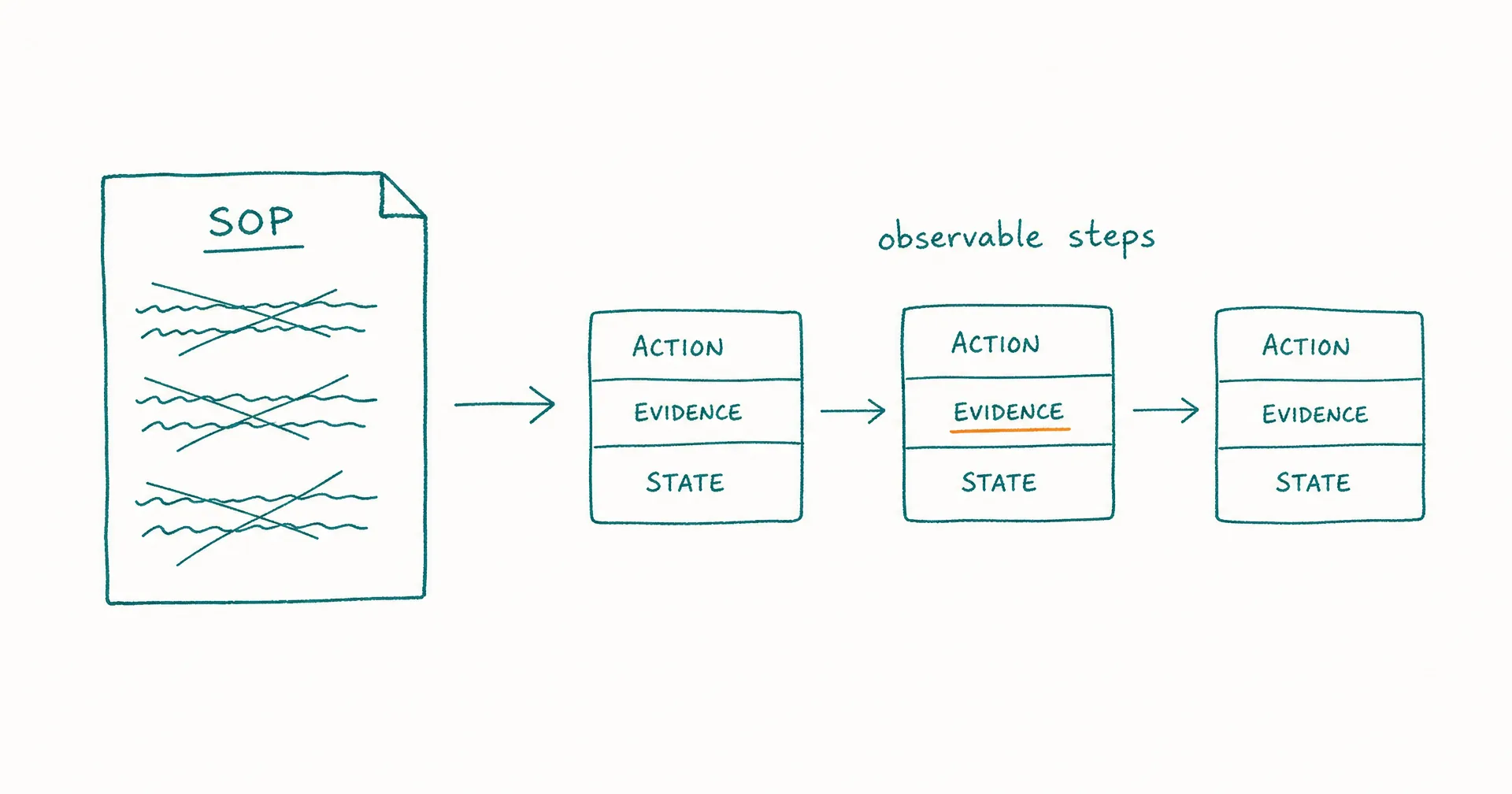
31 JUL 2026 How to Write SOPs an AI Employee Can Actually Use A testable operating contract for one repeatable procedure: trigger, inputs, bounded steps, decision rules, evidence, approvals, and stop conditions - with a copyable template. GuidesHiring 28 min
Napkin-style sketch of a procedure document transforming into a step chain, each step carrying an action, evidence tag, and resulting state
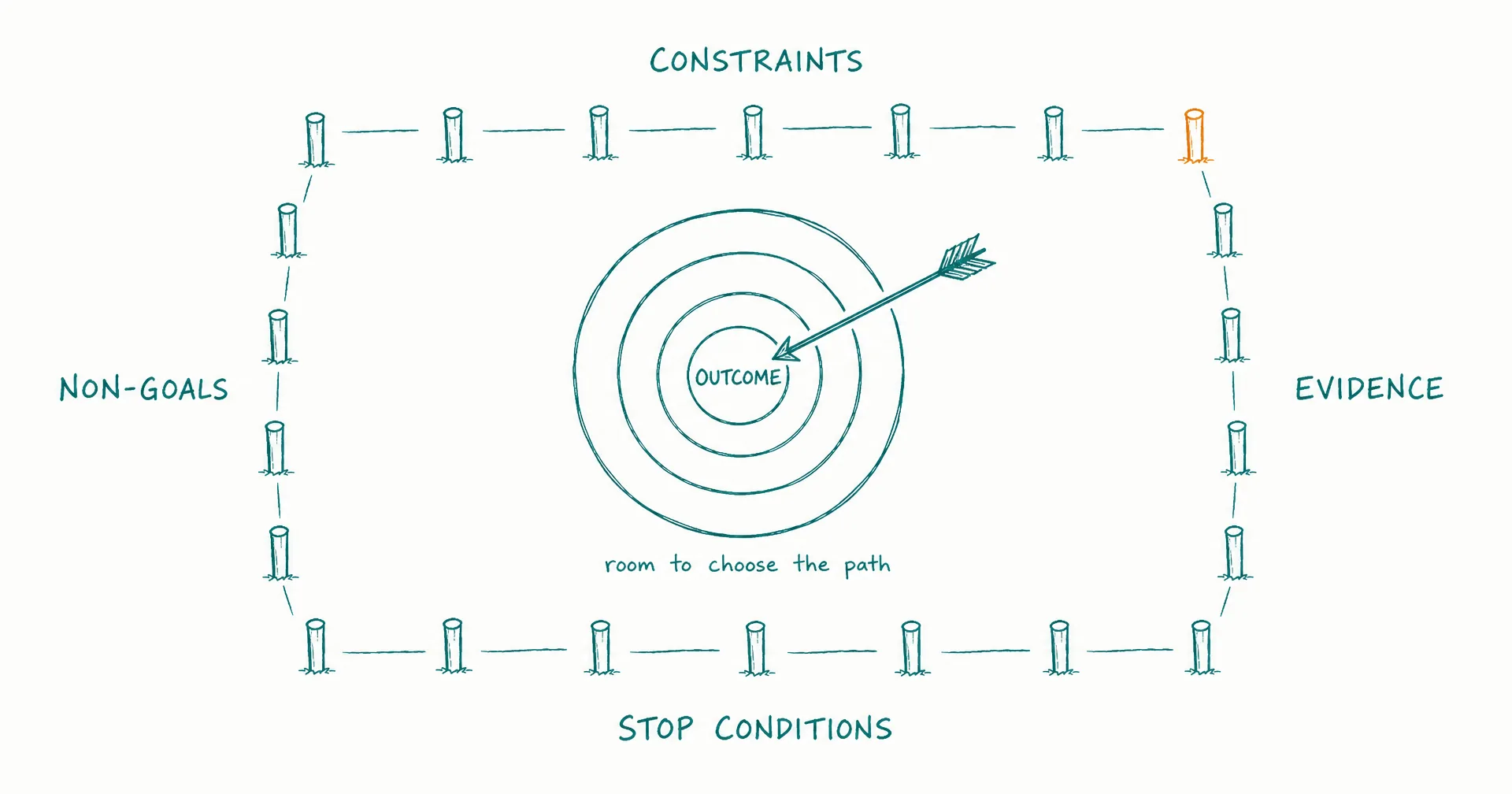
31 JUL 2026 How to Set Goals for an AI Employee A bounded result, not an unlimited direction: one owned outcome plus acceptance conditions, constraints, non-goals, authority limits, priority rules, and stop conditions - with a copyable template. GuidesHiring 24 min
Napkin-style sketch of a goal target surrounded by a labeled boundary fence of constraints, non-goals, evidence, and stop conditions
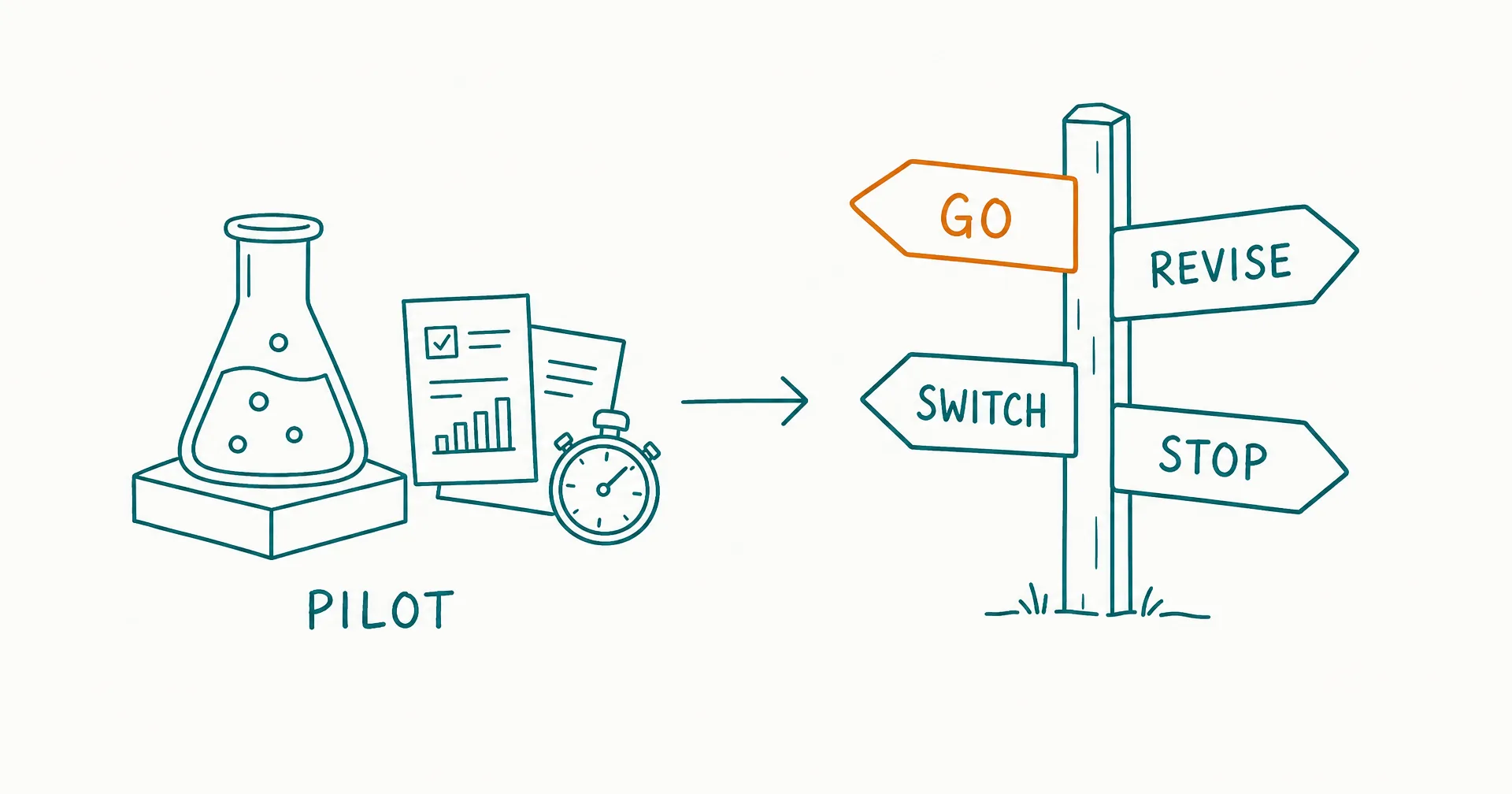
31 JUL 2026 How to Run an AI Employee Pilot That Produces a Decision A collection of impressive demos is not a pilot. A 30-day trial with no comparison, no acceptance definition, and no stop condition is only extended product exploration. GuidesChoosing 22 min
Napkin-style sketch of a laboratory flask on a pedestal feeding a four-way decision signpost labeled go, revise, switch, stop, with an amber highlight on the go arrow
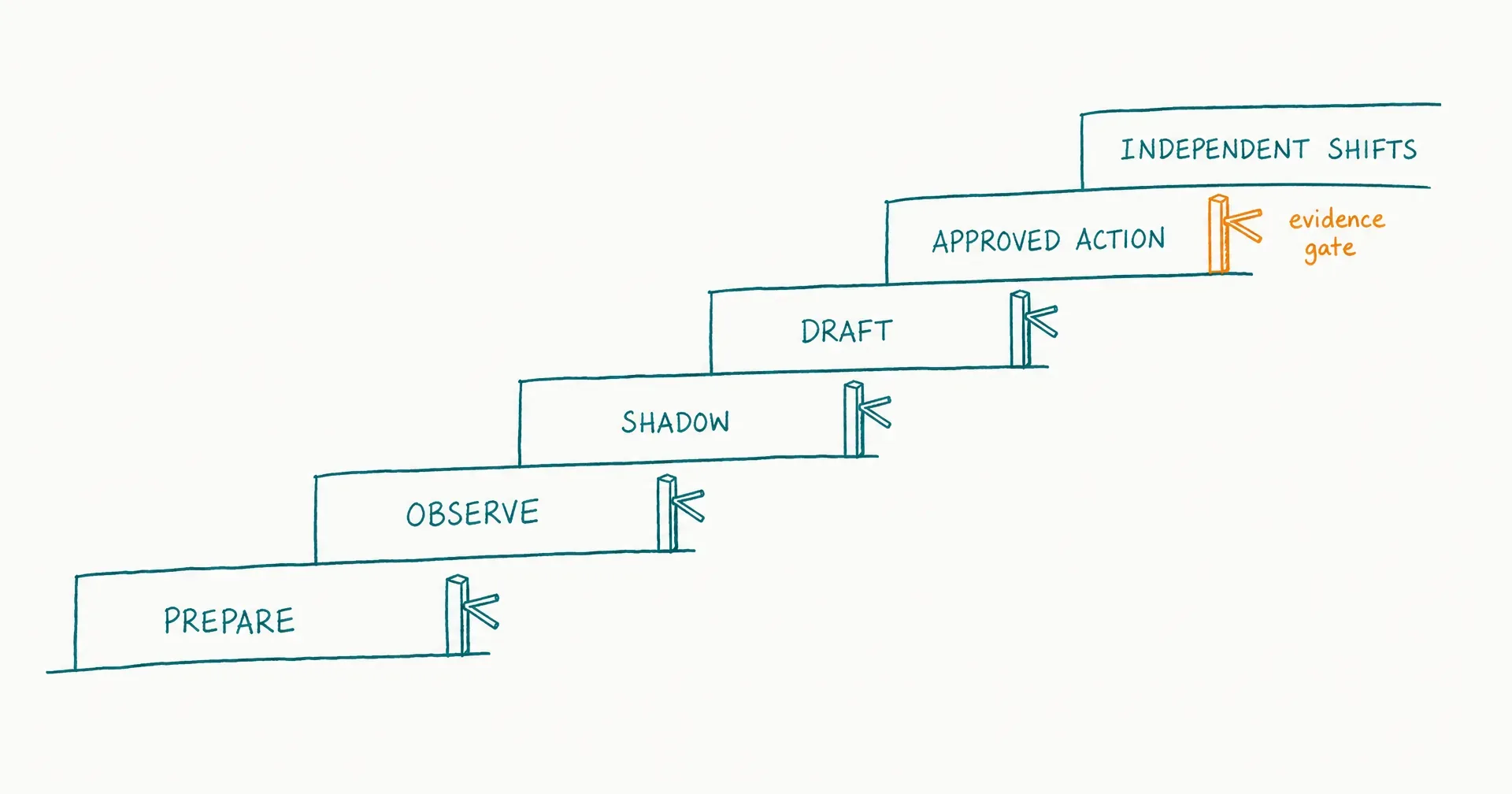
31 JUL 2026 How to Onboard an AI Employee With Graduated Autonomy Six evidence-gated stages - prepare, observe, shadow, draft, approved action, bounded independent shifts - and the four boundaries (scope, context, access, authority) that expand one at a time. GuidesHiring 24 min
Napkin-style sketch of a six-step onboarding ladder rising left to right, each step labeled: prepare, observe, shadow, draft, approved action, independent shifts, with an evidence gate between steps
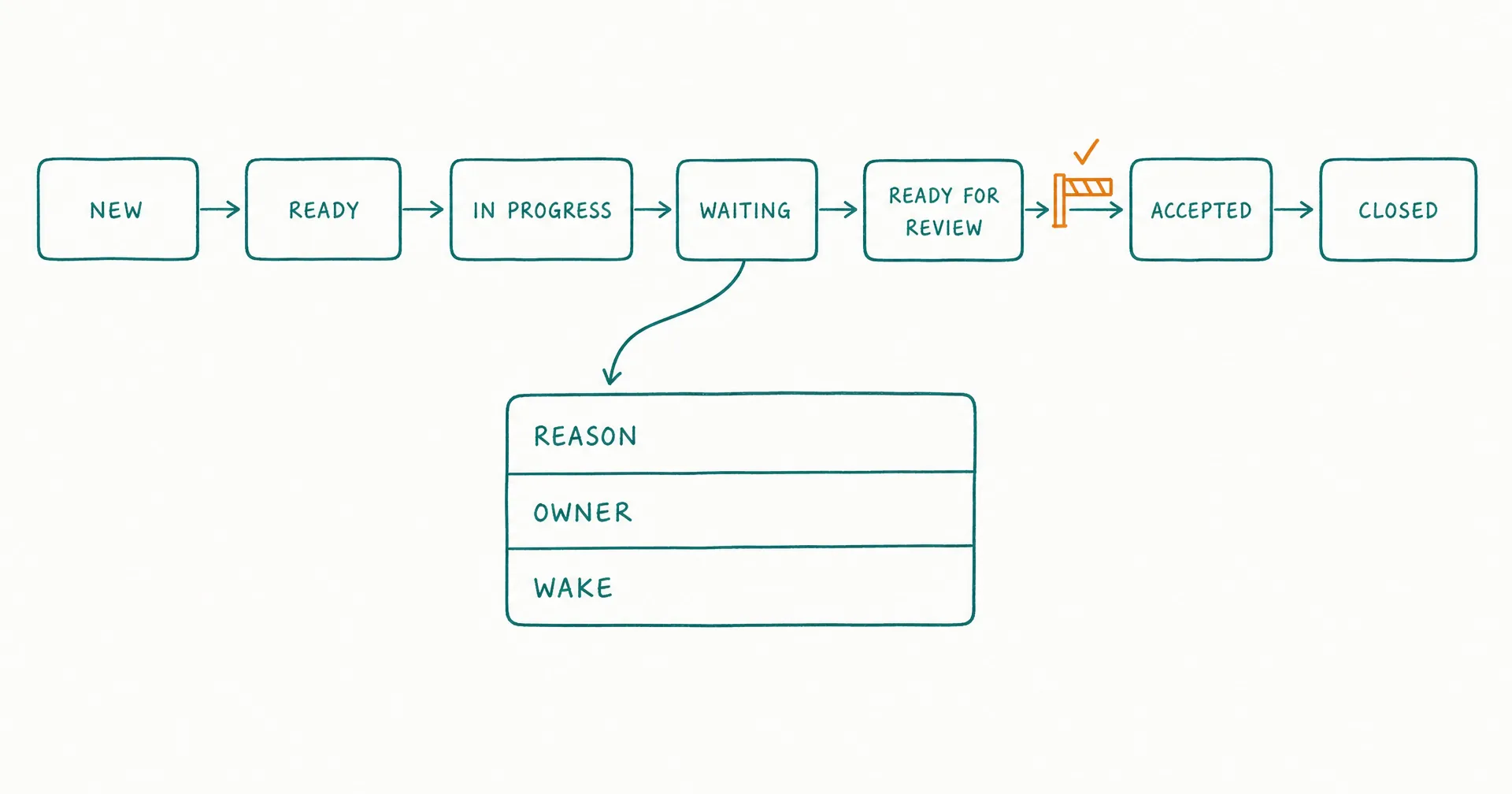
31 JUL 2026 How to Design an AI Employee Task Board The board is a control surface, not an activity feed: seven core states, transition contracts, one owner per next action, structured blockers and approvals, and closure that actually means done. GuidesTrust & security 21 min
Napkin-style sketch of a seven-state task flow from New to Closed with gated transitions and an enlarged waiting card showing reason, owner, and wake fields
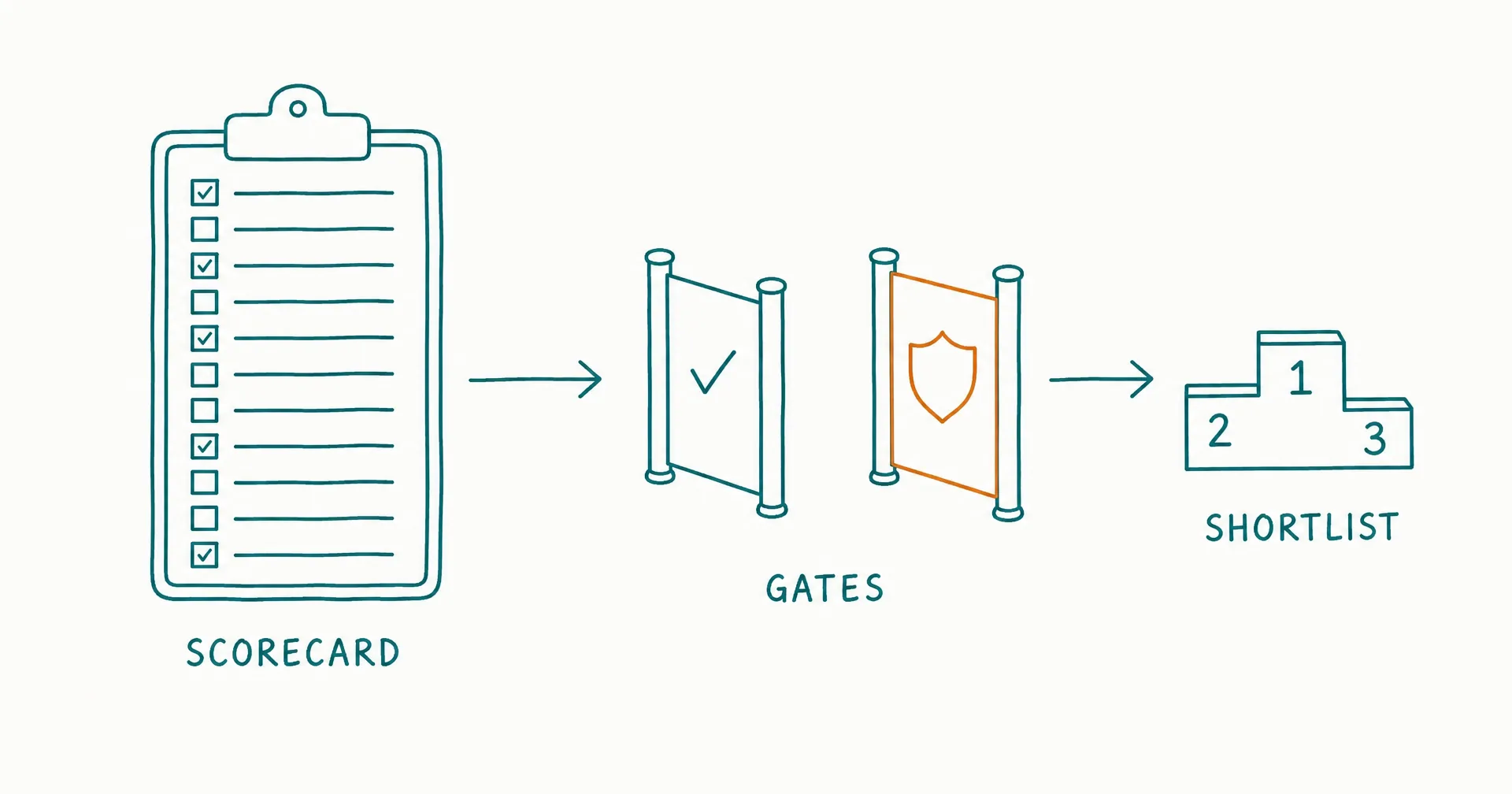
31 JUL 2026 How to Choose an AI Employee Platform: A 12-Point Evaluation Framework Twelve evidence-weighted criteria, non-compensating gates, and one rule: score the platform you can prove, not the product the vendor can describe. GuidesChoosing 33 min
Napkin-style sketch of a clipboard scorecard with twelve criteria rows beside a row of locked gates, with an amber highlight on one gate labeled approvals
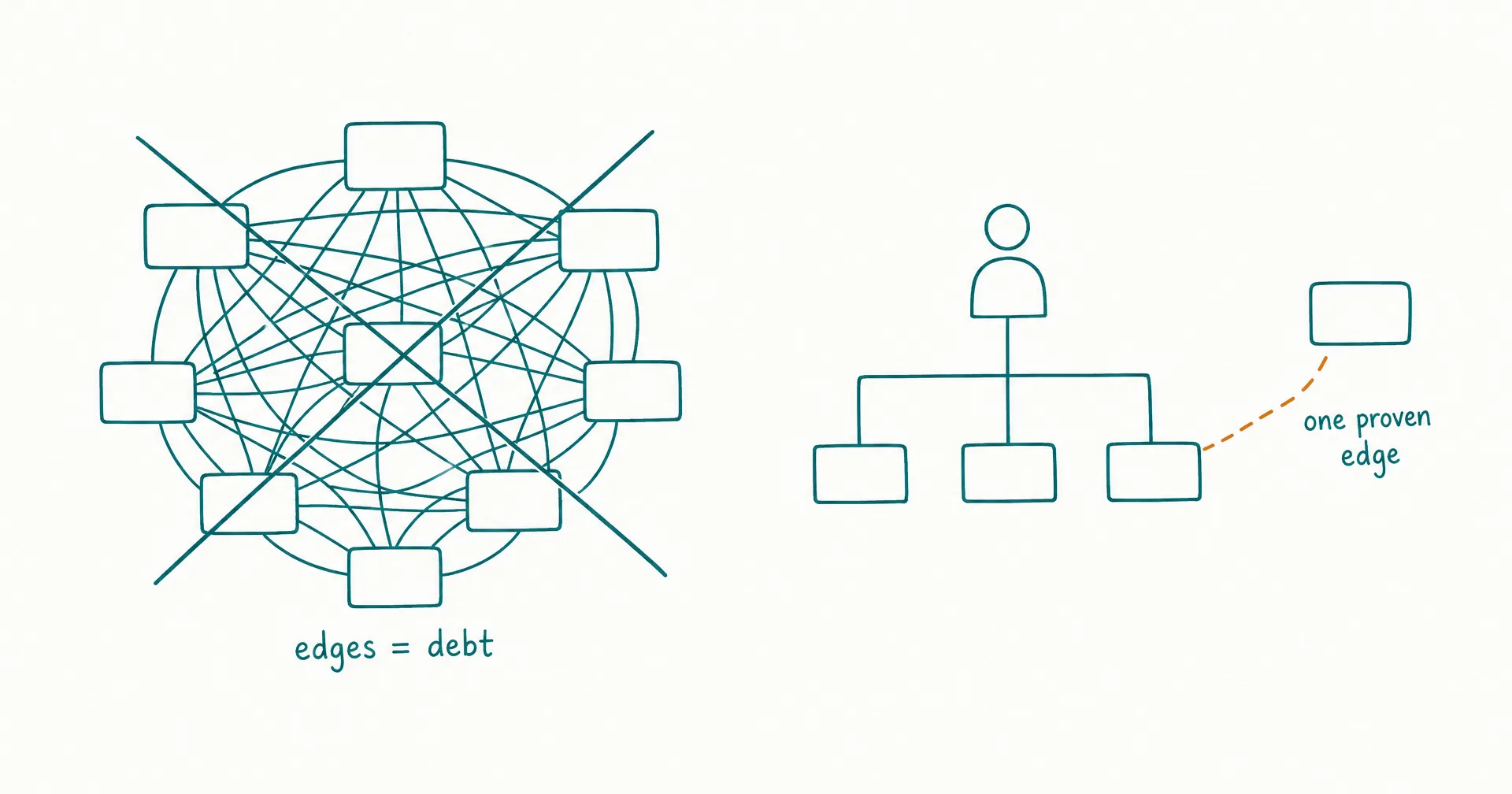
31 JUL 2026 How to Build an AI Organization Without Creating Coordination Debt The objective is not the largest agent org chart. It is the smallest human-AI operating model that produces more accepted work without moving the burden into delegation, review, and supervision. InsightsMulti-agent 23 min
Napkin-style sketch of a small org chart gaining one node while a dense fully connected web of agent boxes is crossed out, with an amber highlight on the single new connection
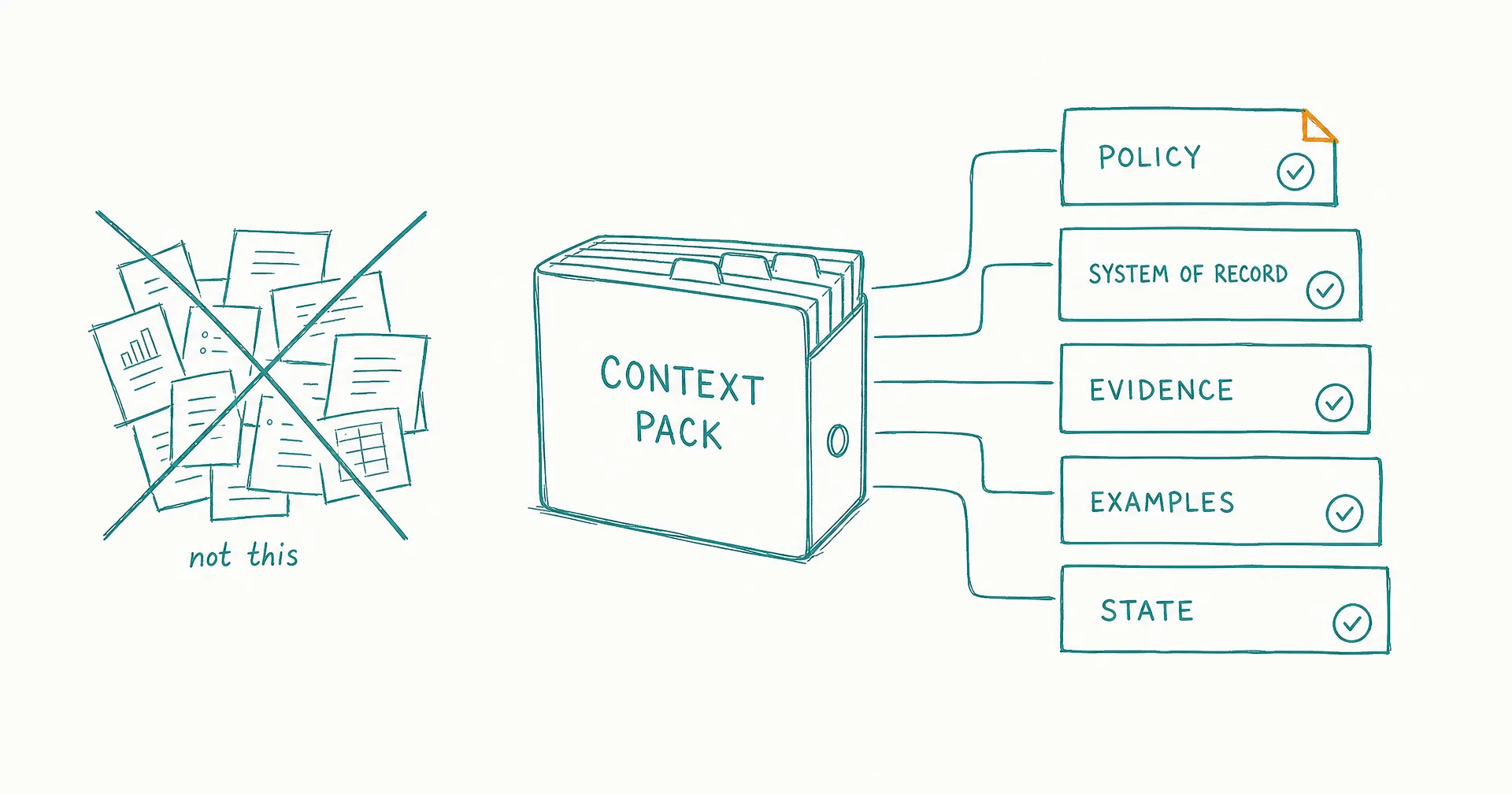
31 JUL 2026 How to Build an AI Employee Context Pack The smallest owned set of information a role needs: a governed index with authority levels, a source register, schemas, boundary examples, open-work state, and explicit unknowns - not a drive dump. InsightsMemory 19 min
Napkin-style sketch of a compact indexed context pack binder connected to governed source cards, contrasted with a crossed-out pile of unsorted documents
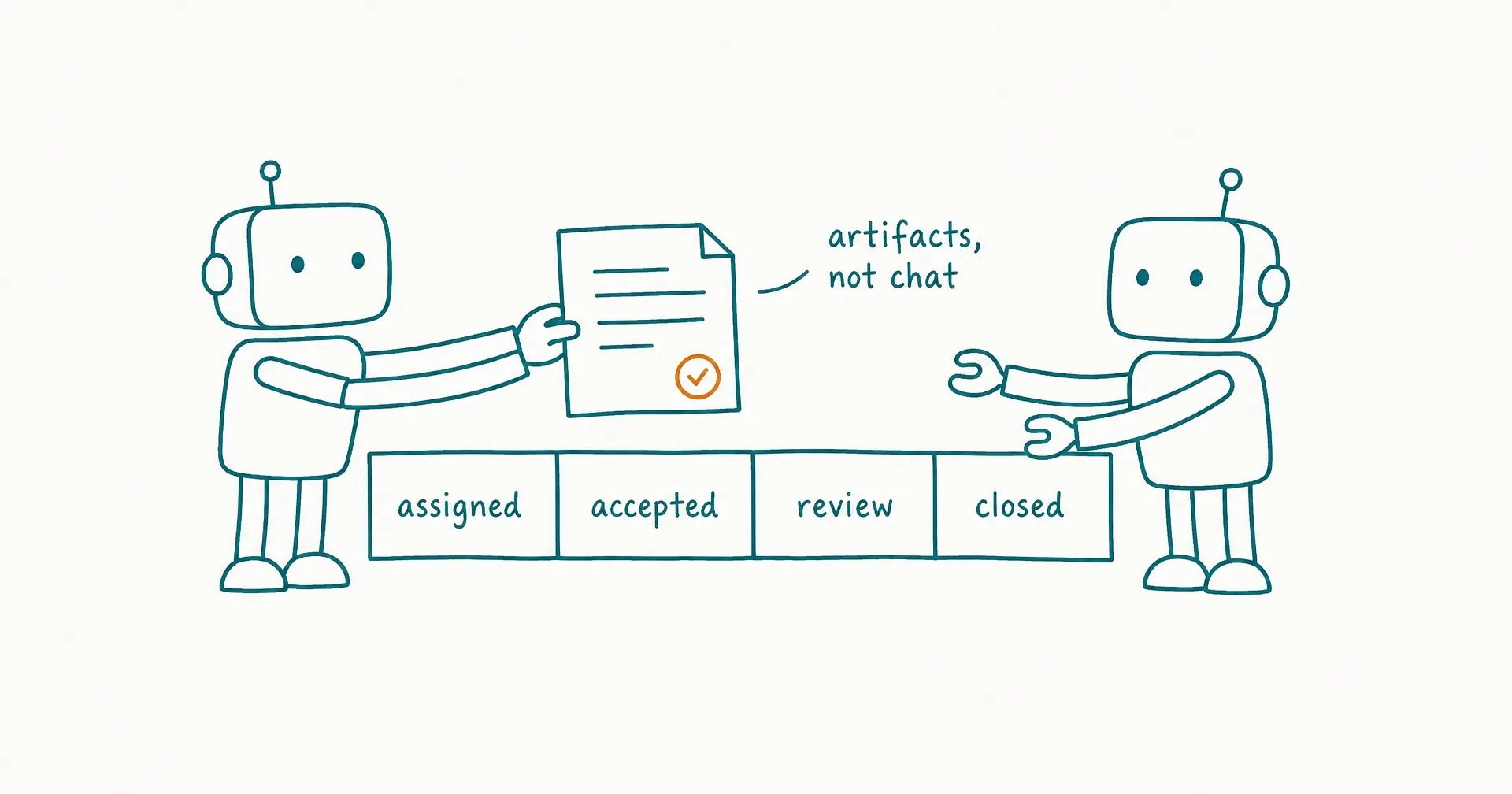
31 JUL 2026 How AI Employees Work Together: Delegation, Handoffs, and Shared Context A useful collaboration has a beginning and an end: one role requests a defined result, another explicitly accepts it, the result arrives as a versioned artifact, and one owner closes the outcome. InsightsMulti-agent 22 min
Napkin-style sketch of two worker figures exchanging a stamped document across a labeled task pipeline with states for assigned, accepted, review, and closed, with an amber highlight on the acceptance stamp
CellCog Research 196 articles · 3 sections · 617k words