Skip to content
AI EmployeeSuper-AgentsAgent-to-AgentTutorialsPricingBlogStoryContact
The AI Employee Library / Insights

Insights

Category thinking, cost models and organisational design — the arguments behind the practice, written to be argued with.

59Insights
3Sections
10Topics
16 SEPLast updated
Insights — page 3 49–59 of 59
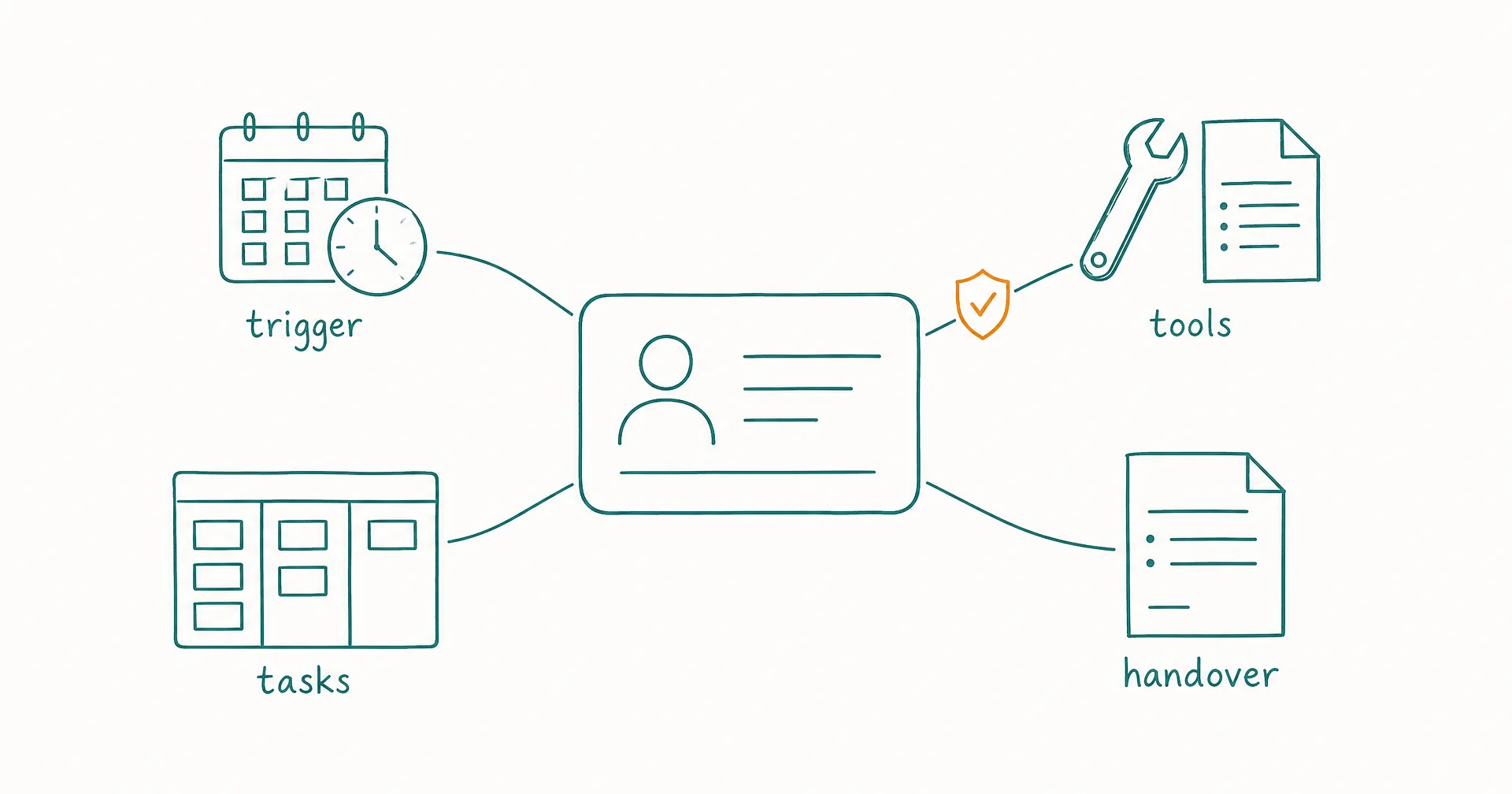
30 JUL 2026 What Is an AI Employee? The 5-Part Test for a Standing AI Worker A practical five-part test - role, continuity, initiative, agency, accountability - that separates a standing AI worker from chatbots, assistants, agents, and workflow automation. InsightsCategory basics 27 min
Schematic diagram of an AI employee operating loop: a central worker card connected by teal lines to a trigger, tools, a task board, and a handover note
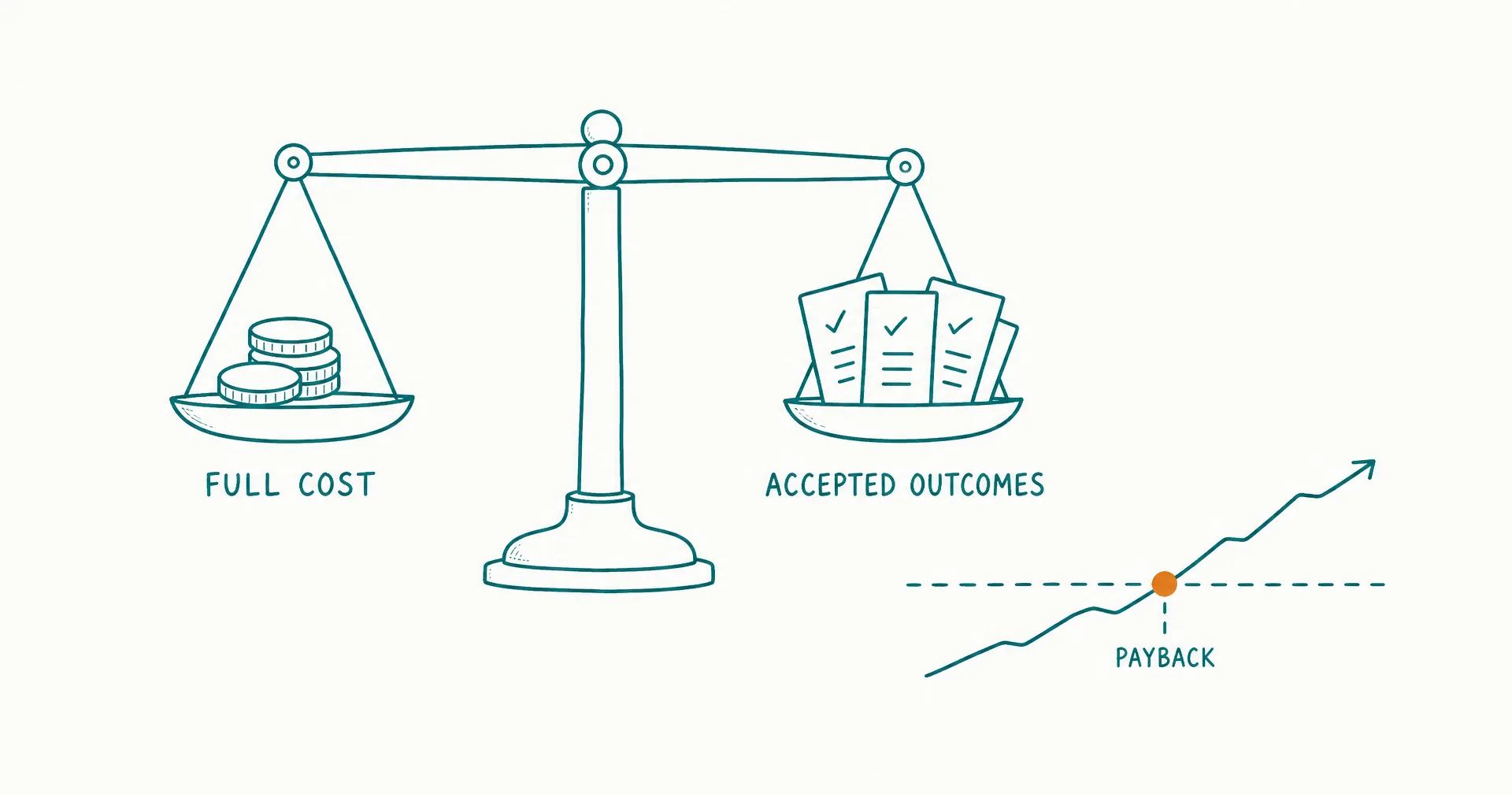
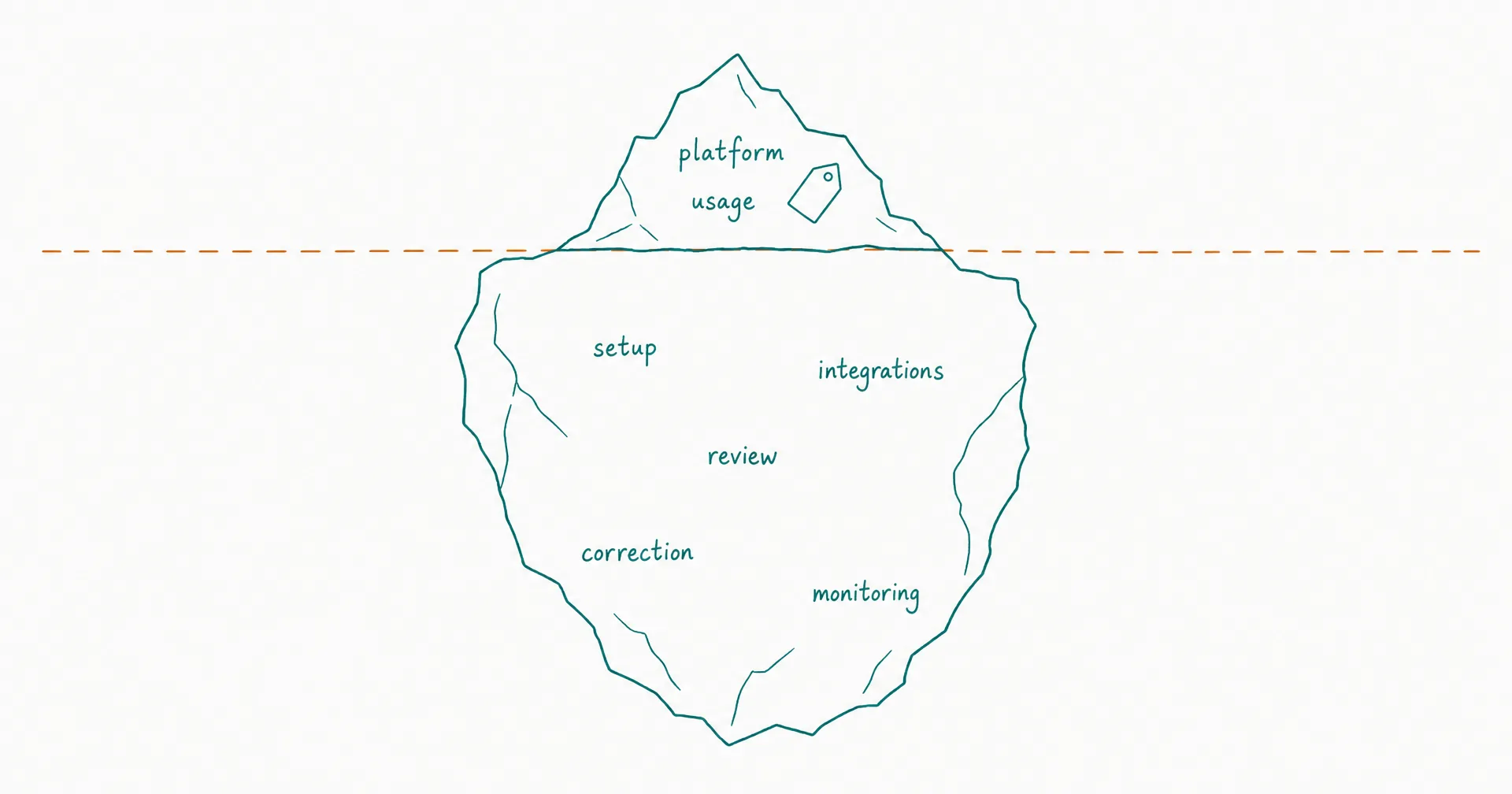
30 JUL 2026 How Much Does an AI Employee Cost? A 7-Layer Total-Cost Framework The plan price is not the total cost. Seven layers - platform, usage, setup, integrations, review, correction, monitoring - with CellCog's live pricing, two worked scenarios, and break-even math. InsightsCost & ROI 19 min
Hand-drawn iceberg diagram: platform and usage costs above the waterline, with setup, integrations, review, correction, and monitoring below it
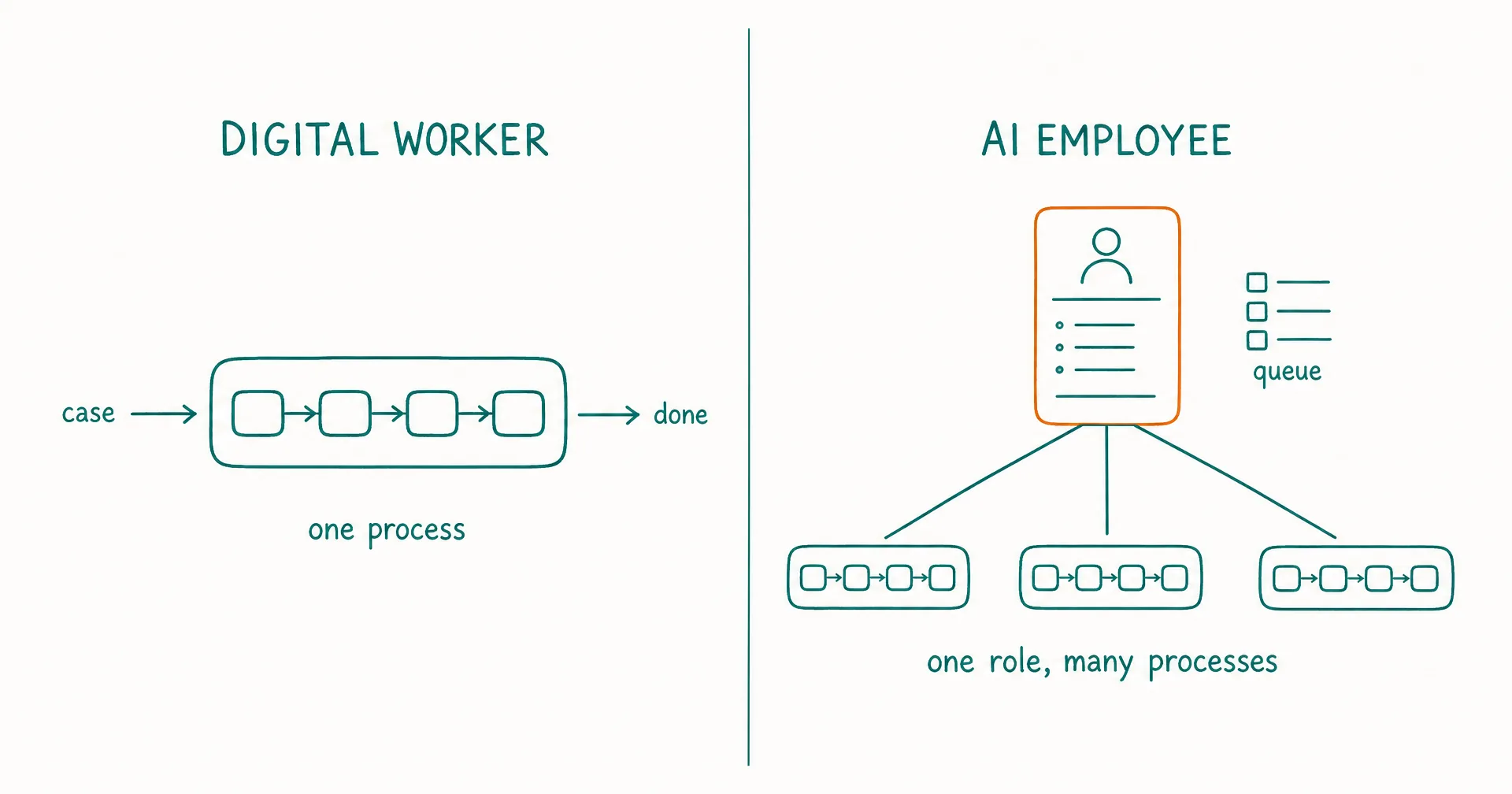
30 JUL 2026 Digital Worker vs AI Employee: What Actually Changes? Process capacity versus role ownership - sometimes nothing changes but the label. Ten differences to test, an upgrade playbook, and a 15-point scorecard. InsightsCategory basics 20 min
Sketch contrasting a digital worker executing one mapped process with an AI employee owning a role that spans several processes
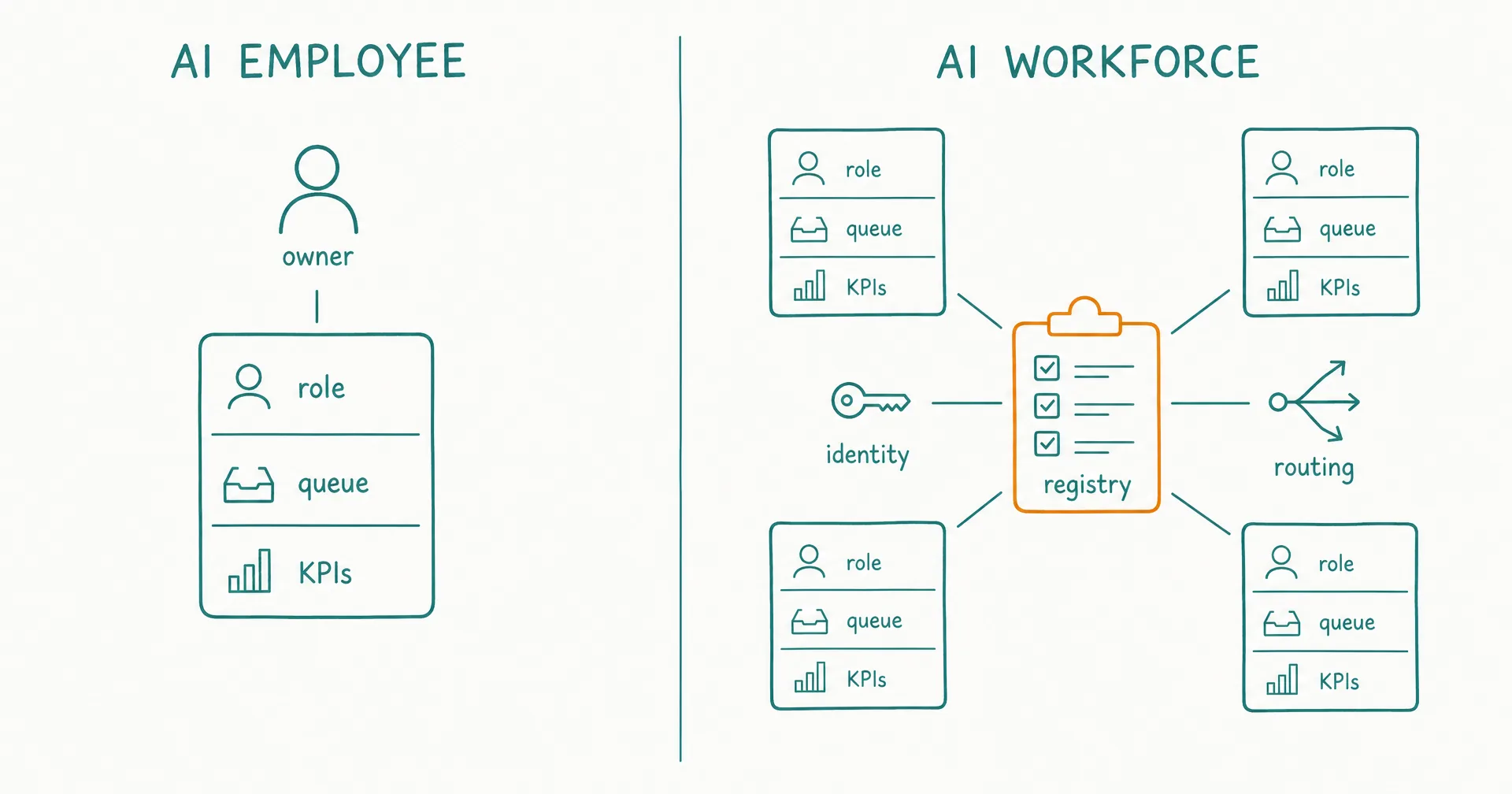
30 JUL 2026 AI Workforce vs AI Employee: One Role or an Operating System? An AI employee is one standing role; an AI workforce is the governed portfolio around many. Seven workforce tests, four operating patterns, and a five-stage scaling model. InsightsCategory basics 19 min
Sketch contrasting a single AI employee role card with a governed portfolio of several roles connected by registry, routing, and shared services
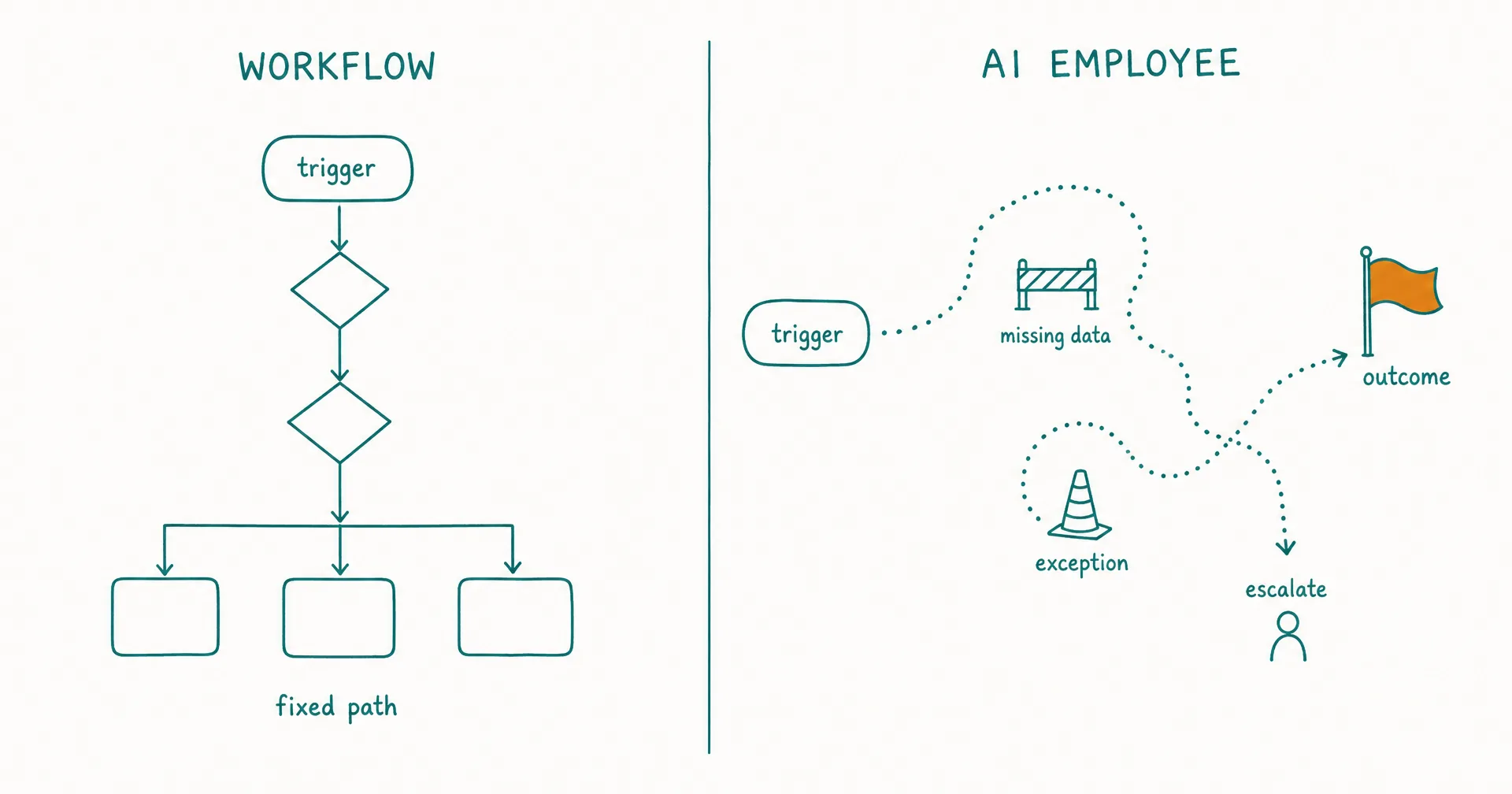
30 JUL 2026 AI Employee vs Workflow Automation: Which Should Own the Process? A workflow owns a known path; an AI employee owns a recurring outcome when the path varies. Where each wins, three hybrid patterns, and a 15-minute scoring test. InsightsCategory basics 22 min
Sketch contrasting a fixed workflow flowchart with an AI employee pursuing an outcome along a variable path
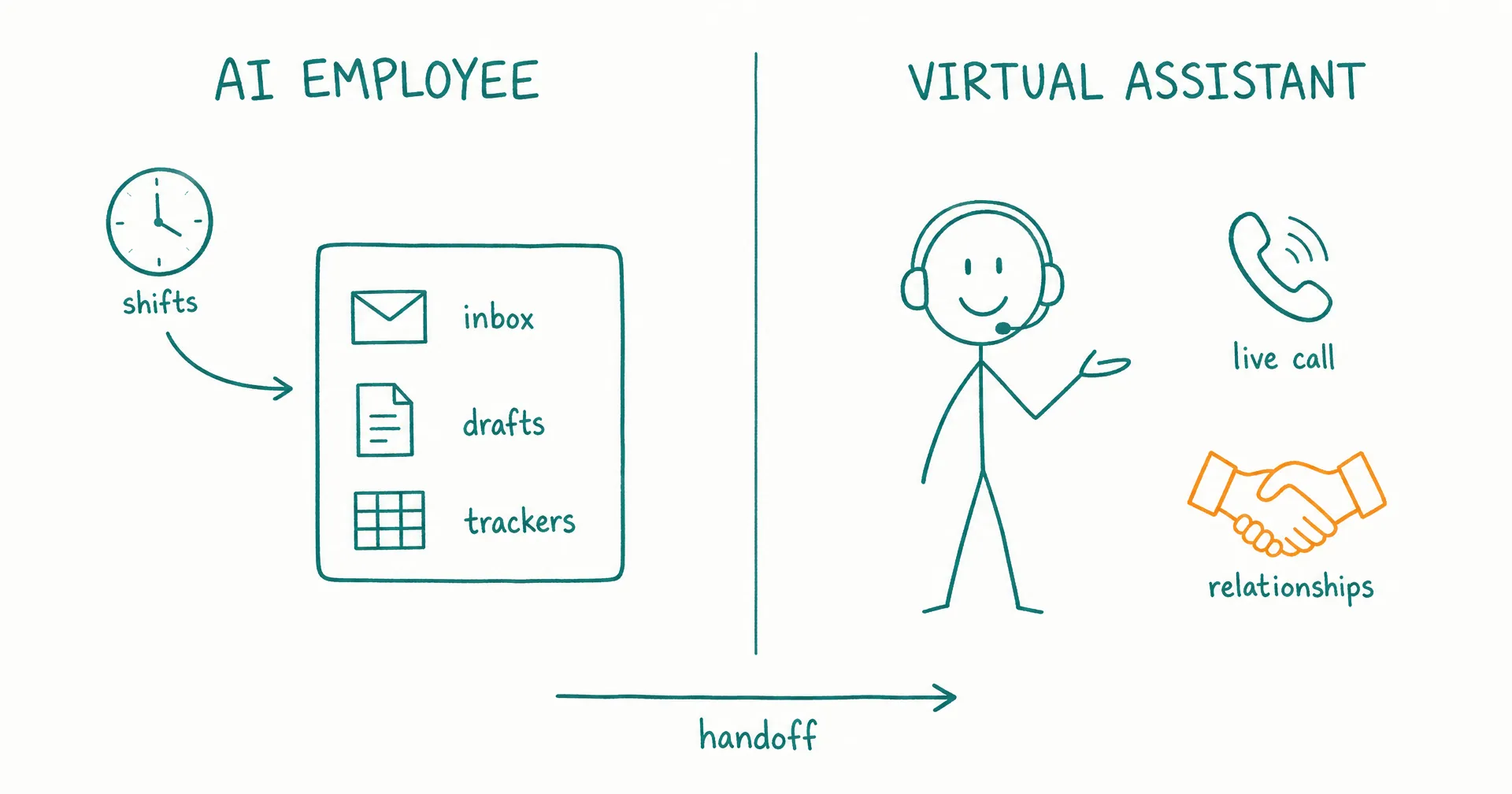
30 JUL 2026 AI Employee vs Virtual Assistant: Software or Human Support? One is software, the other is a person. Where each wins, how to run a fair pilot, and a role-splitting worksheet that usually ends in a hybrid. InsightsCategory basics 19 min
Sketch contrasting an AI employee role card working digital tasks with a human assistant handling a live conversation
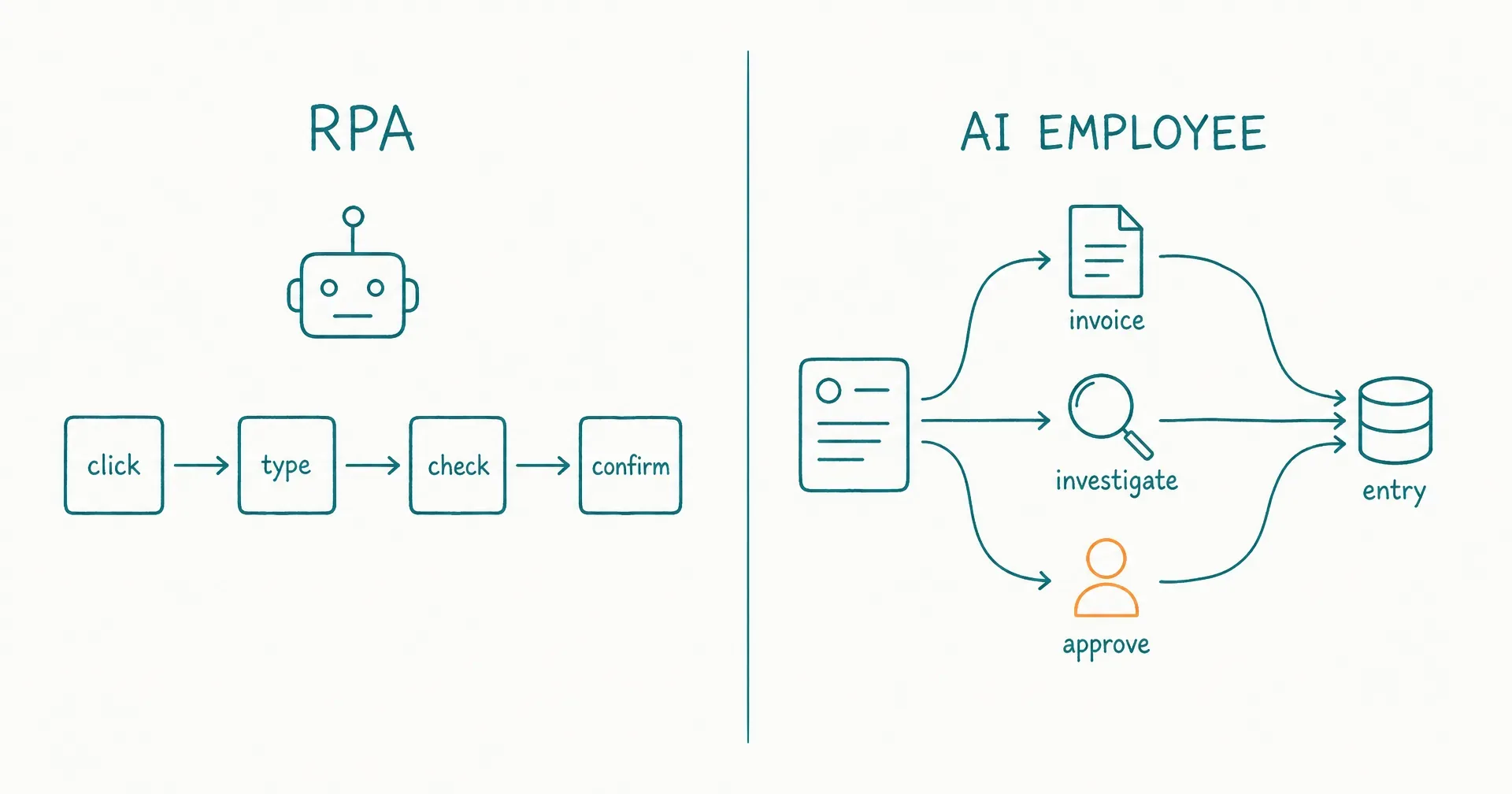
30 JUL 2026 AI Employee vs RPA: Adaptive Work vs Deterministic Bots RPA executes encoded procedures; an AI employee adapts inside a governed role. Nine differences, four hybrid patterns, and a worked invoice example. InsightsCategory basics 20 min
Sketch contrasting an RPA bot replaying an exact click sequence with an AI employee choosing a path through variable evidence
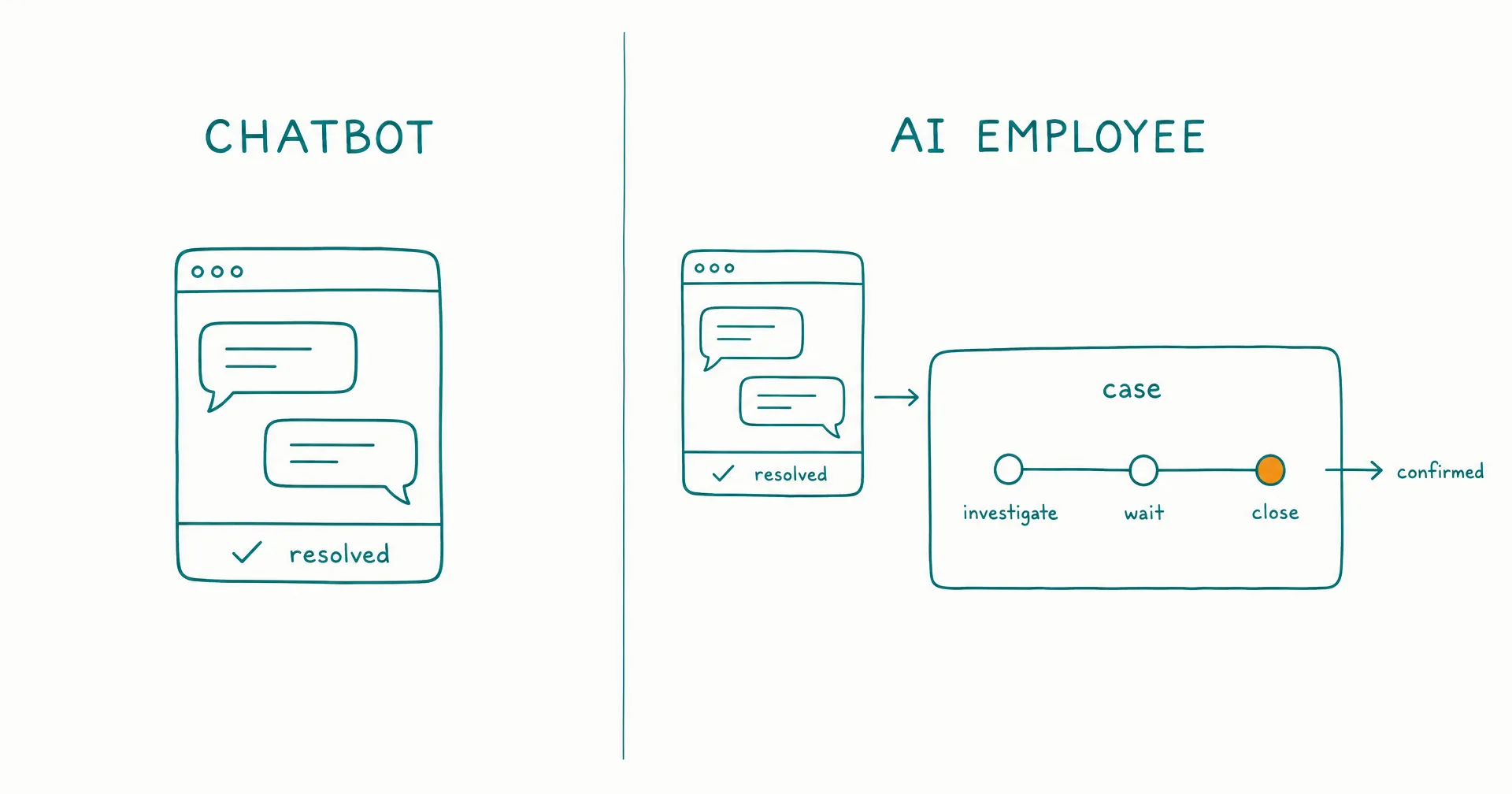
30 JUL 2026 AI Employee vs Chatbot: Conversation Is Not the Same as Ownership A chatbot manages the exchange; an AI employee manages the continuing obligation. Eight practical differences, four hybrid patterns, and the silence test. InsightsCategory basics 20 min
Sketch contrasting a chat window resolving a conversation with an AI employee role carrying a case forward after the chat closes
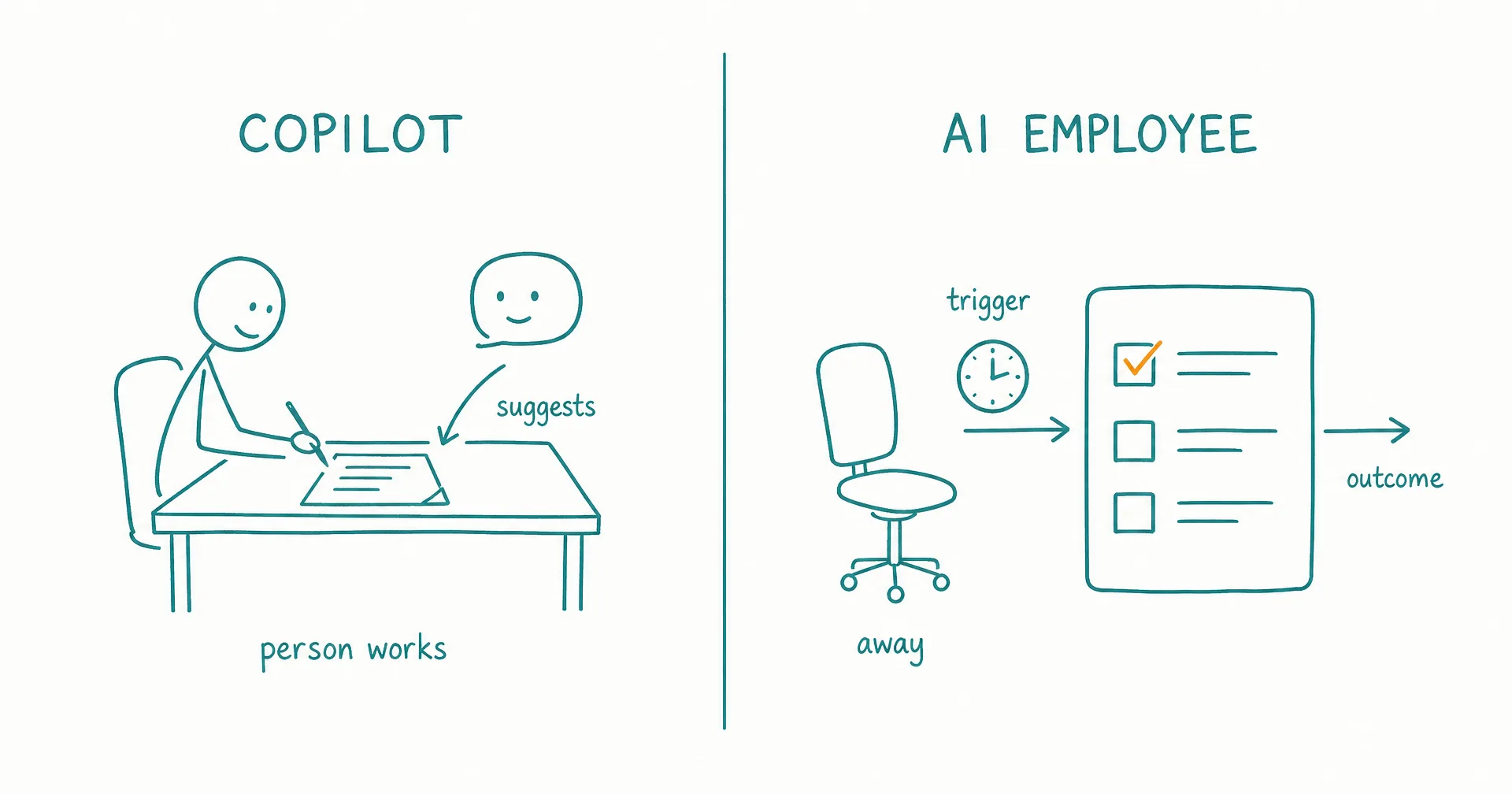
30 JUL 2026 AI Copilot vs AI Employee: Assistance vs Delegated Ownership Co-production versus delegation: where the human sits in the loop. Nine differences, a worked pipeline-review example, and a four-week augment-to-delegate pilot. InsightsCategory basics 19 min
Sketch contrasting a copilot suggesting alongside a working person and an AI employee carrying a task queue while the person is away
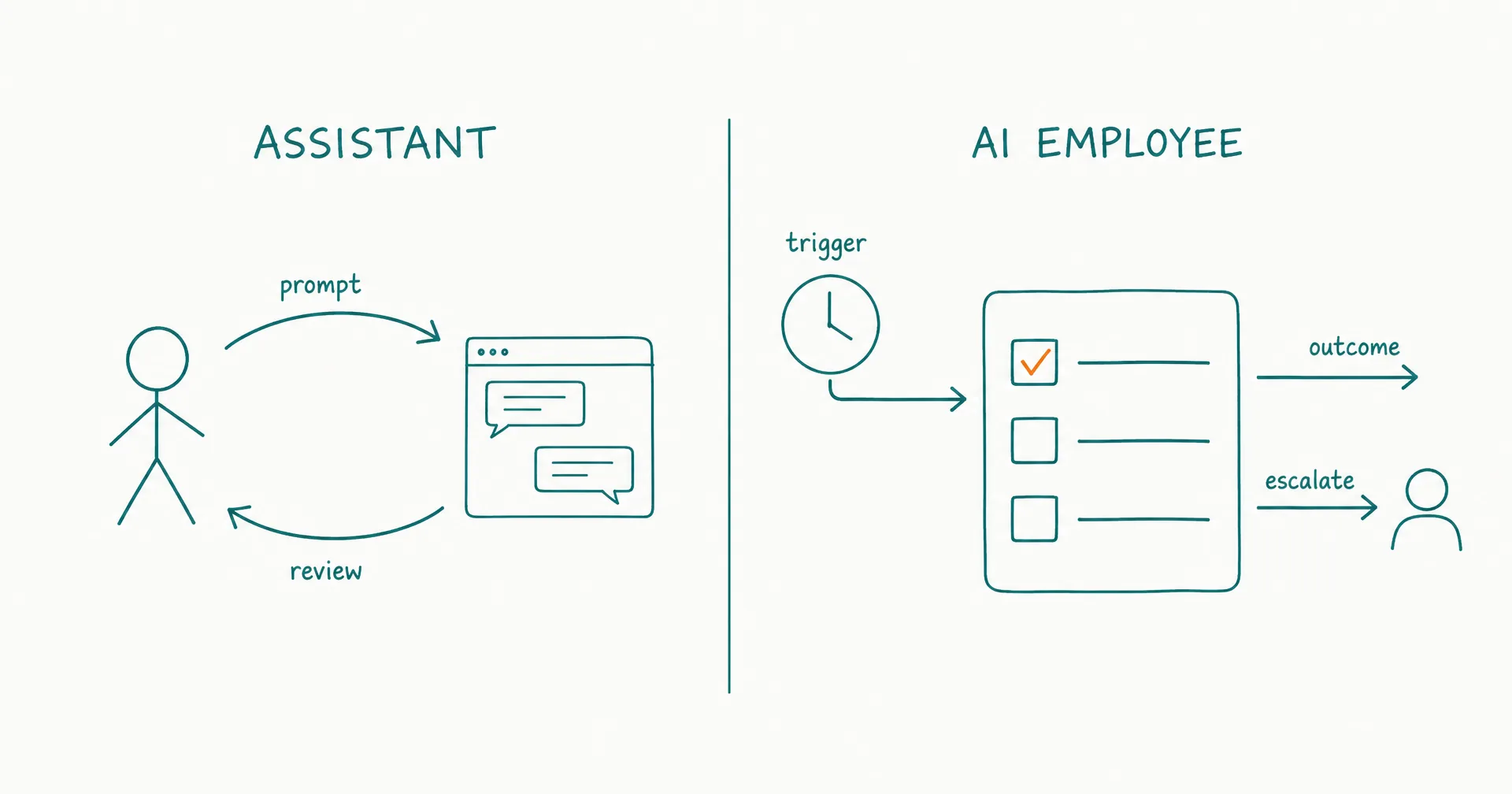
30 JUL 2026 AI Assistant vs AI Employee: Help on Demand vs Owned Work An assistant helps you do the work; an AI employee carries defined work forward. Four ownership tests, the coordination tax, and a 10-question routing rule. InsightsCategory basics 30 min
Sketch of a person prompting an assistant on one side and an AI employee role working a task queue from triggers on the other
30 JUL 2026 AI Agent vs AI Employee: Capability vs Accountable Role An AI agent can complete a task. An AI employee keeps owning a bounded outcome across tasks, triggers, and shifts. Ten operating differences and a final decision rule. InsightsCategory basics 24 min
Napkin-style schematic contrasting an AI agent task loop with an AI employee role card carrying a queue, triggers, memory, and KPIs
CellCog Research 192 articles · 3 sections · 604k words